On a Cursed House

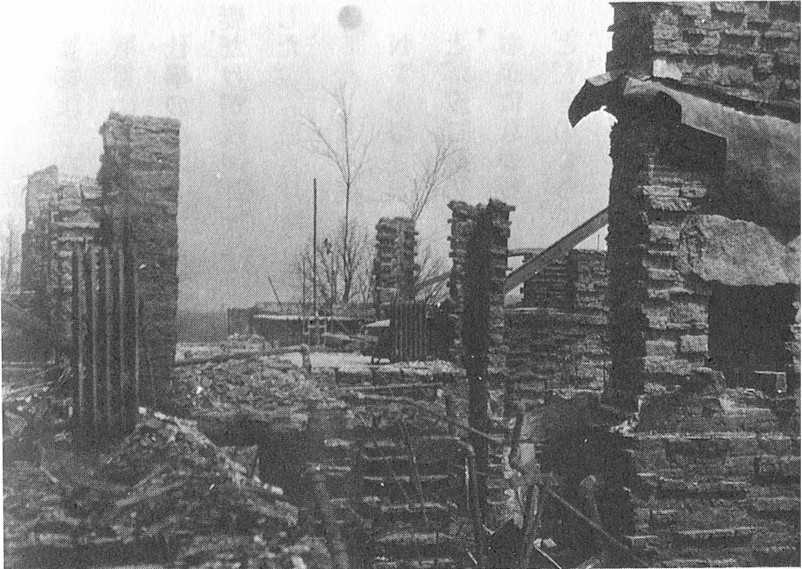
Frank stood in the ashes of his house in Wisconsin. He couldn’t believe his misfortune. His home had burned down because of faulty electrical wiring, specifically (and somewhat, oddly) a poorly installed telephone line. All that remained of the house was the foundation and the chimney. Lost in the fire was also a large collection of art he had gathered over years of travel, specifically Asian art he’d gathered in years of work in that part of the world.

Frank and some neighbors and other helpers had tried to fight the blaze themselves. The house, a large affair, was some ways out of town and, in 1925, there was no nearby volunteer fire department to possibly put out the fire. By the time any firetrucks arrived from the nearby town, it was too late. The little group of neighbors and workers and friends had tried to fight the fire with buckets of water and garden hoses, but it was obvious that the place would be completely consumed. The weather didn’t help their cause. A strong wind blew across the Wisconsin plain and helped to spread the blaze beyond the group’s ability to fight it. All they do was watch helplessly as the flames quickly ate the building.

Because he was so desperate to put out the fire, Frank’s shoes had practically melted on his feet. The soles of both feet were burned and blistered and would need medical care. His eyebrows were singed off. He loved this house, Frank did. He decided to build here because his mother’s family had emigrated to the area from Wales some time before. In many ways, the place was home to him, so he wanted a house there. So part of his past, part of his heart, went up in smoke along with the house.

However, it wasn’t the first house built on the site. A previous house there also burned. It was 1914, only 11 years earlier. That time, the house burned down because of arson. That time, luckily, Frank wasn’t there. He was on a business trip. It seems that a worker on the place, a handyman who had mental issues, had taken gasoline and set the house on fire. Oh, and before he did that, he took an ax and killed Frank’s girlfriend, her two children, and a few men who worked for Frank. No one ever found out why the handyman did this terrible thing. He drank acid soon after his dastardly deed, and he died soon after. The crime remains one of Wisconsin’s most heinous mass murders.

Some tried to convince Frank that the site was cursed, that it would not be wise to rebuild the house on the same site of the terrible murders and arson. But Frank didn’t listen. He rebuilt. And, here again, the house was in ashes. And, again, people told him to give up on the site, that it was not appropriate to rebuild there.

Frank ignored them again. In fact, as he commissioned a third build of the house, he ordered that some of the burned artifacts, some of the destroyed art, be incorporated into the walls and supports of the third incarnation of the house. You would think that his architect would object to this odd request, but, of course, Frank’s architect didn’t object.

That’s because, you see, the architect was Frank himself.

Frank Lloyd Wright.

On a Speech Therapist

A few years ago, the film The King’s Speech brought the story of George VI and his speech therapist, Lionel Logue, to the public’s attention. Logue found success helping the stuttering father of Queen Elizabeth with his life-long speech impediment. While Logue had no degrees or certifications and was thus dismissed by the profession as a quack, Dr. Felix Semon, on the other hand, was infinitely qualified as a speech therapist.

Semon lived and worked a generation before Logue, first in Germany and then in the United Kingdom. Technically, Dr. Semon was a laryngologist. That means he specialized in the breathing and formation of sound from what is commonly called the voice box. He practiced surgery as well as therapy to assist patients with such issues as paralysis of the throat and post-surgical voice recovery. His contributions to the field was recognized by King Edward VII (George VI’s grandfather) with royal honors.

One young man came to Dr. Semon in 1897 with a lisp. All his “s” sounds came out as “sh” sounds. Some other therapist had told the young man that he had a ligament attached to his tongue that forced his impediment. He came into Dr. Semon’s office to consult on the possibility of a surgery to correct the issue. After a short inspection of the youngster’s throat, Semon was astounded. There was no ligament, he told the young man. To put him under surgery could do permanent damage and possibly take away his voice all together. It was a good thing, Semon said, that the young man came his way before any rash decision was made.

This diagnosis and prognosis by the doctor came as such a relief. The mis-pronouncing of the “s” sound, while certainly noticeable, could be overcome, Semon said. Surgery wasn’t needed at all. The young man was greatly relieved. He came from a monied family, and speaking would be important in his chosen career. No, Semon told him, all he needed to do was to practice. He suggested saying, “The Spanish ships I cannot see for they are not in sight.” It was a practice the young man would recite for his whole life.

For his years of service to the nation and to his profession, Semon received a knighthood near the end of Queen Victoria’s reign, and King Edward awarded him the title of Commander of the Royal Victorian Order in 1902. He retired in 1911 and enjoyed ten years of leisure before dying in his German homeland. Upon his death, he was recognized as one of the greatest therapists and surgeons in his field.

And the young man with the slight lisp? He also had great success in his chosen field.

You know him as Winston Churchill.

On a Time of Lockdown

What did you do during the lockdown? How did you spend your time? Did you finish that novel? Did you take up oil painting? Did you perfect making a soufflé? Did you at least clean out a closet or two?

The first victim of the sickness to die was a five-year-old boy in a village north of London. The doctors who examined him determined that he had indeed died from the illness. Not wanting to cause too much of a panic, the authorities began by strongly advising people to leave their work, and if possible, even leave the city and to go isolate somewhere safe. As the sickness began to spread and ravage the population, the suggestion to isolate turned into a governmental mandate to isolate. You are, of course, familiar with a lockdown.

One particular young university student, not wanting to expose himself unnecessarily, did not wait for the mandate. No, early on during the pandemic, he voluntarily returned to his family’s large rural house. He didn’t know how long the lock down would be, and he began to make plans to use the time in study as much as he could.

Instead of being frustrated by not being able to go to school and interact with his peers, the young student used the time to observe and contemplate nature and the world around him. He strolled through the fields, walked in the apple orchard across from his family’s home, and he convinced his family to allow him to turn part of one of the farm buildings into a makeshift work and study area.

Each of us used the past couple of years of the Covid lockdown in our own ways. Some sociologists have said that historians in the future will look upon the past two or three years as one of the greatest in human history, as far as personal reflection and artistic and literary achievements. They may be right. History has a way of putting societal anomalies like the Covid years into proper historical perspective.

That certainly turns out to be the case with our young student on leave from college and lockdown on his family‘s farm about 60 miles north of his college in Cambridge, England. Some historians indeed point to those two years in isolation as some of the most important years in all of modern scientific history.

You see, it was during those two years in lockdown from the Plague that Isaac Newton began developing his paradigm-breaking theories.

On Veterans Day

Six hours can make a world of difference. Ask Henry Gunther about how important six hours can be.

Henry was an American soldier during World War 1, a part of the American Expeditionary Force, led by General John “Black Jack” Pershing. Henry, along with the other hundreds of thousands of Yanks, entered the conflict in 1918. Their arrival in France provided the boost the Allied side in the war needed. Henry and his fellow Americans ended up making the difference in the war and brought it to a successful conclusion for the Allies over 100 years ago, on November 11, 1918.

Henry was from Baltimore, and, interestingly, was from German ancestry. Maryland is still largely a Catholic state, and Henry was a good Catholic. He was a member of the Knights of Columbus in Baltimore, and he worked as a bank clerk and teller. The last day of the war found him, at age 23, in somewhat of a pickle. You see, Henry had been promoted to supply sergeant for his regiment, the 313th, known as Baltimore’s Own. His clerking experience helped him organize the unit’s supply, and he was good at it. He was responsible for making sure that the regiment had proper clothing. The US Army in France certainly had no supply shortage of equipment, and Henry was the go-to guy for his regiment.

The conditions in which the war was fought are difficult for us to imagine. The front lines were so horrendous with the constant bombardments, the lack of sanitation, mud that came up to your knees, the unburied bodies that were feasted on by rats the size of house cats…you begin to get the idea. For a good Catholic boy from Baltimore, even the conditions behind the lines were horrifying. The war had devastated north-eastern France, leaving huge scars on the land that are still visible today. Henry wrote a good friend back home in Baltimore; he told him about the miserable conditions in the war and gave the friend some sage advice: Avoid the draft at all costs.

Well, you can imagine what happened. A censor got a hold of Henry’s letter, and it certainly seemed like his advice as telling the friend to break the law. It was a poor choice at best and possibly treason at worst. As a result of the letter, Henry was busted back down to private. And, if he thought conditions were bad behind the lines, well, welcome to the front lines, Henry Gunther.

French Marshal Foch, the supreme commander of the Allies, and the representatives of the German Army had actually signed the Armistice effectively ending all hostilities at 5:00am on November 11. Messages were sent to all warring factions notifying them of the war’s end. Foch wanted a symbolic time, a poetic end, that the entire continent could point to as a fitting end to the war. He asked that the message say that all firing would cease at 11am, thus giving the war’s end a memorable 11:00am on the 11th day of the 11th month. We call it Veteran’s Day in the United States now. Originally, it was known as Armistice Day.

Henry had brooded over the demotion. He wasn’t a traitor. He loved his city and his nation. He was a proud soldier. That morning, knowing that the war was going to end before noon, Henry Gunther knew the time to show his true patriotism was running out. Perhaps he felt that he must redeem himself with his fellow soldiers and, more importantly, with himself. So, with mere minutes left before 11am, Henry fixed his bayonet and charged a German machine gun emplacement at a roadblock near Meuse, France. The Germans, to their credit, yelled at him to go back. They knew the war was almost over. But Henry would not be deterred, by God. It wasn’t 11am yet. For him, the war was still on.

Sadly, 3,000 men died in those six “poetic” hours between the signing of the Armistice and the silencing of the guns. A short burst from a reluctant German machine gunner made sure Henry Gunther was the last solider to die in World War I.

Happy Veterans Day.

On a Group of Displaced Persons

The concept of displaced persons is not new, although the designation of them as such is. As this is being written, hundreds of thousands of Ukrainians and Russians are on the move. Ethnic cleansings have taken place throughout history, most recently in the Balkans and even going on today in parts of Africa and South America. Groups can be displaced due to wars, famine, acts of nature, and even sickness. Sometimes, people are displaced because other people want their land. This is one of those stories.

In this case, over 60,000 individuals were forced off their land in the years between the ’30s and the ’50s. The land was going to be used for resettlement purposes. The people behind the removal felt that God had ordained that they be granted the land, and, as you know, when people are convinced their cause (whatever it is) had some sort of divine imprimatur behind it, there’s not much that can be done to change their mind. Sadly, the displaced persons in this case had no power behind them to thwart the encroachment on or the removal from their land.

They argued that the land had been something they lived on for, well, as long as anyone can remember. This displaced group tried taking their case to both international and national tribunals. And, even though they won some of their court cases, those in charge of the removal of the displaced persons had a powerful military behind them. And, as you know, might makes right–even if what is “right” is not actually the moral or ethical thing.

Force is employed by oppressors, and these specific displaced persons had been subjugated by this group or that for centuries at the point of their displacement. History, again, is filled with such stories. Look at the removal and relocation of Palestinians, the pursuit by the European powers of their colonialization in the past 600 years, at the pursuit of empire throughout the millennia by every group from the Sumerians to the Americans, and even the movement of religious and ethnic minorities by both the Nazis and the Soviets.

This specific displacement of the more or less 60,000 families, individuals, children, old people and the housewares and animals they could carry with them looms large today because of where and how it occurred. It’s difficult today for us to think of a time when people had no choice about leaving houses, farms, businesses, and their ancestral homelands for an unknown place the military forced them to walk to. Many of them died enroute from disease, malnutrition, and even simply fatigue.

A Frenchman who witnessed the removal could not believe his eyes. “In the whole scene there was an air of ruin and destruction, something which betrayed a final and irrevocable adieu; one couldn’t watch without feeling one’s heart wrung. [The people] were tranquil but somber and taciturn. There was one who could speak English and of whom I asked why they were leaving their country. “To be free,” he answered, and I could never get any other reason out of him.”

Yes, we can look at this clinically and call it forced displacement.

For the 60,000 and their families in the decades since, they know it as the Trail of Tears.

On a Vulgar Book Title

Now, I’m not an obscene person, but vulgarity is often my stock in trade. As an American genealogical mutt, from the southern part of the United States, from the lowest class of that society, you could excuse my vulgarity and commonness. On the other hand, vulgarity is not something one would expect from someone who was high-born, someone who hailed from a family rife with physicians and medical people. No, from such people, we would not expect vulgarity. Society has long looked to those of “breeding” to be shining examples of proper deportment and behavior.

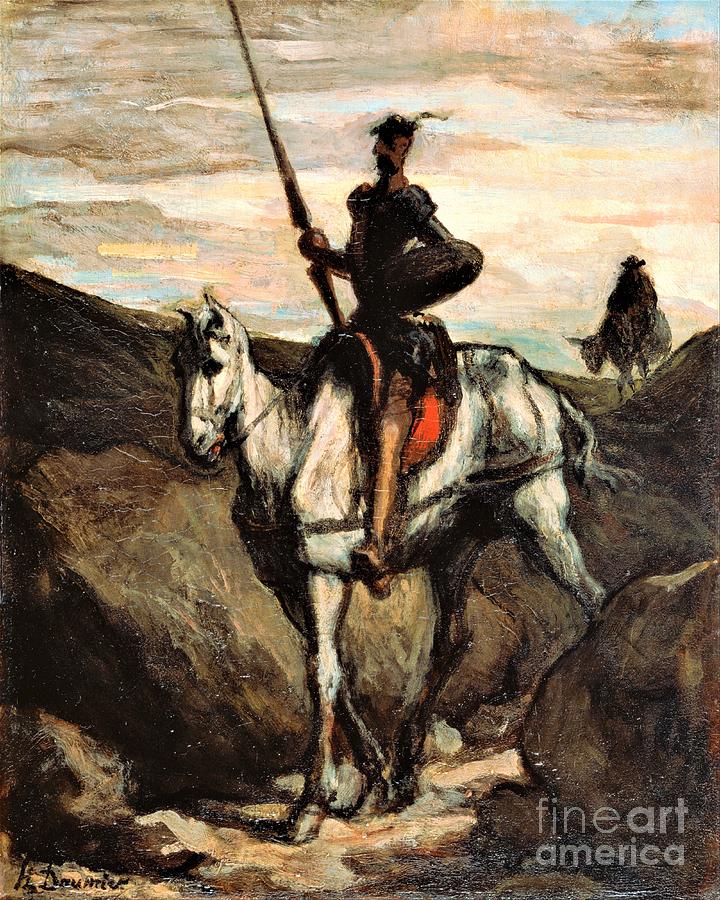
That is why the book written by one Spanish man who called himself Saavedra is so shocking. You don’t know him by that name, obviously. But the book he wrote changed the language of his nation and the world of literature. The title of the book?

Lord Fat-Ass.

That is not a joke. As one of my brothers often says to me, “I am as serious as ear puss.”

See? I told you I was vulgar.

Spain of the 17th Century was a burgeoning economic and political power. The expulsion of the Muslims from the Iberian Peninsula in the late 1400s spurred the conquest and establishment of Spain’s New World colonies. They began providing the country with wealth the world had rarely seen. After centuries of Islamic domination of Spain (and Portugal), the riddance of non-Spanish, non-Catholic persons from the Spanish homeland was seen as an act of patriotic destiny. The unification of two Spanish royal families in the marriage of Ferdinand and Isabella insured that the country would go into the future with a (somewhat) national identity of what it meant to be Spanish.

And that is partly where Saavedra comes in. His book was such a success that it has been called the seminal Spanish work of literature as well as a world-wide best-seller. Modern Spanish is said to spring from this work with the vulgar name. And all of this success happened despite the name. By the way, the English translation of the book provided that language with such expressions as “the pot calling the kettle black,” and several other expressions we take for granted today.

Saavedra fought in Spanish wars, he traveled through much of Europe, he was widely read, and, some scholars have argued, he and his family were “new Christians.” The theory is that hey had been Jews who converted to Christianity during the period of the Spanish Inquisition. As you know, that was a time of religious (and political/racial) intolerance. Anyone who was not Catholic was given several choices, none of which were good options. They could choose to be sent to the Americas (Mexico today has a sizeable Jewish community from that period), they could face imprisonment and possible death, or they could convert. Saavedra’s family chose conversion, it seems, because of their standing in the medical and legal community of the family’s hometown of Cordoba. All of that serves to help us understand that, perhaps, Lord Fat-Ass might be, besides an amazing work of fiction, a not-so-subtle dig at Spain’s culture of intolerance. We have that book today under the original Spanish title, of course.

Don Quixote by Cervantes.

On an English Hero

The Weald is a horizontal slither of land in southern England that, in the Middle Ages, was a hilly, wooded area. The word “weald” is related to our modern word for woods, as you can easily see. 1000 years ago, the Weald sheltered robbers and legends. One of the legends that come from that part of England is the story of William of Cassingham. In fact, some documents of the period refer to him as Willikin of the Weald.

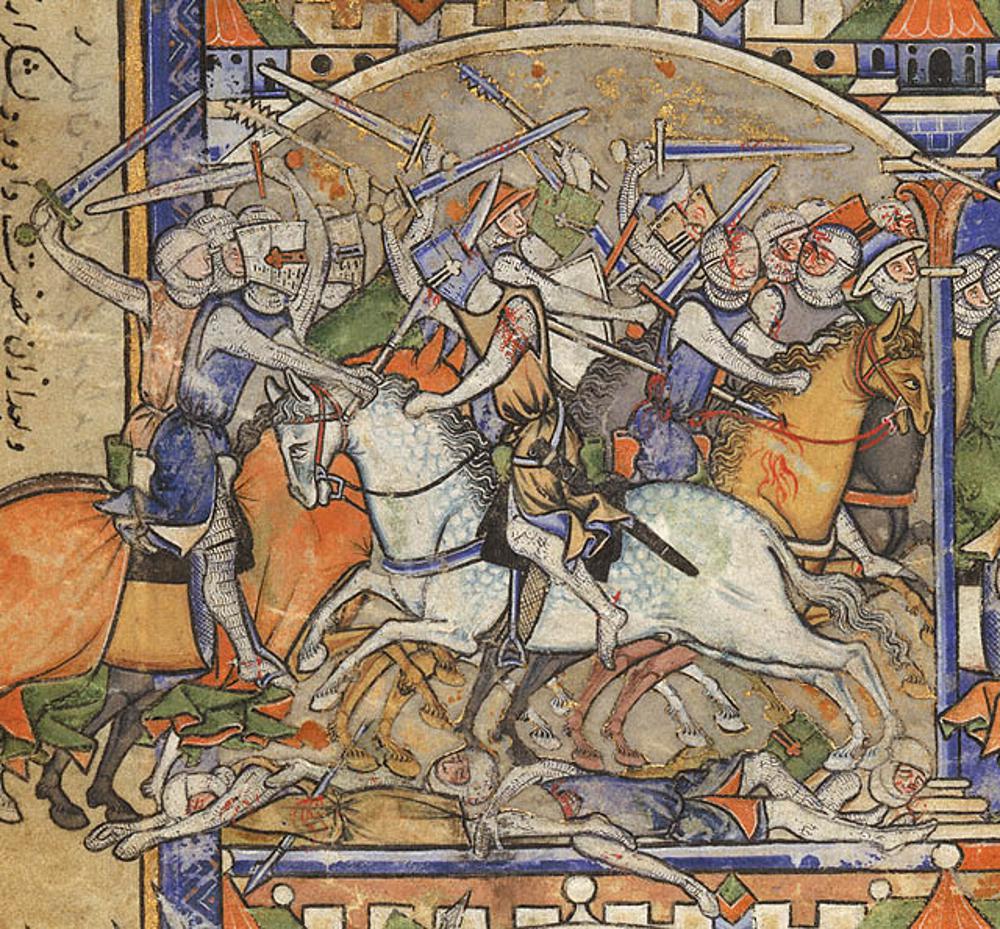
William (let’s go with the more standard name) was actually a landowner from that area. During the 12th and 13th Centuries, England was caught up in wars and pestilence, famines and plagues. Much of society lived hand to mouth. Fear gripped the people by their throats. One of the threats to stability came from France, where princes from there hoped to take England as William the Conqueror had some 200 years before. What William of Cassingham did was save England from some of these incursions by the French.

He was loyal to King John of England and his successor, King Henry III. As a loyal subject, he organized a small group of fighters from the Weald to attack French forces of Prince Louis that had marched on London. These were woodsmen who were skilled huntsmen, men used to going through the Weald stealthily and able to kill swiftly at distance. Using his assembled archers, William was able to strike Louis from afar and immediately retreat silently into the woods, seriously crippling Louis’s army and forcing him to return to France for reinforcements.

When Louis returned to England some time later, he found that his army bases there had been destroyed by William and his men. For his service to the Crown and country, William was granted more land an a pension from the grateful young King Henry. William was proclaimed the Warden of the Weald, and he held his post proudly until his death sometime in the 1250s. He saved the day and got the girl in the end. A later chronicler would call William, “a Worthy man of English blood!”

So, you’ve probably been piecing together the various clues in this story to figure out exactly who this William of Cassingham is. Let’s look at the clues again: Weald (woods). Time of war and uncertainty. Small band of archers who live in and know the woods well. Story ends with our hero winning victory and being granted land and respect.

While we have no true record of who the person behind the legend is, I will suggest to you that this Willikin of the Weald is the model for the legend we know as Robin Hood.

On a Lonely Wife

We don’t know if Agnes married for love or not. Her husband was younger by seven years, and he was definitely a social riser. Since Agnes’s dad, a successful farmer, died and left her with somewhat of a dowry, she had been seen as a catch even if she was a bit older to have never married by age 25. However, the young man had gotten Agnes pregnant, and it seems her family insisted that he make “an honest woman” of her as they said back then. So, there were some incentives for him to make Agnes his wife.

That didn’t mean he would stay in the household. No, he left their Warrickshire home and went to London, he said, to find work so she could live a lifestyle she had grown up with. So, less than a year into a marriage she may or may not have wished, Agnes found herself with a child and no husband at home. Oh, he came for a visit every now and again, and, it seems, he left Agnes pregnant after some of his trips. She had twins, a boy and a girl, a few years after her daughter, Susannah, was born. Still, it was difficult to raise the kids and tend to the household alone; doing it herself was certainly different than having a husband and father around all of the time.

We have a bit of evidence about Agnes’s life in the form of a will from one of her father’s former shepherds. A man named Tom Whittington apparently left Agnes 40 shillings for distribution to the poor of her town. Now, the way that the wording is in this document could also suggest that it was Agnes herself who was the one referred to as being poor, and the man with the connection to her father was merely showing kindness to a woman he had known when she was young by giving her money because the worthless husband was nowhere to be found.

Agnes had to endure the usual pains and tribulations of family life alone most of the time. For example, the boy of the twins died in one of the plague years that came through the English countryside every few decades. On the other hand, she celebrated the marriage of Susanna to a local doctor named Hall; the union produced a granddaughter for Agnes, a bright child named Elizabeth. The girl twin, Judith, married a tavern owner. So, she bore the good and bad of the years largely alone with only infrequent visits from the absent husband.

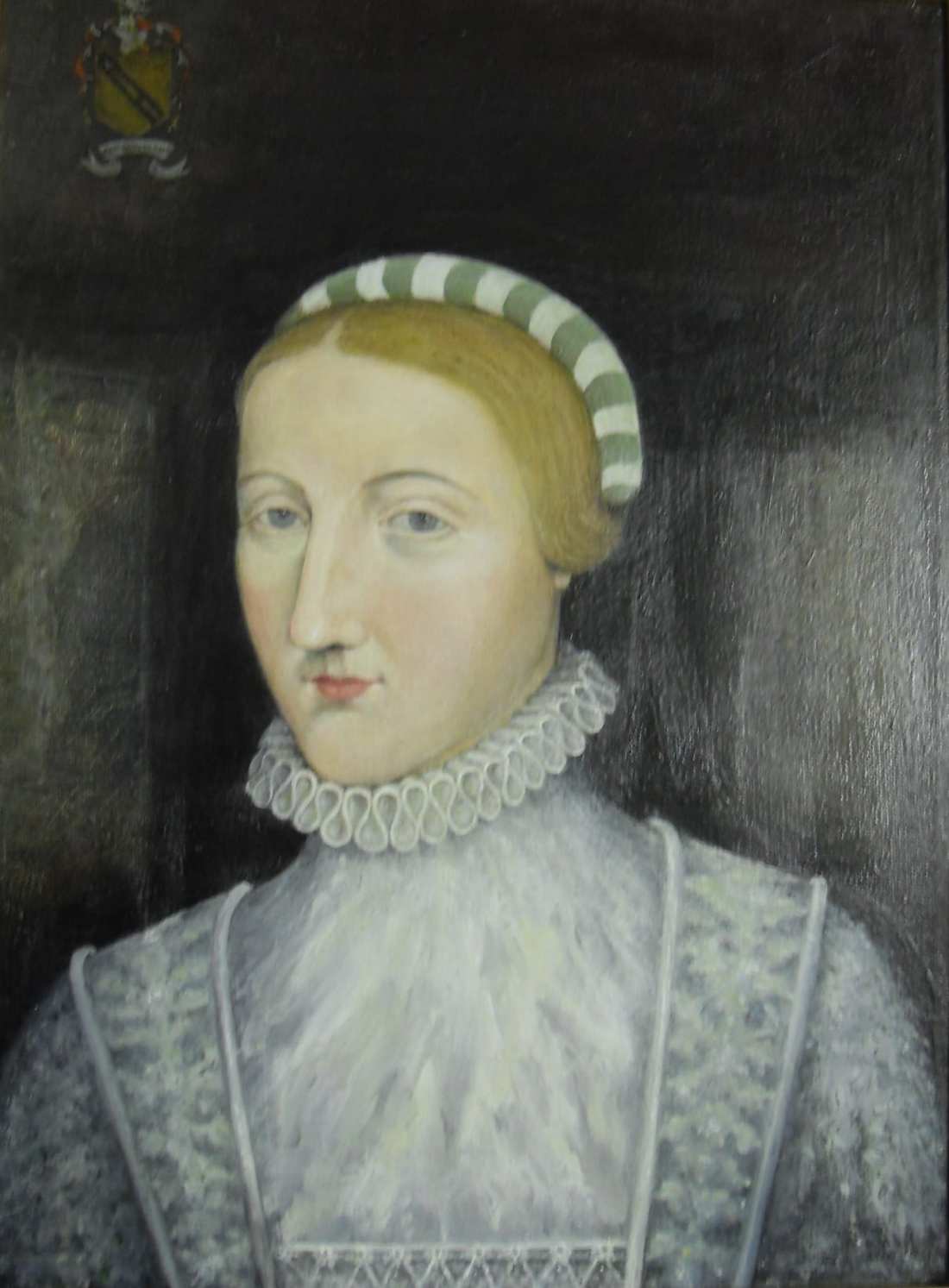
Despite being older than the husband, he died first. In his will, he left her the “second-best bed” while granting most of his possessions to Susannah. He did not even mention Agnes by name. When she did pass, she made the odd request to be buried next to her husband. Oh, and Agnes is only one name the records of the time have for her. The other name listed for her is Anne. Her epitaph, written by her son-in-law, the good Dr. Hall, says,

“Breasts, O mother, milk and life thou didst give. Woe is me—for how great a boon shall I give stones? How much rather would I pray that the good angel should move the stone so that, like Christ’s body, thine image might come forth! But my prayers are unavailing. Come quickly, Christ, that my mother, though shut within this tomb may rise again and reach the stars.”

That lovely epitaph is on a plaque placed under the inscription:

“Here lies Anne, the wife of William Shakespeare.”

On a Painter

Vincenzo loved art. Ask anyone who knew the man. He was a fair painter himself as well. Such was his love for fine art that the Italian moved to Paris to study his chosen craft and to be near some of the world’s greatest art exhibitions. He even got a job at the Louvre Museum in order to surround himself with his beloved passion.

Part of what Vincenzo liked about art was that Italy had such a rich and varied history of the arts for hundreds of years. He took great pride in his nation and felt that art was, in some large part, his birthright. He loved all things Italian. Such was his feeling of patriotism for his nation that he did not even wait to be drafted into the Italian Army during World War I–he was one of the first to enlist. But we’re getting ahead of our story.

In Paris, Vincenzo often tried to track down paintings by Italian painters to, in effect, “rescue” them from the foreign French and return them to his native land. In 1911, he managed to lay his hands on a work by one of the great Italian masters. He felt that all Italian art should be displayed in Italy. Returning this painting to its artistic “homeland” would be an act of national pride for Vincenzo. He lamented that works of art by Italian artists had been taken (“looted,” Vincenzo said) during wars in the past and were now on display in other nations. It wasn’t right, he said.

This particular work that Vincenzo managed to get was certainly worth more than it cost him. In his mind, the work should be hanging in the greatest museums in Italy or taken on display around the country. However, when he brought the work to the attention of a museum director in Florence in 1913, his motives began to be questioned. The reason that his intentions began to be scrutinized was that Vincenzo told the director that he felt owed a reward for bringing the work back to the land of its origin. The director said that if he really was interested in returning art to Italy then he should be doing that for free.

The museum director was nonetheless interested in the work Vincenzo presented him, and he asked to be able to inspect the work in order to authenticate it. Vincenzo agreed, and he presented the work to the Uffizi Gallery in Florence. Sure enough, the director was thrilled to announce that, indeed, the work was by one of the great Renaissance Italian masters. He congratulated Vincenzo on the success of bringing this work home to Italy. He then immediately called the police and had Vincenzo arrested.

You see, the painting that Vincenzo Peruggia presented to the Uffizi director had been stolen two years before.

You know it as the Mona Lisa.

On a Tall Spy

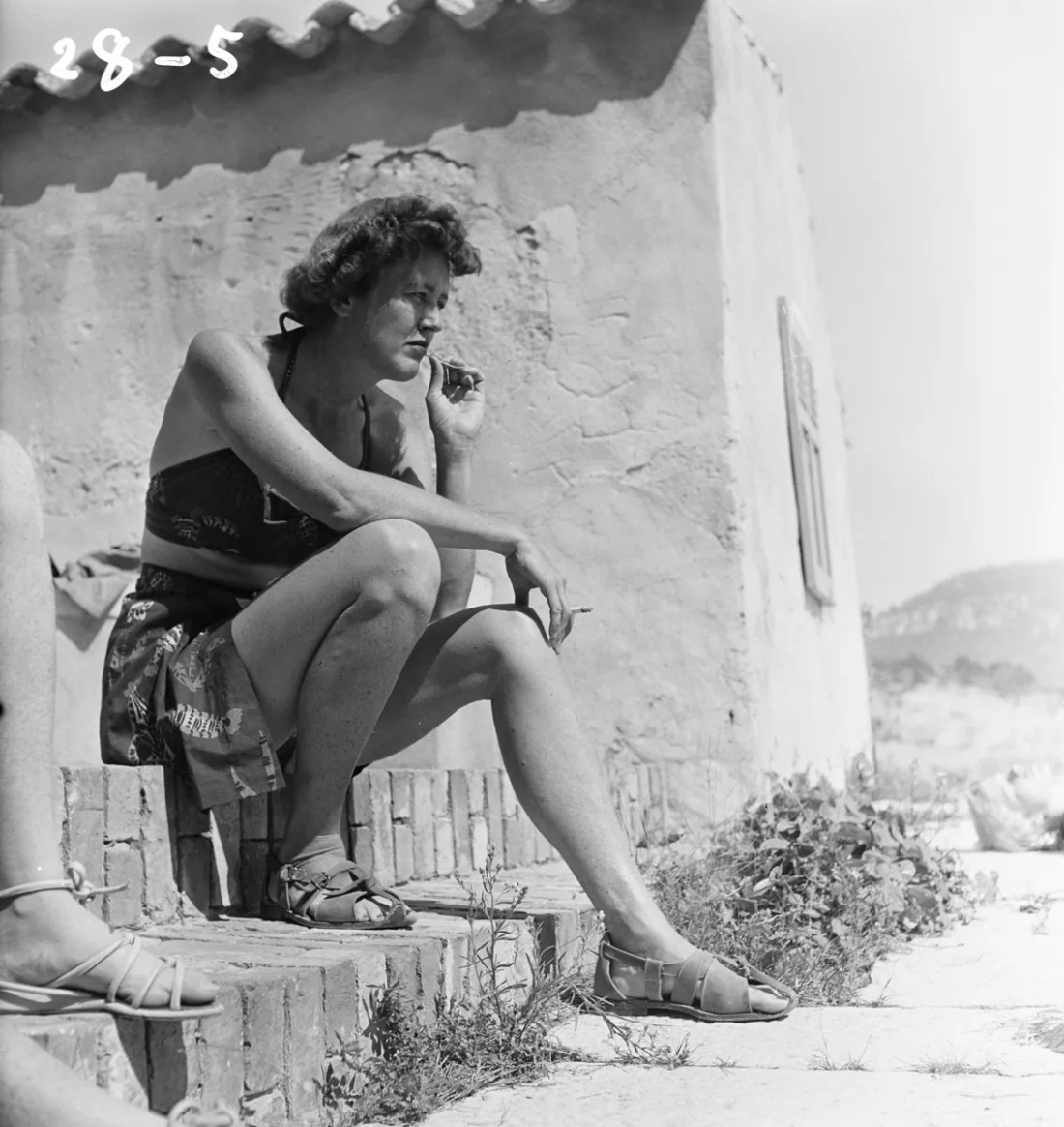
Carolyn was pointlessly tall, she believed. at 6’2″ (1.88m). So was so tall that she was not able to join the Women’s Army Corps (WACs) in World War 2. This denial of service devasted Carolyn, so she sought other ways to help the American war effort. She found it. The Office of Strategic Services (OSS), led by General Bill Donovan, was the pre-cursor to the CIA. Carolyn found acceptance there and began to work directly for the head of the agency as a researcher.

Her family had a background in government, and she had completed a degree in history from Smith College in Massachusetts. Spying was not her first career choice. Carolyn wanted to write, and she hoped to become a magazine writer and a novelist. But she took to the spy game because of her sharp mind and ability to solve problems. Soon, Donovan felt that she was ready for field work, so Carolyn was first assigned to what is now Sri Lanka and served as a handler for several Asian contacts the OSS had in that area. She later was posted to China in a similar capacity.

That was about the time that Donovan brought a problem to her attention. The OSS had an issue with the ordinance it had developed as an anti-submarine tactic. German U-boats had been the bane of naval and supply shipping even before the entry of the US into World War 2. This anti-U-boat ordinance had a major issue with its effectiveness: Curious sharks kept detonating it prematurely. Donovan wondered if something could be developed that would repel the sharks from coming near the ordinance.

Now, Carolyn was no cook by any means. Her family was wealthy enough to have a cook, and she never learned as much as how to boil water while growing up. However, this situation with the sharks intrigued her problem-solving personality. She set up a sort of laboratory in her apartment kitchen and working on creating something that would make the sharks stop blasting themselves (and the ordinance) into oblivion.

Her experiments worked. She concocted a powder that, when sprinkled in the water around ordinance, did indeed repel sharks. A variation of her formula is still in use today by the armed forces of the US. The agency was so impressed with her work that she received a citation recognizing her contribution to the war effort. Her OSS service record is available online for all to see and appreciate.

The other major event that happened to Carolyn during her time in Sri Lanka was that she met and eventually married another OSS agent, a guy named Paul, a man who later worked for the US Foreign Service in France. It was in France after the war that Carolyn made a return to the kitchen, this time to work creating not something repellent but rather something delicious.

You know her as Julia Carolyn Child.