On Old Friends

Mac called his pal, John, one afternoon.

“Whadder ya up to?”

John laughed. “Just baking some bread. You?”

“Same!” Mac answered.

The pair had known each other almost their entire lives. They grew up only streets apart in the late 1940s and early 1950s. For a few short years, the two had even been business partners.

Now, in their 40s, the two middle aged men had taken up baking at the same time. They each felt it was both a creative and, at the same time, relaxing thing to do. Interestingly, the two took on the hobby independently of each other–there was no discussion about agreeing to do so. But that’s the level of kinship the two men had felt over the years. They were the type of chums that could finish each other sentences and thoughts. A rare thing, at least in this day and age.

And here they were, on the phone, two middle aged men, comparing bread baking techniques as if they were housewives. This particular conversation was about how long each of them allowed their doughs to rest and rise and where they did so. John said he liked to leave his in a warm cupboard. Mac countered that he left his out, covered with a warm cloth, to rise overnight. And, so, the conversation ran like that–light, breezy, and with the ease to two friends who had, according to one of them, “lived in each other’s back pocket” for most of their lives.

Oh, as all relationships do, this one had its moments of disagreements and even fights. Never physical ones, but verbal fights that sometimes lasted months where the two wouldn’t speak. But the things that they had in common were stronger than those that tried to tear them apart. “It was always nice to get back to the relationship we’d had as kids,” of one them said.

John said he had to go–“The missus is calling,” he said, and Mac bid his friend farewell. “Call me later and tell me how the bread turned out,” he said. John promised he would.

It was the last time the friends would talk.

A few days later, Mark David Chapman shot John Lennon, and Paul McCartney would lose his closest friend.
On a Zoological Exhibit

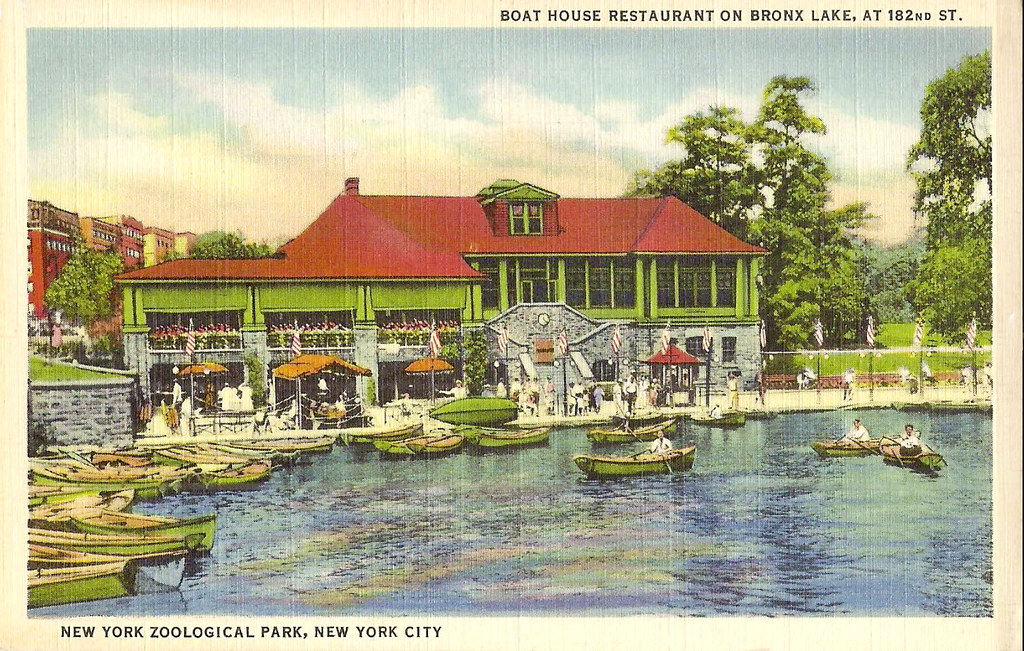
Today, for many people, the ethical or moral justification for zoos is tenuous at best. While it is true that zoological collections can and do serve to preserve endangered species (and have seen some success at re-establishing such species in the wild), it is generally accepted by many that zoos and even aquariums can often do more harm than good to and for the animals in their care.

Take the case of one exhibit in New York in 1906. A man named Madison Grant (you know he’s rich because he has a last name as a first name), a person who served as the head of the New York Zoological Society, pressured the New York Zoo (known as the Bronx Zoo today) to create an exhibit that featured several species of primates. The highlights of the exhibit were the chimpanzees and an orangutan named Dohong. Grant also had zoo director William Hornaday add a primate from the Congo called Oto Benga and asked Hornaday to label the exhibit as an example of evolutionary science since several types of primates were shown in it.

Well, as you can imagine, the ministers of several churches in the New York area flew into paroxysms of indignation over the exhibit. How dare such a display be shown to the public, they screamed. How could the city expose children to the terrible lesson the zoo seemed to be teaching? They demanded that the zoo close the exhibit immediately and staged a protest against it.

On the other hand, the public flocked to the zoo. The old expression that any publicity is good publicity came into play here, perhaps. People who might not have heard about this “evolution exhibit” were made aware of it due to the ministers’ protest against it. Lines formed around the block to get tickets. Grant was thrilled by the public’s reception of it, and he saw the huge ticket sales as validation and vindication that his vision was right.

However, the exhibit closed soon after it opened. It seems that Ota Benga was less than cooperative. He would throw things at the onlookers and even made threatening motions with sticks at the viewers of the exhibit. Hornaday tried to give Ota Benga some leeway by letting him out of his cage during parts of the day where he docilly followed the zookeeper around the park grounds. But the fear that he might hurt some zoo patron overrode the desire for ticket sales, and the zoo decided to end the display.

Now, you should know that there were several other “evolution” type displays in the United States and around western Europe during this time. They, too, showed the so-called evolution of apes by having several “specimens” of lesser and greater apes on display. Like the New York exhibit, they, too, often featured natives from the Congo.

And, like Ota Benga, these Congolese were the feature exhibits in human zoos.

On a Noble Inventor

Immanuel still holds several patents for his inventions despite the fact that he died about 150 years ago. The Swede took his rather large family and moved to St. Petersburg Russia in the late 1830s and found success there working on ideas that still comprise parts of various modern industries. For example, Immanuel created the first rotary lathe that made possible the creation of modern plywood.

In addition to his inventions, Immanuel also created companies that made explosives and various bombs and mines that caught the keen interest of then Czar Nicholas I of Russia. The Czar, engaged in a war with Britain in the Crimea, made Immanuel a wealthy man for a time. But Nicholas died in 1855, and the incoming Czar, Alexander II, ended the Crimean War and severely cut the nation’s military spending. Immanuel’s company went from boom to bust in a very short time. By 1862, the company was in receivership, and the family returned to Sweden after over two decades abroad.

It wasn’t the first time Immanuel had faced economic ruin. That circumstance faced them before when they had gone to Russia in the first place. Now, coming back to Sweden, it felt to Immanuel and his wife that they were right back where they had been, as if the past twenty plus years had been in vain. Add to their increasing despair the fact that one of Immanuel’s eight children, his son, Emil, had died in an explosion at the family factory. It seems that the company had been experimenting with nitroglycerin. Someone grew careless in handling the dangerous material, and Emil lost his life.

When Immanuel died a decade later, the rest of his family rightly mourned him. Here was a man who tried his best to do what he needed to do to take care of and provide for his wife and children. That’s the noble way he wished to be remembered–not as someone who made (and lost) a fortune in the arms business. That mentality of being keenly aware of what your legacy would be–how people would remember you after you’re gone–would be passed down to his children and his children’s children.

It certainly made a large impact on one of Immanuel’s son, a man named Alfred. Alfred would go on to create over 350 patents for inventions, including the creation of dynamite out of nitroglycerin, thus safely handling the very substance that took the life of his brother. And, like his father, Alfred did not want to be know for his inventions regarding warfare and destruction. He wanted his legacy to be a legacy of the celebration of the achievements of mankind, including the making of peace.

That’s why Alfred Nobel used his fortune to create the Nobel Prize.

On a Mysterious Phone Call

John Hurt sat in his living room and watched the remarkable television coverage. It seemed that President John F. Kennedy had been killed by an assassin in Dallas, Texas, earlier that day. As the evening wore on, his local Raleigh, North Carolina television station did not have its usual evening broadcast; they pre-empted all programming to show the latest news on the shooting.

It seemed that a former US Marine, a man named Oswald, had shot the president and then killed a police officer as well. This Oswald fellow was in custody, and the body of the president was being taken back to Washington, D.C. The news kept saying that Oswald was the only shooter, that early reports said he had tried to go the Soviet Union and live there and that he had communist sympathies. John, along with the nation, watched all the incredible pictures and updates. John had been in the military himself during World War II, and news such as this did not upset him as much as it did most people who were not used to war. On the other hand, John would later describe himself as “a great Kennedyphile” and someone who appreciated the policies of the administration. Besides, Kennedy was a fellow war vet.

So, he sat in his living room, poured himself a short glass of Scotch, continued to watch the updates on the assassination, and smoked. As an employee of the state of North Carolina in the insurance investigation department, John had the reputation of being tough but fair. That went back, some said, to his time in the service during the war. However, almost paralyzing arthritis had rendered John disabled, and he was on the dole. John had earned a law degree from the University of Virginia, but he never took the bar and never practiced law.

He and his wife, Billie, lived simply but comfortably in Raleigh. John was a short man (he stood 5’4″ tall) and was a chain smoker. He watched the news that evening, he ran through cigarette after cigarette, and Billie came in and out of the living room, telling John to come to bed, that they would catch up with all the news in the morning. There was nothing they could do, Billie said. It was a tragedy, Billie said. Come to bed, Billie said. John had a history of not sleeping. In fact, he had a history of erratic behavior, something that had caused some trouble in his life since the war. He had requested psychiatric treatment at Duke University’s mental health hospital, but that request was denied.

After two days of wall-to-wall coverage of the shooting, John was watching the news live when he and the rest of the nation saw Jack Ruby shoot Oswald in the parking garage of the Dallas jail. He moved excitedly to the edge of his chair. Billie came in wiping her hands on her apron. “I can’t believe it!” John kept saying. Even a war veteran like John was stunned by witnessing a shooting live on TV.

Of course, John’s war service wasn’t really at the front lines, so he didn’t really see that much of the war. No, John served his country in military intelligence. He worked as a valuable asset in both Europe and Asia. Records are sketchy, so we aren’t quite sure exactly the depths of John’s activities in the intelligence community during the war.

What we do know is that the night after John F. Kennedy was shot, Lee Harvey Oswald made two phone calls from the Dallas jail.

One was to his lawyer.

One was to John Hurt.

On a Truck Driver

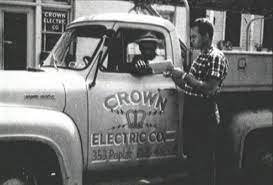
Jim needed a delivery guy.

He interviewed a few people, if you call asking people if they could drive a delivery truck an interview. In any case, Jim was almost driven to despair–no pun intended. Most of the young men Jim spoke with could barely keep their mouths closed long enough so that the flies that swarmed in Memphis that summer wouldn’t make homes inside. He was getting so desperate that he considered hiring his wife, Gladys, to make the deliveries.

It’s not that the job was difficult. This wasn’t a large delivery truck, after all. The job called for the driver to simply run electric supplies like spools of wire, light switches and fixtures, and outlets to building sites from the Crown Electric Company warehouse on Dunlap Street. Easy peasy, right? Well, you’d think so.

Finally, an incredibly polite, almost shy young man showed up brandishing the want ad from the Memphis Commercial Appeal newspaper which he had carefully torn out. Jim took the young man to the truck. “Think you can show up on time?” Jim asked. “Yessir,” the young man answered. “Can I trust you?” Jim asked. This made the young man smile. “Well, if you ever have reason to not trust me, Mr. Tripler, my Momma would have my hide,” he answered. “Whereabouts you from?” Jim asked. “Mississippi. Sir,” the fellow said.

Jim asked him why he wanted the job. The young man said that he hoped to one day become an electrician, and that if he started at least working for an electric supply company, that he might just get a foot in the door of that profession. Jim was impressed with the young man’s gumption.

“The job’s yours,” Jim said, and he handed the young man the truck keys. “There’s a delivery that’s needed out on Union Avenue. Know where that is?” “Yessir,” came the polite answer, again. The young man began to get in the truck, but he hesitated. “What’s wrong?” Jim asked. “Well, the ad says the job pays $1.25 an hour. Is that right?” Jim grinned. “Now, you said I could trust you, and you gotta trust me,” Jim said. “After all, I got a Momma that I have to answer to as well,” he added with a grin.

And so, Jim found himself a delivery guy. The boss and the employee soon became friends. Jim learned that the fellow’s mother shared the same name as his wife. Years later, as Jim would re-tell the story, he would always emphasize how polite the young man was and how close he was to his mother.

After some time on the job, the young man had an opportunity to improve himself by taking a job in the entertainment industry. Jim was sorry to lose his young friend and delivery driver, but he was happy for the polite young man from Mississippi. He never forgot him.

And Elvis Presley never forgot Jim Tripler, either.

On a Christmas Tree

Al and Vicky loved Christmas. The kids, the presents, the traditions. Back in the 1840s, when the couple’s family was starting, they embraced the German tradition of putting up a tree as part of the celebration of the holiday time. That seems innocuous enough, but the pair lived in Britain, and German traditions weren’t looked on kindly at that time. People around them started to talk. Some even began to question their loyalty to the country.

Why did the Germans have this tradition? History is murky on this point. You’ll hear many stories on as to why. One obvious reason is that the evergreen tree represented eternal life–a green tree in winter when all other trees had no green. Another theory points to German’s pre-Christian past and the erection of a tree to honor the pagan gods of early Germanic tribes. There are several other hypotheses. In the end, we have the tradition from Germany–and that includes the song, “Oh, Christmas Tree,” which, as you know is “O, Tannenbaum” in German.

Putting up a tree in Britain actually began under the reign of King George III. George and his wife were both German. They first put up a tree in the late 1790s for their family. As you can imagine, when a monarch adopts a tradition from a rival nation, the public would understandably react negatively. George was already under suspicion for being pro-German. One of the nicknames detractors called him was, after all, German George.

So, over 50 years later, this British couple decided to do the same thing King George had done before. They set up a tree on a table, and they put gifts on and under it. Candles lit the tree. The children loved the tree, and that was enough for Al and Vicky to feel good about their choice to put up the tree despite what people around them were saying.

What they didn’t know was that so many people, rather than seeing their embrace of the German practice as being anti-British and anti-patriotic, saw it instead as being charming and something that celebrated family and love. It was the Romantic Period in Britain, after all, and such middle-class sentiments had developed in the period between that time and the years of the Georgian Era.

In fact, what Al and Vicky did sparked a nation-wide embrace of putting up Christmas trees. Within a few years, almost every family was putting up a tree at Christmas. Eventually, the economy allowed evergreens from Scandinavian nations to be imported to Britain for mass consumption by an eager public.

It didn’t matter that Al himself was German. It didn’t matter that the couple were held to a much higher standard than most British couples were. It didn’t matter that the tradition had not been practiced widely in Britian.

All we remember about this situation is that Al and Vicky–Prince Albert and Queen Victoria–caused us all to have a tree this Christmas.

On a Store Promotion

Robert May worked for the Montgomery Ward company as an ad man who wrote promotional material for the chain. For those of you who don’t know, “Monkey Ward” was a chain of department stores somewhat akin to Target today. Anyway, the store brass asked May to produce a story they could pass out to customers, something that would be light and entertaining and that would give the clientele a positive feeling about the company. If May could somehow tie the story into one of the holiday seasons–so much the better.

So, May began to brainstorm ideas. Easter had an appeal, and he toyed with that for a bit, but May knew that if he wanted to really tap into holiday time, his story would have to something to do with Christmas. It was the late 1930s, and May and the rest of the United States were only then beginning to emerge from the economic bombshell that was the Great Depression. Sales were increasing nationwide, people were starting to work again, and promotional items like May was asked to create were becoming more and more popular.

Well, when Robert May submitted his first story idea, his boss hated it. “Can’t you think of something better?” the boss asked. May went home that day severely depressed. He liked his story, and, when he read it to his wife, she concurred. It was a child’s tale about an animal who had been an outcast. You see, in many ways, that was Robert May’s story as well.

Born to a Jewish family on Long Island, May had first-hand experience on what it was like to be different. He managed to survive high school and win a place at Dartmouth College. His major, perhaps surprisingly, was psychology. He grew particularly interested in the psychological theories of Alfred Adler, a man who had proposed that much of human motivation stemmed from the strong desire to overcome perceived inferiority.

May had achieved success working for various department stores after his graduation from Dartmouth. He worked for Rich’s in Atlanta, Gimbel’s and Macy’s in New York City, and, finally, he and his wife moved to Chicago where he worked for Montgomery Ward. However, in almost every place he had worked, May encountered some form of prejudice because of his background, even though he was not a particularly observant practitioner of Judaism.

Adding to May’s life situation was that, in 1939, his wife, Evelyn, was diagnosed with cancer. Life had not turned out the way he had hoped. He later said that he found himself in his mid-30s, heavily in debt due to the mounting hospital bills for Evelyn, and, instead of writing the Great American Novel, he was instead writing advertising for cheap clothing and now, a promotional pamphlet for the holidays.

Turns out that May’s boss was wrong. The story was a huge success. Almost three million copies were handed out to Ward customers, and the stores couldn’t keep the little booklet in stock. World War 2 paper rationing slowed the distribution of the story somewhat, but, after the war, the holiday tale became even more popular. May even got his brother-in-law, a singer/songwriter named Johnny Marks, to pen a version of the story for a song. A huge singing and motion picture star, Gene Autry, “The Singing Cowboy,” cut the record, and it, too, became a huge success. The story has taken on a life of its own.

Couldn’t have happened to a better guy than Robert May, everyone said. If anyone deserved the success after so much adversity in his life, it was he.

Yes, and we can reasonably say that Robert May’s creation, Rudolph the Red Nosed Reindeer, would heartily agree.

On a Trip to Hawai’i

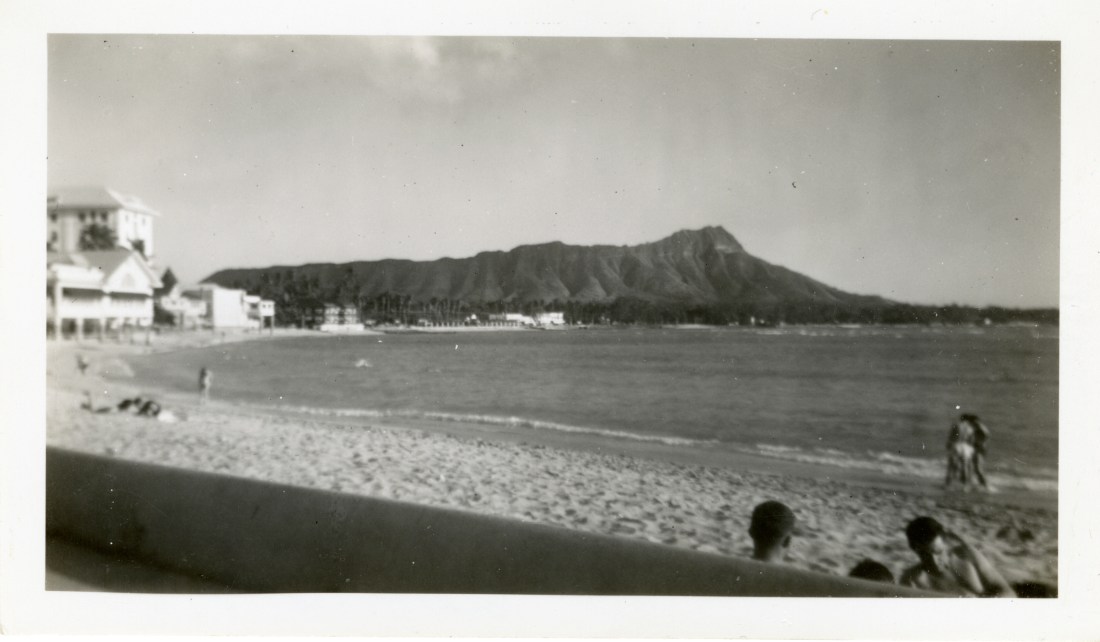
Hawai’i is one of the most beautiful places in the United States, and people from all over the world go there to enjoy the beauty of the beaches, forests, and the hospitality of the people. Asian tourists visit the islands routinely and have for decades. One such tourist from Japan was named Takeo.

Takeo’s desire to go to Hawai’i was so strong that he stayed several months. He arrived in Hawai’i in March of 1941, and he rented an apartment overlooking the harbor in Honolulu. Using that place as a base, Takeo wandered all over the island of Oahu, learning about its beaches and hills, and he took copious notes so he could remember all that he saw. Like many tourists, he enjoyed taking tours of the island by air. The view from above, he said, gave him a wonderful perspective on all that lay below.

Takeo enjoyed swimming in the harbor. He snorkeled there often, and he sometimes took the ferries and boats that chugged around the island. He mingled with the populace, shopped in the markets, and listed to their stories about life there. Over the course of nine months, Takeo learned all he could about the place. You could easily say that he was obsessed.

Today, almost 1/5th of the population of the state is of Japanese descent. When Takeo was there, the place housed about 160,000 people from Japan. That helped Takeo blend in better and made him feel much less conspicuous, much less of a “foreigner” in what was still at that time an American territory. When the United States entered World War II, the overwhelming majority of those Japanese people residing in Hawai’i chose loyalty to the United States over their native land. Fear of “the other” and racism led the United States government to implement a policy of internment for many Japanese-Americans on the mainland.

Takeo, however, had other ideas. You see, the reason he was so interested in Hawai’i was not that he was a casual but deeply attached tourist. No, rather, he worked for the Japanese government as a gatherer of intelligence. He was the chief Japanese intelligence agent in the American territory.

In fact, Takeo Yoshikawa’s copious notes and research that he radioed back to his home country over the nine months he lived in Honolulu helped Japan carry out the surprise attack on Pearl Harbor on December 7, 1941.

On a Heavyweight Champ

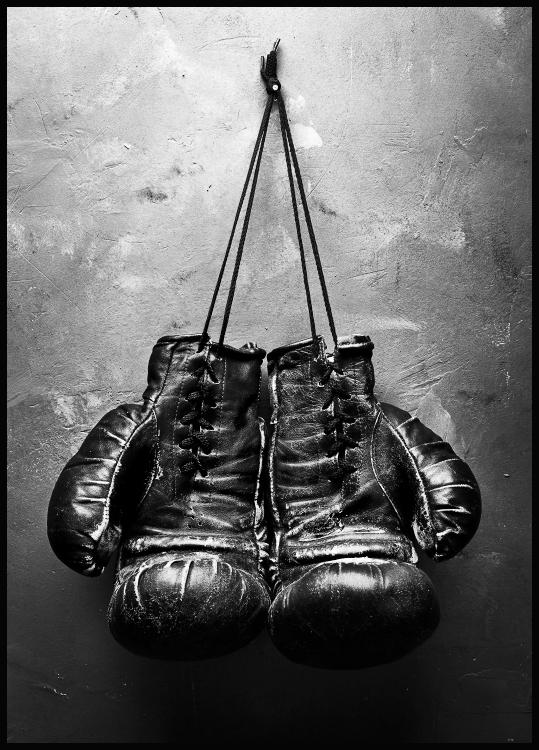
You’ve seen the old films of his fights, or, if you haven’t, you can find scads of them on YouTube or other online video platforms. The muscular, black southerner, the undisputed heavyweight champion, who spoke out so eloquently and openly against racial discrimination in the United States, was an in-your-face athlete became known world-wide as someone who combined politics and race relations with popular sport.

The Champ was somewhat of an enigma. To be involved in such a serious sport, he joked in and out of the ring. He taunted his opponents as well as out-classed them in fights. He would smile as he pummeled the poor saps who faced him, pummeled them into submission. Throughout almost 100 fights he took part in during his career, the Champ angered those white segregationists/racists every time he defeated another white fighter. The fact that he smiled when he won his fights rubbed salt into the wounds of the racists. They felt that if this black man could beat white fighters, then perhaps their ideas of white racial superiority were wrong.

His record included over 1/3 of his fights ending with him knocking out the opponent. He held the heavyweight crown across seven years–an almost unheard of time length in the sport. This dominance as well as his outspokenness and his in-your-face attitude combined with the winning personality he exhibited made him, as one historian has said, almost criminally black in the eyes of racist whites.

And it didn’t endear him to many Americans that he was so outspoken against the prosecution of what he saw as an unjust war overseas. The way the Champ saw it, he had nothing worth fighting about with those the US government–a government that denied him civil rights by the way–called the enemies of freedom. So, he sat the war out. That made people question his patriotism.

Yet, to many young black people, the Champ gave voice to their frustrations with the American system and, at the same time, voiced their pride in the accomplishments of African-Americans during last century.

In fact such was his influence that, in later years, one of his greatest fans, Muhammad Ali, called Jack Johnson, who was champ from 1908-1915, one of his life’s major inspirations.

On a Name Change

What’s in a name?

My dad’s dad came from Greece to the United States in 1907. His Greek name was Papapistolos, a name so long it would need two mailboxes so all the letters could be seen by the postman. The family lore says that, since my grandfather wanted to work in the steel factories around Pittsburgh, PA, he chose the last name Millson as his “American” name. After all, he wished to be a “son of the mill.” I like that story, even if it’s probably apocryphal.

Families choose to change their names for many reasons. Sometimes, the act represents a new start as in the case of my grandfather. Sometimes, a name can be a tribute to the past or to a particular person or tradition. I’m thinking of some celebrities lately whose families chose more “American” sounding names and have Jewish heritage and who are now choosing to return to a name that reflects that heritage more. Sometimes, names are changed for political reasons.

During World War I, anti-German sentiment in the United States was so high (despite German being the second-largest ethnic group in the US) that many Americans with German-sounding names changed them in order to not have their loyalties to the US questioned at all.

George was one of those on the allied side who felt that his German-sounding last name might cause some to wonder where his loyalties really were. Mary, his wife, while not born in Germany, also had a German last name because both of her parents came from there. The couple discussed the issue at length. Their family was large, and whatever choice they made would have far-reaching impact on generations to come. Yet, anti-German feeling was so strong that there had been news reports of street violence against people who were discovered with names like Schultz or Mueller or Baum. Such stories frightened both George and Mary.

The couple decided to take the step and make the change. They weren’t sure how to go about it. They knew it would require much paperwork and legwork to accomplish, but they were willing to put in the effort. The next thing was for George and Mary to decide what their new family name would be. One man who worked with George suggested that they take the name of a famous nearby building. It sounded distinctly English, and no one could possibly mistake it for anything but. George ran the idea Mary, and she whole-heartedly agreed.

So, on July 17, 1917, King George V and Queen Mary abandoned the last name Saxe-Coberg-Gotha and chose instead the last name Windsor.