On an International Soccer Match

The 2022 FIFA World Cup soccer (football for the rest of the world besides the US) tournament in Qatar has been the source of controversy for several reasons. Staging such an international extravaganza in the middle of a war in Ukraine, with Covid-19 still being a major health crisis, and with charges of bribery and malfeasance on the part of FIFA as well as the abuse of foreign workers by Qatar…well, you get the idea.

1914 was a similar time to hold an international soccer match. The turmoil in the world at that time was palpable. Yet, England and Germany, two rival nations, faced off in a friendly match outside of any tournament. In fact, it wasn’t only one friendly, but, rather, a series of games played across one wonderful and improbable day. The event was so historic that the British supermarket chain, Sainsbury’s, later made a short film about that day. The story of how all that came about is still a bit murky, however.

One major obstacle to overcome was a basic lack of trust. The two nations had no reason to believe that the other one would honor the agreement to play, even. Such was the fear each nation had of the other at that time. Officials from both countries even tried to stop the games, but it was the players themselves on both sides who insisted that the series should be played. There was no stopping them, apparently. These men wanted to play the games no matter what the higher-ups said.

And played they were.

One interesting aspect of these particular matches was that the participants were all amateurs. FIFA, which had been created a decade earlier, had sanctioned matches between England and Germany, and, indeed, the national teams from the two countries had met on the pitch four times in the previous six years in FIFA-sanctioned games. England had won 3 of them, and one of them ended in a draw. However, these games were neither FIFA-approved nor played by the nations’ national squads. Besides, the games had no referees and no real goals.

You see, it was Christmas Eve, in France, in that first December of World War I. And along a 20-mile long stretch of no-man’s land between the English and German trenches, soldiers from both sides came out of their foxholes and lines and met in the middle of all that death to play a kid’s game during what has since been called The Christmas Truce.

May there be peace on Earth.

On a Christmas Tradition

One of the favorite theses I read about in studying for my history degree centered around the idea that the modern world was, by and large, created from the period 1820-1850. Those thirty years saw the creation of steam travel (trains), instant communication (telegraph), and the application of machines to industry (engines in factories). Arguably, most “inventions” since then have only been improvements on those original concepts.

The same can be true about many of our modern traditions and practices in society. A stock reply to almost any question regarding the origins of traditions today is, “Oh, the Victorians came up with that,” and this is mostly true. We have already looked at the idea of the Christmas tree (from Queen Victoria herself, actually), and we can add such things to the Victorians’ credit as stockings being hung and carols being sung.

Henry Cole is one such Victorian who had an impact on what we do as a holiday tradition today. Cole’s career was largely as an upper level British government functionary; he worked in records, worked on post office reform (some people give him credit for the first postage stamp, for example), and, because of his interest in arts, worked with various exhibitions and art displays over the years. He was a major planner and proponent of The Great Exhibition held in London in 1851. Cole even managed to write a well-received book on design and even invented/designed a teapot that was mass produced by an English pottery firm.

All in all, Henry Cole was a prototypical Victorian. His interest in combining art and industry and public admin demonstrates the Victorian adage that the modern person should not pigeon-hole, that interests–even as disparate as art and science–should complement and not compete with each other. His ability to administer projects and marshal disparate factions into one focus made him a favorite of the Queen’s Consort, Prince Albert. “If you want steam,” Albert reportedly said once, making a joke on the man’s name while recognizing his ability, “then you need to get Cole.”

We remember Cole these days mostly for his collaboration with an artist named John Callcott Horsley (With a name like that–you must be a Victorian artist, right?). In 1843, Cole commissioned Horsley to draw/paint a festive holiday scene and include a greeting. The image Horsley produced caused some controversy (say that word like a Brit would with the accent on the second syllable) because it depicted a young child drinking wine (see the image above). No matter! It’s the thought that counts, isn’t it? Cole had the image reproduced on card stock and sent it to various friends and family members that December. And while others claim that some people sent holiday greetings earlier than this, it was Cole’s sending these by post that year that began a yearly holiday tradition.

It was the first Christmas card.

On a Real Grinch

Ollie hated Christmas. Well, to be fair, Ollie hated any religious celebration outside of Sunday services. In fact, there was quite a lot that Ollie hated.

He worked hard to make sure laws were passed in his country to insure that not only Christmas, but also Easter and other “saint” days were not observed by the Christian church. And Ollie succeeded.

This was a guy who believed in the dictum, “No more fun of any kind.” Besides his war on Christmas, Ollie worked to outlaw such things as theaters (dens of iniquity, he said), bars (do we need to explain why?), and sports (if you have time for leisure, you have time for work). Even swearing could earn you a lashing in the public square.

It wasn’t enough that he believed Christmas should be ignored; he also initiated the day as a day of fasting in repentance for the previous years of what he perceived as gluttony on a feast day. We have to remember that most poor people in towns didn’t eat meat daily, and that meat meals were sometimes had only on “feast” days–like Christmas. To Ollie, this was an unneeded luxury for people. So, he said that fasts should be observed rather than feasts on December 25th.

You might wonder about Ollie’s justification for this concept, and I’m here to help you with that wondering. Ollie pointed out–rightfully–that the Bible doesn’t actually state when Jesus was born. There is no date stated in the Gospels. The date of December 25th is simply a tradition. Also, the Bible never mandated that the date be observed even if we did know what date Jesus was born. Besides, Ollie, said, Christmas is Catholic, and, if he was anything, he was vehemently anti-Catholic. He was anti-anything that didn’t agree with his incredibly narrow interpretation of God.

Now, to be fair, people still celebrated Christmas–they simply did it much more quietly and secretly. The holiday proved simply too popular to stamp out simply by dictate. And you will find people who said that Ollie had nothing to do with the ban on Christmas but, rather, he merely didn’t stop those who wanted such a ban.

Don’t listen to those people. Nothing happened without his approval while he held power.

And anyone who knew him knew that he was sour, dour, and almost never smiled. Ollie was the original Grinch who Stole Christmas. The only thing he wasn’t was green.

You know him, of course, as Oliver Cromwell.

On a Parasite

Why would you purposefully bring a parasite into your home?

Yet, many of us do so, every year. This is a parasite that infests trees where bird droppings have deposited the seeds of the parasites. The invasive species then saps water and nutrients from the tree it leeches from. Apparently, it gets its name from a combination of two Anglo-Saxon words for “dung” and “stick.”

Yuck.

To be fair, the Ancient Greeks and Romans used the parasite as medicine. They believed it could be used as a treatment for everything from epilepsy to possession to dealing with menstrual cramps. Yet, even they recognized that they were dealing with a parasite.

And, for some reason, many of us in the modern world have adopted this as a part of our lives, at least for a few weeks out of the year. Well, the ancient Celtic tribes did it first, it seems. They get the credit in some circles for being the ones who began the tradition to bring the parasite into their homes in the winter. The fact that it was thriving when the trees it was mooching off of had lost their leaves made the Celts believe that this thing had magical, special, life-giving properties that they came to admire and covet. The myth sprang up that it brought luck to those homes into which it was brought, and some believed that it had the power to ward off evil spirits.

While some Christians felt it was wrong to include a “pagan” Celtic ritual in their homes, it seems that, at least in northern and western Europe, the tradition continued into the Christian era. It was in the Georgian Era in England when a song about the parasite popularized and added to the mystique behind the practice of bringing it into homes during the winter. In fact, many songs refer to this parasite in a positive way–songs that you sing to this day. You see, the song from the 1780s said that, along with the other positive aspects (the magic, the life-affirming element, the luck, the anti-evil spirit thing) of bringing it into a home, there was one more thing that could insure luck to someone.

That was if you would kiss someone while standing under the parasite. And, for the past 250 years, we have followed this tradition of kissing at Christmas.

You know this parasite as mistletoe.

On a Miserable Miser

John Elwes was said to have been so cheap and miserly that he lamented the birds who took hay and straw from his animal stalls to build their nest, that there was nothing he could do to stop them. Another story about Elwes is from a relative who stayed in his large house for a time being awakened one night in bed by rain hitting him in the face from a hole in the ceiling that Elwes refused to spend money to fix. When asked about the hole the next morning, the host remarked that he often slept in that room and actually found the rain in the face quite refreshing.

Man, that’s cheap.

And it wasn’t that he was hurting financially.

In fact, Elwes had been the recipient of not one but rather two large inheritances. He also had lived a fairly interesting life. Part of his education had come from Geneva, Switzerland, where he had become one of Europe’s premier horsemen. It was also during his educational years that Elwes had been introduced to the famous philosopher, Voltaire.

But miserliness ran in the family, apparently. One of his inheritances came from an uncle who gave Elwes a run for his money when it came to being a skinflint. And the approximately £8,000,000 he received from his parents was handed down to him, in part, because his mother’s health suffered severely and she passed away when she refused to spend money on enough food to eat.

Elwes did manage to get elected to Parliament for twelve years, but he retired when he realized that it was costing him money to travel to London so much on parliamentary business. In later years, his reputation for being cheap was cemented by tales spun by his renters in his large real estate holdings who testified that he often forbade fires in his houses in the winters for fear that damage would be done to the rentals. Living on less than most people people spent in a year, upon his death at age 75, his estate was worth almost £75,000,000 in today’s money (approximately just over $90,000,000 in US funds).

At his poorly attended funeral, it was generally agreed that he did no one real harm other than himself for living so cheaply.

The stories of John Elwes were told for several generations. They heavily influenced a writer a couple of generations later. This writer was looking for inspiration for a character who was to be the epitome of miserliness, someone whose name would become synonymous with unbridled thrift. And so, Charles Dickens is said to have chosen John Elwes as his inspiration for his story, A Christmas Carol. Unlike Elwes, however, Dickens’s character learned to be not so stingy in the end.

You know that character as Ebenezer Scrooge.

On an Abolitionist

James Forten is one of the often overlooked heroes of the Abolitionist Movement in the United States. Born in the 1760s in Pennsylvania to an established Keystone family, Forten had a difficult childhood because his dad died when James was still a kid. He was forced into the workforce at an early age, but, like fellow Philadelphian, Ben Franklin, that experience taught him thrift and hard work.

As a teen, Forten served his emerging nation as a powder boy onboard an American frigate during the American Revolution. After his war service, Forten apprenticed with a sailmaker in his hometown. The owner of the company retired after Forten received his mastery papers, and he sold the business to the enterprising young man. It was in this business that James Forten made his fortune in an era when sailing was the nation’s economic life-blood.

He decided to use his money to further the cause of ending African slavery in the United States. You see, Forten had been schooled as a young man in a Quaker schoolhouse, and that sect produced many of the leaders of the anti-slavery effort. He learned his Quaker lessons well. What most people don’t realize is that Forten was a large part of the money behind William Lloyd Garrison’s famous and influential anti-slavery newspaper, The Liberator, and he even wrote opinion pieces for the paper.

In addition, Forten became a vice-chairman of the American Anti-Slavery Society. His wealth gave his time (and money) to devote his life to working for the ending of slavery. Forten was one of the signers of a petition to Congress in 1801 advocating for the ending of slavery in the US (one of the first such petitions to be made public). He and his wife had nine children, and each of them were raised to see the Peculiar Institution as a national evil. They all grew up to work for the rights of former slaves in the post-Civil War American south. When Forten died at age 75 in Philadelphia, his funeral was attended by thousands of people, both white and black.

Forten believed in the fundamental rights of all people. He also advocated for women’s rights 100 years before women got the right to vote in this country. However, it was his work against slavery for which he is most remembered. To him, slaves weren’t property; they were humans. They had rights simply by being humans and by being in this country. It made no difference that they were African-Americans. They had the same rights to life, liberty, and to pursue those things that made them happy, he believed. Those were the rights he had been able to pursue his whole life, and he strongly believed that slaves should be able to do so, also.

You see, James Forten was an African-American, too.

On a Supreme Court Case

What is the limit of government endorsement of religion? Well, it depends on which side of the political aisle you ask. The question this addresses runs along the lines that if taxpayer money is being spent by a governmental organization (like a town) on a religious display (like a nativity scene), is that a government endorsement of Christianity? Such an example might seem petty or even far-fetched, but, in 1989, this type of case made its way to the United States Supreme Court.

In this case, the government of Allegheny County, Pennsylvania, and the American Civil Liberties Union (ACLU) butted heads over a public holiday display. An 18 foot tall holiday display had been paid for by the county, and the ACLU felt that this use of taxpayer money indeed endorsed the religion this symbol portrayed.

The US Constitution does say that government shall not pass any law (or, by extension, perform any action) that could be seen as, “respecting an establishment of religion.” This fear of the Founding Parents was that they did not want to fall into the trap that English history seemed to have done by having the monarch as the head of the church. Much of English history even before the establishment of the Church of England by Henry VIII felt the impact of the tension between church and state. America sought to run away from the issues raised by the union of the two, and this phrase in the Constitution sought to address that.

Which brings us back to the lawsuit. If a taxpayer is not a member of the religion that the display shows, why should that taxpayer’s money go towards paying for that display? What if the taxpayer had no religion at all? And, perhaps primarily and most importantly, does a taxpayer funded display constitute a governmental endorsement of that religion at all? What if the display itself was not paid for with government funds, but the display was made on government property? Should my tax dollar-funded property show something from one religion over another?

The Supreme Court delivered a somewhat confusing decision. The bottom line was that part of the display was, indeed, deemed an endorsement of a religion. On the other hand, the largest part of the display in question, the 18 foot tall part, did not. First of all, the confusing ruling decided that a nativity scene was too much. The nativity scene was deemed a specific religious image (and its message wasn’t helped that a large sign that read, “Glory to God in the highest” was nearby) the court said. On the other hand, the court said that another image was merely part of the holiday season and not a specific endorsement of a religion. What was that image?

It was the 18 foot tall menorah.

Happy Hanukah, everyone.

On a Double Date

Clara accepted her friend Mary’s invitation to double date on behalf of her fiancé, Henry. The two couples had shared evenings in the past, and they enjoyed each other’s company despite the fact that Mary and her husband were older than Clara and Henry. In this case, Mary invited the couple to see a show together.

To say that the double date proved memorable is an understatement, but let’s fast forward a couple of years. Clara and Henry married and, within five years, had three kids, two boys and a girl. Sadly, Henry developed mental and emotional issues. He had fought in the war, and today we would recognize at least a large part of his situation as being Post-Traumatic Stress Disorder (PTSD) as a result of all he had witnessed. He had been a front-line officer, you see, and had seen some of the fiercest fighting during the conflict and even rose to the rank of Major.

The couple had grown up with each other–literally. Both were from comfortably upper-middle class families from upstate New York. Henry’s widowed mom had married Clara’s widower dad when he was 11 and she was 13. The two formed a close friendship that blossomed into romantic love when they reached their early 20s. So, in many ways, the pair had been a couple much longer than other engaged young people their age.

A few years later and despite Henry’s continued mental deterioration, he managed to obtain a diplomatic post to Germany where the young family moved in the 80’s. Finally, Henry’s mental instability reached its climax. Wildly and paranoically suspicious of Clara, Henry attempted to kill their three children. Clara stood in the way of his anger and aggression, and Henry shot and killed her. He spent the rest of his life in a German mental institution, and the three children were sent back to the Untied States to be raised by an uncle. A sad ending to the couple’s realtionship.

Of course, some would point back to the double date the couple went on years before as being one of the main reasons for Henry’s issues and eventual mental breakdown. You see, the married couple Henry and Clara had been invited to go to the show with weren’t some ordinary husband and wife.

No, Clara and Henry had accepted an invitation to attend a showing of My American Cousin at Ford’s Theater that night with Abraham and Mary Todd Lincoln.

On a Popular Drug Addiction

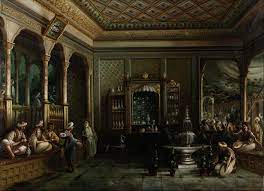
As far as historians can tell, the scourge began in Mecca. People gathered in small groups to consume the drug and socialize. Such became its pull that the governor of the city ordered it banned in the early 1500s. Additionally, he decreed that any discovery of its use punishable with severe penalties. It was a danger to the public, he moralized, and declared it even more of a potential disturbance to the commonweal than alcohol was. In addition, he was quick to point out that, unlike alcohol, this particular drug caused radical thinking rather than lethargy. And that was the primary danger. Unfortunately for the governor, his immediate superior was under the spell of the drug since he was member of the Sumi Muslims. That sect, some of the first abusers of it, gave the drug the name Qahwa. Anyway, the governor’s boss forced him to overturn the ban and make the drug legal again. Oh, and he arrested the governor. But that wasn’t the only time attempts at banning the drug in the Muslim world. Clerics decried the fact that abusers usually gathered to use it. They hated the idea that any place besides their mosques would be a place politics, religion, or even gossip would shared. However, these bans never really lasted.

Members of the Catholic church in the late 1500s tried to ban it as well, citing “proof” that it was a drug from the devil. None other than the head of the church, Pope Clement, stopped this clerical attempt at an Italian version of Just Say No. He, too, had tasted this devil drug and had fallen victim to its charms. His Holiness is reported to have said that the wondrous drug was too good to be left to infidels; God would not have allowed something so incredible to be on earth without allowing His children to enjoy it. Just to waylay any possible fears about the demonic nature of the drug, Clement actually baptized it before using it, thus eliminating any possible demonic influence.

Other attempts to keep the drug off the streets have happened in several countries over the ensuing centuries. Sweden tried to thwart its use by keeping it legal but raising the price so high as to try to keep it out of the hands of the lower classes. That didn’t work. Germany also tried to limit the drug’s use by promoting its home brewed beers. It says a lot that a government would prefer its population drink alcohol rather than take this drug. Britain attempted bans, but public outcry against such attempts threatened to overturn several parliamentary elections. Even the United States has seen periods where the government made the use of the drug limited to a public who craved it desperately.

The popularity of the drug has allowed it to be legal for most of the history of its public use. It helped the popularity that the drug has been used in the home, but it has also been often consumed in public gathering places and still is to this day. In fact, you’ve probably been to one of these drug dens.

It’s caffeine.

On the Building of Washington, D.C.

You’re probably aware that George Washington is the only US President who never lived in Washington, D.C., during his time in office. While the Father of His Country did lay the cornerstone to what would become the White House (wearing his Masonic apron, no less), the first President to live there was John (and his wife, Abigail) Adams who stayed in the unfinished and freezing cold mansion a short time before the newly-elected Thomas Jefferson took office. And every Chief Executive since then has resided there.

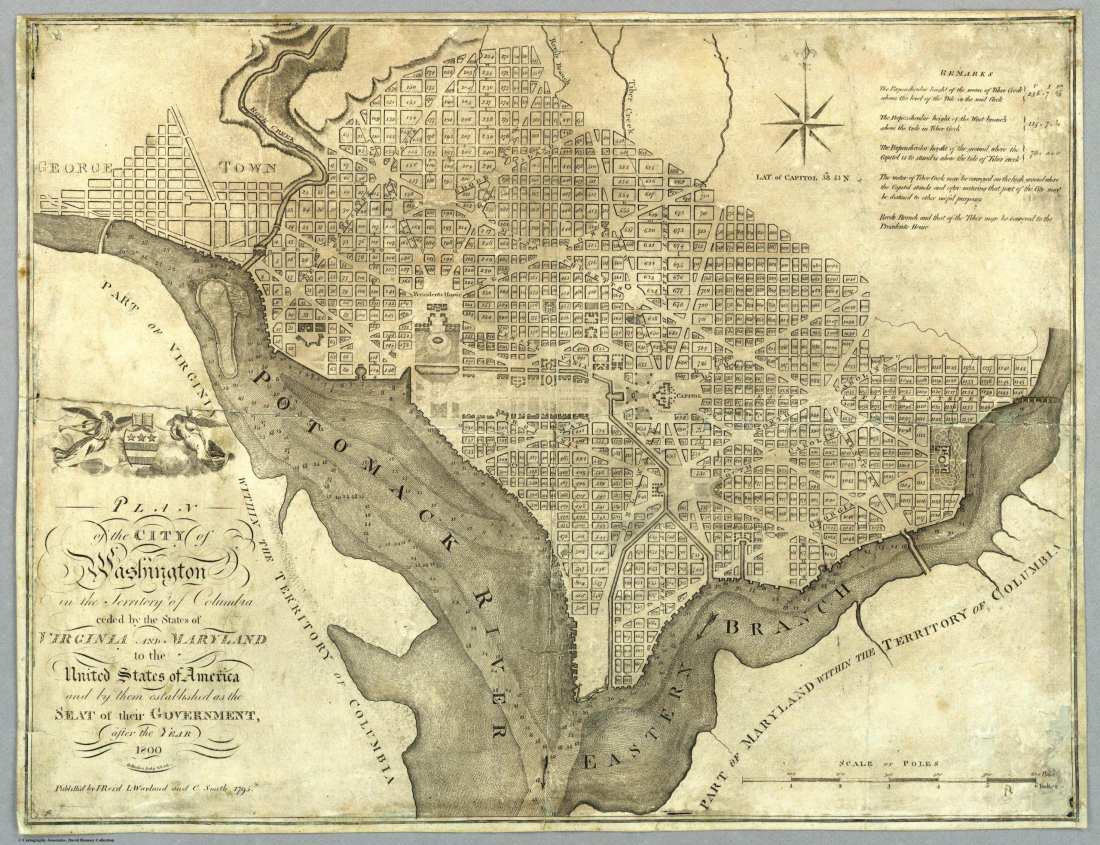
The story of the building of the city is as interesting as it is long. We won’t delve into that in this format, but you should know that the plan to build a permanent and new capital city for the new nation was approved while Washington was still in office. The next step after the approval of the (swampy) land was the design. Thomas Jefferson, ever the designer/architect and Washington’s Secretary of State, put in his two cents regarding building design, but it was a French military officer who had fought with the Americans against the British over a decade earlier who conceived not only of a general style for the architecture of the buildings but also of the overall plan for the city as a whole. His name is Pierre L’Enfant.

L’Enfant’s plan has undergone several changes over the past 220+ years, but the essential heart of the city’s layout and building design is his. As far as cities built as national capitals go, the capital city of the United States remains one of the most beautiful and beautifully designed. The nations of Brazil (Brasilia), Myanmar (Naypyidaw), and Pakistan (Islamabad) all have purpose-build capital cities with varying levels of beauty and livability. Washington remains one of the most beautiful (St. Petersburg, Russia, was also purpose-built as Peter the Great’s capital city, and it is absolutely beautiful, but the Soviets moved the capital to Moscow).

But there’s an irony to the building of the US capital city as you will soon see. L’Enfant’s plan called for the use of sandstone, a plentiful, nearby, and (relatively) easy to manipulate stone building material. While later builders in the city used marble and other stones, much of the original construction of the major buildings of Washington were made of sandstone. The stone was cut, shaped, loaded, hauled, unloaded, shaped again, and then laid to construct the buildings we know so well today. Many of the masons who did the laying stonework were Scots. Scottish stone masons are famed for their craft, and some were “imported” to the United States just for this purpose. However, the Scots, as important and as skilled as they were, did not do the heavy lifting.

No, the backbreaking work of building Washington, D.C., the capital of a nation built, as Abraham Lincoln would say several decades later, on the proposition that all men are created equal, was largely performed by African slaves. It is said to have grieved the abolitionist Adams to see enslaved persons working on liberty’s capital, specifically the executive mansion.

Interesting, isn’t it? For a nation where many people attempt to define what it means to be an American by having been born here or by displaying a certain cultural, ethnic, or linguistic identity, to have the capital city of that nation designed and built by people from Africa, France, and Scotland (among other places).

So, to argue that foreigners and immigrants built this nation, it is true–and literally in the case of the nation’s capital city.