On a Chance Discovery

John was among the first settlers in the valley that would eventually become a part of what is now Sacramento, California. He arrived in the valley in 1839, when the territory was part of the nation of Mexico. John was originally from the border area between Germany and Switzerland, and the area of Sacramento he immigrated to had a large population of both German and Swiss settlers. Mexico welcomed immigrants to its lands because they saw how greedily the Americans were eyeing California. Texas had already been absorbed by the US, and Mexico wanted settlers in California to strengthen their hold on the territory.

By 1846, war between Mexico and the westwardly-expanding United States was only then beginning. Despite Mexico’s best efforts, it took only a little time before almost the entirety of California was occupied by American troops even though the war would last almost another two years. The political situation in that period was in flux as no one was sure what political rights were secured and by which government. Most people simply bowed to what the US military decided.

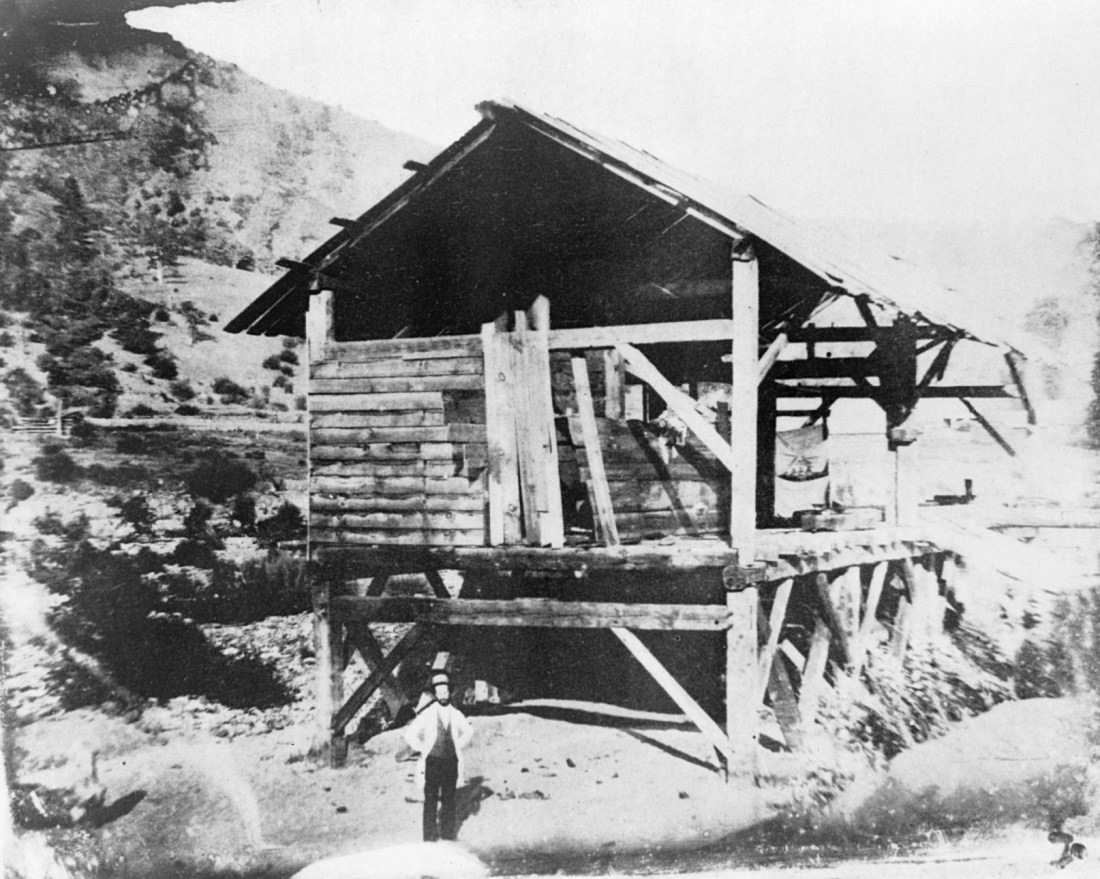
Yet, despite the uncertain political situation, the little settlement in the valley flourished. More settlers came to the area now that the Americans controlled the fertile land. John decided to build a water-powered sawmill a few miles up the valley from the settlement to meet the demand of the burgeoning population. He chose that spot because of the speed and volume of the water in what by then was known as the South Fork American River would easily power the mill’s saw wheel. It made sense that the mill would be constructed in the forest to have easy access to trees, and then also to be build on the river so that the sawed lumber could be floated downstream to the settlements beyond.

To head up the construction project, John hired a carpenter named James Marshall, a man who had experience in building mills and who hailed from New Jersey. Marshall hired his own crew, and they began to work on the project over the winter of 1848. The treaty ending the Mexican War was signed in early February, and California officially became part of the United States.

Within a year, the population of the area exploded from less than 15,000 people to almost 100,000. In fact, the population grew so quickly that, by 1850, California became the 31st state in the Union. You know what it was that caused the territory to see over 300,000 settlers invade California by land and sea over the next decade and become the 12th most populous state by 1870.

You see, it was in January, 1848, that James Marshall happened upon something in the American River while he was supervising the construction of John Sutter’s mill.

Gold.
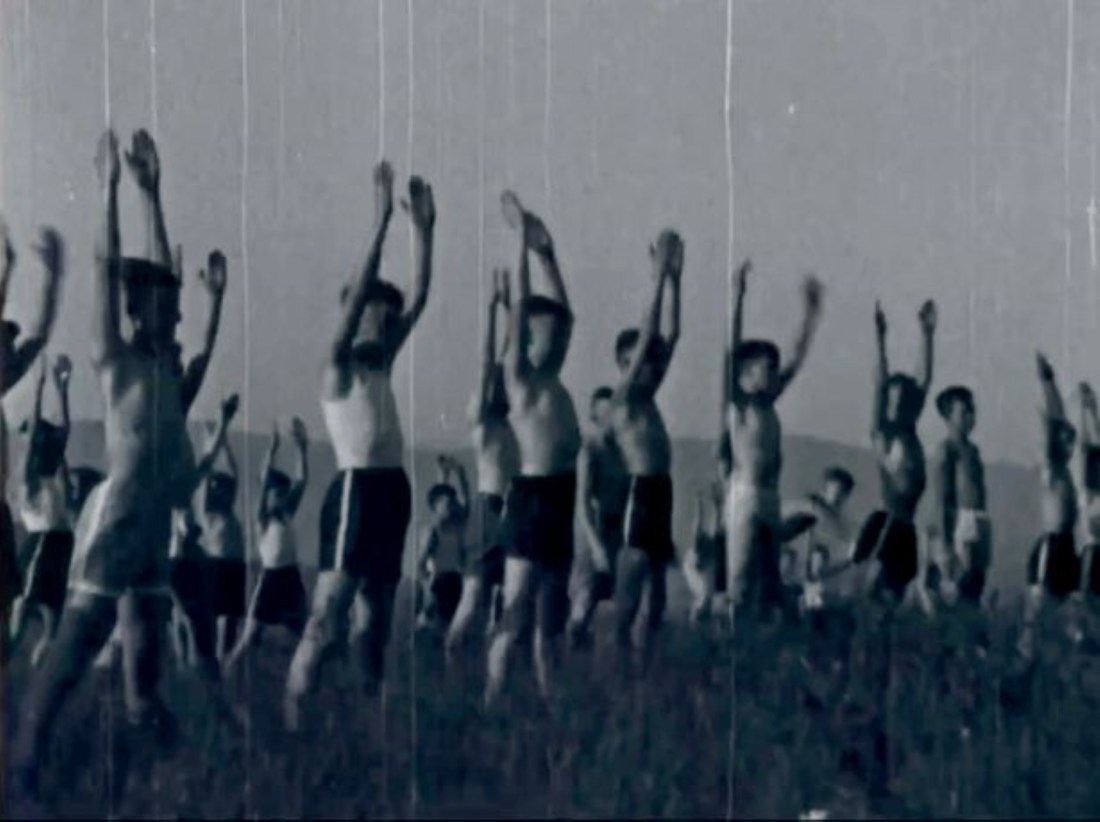
On a Summer Camp

The cold of January causes many to turn their thoughts to the warmth of summer–and how we can ditch the kids for a week or even several at a summer camp. So, we bring out the camp brochures (or, at least, we used to) or look online (more likely now) and try to find one that would fit Billy’s likes or Susie’s interests. There are camps that feature learning how to animate, for horse riders, sports camps of all stripes, and even the good ol’ fashioned simply-get-out-in-nature-and-rough-it camps.

I was a camper most summers. In my college student years, I even made some summer cash being a camp counselor. Camps can be fun and places of learning and enrichment. That latter word was behind the establishment of several camps in the late 1930s in the United States. Remember that the US was still trying to come out of the clutches of the Great Depression, and, while war clouds loomed over Europe and some of Asia, in the US, we were more concerned about issues at home. And these camps were designed to get kids out in the glory of nature and teach them a thing or two.

The camps followed the Boy Scout model where boys and later, girls, would go out into the wilderness and pitch their tents, learn to cook over a fire, maybe learn firearm safety, and practice survival skills. Most of these camps also mirrored European models of getting youth away from cities and into healthy environments. Besides, having the kids away for a time could also help the family financially because they didn’t have to feed them for that time period, and we all know how much teenagers can eat.

The camps were also set up with cultural ties to Europe as well. Strengthening ties to Europe, it was said, would foster the concept of international cooperation and promote the ideas of peace and understanding between nations. Again, this was seen as being important given that Germany, especially, was rearming and making threats of military expansion against its neighbors. If American kids could understand the risks involved in getting involved in a war in Europe that seemed to be inevitable, well, so much the better. They shouldn’t interfere in any European war that might come, they were told, shouldn’t interfere like America did in World War 1, an act that, arguably, won the war for the Allies and brought German defeat.

So, in addition to the healthy running, and hiking, and playing, and survival training, counselors and camp directors instructed kids at these camps on international geopolitics. They explained what Hitler was doing and why he was doing it. They taught the history of the previous world war and how those events led the world to the brink of another war only a generation later.

In a dozen locations across the US, from California to New York, hundreds of American kids aged 8-18 were sent away to these summer camps in the late 1930s where they received the strengthening of their bodies and their minds. Please note that minorities were not allowed in these camps, however. That included Americans who practiced Judaism. Especially those.

It’s important to remember that, in the 1930s, a full 25% of Americans had German ancestry, and that percentage was significantly higher in such places as Wisconsin and Minnesota, for example. The camps targeted these populations for the camps because, well, they often still had some familial ties to Germany and would be more sympathetic towards what Germany was doing. It was important to influence these young people to grow up and promote America’s ambivalence towards German aggression in Europe or even outright support it.

It’s why the American Nazi Party set up the camps in the first place.

On a Timely Date

Time is arbitrary in a sense. Of course, we have divided the time (measured) it takes the earth to make one rotation into 24 segments, and we’ve further divided those 24 segments into 60 segments and further sub-divided those 60 segments into 60 segments. We could have divided that bit in any way we wished (and some cultures do). But, otherwise, every day takes pretty much the same “time” for one complete spin on this ol’ big blue marble.

And, as you know, we have long recognized the time it takes for the earth to make one big trip around our star and call that amount of time a year. Now, here’s where things get tricky.

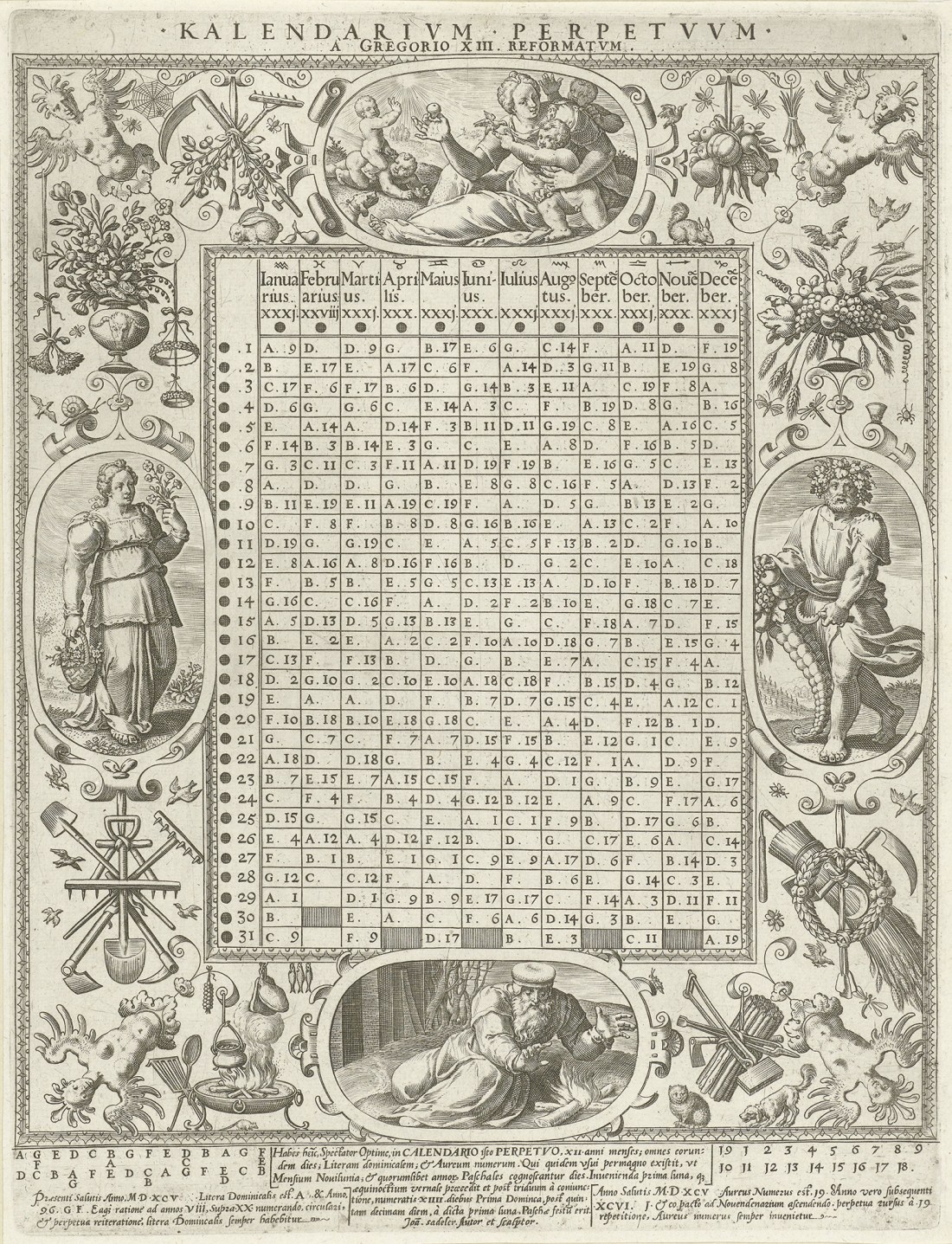
That journey happens while the earth spins; it takes 365.2422 days for that to occur. That’s 5 hours, 48 minutes, 43 seconds in the .2422 you see there. That means about every four years, we add a whole ‘nother day (as we’d say in Alabama) to the year to keep everything sort of “on track” and on season. If we didn’t add that extra day, the “leap day” to the calendar, we would eventually have summer in February in the northern hemisphere. That’s what caused Pope Gregory to change the old Roman (Julian) calendar and shake up the number of leap years we have to compensate for the way that Julian calendar had failed to keep pace with the accurate days (that .2422 above) it takes the earth to orbit. The Gregorian calendar, when it was instituted in Catholic Europe, fast forwarded the date 13 days to make up for all the lost leap day years the Julian calendar had not observed. It made our time keeping better, although the Eastern Orthodox Church still observes the Julian Calendar (it’s why their Christmas is a different date–and their Easter as well). In fact, the whole Christian system of dating things Anno Domini, the thing about it being 2022, well that’s is enough for a post all its own, so we will save that for later. And we haven’t even talked about months yet.

So. “Thirty days hath September, April, June, and November. All the rest have 31…except for February, which has 28, until leap year brings 29.” What kind of cockamamie system is this? Again, we have the Romans to thank for this in part. They added July for Julius (Julius’s birth month) and August for Augustus (the month Augustus took Egypt). The Romans changed month names fairly regularly. They even re-started time with the change in every emperor. People complained that they had to get used to a whole new set of month names periodically and then a whole new yearly system when an emperor died or was overthrown. But they got used to it.

If we would add a month, say Millsonary or Charly (rhymes with July), and make each month have 28 days, we’d come out with an almost perfect year: 365 divided by 13 yields 28.0769. And some cultures have 13 month calendars; these are usually lunar calendars that follow the moon’s phases across the 4 weeks.

Ah, there we go–weeks. Now, that one is arbitrary, right? Well, yes. The seven day week is more of a Bible thingy than an actual, observable scientific phenomenon. There’s nothing about the earth’s rotation on its axis or its movement around the sun or the movement of the moon around the earth that is dependent on a 7 day week. Or a week for that matter.

And when should the year begin? That, too, is arbitrary. We have decided it’s January 1st, but there’s nothing saying that it has to be–or that it has always been that way. The Romans did it that way. They had a 12 month calendar year that began then, and that’s the main reason we do it, too. But, then, if you’re in business or in most state and federal government offices, you know that your fiscal year begins July 1. It could start any day, actually.

Let’s end this little look at time with two proposals. First, I propose that every year starts over and starts with January 1st being on a Sunday. That way, you will know that every year has a May 23rd that is on a Wednesday. It is a fix-ed calendar with no guesswork to it. The leap day is added at the end, which doesn’t matter, because the next day then automatically resets at Sunday, January 1st.

The second proposal is about time. I propose a 24 hour world-wide clock. In other words, when it is 10 o’clock in Dubai, it is 10 o’clock everywhere in the world. No more time zones. Billions of dollars and much time will be saved by not having to calculate Greenwich Mean Time verses China Standard Time verses Central Standard Time. Ok, some places will have 10 o’clock in the middle of the night, but you’ll get used to it.

Just ask the Romans.

Happy New Year.

On a Newspaper’s Celebration

Adolph Ochs owned a newspaper in the early 1900s. Fact is, Adolph owned two papers, one in a small city and one in a large one. The small city paper was successful and established while the big city paper Ochs had been able to purchase on the cheap because it wasn’t successful at all.

The big city paper had two things going against it. One, the competition in the big city was fierce while the small city paper Ochs owned had no real competition. It’s good to be the only game in town, but that absolutely wasn’t the case in the big city. The other reason the big city paper was failing is that the journalism of the day revolved around sensationalism–historians call it Yellow Journalism.

Typical of the period is the story of William Randolph Hearst, the owner of the New York Journal, who hired a writer to go to Spanish-controlled Cuba to cover what Heart was sure to be the impending outbreak of the Spanish-American War. The correspondent wired Hearst and said something like it was pretty in Havana but there was no war. Hearst is supposed to have wired a reply and told him, “You provide the pictures; I’ll provide the war,” meaning that he could gin up pro-war sentiment with sensationalism.

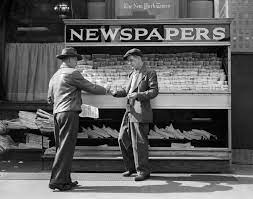
Ochs decided to not practice this Yellow Journalism. He purposely printed stories that were “straight news” with little slant and with as much objectivity as is humanly possible. This sharp contrast to the sensational, lurid reporting found on the pages of the Hearst and Pulitzer (Pulitzer published the World newspaper) rags came to be appreciated by the public, and, soon, his little shabby newspaper grew in circulation and prestige. People knew they could trust Ochs’s paper, and, within a few years, it became the leading newspaper in the nation–the New York Times. But that’s not what we’re here to talk about, really.

You see, in 1904, as Ochs was gaining ground on his tabloid rivals in popularity, he found that his offices needed to expand; he needed a place that was more centralized to not only the center of what news was happening in the city but also central to distribution points in the five boroughs and beyond. So, in that year, Ochs moved the Times offices to Longacre Square in midtown Manhattan. For his own convenience, really, Ochs persuaded New York City Mayor George McClelland to build a subway stop near the new office building.

To celebrate his new building–and his burgeoning success with the paper–Ochs paid for and promoted a celebration in the square to share his happiness with his fellow New Yorkers. The city, aware of how important the paper was becoming, actually re-named the area after the paper. That’s why it’s now called Times Square.

Oh, and that celebration? Ochs made sure to shoot off fireworks from the top of the paper’s office building on New Year’s Eve, and, in 1907, he commissioned an expensive ball to drop from a large flag pole as the countdown to the New Year began. It has done so every year since, with the exception of two years during World War 2.

It’s a tradition we continue to this day.

On a Stolen Corpse

This story comes to us from our friend, Brian Kannard. Brian wrote a pretty interesting book a few years ago: Skullduggery: 45 True Tales of Disturbing the Dead. In this book, as the title suggests, you can find stories about corpses that were dug up, disturbed, held for ransom, and otherwise disrespected. The tales concern the famous and the not so famous.

One of Brian’s tales that has stuck with me concerns the grave robbery that took place in Ohio back in the late 1870s. Now, you have to remember that, back then, medical schools did not have a system for receiving cadavers for their students to use to learn about human anatomy. They turned, macabrely, to corpse snatchers. These nefarious characters made their living by digging up freshly buried bodies and selling them to the medical schools.

At the funeral of a man named John, the family realized that one of John’s nephew’s graves had been disturbed. The nephew had been buried a few days prior to John’s burial, and the family was horrified to learn that the younger man’s body was missing. One of John’s sons, also named John, told his brothers, Ben and Carter, that they should place large stones on top of their departed’s grave to insure that no one could steal the deceased John’s body. Then, John and another cousin traveled to Cincinnati, Ohio, to go to the medical school to look for the body of their cousin there.

At the Ohio Medical College in Cincinnati, John spoke to the janitor who answered John’s questions in a non-committal way. Of course, the school paid for an accepted cadavers, but the man didn’t want to admit that he knew the bodies had been stolen when they purchased them. John noticed that the dumbwaiter door in one of the operating rooms was open and that the rope was taught. “What’s on the end of that rope? Pull it up!” John demanded. The janitor demurred. So, John took it upon himself to work the pulley and bring up the very heavy object on the other end.

The body on the end of the rope was covered with a canvas sheet. John and his cousin removed the rope and brought the body onto one of the examining tables in the operating room. He pulled the sheet back and expected to see the face of his recently dead cousin.

“Oh, my God!” John said. “It’s Father!”

Somehow, in the past 24 hours, grave robbers had exhumed the body of John’s father and brought it to Cincinnati. The janitor was arrested on suspicion of purchasing and/or handling a stolen body. However, it was impossible to prove that the man was the one who arranged for the purchase or even received possession of the body, so the charges were eventually dropped. Interestingly, one of the doctors at the medical school had served directly under another of John’s sons, Ben, in the American Civil War.

Well, the public was outraged. The dead man was well known in the country, and a broad-based campaign was waged to make grave robbing a major felony. Several states in the mid-west passed such legislation in he ensuing months and years, and a system of receiving the bodies of indigent persons and voluntary donation of cadavers for use in medical study was established. By the way, the cousin’s body was later found in the medical school of the University of Michigan. But it was the theft of the body of John Scott Harrison that caused those laws to be passed.

So, who was he?

Well, it’s not really John that you know. However, you know John’s father, William Henry Harrison, the 9th President of the United States, and you know John’s son, Ben–Benjamin Harrison, the 23rd President of the United States.

On a Unique Smell

There is one specific smell that is peculiar among smells. You might say that there are thousands of smells, and you’d be correct to a point. Wet grass smells different from freshly cut wood which smells different from baked bread. But those differences are aromas, which sounds like pedantry if I say that there is a difference between an aroma (pleasant), an odor (not so pleasant), and a smell. Smells are neutral, while words like fragrance and scent (and aroma/odor) are specific descriptors of smells. Those who are in the know about these things (and I am not among them) say that aromas, odors, and etc., are comprised of smells.

Scientists at the University of Pittsburgh insist that all aromas/odors/scents/fragrances are made up of only ten–yes, only ten–unique smells. These ten smells often combine to form the aromas of those things like grass, wood, and bread. Humans with normal olfactory systems can readily distinguish between these ten smells. And those ten smells that make up all the aromas in the world are fragrant, lemon, chemical, wood or resin, fruity (non-citrus), mint, sharp, sickening, sweet, and…one more. Any aroma that you can think of or remember is made up of these or a combination of these.

It’s that last one that interested the scientists at Pitt. They found that this particular smell was so vastly different from the others simply because it was so specific. It’s a smell most of us in the western world know quiet well. One interesting thing the researchers found was that this smell can be found in other things, but was still so unique to itself. They said it was somewhat earthy, but it can’t be classified as either woody or grassy. Most people find it actually comforting somewhat, even though the urine of the animal, the bearcat, smells disturbingly close to it.

One of my favorite rides at Epcot is Soarin’. You ride in a glider-type ride in front of a large IMAX-type screen over snow, over cities, famous landmarks, and even the African savannah. It’s the is last one I like the most, because, as you soar over a small group of elephants, one of the animals throws some of the savannah dust and grass up and into your path. At the same time, the Disney engineers spray a scent of woody/grassy aroma into the room, and the illusion becomes wonderfully complete. You can actually buy Savannah Soarin room air freshener (I have done so with no regrets).

Researchers also say that smell is the one sense most closely aligned with memory. Your father’s cologne. Roses in your grandmother’s garden. The wet fur on your favorite dog. I can attest to this power of smell with two short memories from my youth. First, one of my first memories is of the smell of scorched oatmeal. I’m from the American south, and oatmeal was a filling and cheap and traditional breakfast food (and, for me, a butter delivery system). So, if I smell that burned oatmeal aroma, my mind goes back immediately to when I was 3 and smelled that smell one morning.

The second memory aligns with the one that is the unique smell mentioned in the list of ten above. In middle school (grades 6-8), I played basketball for our school. On game nights, the concession stand was set up on the stage (the gym doubled as an auditorium), and the smells of the concession fare filled the room. It became difficult to breathe on some winter evenings as the smell filled the room–specifically, the hot/humid, buttery smell of the sugar in a kernel of corn being heated to the point of exploding.

We know this smell as popcorn.

On a Good Barber

Milton Pitts was a really good barber. In a haircutting career spanning six decades, Milton cut the hair of the famous and the completely unknown. Most of this time, he worked in a one-chair shop, yet he managed to not only make a living at the profession but also to become somewhat well known in the process.

One of the main reasons for Milton’s popularity and success was his conversational abilities. In the way a doctor has “bedside manner,” Milton had a way about him when a client was in his chair. And it wasn’t that he was a yes-man; if the tie you were wearing was unflattering, he’d tell you so. If you complained about your looks, Milton would tell you to do something about it. He also had a broad knowledge of many subjects. He could speak at length about sports (not that unusual), politics (a little more rare), and even economics (very rare indeed) with authority.

One regular client of his, a fellow named Jerry, kept coming in to the shop and insisting that Milton help him with his combover. “You’re bald,” he told Jerry. “You’re not kidding anyone, and you’re looking a little ridiculous.” He asked Jerry to trust him, and he cut off the combover and brought the sides straight back. “There,” he said, showing Jerry the results. “That’s an honest look.” And Milton was right.

Before he died in his 80s, Milton was interviewed by a newspaper, and he looked back on an amazing career in a profession many people overlook or take for granted. He commented that you could tell a lot about a person by the way they wore their hair. And he recalled his last interaction with a powerful man who came in one day immediately before a major life event. The great man was dour because the task before him was distasteful. Milton tried to reassure him, and he told the man that no matter what happened, he would make sure that the man looked his best. The haircut continued in usual silence, both men aware of the importance of the next few hours in the powerful man’s life.

Milton finished, showed the results in the hand mirror, removed the barber’s cape with his usual flourish, and brushed a few, stray, dark curly strands from the man’s shoulders. He silently helped him into his suit coat, and then shook his hand. The man thanked him.

“You’ve always been a straight shooter with me,” Richard Nixon told Milton, and Nixon went upstairs and out of the White House barber shop and resigned the presidency.

On a Slick Salesman

Bill Blythe got around.

That was the understatement of the century. First of all, Bill was a traveling salesman. For the majority of this sales career, Bill sold heavy machinery to contractors and builders and even state and local governments. Even during the Great Depression, Bill had a knack for sweet talking his way past the secretaries and into face to face meetings with the decision-makers on those types of purchases. Once he got past the secretaries, he said, the big bosses were easy because the equipment pretty much sold itself. The hard part was convincing the secretaries to let him in. So, Bill was an excellent salesman.

Then, when he died in 1946, he left behind him five wives and a whole slew of children from one side of the United States to another. In fact, all five of his wives were women he met as he traveled cross-country on sales trips. As I said, Bill was smooth when it came to the women his travels brought into his path. He sold himself, his personality, the way he sold his sales goods. And by smooth I mean manipulative and deceptive and, well, as we used to say back in Alabama, slick. So, a slick salesman and a slick talker. For Bill, the two were inextricably linked.

One minor nit to pick here, minor at least for Bill if not the law, was that he often didn’t get divorced from the previous wife before he would marry the next one. He married his last wife, Virginia, while still married to wife number four, a woman named Wanetta. Oh, and in an era when several states still had laws on the books that forbade adultery, Bill fathered some of his kids with a couple of his ex-wives after their divorces. That’s a smooth talker for sure.

But his marriage to Virginia seemed to mark a turning point in his life. Well, to be fair, perhaps it was his service in World War 2 in the African and Italian Theaters of War repairing heavy equipment like the type he used to sell. Travel–and war–can change a man. Bill returned from service determined to finally settle down. He bought a house in Chicago and told Virginia that he would soon come get her after he finished his very next sales trip. Virginia was also excited; she was 6 months pregnant with their only child and longed for a quiet life ahead for the little family.

Sadly for all three of them, it was not to be. You see, Bill’s car rolled over on a lonely stretch of highway and Bill was thrown into a ditch. There was less than 2 feet of water in the ditch, and the injured man was not able to extricate himself rom the water. He drowned. He never met the son that would be born three months later. While the world doesn’t really know about the personality of the smooth-selling, fast-talking, charming Bill Blythe, they would certainly come to know his son.

Well, the apple, as they say, don’t fall far from the tree. Bill’s son, William J. Blythe, III, would later adopt the name of his mother’s next husband, the boy’s step-dad.

You know that young slick talker as Bill Clinton.

On the Feast of Stephen

Good King Wenceslas looked out, on the Feast of Stephen, when the snow lay round about, deep, and crisp, and even. Brightly shone the moon that night, though the frost was cruel, when a poor man came in sight, gathering winter fuel.

St. Stephen’s Day is the feast or festival day when the Christian religion celebrates the life and martyrdom by stoning of Stephen, the so-called first martyr of Christianity (the Bible book of Acts Chapter 7 records the event). For Victorian Christmas traditions, St. Stephen’s day was a sort of “poor man’s Christmas” where the needs of lower-class people would receive gifts and food from their richer, higher born countrymen.

That’s sort of what’s going on in the carol Good King Wenceslas quoted above. The king is out and about and finds a poor man who needs firewood. He and his faithful pageboy give alms to the man in the spirit of generosity and charity. At the end of the song, the king reminds his page and us that those who give to others are blessed by the giving. The story–and the song–are based on a real medieval king from Central Europe who, apparently, was kind and generous.

As we have looked at in other stories, the Victorians did much to help create modern Christmas traditions, and that’s also the case here. The story and song became popular after an Englishman named John Neale penned them in 1853. But the St. Stephen’s theme runs a bit deeper still here.

You see, servants–the poor–had to work during most holidays. Christmastime for maids, butlers, charwomen, and cooks meant taking care of their employers and/or landowners first. That also meant, of course, that Christmas Day meant little to these working women and men (and children, too, often). The wealthy folks’ holiday was only another day at the proverbial office for them.

Some say it was Queen Victoria who, mindful of the devotion her armies of servants showed by foregoing their personal holiday celebrations to insure that hers and her family’s was wonderful, first decided to put together packets of small presents and left over food from the royal celebrations and some small bit of money and gift the servants with these things.

Now, there are several examples of this happening much before Victoria, but she seems to have popularized the practice on the day after Christmas. On the Feast of Stephen, the giving of boxed goods to the poorer people. And while the modern observance seems to have more to do with shopping and after-Christmas sales at the chain stores, that wasn’t the origin of the sentiment. No, it was meant to be much in the line of what Good King Wenceslas intended.

The Brits call it Boxing Day.

On Christmas Humbug

Our friend, Mr. Webster, defines humbug as false talk or behavior. Now, I’m among the first to point out the differences between the historicity of the so-called Christmas story and the traditional and usually historically suspect practices associated with the holiday. And, if you’re keeping score at home, I’m firmly on the side of the tradition over the history. However, in the spirit of fun (if not the holiday), let’s examine some Christmas humbug.

There were three Wise Men who visited the baby Jesus. Well, we don’t really know how many there were. The Bible doesn’t say. It does, however, say that there were three gifts: Gold, frankincense, and myrrh. Tradition simply extrapolated the number of wise men based on these three gifts. So, the reality is that there were anywhere from two to infinity number of wise men.

Mary rode into Bethlehem on a donkey. This one’s gotta be true, right? I mean all those Christmas cards of her and her betrothed, Joseph, in silhouette, riding into Bethlehem with the start behind them can’t have lied, right? Well…we don’t know that she rode at all. In fact…

Yeah, well, but for sure Jesus was born in Bethlehem. No way this one is humbug. Or, is there? Here’s the deal. We keep trying to look at the Bible as a history book. It’s not. I’m reminded of the Lincoln statue that depicts a freed slave at Lincoln’s knee with his chains broken in two. Did that event actually happen? No, but the symbol absolutely did. It’s sort of the same with the Jesus born in Bethlehem thing. That village was the village of Israel’s greatest (not most powerful but most symbolic) king–King David. So, if Jesus is a king greater than David, he had to be born there, right? So, Luke’s Gospel creates a Roman census that requires everyone to stop what they’re doing and return to their ancestral land. First of all, imagine the economic disaster such a decree would cause. People would have to travel for weeks or months in some cases. More importantly, we have no record of any such Roman census being ordered by Augustus during that time. We have records of how much a bushel of wheat cost about that time, so you’d think we’d have at least some evidence of an earth-changing event like a massive world-wide census. We don’t. Besides, he’s Jesus of Nazareth–not Jesus of Bethlehem.

Jesus was born in a stable surrounded by the animals (and probably a drummer boy). Insert game-show wrong answer buzzer here. The Greek word for “inn” is better translated as “guest room,” so that’s probably where Jesus was born. You think Joseph is traveling home and forced to stay in a Motel VI? No. It’s probably meant to be that small room and definitely not a stable. And if you follow the timeline of the birth stories in Matthew and Luke (Mark and John don’t have them), you’ll see that the little family stays in Bethlehem about 3 years before skedaddling for Egypt to escape the supposed massacre of all the male children of the village under the age of 3 by King Herod–another major event for which there is no historical evidence.

So, if all of these are humbug, what are we left with?

We’re left with giving to each other our time, support, forgiveness, and love, and we set aside a season for doing so once year. Even if we didn’t have the Jesus traditions, we would do well to set apart a season for giving to each other those things that are beyond price, and give them with grateful hearts.

The world would be a better place if we did.

Merry Christmas. Happy holidays.