On a Nursery Rhyme

Scandinavian countries call it Lille Trille, the French Boule Boule. Germans have several names for it. During he Middle Ages, a phrase like it was often used to describe a clumsy person and also an ale and brandy concoction. And, like many children’s tales and rhymes, it has a meaning far deeper than simply the amusement of children in the nursery.

For example, some folklore experts (and, like many children’s stories and oral traditions, this is indeed folklore) say that the story retells the rise and fall of the humpbacked King Richard III of England who died in the Battle of Bosworth Field. His brutal death in that conflict as part of the War of the Roses entered the vernacular, these experts say, in the form of a simple rhyme that explained the terrible fate of what was the last English monarch to die in battle.

Or take the explanation by some military historians (as well as some local historians) regarding the depiction in the rhyme of a large cannon on the fortified wall of the English city of Colchester. When part of the wall beneath the cannon was destroyed in a siege during one of the many wars that came through that area in the 16th and 17th centuries, the large gun collapsed and was destroyed beyond repair.

Some religious historians in the UK argue that the poem describes the sad death and burial of Cardinal Wolsey, a contemporary and Catholic rival of sorts of English King Henry VIII. Wolsey died on the way to being arrested by Henry, and he was not buried in the tomb that had been prepared for him.

And so on.

But you get the idea. The rhyme, no matter the origin story behind it, is about loss and the inability to make something the way it used to be. Thus, it could be said that we are dealing with the simple human emotion of regret, that we cannot change what has happened and must deal with the present reality, no matter how devastating it may be.

But nowhere, and I mean nowhere, in the rhyme does it state that Humpty Dumpty was an egg.

On a Loan Request

Arnold bit his lip and looked at the floor. His brother in law stood before him, literally with his hat in his hand. “Well, Arnold? What do you think?” The question caused Arnold to grimace, and he looked up into the face of his wife’s half-brother.

“Tell me again about the process,” he said. “Tell me like I was an imbecile.” So, for the fourth time, the brother in law told Arnold his grand scheme for a marvelous invention that would revolutionize the world. While the man told Arnold of his plans, he returned to staring at the floor.

“And you want how much again?” Arnold asked. And, again, the man told him. Arnold stroked his beard. “What I don’t understand,” he said, “is why you don’t go back to polishing gems? That was a decent living. Why get into debt with me?”

The man was clearly frustrated that he hadn’t been able to impress upon Arnold the importance of his idea. Arnold began the conversation with a flat “no” when the request for the loan was made. “Some people say you can’t be trusted,” he told the bother in law. “After all, you broke your promise to marry that girl in Strasbourg.” It was the man’s turn to study the floor. He tried to explain to Arnold that his heart told him that the marriage wasn’t right for him.

“Well, in any case, some people still have a hard time trusting you after that mirror thing,” Arnold reminded the man. It seems that, a few years earlier, Arnold’s brother in law had been involved in an investment that produced mirrors that were sold to pilgrims who visited Aachen’s cathedral. The mirrors, supposedly, could capture “holy light” from the sacred relics at the church. The man protested when Arnold brought this up. He explained that floods that year kept pilgrims away and that it was not his fault that the investors in that venture lost all their money.

Again, Arnold hesitated. Finally, he sighed. “I’m going to do this against my better judgement and only to keep peace in my own house, but you can have the funds.” The man sighed deeply, and gratefully shook Arnold’s hand. “You won’t regret this,” he promised.

“See that I don’t,” Arnold said.

So, what do you think Arnold’s brother in law did with the money?

Why, Johannes Gutenberg’s printing press did actually revolutionize the world.

On Making a Legend

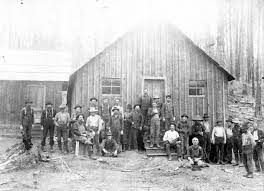
Fabian Fournier, as his name suggests, was from Canada. After the American Civil War, he moved south of the border to the US to work in the lumberyards and the camps of the woods of the north county there. And Fabian was the stuff of legend. Across the northland, through Michigan, Wisconsin, and into Minnesota, his prowess with his fists, his drinking ability, and his axe became quite well known rather quickly.

It’s not that Fabian was quarrelsome or picked his fights. It’s that people–men, particularly–with chips on their shoulders or axes to grind (pardon the intended pun) saw the tall, muscular Canadian as someone they could take on and prove their manhood or mettle by having fought and beaten him. The problem was, Fabian almost never lost the fights that these low-ego lumbermen picked with him. The other reputation he earned was for how he would often hold back his temper and the hits to the opponents’ faces when he had them beat. A lesser man would continue to fight even when the other person was done, but Fabian wasn’t like that.

In an era when the average man was not quite 5 1/2 feet tall, Fabian was well over 6 feet (2 meters). It was rumored that he could hide an axe head in one fist. He could cut more trees than any two other men in a day’s work, and he worked longer and harder than any of the others in the camp. His work ethic was so good that the lumber camp owner made him the foreman of the wood cutting operation.

And Fabian played as hard as he worked. His appetite for food and women was voracious. Sadly, it was this last predilection that would lead to Fabian’s death. In a lumber camp in Michigan in the late 1870s, he met a woman who stole his heart. What she didn’t tell him was that she was already married. This husband came home early and caught the couple in bed together. The man shot Fabian and killed him. The jury at the ensuing trial found the husband innocent, and nobody really mourned Fabian. However, his legend endured.

Some time in the ensuing years, the stories of Fabian got conflated with another French Canadian wood cutter, a man named Bon Jean, and the stories were complied and published in the early 1900s in newspapers in the Michigan and Wisconsin area. Somehow the name of the other Canadian lumberjack got changed from Bon John, but the stories were purely the legend of Fabian Fournier.

You know him as Paul Bunyan.

On a Utopia

The word utopia literally means “not place” or “nowhere” for a reason. Utopias sound great but are not practical, cannot exist, and usually fail because people are people. The perfect place cannot survive if it is controlled or inhabited by imperfect people. Thus, all utopias fail.

Take the story of a town that was built and promoted as a utopia in the jungle of Brazil in the 1920s. This place was set up to provide jobs, housing, food, healthcare, and education for a population of 10,000 Brazilians. The workers in the factories even had their meals provided in large cafeterias. The homes and workplaces were all prefabricated. Everything was to be provided for the people who lived and worked there. The town eventually boasted a golf course, a swimming pool, a large public library, and a first-rate hospital. It sounded too good to be true to the Brazilians who signed up to move there. And, as we all know, if something sounds too good to be true, it usually is.

For example, the town was designed to provide for everything except what people at that time would call vices. Drinking, smoking, sex outside of marriage, and even the playing of soccer were all forbidden. The town’s police enforced these bans by conducting random raids on people’s homes to insure compliance. So, because these things are part of human nature, a separate place outside of the town was surreptitiously set up to provide a place the residents could safely “debauch” themselves and pursue these distractions. The tension between the town’s managers and the people who engaged in these activities were only part of the issues the utopia faced. For example, all residents were required to wear ID badges, and, as you can imagine, the people hated this concept.

Another issue pertained to the food provided to the inhabitants. You see, the town was set up by Americans, and, sadly, they did not take the traditions and food tastes of the Brazilians into account when they decided what the town’s diet should be. So, the American managers provided American food to the Brazilians with predictable results. At the workers’ cafeterias, American hamburgers were standard fare–a food the Brazilians found distasteful. In the company stores, canned goods lined the shelves, but the managers did not realize that the Brazilians did not know much about canned foods and did not trust food they could not see for themselves.

Interestingly, it was the food that provided the breaking point for this utopia. A revolt broke out among the town’s inhabitants because they hated having to eat these American foods. The people rioted and chased the town’s American managers out of the area. The Brazilian government did not do much to put down the revolt. Soon, it became apparent that the situation was not tenable anymore, that the Americans behind the project should cut their losses and abandon the project.

And so, they did.

Aldous Huxley, in creating his masterpiece, Brave New World, is said to have based his fictional utopia on this specific utopian failure. It’s easy to see the comparison. The town was built to harvest and produce rubber for the burgeoning American automobile industry. However, by the 1930s, synthetic rubber was replacing natural rubber, and the need for the raw rubber produced by the town was going away. So, it made sense to stop financing what was obviously a futile and failed experiment. The main financial backer of the venture was perhaps the most famous of the American automobile manufacturers. He realized the folly of continuing to pour money into this fiasco of a utopia.

He’s why the town was called Fordlandia.

On a Second Act

F. Scott Fitzgerald famously said that, in America, there are no “second acts,” meaning that we usually get only one chance to make it, succeed, achieve, and you get no do-overs. He was wrong. History, especially American History, is filled with second-chancers who remade themselves, sometimes again and again. It’s one of the remarkable things about the US.

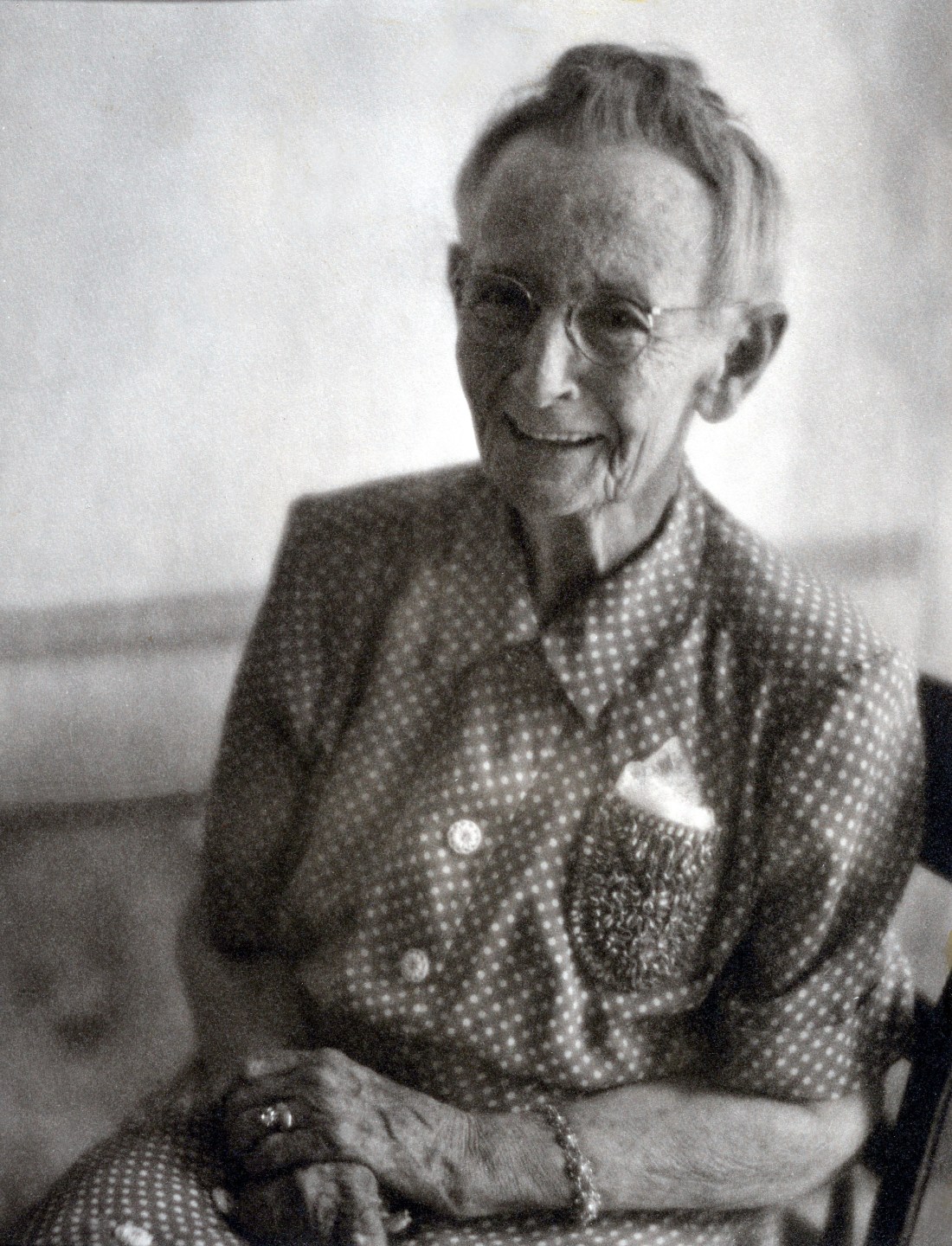
Take the story of Anna Robertson. She was born the year before the American Civil War began, in 1860, in a rural area of New York near the Vermont border. Anna’s family was poor, and, at the age of 12, Anna was “hired out” to live with another family as a servant. It was a position she would hold for the next 15 years of her life. At age 27, she met another hired hand who worked on the same farm she did, a man named Thomas, and the pair married and set up housekeeping in Virginia. The couple continued to follow work around that area, moving often as their services were needed by other, wealthier, families.

Finally, in 1901, the pair had saved enough money to purchase their own homestead near Verona, Virginia. However, the couple missed the life and seasons of upstate New York, and they returned to that area a few years later. Over the course of time, Anna had 10 children, but only 5 of them lived into adulthood. In 1927, Thomas died of a heart attack on their farm near Eagle Bridge, New York. He was 67. Anna never remarried, and, after trying to run the farm herself with the help of one of her sons, she sold off and moved into the house of one of her daughters in 1936 at age 76.

Now, most people Anna’s age would simply take it easy and enjoy her grandchildren and her “golden years” of retirement. Not Anna. All her life, no matter where her and Thomas moved, Anna made the house they lived in into a home with her decorating ability. She stitched, embroidered, painted, crafted, and created wonderful if simple depictions of the things she knew: Farming, the fields and woods, animals, houses, and children. In her retirement, she continued to create. Anna would re-use (we would say re-purpose today) items to make her objects, decorations, and even her medium. Professionals often call what Anna did “hobby art” as opposed to “folk art” because it has more in common with something done for oneself rather than for artistic or commercial reasons.

But, as happens to older people, especially those who worked their entire lives with their hands, arthritis set in. By her late 70s, Anna could no longer create embroidery or sew or even craft anymore, and it frustrated her. However, a relative made the suggestion that she continue to create using a large paintbrush, which, despite the arthritis, she could still wield. And, so, she did. And Anna continued to paint until near her death in 1961 at age 101. She would go on to paint hundreds of canvasses.

In 2006, one of her paintings sold for $1.2 million.

You know her as Grandma Moses.

On a Curse

I don’t believe in curses. Cursing–yes, but curses, no. However, some events and occurrences seem to be more than mere coincidences. There’s the supposed curse of King Tut’s Tomb; several people associated with the discovery of that important archaeological site are supposed to have died under mysterious circumstances. There’s the Hope Diamond curse that says people associated with that famous jewel also either received terrible luck afterward or perished under strange conditions. Then there’s the curse of Tenskwatawa.

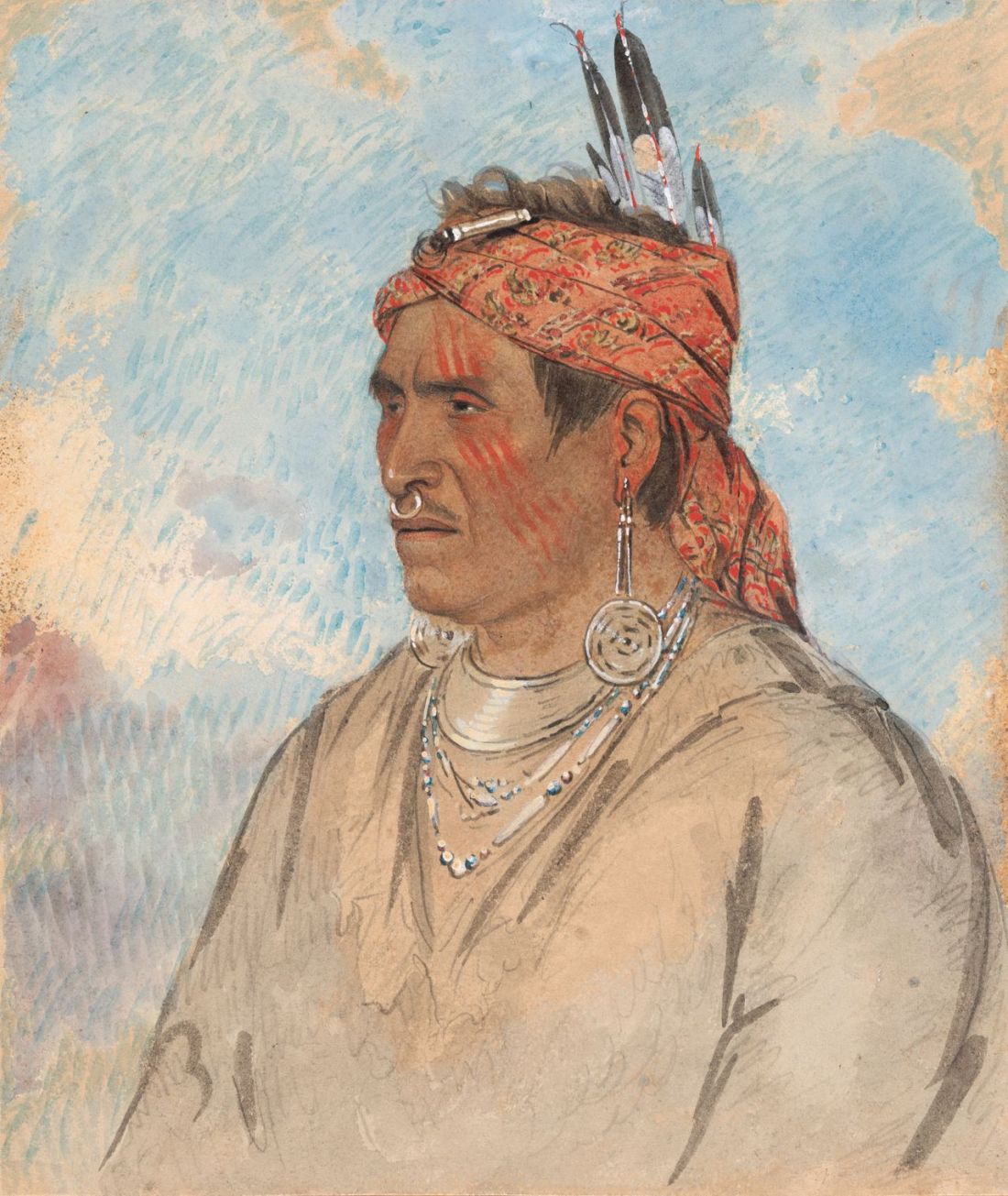
Tenskwatawa was a Native American religious leader or holy man. He made prophecies regarding his tribe, the Shawnee, as the American government made increasingly aggressive moves into Shawnee territory in the earl 1800s. The horrible history of how the American nation broke treaty after treaty with native tribes is the stuff of volumes of books and dissertations. However, for our purposes, please know that Tenskwatawa led a movement, along with his brother, to fight the American aggression.

Tenskwatawa’s message to his tribe was that they should not only fight against the Americans, but that they should also reject American culture and practices. In many ways, his preaching was a native conservative reaction to the changes that were taking place in Shawnee culture during that period. He advocated a return to Shawnee traditions and practices that would somehow channel, Tenskwatawa said, the sprits of their ancestors to defeat the encroaching Americans.

The Shawnee went to war. Led by Tenskwatawa and his brother, and joined by other native tribes who shared the Shawnee anger at the American lies and treachery, the natives made several attacks on American outposts on the frontier. The American governor of the Indiana Territory, Governor William Harrison, asked for and received permission to move against the native confederated forces. Governor Harrison believed that the only way to treat the natives was by a show of strength. In the fall of 1811, the two sides met in battle in what is now northwestern Indiana.

The native alliance lost the battle, and many historians point to this as a turning point in the dissolution of the native resistance movement east of the Mississippi River. Tenkswatawa’s reputation suffered, and his brother was killed in battle against the Americans two years later. You know that brother: Tecumseh.

And Governor Harrison parlayed his victory over Tenskwatawa into a later political career. He became known as Old Tippecanoe–the name by which the battle came to be known. Harrison ran for President in 1840 with John Tyler as his running mate under the slogan, “Tippecanoe and Tyler, too!” and won the election. However, only a few weeks after being sworn in, Harrison died. Some people whispered that the President’s death was due to a curse put on him by Tenskwatawa. The prophet’s anger at the loss of the battle and the destruction of his alliance and movement is said to have been the reason he summoned the curse on his victorious foe.

In fact, the curse was supposed to have been on Harrison and all like him who were elected in years ending in ‘0’ such as Harrison had been in 1840.

That’s laughable, right?

Well, after Harrison, the next president elected in a year ending in 0 was Abraham Lincoln in 1860. After that, James Garfield won in 1880. Garfield, too, was assassinated. Then, in 1900, William McKinley was re-elected–and was shot to death a year later. Warren Harding, who won election in 1920, died from mysterious circumstances in 1923. When Franklin Roosevelt died in 1945, people noticed that he, too, was elected in 1940 and died in office. Finally, John Kennedy, who won his term in 1960…well, you know what happened there.

But then, this supposed curse simply…ends. Ronald Reagan, first elected in 1980, was shot while in office but survived. George W. Bush, elected in 2000, had a grenade thrown at him in 2005, but the device failed to detonate. And Joe Biden, elected in 2020?

Perhaps Tenskwatawa’s wrath is slaked.

On a Religious Patient

Dr. Bloch knew the woman would receive the bad news with fortitude. He knew her deeply religious belief would not even allow her to question what she felt was God’s will for her life. Sure enough, when Block told Klara about her bad prognosis, that the breast cancer was going to kill her sooner than later, Klara took the news with complete resignation and acceptance.

Six children and her husband had been Klara’s life. However, tragedy had already struck the family deeply. The husband had died some years earlier, and only two of the six children would live to see adulthood. Yet, through it all, Klara’s faith remained strong. She saw her suffering–the losing of the spouse, the loss of her other children to disease and then, finally, the cruel blow of the terminal cancer–as making her suffer like her beloved Jesus had suffered. During all her sickness, when she could, she never forsook attending the Catholic church in Linz, Austria, where she and the children had moved after her husband’s death.

They had moved to a small apartment where they could manage to survive on the small government pension the husband’s death had provided. Dr. Bloch assured the family that the cost for the cancer treatment would not be more than they could bear. This was a great relief to Klara and the family. Surgery was scheduled for a double mastectomy. Sadly, the surgeon found that the cancer had metastasized far beyond what his scalpel could reach. Klara’s oldest surviving son, only a teenager, begged the doctor to try something, anything, to save his beloved mother. So, Dr. Bloch suggested a new type of treatment as a last resort. This treatment, an early form of chemotherapy, called for direct contact of the chemicals with the infected tissue.

The pain caused by the therapy was almost unbearable. Yet, through it all, Klara’s unfailing faith kept her from grief. God’s will, she told her son, was the most important thing. This attitude of Klara’s would have an impact on him to the point that he eventually gave up on any faith at all. What kind of God would allow such a wonderful, loving mother to suffer as she did? Bloch noted the close, almost psychic bond the mother and son shared, and he watched as the son grieved so deeply as anyone he had ever witnessed when his mother finally succumbed to the cancer.

Dr. Eduard Bloch had a long career in Austria. Years later, and being Jewish, he watched with understandable concern as Adolf Hitler annexed Austria in 1938. He knew the Nazi pre-occupation with what Hitler called “the Jewish Problem” in the greater German Reich. And, so, he made plans to try to emigrate to the United States to escape the oncoming Holocaust. He sent a request to Berlin to be allowed to join his daughter who had gone to New York City some years earlier. Surprisingly, not only did Hitler allow Bloch to go, but he also ordered his private secretary, Martin Bormann, to take personal charge of the paperwork. Bloch went to New York and lived for the remainder of his life there. But he never forgot the deeply religious woman who faced her cancer fight so bravely. And he never forgot the son who grieved so deeply for his mother.

It was the same Adolf Hitler.

On a Systematic Starvation

History since 1945 has winked at the fact that Joseph Stalin was responsible for more deaths in his own nation than any other dictator before or since. We have largely overlooked Stalin’s killings and mass incarcerations, the building of the gulags and the forced large-scale relocations, because Stalin was the ally of the United States during World War 2. The US has a difficult time (as many nations do) of admitting that we made a deal with a devil (Stalin) in order to defeat another devil (Hitler).

Holod means “hunger,” and “mor” means extermination. Thus, the word Holodmor comes to us from a period when Stalin purposely starved an entire area of the Soviet Union in order to replace an ethnic and cultural population there with Russians. This part of the USSR had been occupied by the same group of people for centuries. Like most of that part of the world, the system of land ownership and food production had followed a centuries-old system of large land owners and vassals or serfs who worked the land. While it was an inherently abusive system, it had managed to provide enough food for the people to have enough to eat for generations.

Stalin imposed a new system of land ownership where the land was collectivized and soviet supervisors replaced the land owners. The produce of the land, rather than going to the land owner and the peasants who worked the land, went instead to the state. It’s easy to see that this system would, obviously, cause hunger for people who had adequate but not an overabundance of food. The people of this fertile area of the USSR did not sit for this outrage. They rose against the machine, taking arms against Stalin and his soviet administrators.

As you can imagine, Stalin did not take kindly to any disagreement with his policies, much less one that involved an armed insurrection. He crushed the rebellion with the force of the soviet army. And then he got revenge. Apparently, one rule of the dictator game is that you want to make sure not one tries to do something like that again by making an object lesson out of the people you’re punishing. Part of Stalin’s anger also seems to have been that this particular region of the USSR had fought against the soviet revolution and with the Czar’s army (the so-called White Army against the soviet Red Army) a few years before. Stalin’s memory was long, and he never forgot what he considered to be disloyalty from this region. He would make them pay.

To punish the people there, Stalin ordered that the state-controlled food distribution system purposely stop sending food to this area. Further, he closed the borders, effectively insuring that the people there could not leave the area to search for food in other regions. The final blow came in the winter of 1932-1933. Stalin sent the soviet secret police door-to-door in cities and villages to confiscate what food had been stored or hoarded there. He even mandated that pets be taken in case the starving people turned to eating their cats and dogs. It’s not difficult to see what the results of these policies would be.

Holodomor.

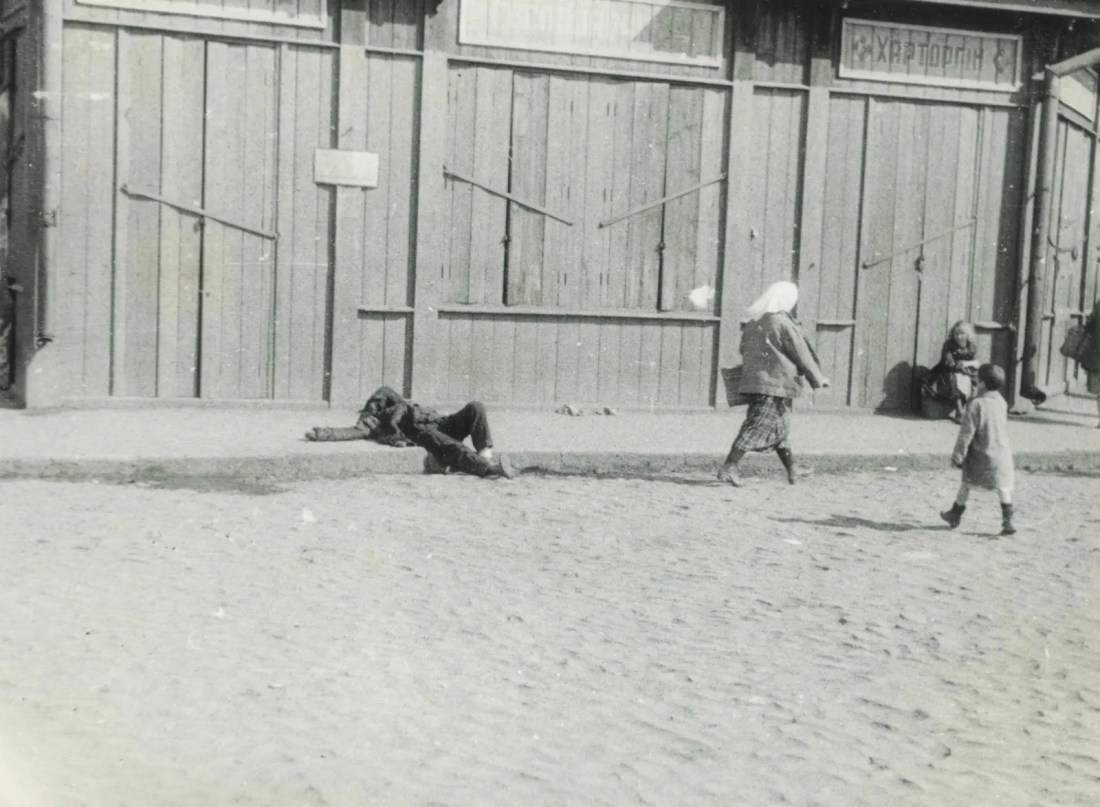
Almost 4 million people in this area died from starvation within a couple of years. It became usual to find bodies in the streets of the cities. Mass graves became commonplace. Meanwhile, Stalin began quietly removing the ethnic and cultural leaders of the people and sending them to gulags in the far east. He replaced all government administrators with Russians. Finally, he ordered all government records that might have recorded the Holodomor, such as census records that would show the mass deaths, to be suppressed or changed. In other words, he erased all physical evidence of the horror these people endured.

Except Stalin could not erase the memory of the Holodomor in the minds of the people. The people–they never forgot. And they still do not forget what the Russians did to them. It motivates them to this day, in fact.

You know them as the brave people of Ukraine.

On a Cheating Spouse

Emily’s husband was a cad.

That’s the nicest way to put it. When the man had immigrated to Argentina in the late 1940s, he had brought not only Emily, his wife of 21 years, with him, but he also brought his mistress as well as several servants and other hangers on. Now, you might be saying to yourself that any self-respecting person wouldn’t put up with this type of behavior, that any spouse would demand that the husband or wife get rid of the third person in the relationship or face divorce.

But Emily wasn’t like that. First of all, she loved her charming and dashing husband, and she knew that, like the other dalliances, this one, too, wouldn’t last. In fact, she had made a pact with herself, knowing that he was a brilliant–flawed, certainly–and generous man. She told herself that as long as he came back to her, that she would be there, waiting. And so, she was, for most of her life.

The move to Argentina proved to be yet the latest in a series of get rich schemes that Emily’s husband pursued in his professional life. He had made money–lots of it–over the years, but, sadly, he lost it all or gave it away. His theory was that there was no trick to making money, so it didn’t matter how he spent it. He had expensive tastes in clothes, food, furniture, and, as Emily could testify, women.

The Argentina experiment failed, miserably. The man was no farmer, and the people he’s hired to help him turned out to be equally inept at raising nutrias for their fur. By 1958, the small enterprise was bankrupt, and Emily’s husband left Argentina with a promise that he would go back to Europe and make money and then send for her.

So, Emily waited.

For decades.

And her husband never returned. She never received a good explanation why. Well, she knew that he had died in Germany of liver failure in 1974 at age 66. To fill her time, Emily began adopting cats in the neighborhood, becoming, by the time she passed away in her 90s, the proverbial crazy cat lady. People who asked her about her husband were told the truth by Emily; he was a drunk, a womanizer, a spendthrift, and a man she would’ve taken back in a moment if he had ever walked back through her doorway. Others spoke of Emily’s husband in kinder, almost sacred tones, and she would often wave a dismissive hand at them.

But until the day she died, Emily insisted that Oskar Schindler was the love of her life.

On an Educational Agreement

Hearing the news in late 2022 that the conservative government of Afghanistan has banned women from pursuing university degrees reminded me of a story I’d read a few years ago. We in the west take it for granted that anyone can go to college if they wish–or not. Choice is one of the major benefits of our western political-economic systems. We often forget that, even in the western world, women attending a university was an extremely rare thing even one hundred years ago.

This story is about a pair of sisters in central Europe in the late 1800s who desired to study in a university. Their family wasn’t wealthy, but they were from solidly middle class stock. Despite having some funds, they still lacked the money for university tuition. Add to this impediment was the fact that women were often denied any post-high school education for many of the same reasons the Taliban is now using in the modern era. So, these sisters, Mania, the younger one, and Brania, the older one, entered a secret university in their country called The Flying University. This institute of higher learning provided affordable co-educational opportunities in an era where such a thing in that part of Europe was practically unheard of.

However, the Flying University provided only a limited opportunity for the area of study the sisters desired: Science, specifically medicine and physics. So, they devised an agreement. Mania agreed to work as many jobs as she could in order to pay for Brania’s education in France, a nation that allowed women to attend classes and receive scientific degrees. Then, when Brania’s education was finished, it would be her turn to work and support Mania as the younger sibling worked on completing her degree.

Mania worked as a tutor for younger students and, eventually, she moved in with a family of nearby relatives and worked for them as a governess. The agreement seemed to be working as Brania’s medical studies progressed. But, one thing intervened that the sisters didn’t foresee. The older sister fell in love. She met and married a fellow student in Paris, and her plans to work while Mania was in school were put on hold. The best she could offer was to have Mania come live with the newlyweds in Paris in order to save money. Now, you might think that this was incredibly unfair, and that Mania would have every right to be angry after working for two years and Brania not living up to her side of the bargain. However, Mania was absolutely thrilled for her beloved sister, and she took Brania up on the offer of a place to stay for a time in Paris while she sorted her school situation.

As much as Mania had worked while Brania was in school, she doubled her efforts to work and pursue her own degrees. She moved into a one room apartment nearer the school, continued tutoring, and often went without eating in order to save money for tuition. Her hard work paid off. She not only completed one degree, but she also achieved a post-graduate degree and received a scholarship to assist her with funding. The university in Paris recognized her exceptional ability and rewarded her work and effort.

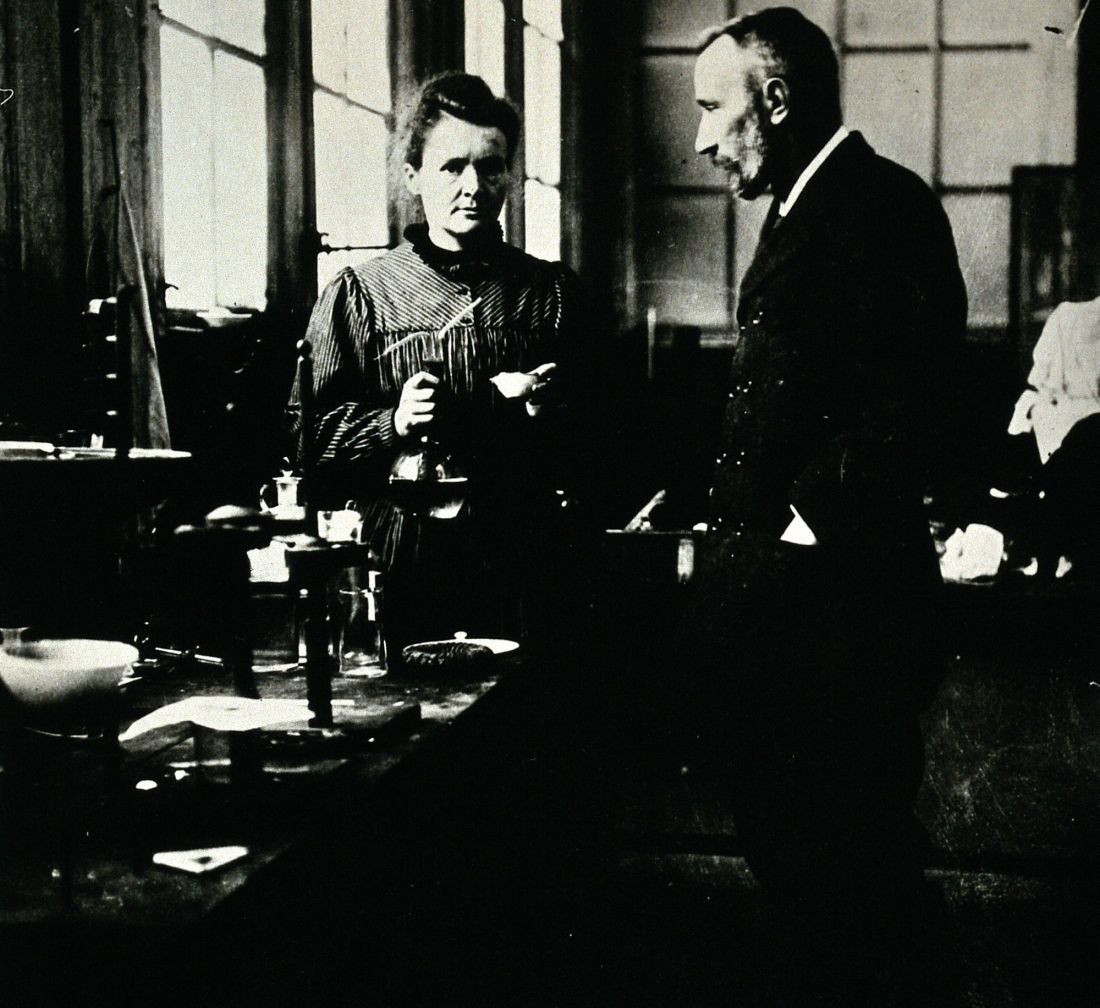
It was after her degrees were completed that Mania went looking for space in Paris where she could continue her research. A fellow scientific researcher named Pierre offered a small space where Mania could begin her work. On meeting each other, they each later reported that a strong attraction was felt. Pierre eventually offered marriage, and, after weighing how much a marriage would have an impact on her research, Mania agreed. The pair was married in 1895. So, Paris brought Mania the education she sought and a life-partner (and research partner) she never knew she wanted or needed.

Of course, Mania was the nickname her family called her. You know her by her married name in France.

Marie Curie.