On a Circumnavigation

Your history books will tell you that Ferdinand Magellan captained the first expedition that sailed around the world in the early 1500s. If you remember your high school class, you’ll recognize that Magellan actually was killed by the inhabitants of what is now the Philippines, and it fell to one of his officers named Elcano to complete the voyage and, thus, become the person to get credited with the first around the world trip.

That period of history in Europe was filled with firsts, of course. Since Columbus made his trip only thirty years before, voyage after voyage left Portugal and Spain and went to the Americas. Those ships returned to Europe with the treasures of the newly recognized lands–gold, silver, other raw materials–and humans as well. The slave trade is a direct result of the Age of Exploration. In fact, Magellan took a slave with him on his ill-fated voyage, a man who had been given the name Enrique. No one, including Enrique, seemed to know his origin, but he was bought by Magellan as his personal slave for the journey.

Magellan’s trip had issues from the start. He himself was Portuguese, but he sailed for the King of Spain. Magellan’s Spanish crew resented him for this. By the time the first leg of the journey was completed in what is now Argentina, much of the crew mutinied. Magellan swiftly put down the mutiny and regained control by beheading the mutiny leaders and offloading others on the unfriendly coastline. That was followed by the harrowing journey through what is now the Strait or Straits of Magellan at the toe end of South America. The crew then didn’t see land for over 100 days. Scurvy, other sicknesses, and more talk of mutiny ensued. Finally, the voyage reached what was probably Guam, where the grateful crew spent some time enjoying land under their feet (and several local inhabitants were killed as well, sadly).

Finally, the voyage reached the Philippines. Without going into the details, the Europeans and the locals clashed, and the result was Magellan’s death at the hands of the locals. Despite the firepower of the Spanish men’s muskets, Magellan was felled by a poison arrow fired at him during a skirmish with one of the tribes there. That was when the expedition’s leadership fell to Elcano. With only one ship remaining and over 80% of the original crew that left Spain the previous year dead from one cause or another, the survivors of Magellan’s trip limped back to their home port in September of 1522 after a journey of over 50,000 sea miles.

Interestingly, it turned out that one of the members of Magellan’s crew had been able to understand and speak the language of the people in the Philippines. That person was Magellan’s slave, Enrique.

Now, if you think about it, Enrique had to have gotten from the Philippines to Spain one way or another. And that makes him–not Magellan or even Elcano–the first person to circumnavigate the globe.

On a Reformed Criminal

The age-old argument about incarceration centers around the reason for putting a criminal in jail. Is the primary purpose of imprisonment meant to be more punishment, or should it be more about rehabilitation? In the case of Eugene, it was both, really. He had been a career or life-long criminal. At almost the age of 40 and during a rare period he was not in jail, Eugene heard that a man with whom he had committed several crimes was executed by the state for murder. The news of his former partner’s death changed him.

So, Eugene decided to go straight. He still had some time inside that he owed to the state, but he told his captors as he went to prison that he wished to provide them with insider information in exchange for an early release. The chief of police of the national capital city agreed, and Eugene became a snitch. Except that no one really knew his identity because he gave his reports directly to the chief through codes sent through several channels. And Eugene’s information was amazing. His long history in crime had given him credibility in prison, and the other crooks trusted him and looked up to him. So, they told him all their plans, all their past misdeeds, and all their nefarious connections in the major cities of the country. And it all went to the ear of the chief of police through Eugene.

Having kept his part of the bargain (incredibly, so, given the amount and veracity of his information), and the chief kept his part, too. Eugene was released, but the authorities made it look like an escape so that his reputation both in and out of prison would remain intact in case his snitching skills were ever needed again. In fact, Eugene became an undercover police officer. He used his connections and reputation to gain entry to some of the most notorious criminal gangs in the nation. He would slide easily into and out of costumes, personalities, and personas to infiltrate into the core of gangs, cutthroats, drug rings, and illegal gambling operations. Crime decreased dramatically nationwide because of Eugene’s efforts as an undercover cop.

It was at this point that Eugene had a brainstorm. If he could be this effective as a plainclothes policeman, surely an entire division of the police department, all made up of former (now trusted and reformed) criminals could be super efficient at stopping crime. The police chief agreed, and he gave Eugene the authority to establish an undercover squad for this purpose. Eventually, 28 former criminals and former jailbirds made up Eugene’s secret, undercover police squad. They soon led the nation in major crimes arrests and convictions. The group uncovered assassination plots against politicians, they foiled bank robberies, and they broke up counterfeiting rings.

But there was one problem. Eugene was still on the books as a wanted, escaped criminal. His arrangement had been with the chief of police and not with the magistrates and the court system. A pardon was requested, and, because of his great service to the nation over the years through the work of the undercover squad, Eugene received his pardon. For the first time in his life, he was truly a free, unwanted man. But his collaborator, the chief of police, was replaced by a man who didn’t like the idea of a group of policemen in his department being made up of former criminals, and he began putting pressure on Eugene to get rid of the squad and replace them with “straight” policemen. Eugene saw the handwriting on the wall, and, after over a decade of solid and valuable police work, he tendered his resignation.

Eventually, Eugene put his years of work on both sides of the law to work as a private investigator. And, as he did when he worked for the police, he hired both male and female convicts as his agency’s operatives. The business thrived–perhaps too well. Soon, the police themselves began to complain that Eugene’s company was taking cases and solving them to the point that they had little work to do. His inventive and creative processes of documenting and analyzing such things as crime scenes and of identifying criminals have become standard stuff in not only private investigating firms but also in most police forces worldwide. If you’ve seen a line-up, a photo array of potential perpetrators, a systematic cataloging and documenting of a crime scene, plaster casts of shoeprints, bullet ballistics, and so on, then you’ve seen something pioneered by Eugene. When he died in 1857 in Paris in his 80s, he was lauded as a great pioneer of police work.

You don’t know his name–Eugene Vidocq–but you know the word that describes him: Detective. And, since Eugene, every private and police detective, both in real life and in fiction, are modeled after him and his methods.

Not bad for a career criminal, eh?

On the Queen’s Death

It’s been some time now since Queen Elizabeth died peacefully in her sleep at her residence. She deserves a moment of reflection by us on a life well lived. While her death was not from an accident or some other misfortune, it was still somewhat of a shock to the nation. When any monarch rules as long as she did, to think that she no longer sat on the throne stunned most of her loyal and loving subjects.

Elizabeth had spoken of death many times. “I know I am mortal,” she said once in a speech to Parliament, “and have prepared myself for death, whenever it shall please God to send it.” Her measured words, delivered in a calm, matter of fact manner, reminded all of her nation that death is no respecter of persons, that it visits both rube and royal, both commoner and king.

She was literally born to rule if anyone ever was. Her father, a ruler who saw the nation through perilous times and through terrible struggles, who led the nation for much of the middle part of the previous century, had not produced a son. It had therefore fallen to Elizabeth to assume the throne at a young age when the crown was vacated. At the time, some questioned whether such a young girl could rule, could wield power, and hold the nation together, but Elizabeth more than proved her detractors wrong.

When she passed, a simple notice was made on the gates of the residence. A crowd had gathered after hearing of her being unwell, expecting the worst but praying for the best. The murmured prayers and lit candles on behalf of the beloved monarch stretched up and down the street in front of the gates. After the announcement, the assembled crowd fell into hushed reverence, as the prayers became silent ones for both Queen and country.

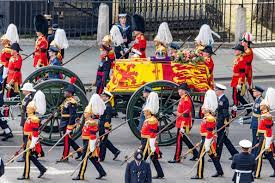
As you know, Elizabeth’s funeral was attended by hundreds of dignitaries. The amount of sorrow over her death and the respect for her years of service affected all who saw the event. People began to wonder what would happen to the nation now that Elizabeth was gone. What would the new King be like as a monarch? Even if the incoming monarch were to prove capable and a good ruler, the consensus was that there would never be another like her.

And Elizabeth also had a way of engaging her people with her life. She set trends for the modern monarchy but also in the areas of the arts and fashion as well. Historians will continue to look to her time as monarch as sort of a golden age in the nation that may well never come again.

In fact, Queen Elizabeth I, who died in March, 1603, is known today as the greatest queen in England’s storied history.

On an Administrative Conference

The United States is a nation of laws. In other posts, we have talked about how the courthouse is at the center of the county administration in the various towns and cities in the US. This is different from some of Europe where the church is often the center of town. Not that laws are not important to Europe, because they are. The point is that Americans believe strongly in the rule of law, and that concept lies at the center of American democracy. All American law springs from the US Constitution. So it is imperative that if some administrative action is to be enacted in the United States that it be codified into a law.

That concept is not unique to the United States, of course. I am thinking on this day of the codification of certain concepts in Germany 81 years ago. On January 20, 1942, a collection of administrators, including several licensed attorneys, eight of them holding doctorates, met in a villa in a suburb of Berlin to discuss the changing of citizenship laws in the country and how to deal with the movement of displaced persons in areas under their control.

From a purely superficial, administrative perspective, this meeting was necessary. The organizers argued that the war had created increasingly large areas of Europe to administer and had produced a large number of refugees going in all directions. By 1942, the military gains by Germany required a reshuffling of German citizenship law. And, being mostly attorneys and administrators, they all recognized the need to have these changes codified.

These reclassification proposals targeted 11 million people in Europe.  Again, you can begin to see that the administrative tasks were overwhelming in the minds of these administrators. You had to deal with transportation issues, food, clothing, healthcare, as well as housing. Not to mention the fact you were dealing with several different languages all across German occupied Europe. And the people were from several other nations and ethnicities.

And, again, these same types of questions are facing the United States today. Should we in the US grant these people any kind of civil rights that are normally reserved for citizens only? What obligations do we have for their welfare if they are not, to put it not politically correctly, of our kind? Maybe we don’t grant these refugees any rights at all, some people argue. Sadly, there are politicians in the United States who are treating the refugees as less than human.

And it may not surprise you that every one of those administrators at this conference in the outskirts of Berlin in 1942 felt exactly the same in dealing with the influx of what they considered “others.”

In fact, the codification of laws that the Nazis discussed at this meeting held in Wannsee on January 20, 1942, ultimately decided that the best and most efficient way to deal with the Jews was simply to kill them all.

On Discovering a Body

Erika and Helmut loved climbing in the mountains. Germans have long been mountain climbers even before the pastime became a middle-class sporting activity. In mid-September, 1991, the couple were on a climbing vacation and hiking near a glacier along the Austrian/Italian border when they came upon the body.

The man was clearly dead, and, being in the Alps, the pair assumed that the man died of injuries sustained in pursing mountain climbing. After all, the hobby is not without its inherent dangers; rock and snowslides, sudden storms, altitude sickness, and more can overtake even the most experienced climbers. So, accidental death seemed to be obvious thing for Erika and Helmut to assume when they contacted the authorities and reported finding the body.

Their assumptions were wrong. First of all, the man had no ID on him. Forensic scientists believed he was around 45 years old, and he was fairly short (about 5’5″ or 1.7 meters tall) and thin. His clothes were simple and the things scattered near his body told of someone who was in the mountains for something other than sport. Moreover, the scientists could tell that this man had been healthy when he died. And then the mystery deepened. They found the wounds. The man had been shot through his shoulder, and the projectile had hit a major artery. They had found the cause of death, at least.

As to who shot him, well, there was no way to tell. The ice from the glacier had preserved him, luckily, but that did not help the doctors with what led him to be in that place at that time and receive the fatal wound he received. They were confident at the time that where he was found by Erika and Helmut was where the man had died; in other words, the body had not been moved there by the killer. However, it was later proven that the man had been killed elsewhere and the body was moved to the place where the German hiking tourists found him.

But who–or what–moved him?

We know that, most likely, the man’s body was moved not by a human but rather by the ice that had preserved his body. In fact, the body may have been moved a considerable distance by the ice. And that wound, that shot, still perplexed the scientists. After some full body scans, they discovered that the projectile was still in the body. But this information brought them no closer to determining who killed this mystery man.

On the other hand, the finding of the projectile did help them date the killing of the man, at least generally. You see, the projectile lodged in the man’s shoulder was an arrowhead. And the man found by Erika and Helmut, so well preserved by the ice that he looked like someone who had died recently and discovered in the Otztal Alps, probably died of his wound some 5,400 years ago.

He’s known today as Otzi, the Iceman.

On a Boat Trip

Charles had always been a sailor and an officer for various companies in Britain. When he retired from the sea in the late 1920s, he and his Australian wife, Sylvia, purchased a decrepit 58 foot motor yacht for about $3000 in today’s money. They named the vessel Sundowner. In Australia, a “sundowner” was a slang term for a bum or hobo. Charles thought the name was perfect, and the couple set about spending a considerable sum getting the old crate up to standards, and they added sails and completely remodeled the insides.

The couple used the vessel mostly to cruise the coasts of southern England and occasionally made the trip across the English Channel to skip along Europe’s northwestern edge. A few years later, when he was in his 60s, Charles received a message that his help was desperately needed, and the message asked if he could aid in rescuing some stranded folks on a beach. Charles contacted his adult son, who brought along a teenaged Sea Scout (like a Boy Scout but for sailing), and the trio quickly set off to do what they could to aid in the rescue.

An odd thing happened enroute to the rescue. Sundowner encountered another ship that was on fire. Charles pulled alongside the stricken vessel, and he and his crew of two took aboard the crew of the ship. They then continued on the original rescue journey. When they arrived at the beach, they realized that the water was too shallow for them to pull near enough to shore to bring those there aboard. So, Charles sent word to have the people go onboard a ship that was tied up there, and from this other ship he took aboard all Sundowner could carry.

You’ve probably already guessed that Charles and his yacht were involved in the rescue of hundreds of thousands of men from the Dunkirk beaches at the beginning of World War 2. His boat and others like it managed to rescue 350,000 Allied soldiers over several days in 1940. Charles himself saved 130 that day. Yet, he never considered himself a hero. To him, it was simply doing his duty.

And he was used to doing his duty, even and especially in difficult situations. During World War 1, Charles had commanded vessels for the Royal Navy and received commendations for bravery. And back when Charles worked as a sailor and officer for private companies, he was assigned aboard some of the most famous luxury liners and ships in history. You know the most famous one.

You see, Charles Lightoller had been the Second Officer and most senior surviving crew member from the RMS Titanic.

On an Incorrigible Kid

The parents had no idea what to do with him. The boy stood before them as the dad read aloud the detention report from the teacher. “He refuses to do what he is told if he feels it is beneath him.” The mom silently shook her head in disapproval as the sentence was read. All the while, the boy stood with his chin thrust out, his head tilted slightly backwards in defiance, the lips pursed in distain.

“Son…” the dad began, but he stopped. He looked over at his wife, back at the boy, and continued. “You’ve had everything a boy could want. The best of everything we could afford. We’ve tried to reason with you, bribe you, punish you. You’ve been impervious to it all.” It was now the dad’s turn to shake his head.

He began the speech that the boy had heard for the past several years: How the dad was tired of receiving the weekly detention reports from the various private schools he’d been sent to an removed from, how a litany of high priced summer camps, counselors, priests, and tutors had tried in vain to change the attitude and thus the behavior of the boy.

And, all through the speech that, by now, the boy could recite verbatim, he maintained the defiant stance. But that demeanor changed because the dad was ending the speech differently this time.

“…and, so, your mother and I have made the decision to send you to a military school upstate.” This made the boy lower his chin and stare at his dad. He couldn’t believe what he was hearing. “You will be leaving tomorrow. This is something you have forced on your mother and me by your behavior,” the dad added.

So, at age 13, this boy was removed from the household and his family and the mansion and the chauffeur and was placed in a military boarding academy that specialized in dealing with incorrigible boys like him. There he was sometimes beaten and punished and hazed as never before. And it was there that he perfected the life-long ability to bully others.

The move to the military school changed him for the worse. Beside the defiance, which never left him, there was added resentment, embarrassment, and a strong feeling of abandonment that never left him. He would spend the rest of his life trying to prove he was beloved, accepted, and that his opinion was the right one above all.

By the way, at his last male prep school before the academy–a school which the boy had liked, actually–he had received so many detentions that the other boys began calling detention by the boy’s initials: DT

You know him as Donald Trump.

On a Hitchhiker

The old man in his truck with the camper on the back slowed down when he saw the hitchhiker on the side of the road. In instances like this, both driver and hitchhiker must make a split-second decision on whether or not to stop and whether or not to accept the ride. Most of that choice is made from, to use a colloquialism that is not easily defined, the gut. In the U.S., we call this feeling a “gut instinct,” which is, oddly, usually right.

The driver and his dog had been traveling around the United States simply because they could. It’s a big country, the old man reasoned, and he had seen some of it but was curious as to the parts he didn’t know. So, this being the early 1960s, he did what many Americans of the post-World War 2 era did–he decided to take a road trip. Much of what he and his dog had seen in the weeks they’d been on the road both pleased and surprised him. He never realized, for instance, how vastly different the rest of the nation felt about many political issues outside of his native California, for instance. Besides speaking to patrons and workers at roadside diners, the old man decided to pick up hitchhikers in order to get a taste of what they felt about societal issues.

Now, you must remember that hitchhiking was much more prevalent 60 years ago. Even in the 1980s, for example, I hitchhiked across several states, but such a thing would be almost impossible today. But, back then, it was an acceptable way to get from one place to another. And, in this instance, the old man pulled over when he saw the young man with his thumb out–the American sign for hitching.

The young man wore dirty clothes, and his longish blonde hair was tangled, his face pock-marked with acne scars. As the young man opened the door and climbed in, he thanked the older man in a deep southern drawl. The old man introduced himself and his dog, and the young man reciprocated. They continued down the road, and the conversation began. It started amicably enough as the pair exchanged pleasantries and brief biographies of themselves.

Then, the conversation changed. The older man told the young person about his journey, how he had been startled to find out that much of America (especially the middle and the south) was ultraconservative. He talked about how disappointed he was that America seemed to have learned nothing from the fight against Nazism in World War 2 when it came to race relations. He pointed out the way Native Americans were looked down on in the mid-west and south-west and how badly African-American minorities were treated in the south. This caused the young man to turn in the truck seat to almost face the older driver.

“Them folk outta be happy we let them even live in the south,” the young man began. “They got no right to try to feel like they’se equal in any way to white people.” He went on to say that groups that fought against desegregation, groups like the White Citizens’ Council and others, were modern-day heroes for working hard to maintain the status quo. At this point, the older driver had heard enough. He stopped the young man. “Are you saying that these minority groups do not deserve equal protection under the law?” he asked. “Nossir!” the young man replied. “They sure don’t. Why, have you seen ’em? They ain’t even people, really!” And he began to loudly harangue the older man.

The old man braked sharply and jerked the truck to the side of the road. The dog began barking sharply as the driver ordered the young man out of the vehicle. Even as he quickly pulled the truck away from the racist younger man, the driver could still hear his curses and racist rhetoric being yelled at him.

The encounter proved to be a breaking point for the older man. He felt saddened that even the younger generation of a large swath of the American population perpetuated the racism he had hoped was dying out in the nation. His journey of discovery of his beloved nation was over, and, in his mind, was a failure.

“Charley,” John Steinbeck said wearily to his dog, “let’s go home.”

On a Broken Promise

If you happen to ever travel through London Heathrow Airport, you’ll literally see the world pass by you. People from all corners of the globe go through that international hub, and that traffic of world-wide guests is magnified by the fact that the British Empire used to be the world’s largest. With colonies on every continent of the world at one time (yes, even Europe–check out Gibraltar), it’s no wonder you can see a veritable United Nations pass through Heathrow.

In the 1800s, Britain still had a tight control over a sizeable amount of land in Africa. One of the colonies in Africa was what would become Rhodesia, now the independent nation of Zimbabwe. And in the late 1890s, the local people rose up to fight against the colonial power. Today, that largely forgotten and terribly violent war is known in the UK as the Second Matabele War. The name implies that there was a first Matabele War, and, of course, there was. Wars against colonial oppressors were fairly common across not only Africa but also Asia and other parts of the world where European, American, an other colonizing powers worked to subjugate people for monetary gain.

Into this Second Matabele War came a British officer whose wife would call him Robin, and, therefore, so shall we. Robin had risen from the rank of lieutenant and sometime scout/spy to becoming a major in the British Army by the time he arrived in Africa to help relieve the besieged British garrison in Bulawayo. In his short time there, Robin managed to work out an agreement with one of the leaders of the uprising for him to surrender peacefully. In return, Robin promised, the man would not be punished if he cooperated. So, acting on Robin’s word, the man surrendered–and was promptly arrested.

The man turned out to be not only a miliary leader of the local people, but he also carried the distinction of being somewhat of a holy man as well. His name was Uwini. When Uwini was arrested, he was accused of taking part in the killing of some British settlers in the area. The facts of the situation were disputed, but that didn’t seem to stop a military court from finding Uwini guilty of murder. They sentenced him to be executed by firing squad.

As one of the officers over the court martial board that sentenced Uwini, Robin had the verdict come across his desk. He had the option to commute the sentence, and, given that he had promised no harm would come to the man if he did surrender himself., probably should have commuted it. However, Robin did not do so. He signed off on the execution, and Uwnin was taken to the edge of a nearby jungle and executed for the killing of the settlers.

Well, even the British military knew this stank. They brought Robin before a military court of inquiry into his actions. However, the military court cleared him. After the verdict of innocence was announced, even the civil authorities in Bulawayo demanded an investigation and trial. This never happened, however, and the issue was dropped. Robin would later say at length that he had been completely exonerated of any wrongdoing. But people who knew him said that the incident dogged him inside.

Robin would go on to become a colonel and, finally, a general in the British Army. But that’s not why you know him. This man, who had his integrity (understandably) questioned, would go on to become an example to millions of how to live ones life with character, forthrightness, moral fortitude, and clean living.

Interestingly, Robin would later write that if a young person says, “On my honor it is so,” that means it exactly that, “just as if he had taken a most solemn oath.” In fact, this concept was so important to him, that Robert “Robin” Baden-Powell made this the first law of the Boy Scouts.

On An Exodus Route

The 1930s could be seen as the most pivotable decade of the incredibly violent and paradigm shifting 20th Century. Hitler (and Roosevelt, too) came to power. Japan invaded China. Italy attacked Ethiopia. All of that sets up World War 2 that began in 1939. None of those events begins to look at the absolute disaster that the worldwide Great Depression brought upon everyone.

It’s difficult to fathom 25% unemployment. We can’t imagine not being able to use banks for our economies. A large segment of the population simply not being able to eat is beyond our ken in most of the western world today. Yet, all of that happened in the United States in the 1930s. We have since learned that the Great Depression didn’t begin when the Stock Market crashed in 1929. The grim descent into economic collapse that bottomed out in early 1933 actually started for farmers a few years earlier.

Farmers began to feel extreme economic pressure in the 1920s due to several factors. First, small farmers were finding that they could not keep up with the emerging economy of scale as large, corporation-owned farms began to emerge and started to squeeze prices verses the costs of farming equipment. This forced many small farmers into bankruptcy. Secondly, the middle years of the 1920s saw extreme drought in much of the farm belt mid-west. Finally, outdated farming methods exhausted land and made it useless and unproductive. The result is known as the Dust Bowl, where farmers found that their land literally dried up and blew away.

One of the hardest hit areas was Oklahoma, Texas, Arkansas, and Missouri. So, desperate for food and for ways to provide for their families, many of the farmers there simply abandoned their farms and moved to California. And the route these desperate people took to get to California was along a highway that was one of the first numbered roads in the United States when it was constructed in the early 1920s. It ran from Chicago to Santa Monica, almost 2,500 miles and through seven states.

When John Steinbeck wrote his epic novel, The Grapes of Wrath, he depicted the fate of these Dust Bowl farmers, and he used this same highway as a metaphor for what was happening to the people. He said it represented both despair (the place they were leaving) and hope (their destination), and he likened it to the route the Hebrews took in the Bible from slavery in Egypt to the Promised Land, a journey known as the Exodus. Steinbeck termed the route The Mother Road of America because it birthed a new way of living for these migrants who were so desperate for a start-over. Because they were united by the journey and, thus, the route, Steinbeck pointed out that the journey itself became a unifying experience, an shared moment in history, for these desperate farm families. Think of it as a poor, poverty-driven “on the road” story.

The highway, as you know, is labeled Route 66. Today, it is used by vacationers and tourists, cyclists and RV-ers, people who travel the route for fun and adventure. Most of these travelers probably do not realize that it was the road used by over 300,000 Americans in the 1930s who left behind a dry and barren land for the vision of a green and prosperous Promised Land during our version of the Exodus.