On A Pen Pal

Thomas Stearnes (T.S.) Eliot was one of the 20th Century’s greatest poets. Born in the United States and choosing to live most of his life in the UK as a British citizen, Eliot was awarded the Nobel Prize for Literature in 1948. His lasting reputation rests on two major works, The Waste Land and The Love Song of J. Alfred Prufrock. This reputation was further enhanced by his plays (a handful of Tony Awards) and his groundbreaking literary criticism.

What few people realize is that Eliot had a relationship with an unlikely pen pal, a man named Julius, over the course of several years later in his life. Eliot and Julius were near the same age, and they wrote each other letters expressing great admiration for the other, but they never really spoke in the writing about their respective jobs. Julius was not in the literary game, you see, so the pair of pen pals didn’t seem to have that much in common. Yet, they wrote several warm and interesting letters to each other in the early 1960s.

With Eliot living and London and Julius making his home in California, the letters made their way slowly between the two men. They even exchanged photos through the letters. “I had no idea you were so handsome!” Julius teased Eliot in reply after receiving the poet’s picture. When Eliot received his picture of Julius, he quickly dashed off a response: “This is to let you know that your portrait has arrived and has given me great joy and will soon appear in its frame on my wall…” These two men, from vastly different walks of life and from divergent backgrounds nevertheless felt a kinship because of the gratitude each felt towards the other that pen and paper were taken up and heartfelt words were exchanged.

Because of the obvious connection these two correspondents had, because of the frankness of their opinions about many subjects both profound and sometimes profane, the letters make for interesting reading. For example, Julius didn’t really know or pay much attention about Eliot’s family life. He once signed off a letter saying, “Give my best to your wife–whoever she is at the moment” (Eliot had been married twice before). Julius also often referenced his Jewishness knowing that Eliot had a reputation for being at least tacitly anti-Semitic. And, not being completely understanding of Eliot’s socially conservative attitudes towards most topics (or, perhaps, not caring), Julius also told the poet to not be shy about writing to him about his views on sex. “Confide in me about it,” he told Eliot. The famously prim poet did not honor that request. However, he did express a desire to meet Julius and his wife if the couple were ever to make their way, as the British say, across the pond.

One day, Eliot received a letter that Julius would indeed be coming to London on business. Eliot quickly wrote an answer and invited his fellow letter writer for dinner one evening in London at Eliot’s house. In a letter written to one of his brothers the day after the dinner, Julius described the meeting. It turns out that both men seemed to be underwhelmed when meeting face to face. Julius wanted to impress his famous pen pal, so he read and re-read The Waste Land and memorized some of Eliot’s poems. He recited portions of them to Eliot at the dinner, but the poet merely smiled. Eliot, for his part, tried to ask Julius about his work, but Julius wasn’t interested in re-hashing his life. “He asked me to call him Tom,” Julius reported to his brother. “And, since I never liked the name Julius, I asked him to call me Tom as well,” he added.

But isn’t that type of joke something you’d expect from Groucho Marx?

On A Happy Place

Where is your happy place?

Happiness is one of the major pursuits of our existence. For America’s founding people, such as Thomas Jefferson, property made him happy. That’s why, in part, he changed John Locke’s “life, liberty, and property” to “pursuit of happiness.” But our modern consumer culture has proven over and over that the endless pursuit of stuff leads to a receding horizon of contentment and, ultimately, depression.

(Cue Rod Serling Voiceover) Imagine if you will, a peaceful kingdom, a place where everyone is happy. Some people call such a place Shangri La. Some might see it as a utopia (a word that means, ironically, “nowhere”). For others, such a place could exist. Let’s see what such a happy place would be like.

If such a place existed, it would believe, foremost, in environmental protection. It would not be a law or rule or mandate; the people would simply believe that making sure all choices would be made with the future of the environment in mind. Children would be taught from the crib that sustainable resources and re-use of practically every consumer good would be keys to this protection.

There would be little or no fear of death in this happy place. People would be at peace with death being a part of life, they would see it as merely a natural progression into the next phase of our existence. People at peace with death are happier in life, so this would make perfect sense.

And, the happy place would not place an emphasis on material possessions. As we stated earlier, the pursuit of stuff leads to madness in the end, a distinct longing for that which we do not have. Desiring the next, the biggest, the best, the newest whatever consumer article is out there can only lead to disappointment. We will be happier in our hypothetical happy place if we find contentment in what we have, in realizing that we have enough for now, for here, for the moment (Obviously, I’m speaking from a wealthy, western perspective here). All the utopias of the past wished for the lifestyle the west offers today: Indoor plumbing, short work weeks, readily available and cheap food, instant heat and cool, rapid and personal transportation, etc. Yet, we are among the most miserable people who have lived based on life-satisfaction surveys. Thus, our happy place would not emphasize the pursuit of things as a priority.

Lastly, our happy place would not forget the lessons of the past and would practice the good things that the culture taught. New ideas would not be shunned, but they would be incorporated into the existing cultural framework. Age and wisdom would be valued. People would not pursue attempts to become or stay younger. People would be appreciated above position. Kindness, generosity, and love would prevail. Children would be allowed to be children, but adults would welcome and embrace the elegance of growing old.

So, that would be the happiest place on earth if it existed.

Guess what?

Such a place does exist. And they incorporate all the elements listed above. It’s a smaller, land-locked nation in Asia It’s a country that, rather than make fiscal wealth the most important indicator of societal health (using measures like Gross National Product), they have chosen another measurement. They call this measure of national well-being the Gross National Happiness Index.

It’s the nation of Bhutan, and it’s the happiest place on earth.

On A Sneak Attack

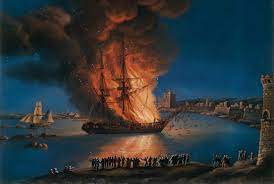
The American warship, the frigate USS Philadelphia, lay in harbor in the north African town of Tripoli. The year was 1804, and the young nation of the United States was still feeling her way in international relations. The Mediterranean coast of Africa was awash in pirating, and the US, wanting to expand trade to the lucrative markets of the Italian peninsula and on to the Turkish coasts, was taking a serious hit to their shipping. What we today call the Barbary Pirates were taking American cargoes and the ships that carried them. President Thomas Jefferson ordered American frigates like the Philadelphia into African waters to stop this pirating threat.

What no one in the harbor–and certainly no one onboard the Philadelphia–knew was that a band of saboteurs had plans to destroy the warship as it rested at anchor there. According to the story, about 80 men disguised their boat with a square sail that mimicked local ships. They chose for their attack a night when the moon was new. No one seemed to notice much as the disguised vessel drew alongside the Philadelphia. In Arabic, one of the men on the ship asked if they could tie up to the American warship because they had lost their anchor. Permission was granted for them to do so.

Suddenly, a loud order was given, and about 60 of the men jumped onboard the Philadelphia. Within ten minutes, the ship was seized. The attackers had lost no casualties in the short skirmish. Now, the intent was for the marauders to sail the American ship out to sea and, in effect, steal it. But the ship was soon discovered to not be seaworthy. As a last resort, in order for the enemy to not be able to use it, the commander of the attackers ordered that the ship be burned. They put incendiary devices all around the large ship, and they set it ablaze. The commander then ordered all the attackers to return to their boat.

As the Philadelphia began to burn, the gunpowder began to ignite as well. Explosions rocked the harbor. In the confusion and fear caused by the burning vessel, the attackers were able to barely escape and made their way to the open sea, their mission happily accomplished. The fact that this feat could be accomplished without a single loss of life was amazing. This commander was lauded for his audacity and bravery. None less than British Admiral Lord Nelson is reported to have called the raid, “The most bold and daring act of the age.” Even the Pope at the time commented on how daring and bold the attack was.

It might surprise you to learn that, when the news of the destruction of the Philadelphia reached the United States, there was great rejoicing. Yes, this act was lauded by both press and public. And it might further surprise you to learn that the leader of this daring raid was actually an American naval captain named Stephen Decatur. And the party Decatur led was made up mostly of United States Marines. You see, the Philadelphia had been captured by the pirates, and Decatur had orders to take it back or, if that were not possible, to destroy it so the Barbary Pirates couldn’t use it.

And so he did.

That’s also why, in the Marine Corps Hymn, they sing, “From the Halls of Montezuma to the shores of Tripoli…”

On Some After Work Drinks

Sam and Harry had been through a rough but satisfying day at work. The organization they both worked for had been busy for the past few years in the Allied war effort. It was April, 1945, and the war had only a few short weeks left. Sam and Harry both knew this for sure, and the fact the United States was going to win the war gave them both great satisfaction. Besides both being southerners, the two men were the heads over their respective departments at work, and, as such, they had much in common both at work and in their home lives.

As the pair was getting ready to leave work that day, Sam invited Harry to his office so they could have a drink. The two were old friends, and they knew each other well after years of working together. And, as old friends do, Sam and Harry could get a lot of work done with talks over a few highballs, sometimes even more work than they could do when they were actually performing their jobs. Sam, as he usually did, loosened his tie and propped his feet on his desk. Harry never loosened his tie; it was a mark of the man that, while he was not wealthy, he dressed well and took pride in his immaculate work wear.

The two co-workers talked for awhile about Harry’s family. Sam had no children, and his homelife was lonely since he was divorced. That’s another reason he appreciated Harry’s willingness to stay and share a drink with him. There wasn’t much for Sam to go home to. Harry’s daughter had recently turned 21 and was wanting to pursue a musical career. Harry was in the middle of his second glass of Sam’s whiskey and his usual diatribe against his daughter’s career choice when Sam’s phone rang.

The two men looked at each other. Answering the work phone after hours couldn’t lead to anything good. It had to be someone who needed something, something the two men would not want to address. “Let it ring, Sam,” Harry advised. “They’ll stop in second.” Sam nodded and knocked back another swig of the bourbon. The phone stopped ringing. “See?” Harry said, and motioned towards Sam with his empty glass for Sam to fill it again.

But the phone rang again. And, again, the pair swapped looks. Sam sighed and leaned forward, taking his legs off the desk. He picked up the phone. “Yeah?” he answered. As he listened, Sam set down his glass. Harry could hear the voice on the other end of the line, but he couldn’t make out what the person was saying. “Yeah,” Sam repeated. “Right now. Got it.” He hung up the phone and turned to Harry.

“The boss wants us,” Sam said. “That was his secretary.”

“I thought he was out of town?” Harry said.

“Well, apparently he’s back, ’cause they just called from the house. We’ve got to go there right now. Side entrance,” Sam explained. Harry grimaced, and now it was his turn to set down his glass. Sam picked up the phone again and called for car. The pair made their way down to the street where a dark car waited by the curb. They entered it and rode the short distance to the boss’s house in silence. When they arrived at the large place, the security guard waved them in.

Harry got out of the car first and made his way to the side door of the large mansion. There was a woman waiting there for him. He greeted her warmly and, out of respect for the boss’s wife, removed his hat.

Eleanor Roosevelt took Harry Truman’s hand and, without emotion, said, “Harry, the President’s dead.”

On the Vanished Prairie

The concept of the Great Prairie or Great Plains of fertile grasslands that lie largely between the Mississippi River and the Rocky Mountains has been a mainstay of the American ethos even before the days that Lewis and Clark explored the Louisiana Purchase in the early 1800s. Those two adventurers brought back reports of how beautiful, how bountiful, how pleasant the prairie lands were, and farmers by the wagonloads made their way west to carve out their own private piece of the American Dream one farm at a time.

Except something happened in the less than 100 years from the time the first settler farms began dotting the wide open spaces of the prairies. The grasslands and the fertile soil beneath the grass began rapidly disappearing. Now, certainly, all of the land between the Mississippi and the Rockies isn’t prairie grassland, but the lion’s share of it certainly is, or was. But digging up the grasslands by the farmer’s plows destroyed that fragile ecosystem by and large. Grasslands take time to grow and mature. Those early settlers not only plowed the ground to grow grains but they also dug down into the dirt to use the solid sod to make their homes in the absence of large amounts of woodlands. That’s why many of them are referred to as sod-busters. They were also effective prairie busters. Because, you see, plowing destroys the entire root system of the prairie grasses, and with it, as we have said, the ecosystem.

It’s difficult to understand exactly how diverse the prairie grasslands were. Some botanists say that there were over 350 different species of grass that made up the prairies. This doesn’t even mention the wildlife and the insects, the moths and even the amphibians, that populated the land before it was destroyed. Such incredible variety, such wonderful diversity, would be amazing to recapture if we could restore the grasslands…somehow.

Of course, today, the advent of the modern corporate farm has also replaced the small farmers that first plowed the land more than 150 years ago in the prairies. They made matters worse, if that was possible, by buying up all the land they could, destroying even more valuable natural land. If the land could be somehow procured and set aside, and if somehow the original grass species could be found, then maybe, just maybe, a patch of prairie could be restored with all the flora and fauna that it protected and nourished. If even a square mile of undisturbed, virginal prairie land was to be found somewhere, somehow, it would be considered incredibly precious.

Well, we are in luck. And our undisturbed prairie land is found today in the most unlikely place. You remember those farmers, those sod-busters, who first destroyed the ecosystem? They died, of course. And their deaths, ironically, may just be the key to restoring the prairie ecosystem.

You see, there are sections of undisturbed prairie land, along with the flora and fauna, in the old fenced-in cemeteries that dot the plains today.

On a Pilgrimage

Being in rural central France for about 6 months, I have become familiar with this area’s part in the pilgrim trail that leads through Europe and ends on the coast of northwestern Spain. It’s known as the Camino de Santiago, and it is only one of several pilgrim pathways that crisscross Europe. Most religions have these pilgrim walks. For example, one of the major tenets of Islam is for the faithful to make at least one pilgrimage to Mecca, the holy city in Saudi Arabia, in one’s lifetime. And that’s what one American Muslim man decided to do in 1964.

He had been born in Omaha, Nebraska, hardly the place where a Muslim would originate in the United States. As a young man, he was known to his family and friends as Red due to the reddish nature of his hair. Despite his rural origins, Red grew up in harsh neighborhoods of Boston. Through some hardships, he found religion and converted to Islam. The hajj, or pilgrimage, was part of what Red felt to be a life-long pursuit of growth towards a greater understanding of God and the pursuit of understanding himself and his fellow man.

It was on the pilgrimage to Mecca that much of what he searched for fell into place for Red. There, he encountered Muslims of many nations. The commonality of belief among the faithful there convinced him that faith could remove all of the things that separated us as humans: The hatred, the prejudice, the enmity and strife. All races and nations and ethnicities seemed to melt away in the face of the faithful Muslims red met there.

The feeling Red experienced in the brotherhood of man during his pilgrimage changed him. He returned to the United States after his trip and was immediately plunged into a slight depression because of the division he found, divisions that he had been allowed the luxury of forgetting while he was reveling in the unity of the pilgrimage. However, Red vowed to work to speak openly about the way his faith managed to erase the cultural, economic, and racial boundaries that have defined the United States since its inception. And speak he did.

In fact, Red angered so many people who were invested, emotionally, politically, and, sometimes, economically, in keeping Americans divided. He himself had been a part of spreading that division before his pilgrimage, and, now that he disavowed that mentality, some of his old acquaintances didn’t appreciate his newfound enlightenment. Some of them were so angry at Red for espousing brotherhood and unity that they decide to silence his voice.

And, so, on February 21, 1965, the man you know better as Malcolm X was killed because he espoused peace.

On Salvation

In honor of the great poet Langston Hughes and Black History Month, I offer his short (true) tale, “Salvation.”

———————————————————–

I was saved from sin when I was going on thirteen. But not really saved. It happened like this. There was a big revival at my Auntie Reed’s church. Every night for weeks there had been much preaching, singing, praying, and shouting, and some very hardened sinners had been brought to Christ, and the membership of the church had grown by leaps and bounds. Then just before the revival ended, they held a special meeting for children, “to bring the young lambs to the fold.”

My aunt spoke of it for days ahead. That night I was escorted to the front row and placed on the mourners’ bench with all the other young sinners, who had not yet been brought to Jesus.

My aunt told me that when you were saved you saw a light, and something happened to you inside! And Jesus came into your life! And God was with you from then on! She said you could see and hear and feel Jesus in your soul. I believed her. I had heard a great many old people say the same thing and it seemed to me they ought to know. So I sat there calmly in the hot, crowded church, waiting for Jesus to come to me.

The preacher preached a wonderful rhythmical sermon, all moans and shouts and lonely cries and dire pictures of hell, and then he sang a song about the ninety and nine safe in the fold, but one little lamb was left out in the cold. Then he said: “Won’t you come? Won’t you come to Jesus? Young lambs, won’t you come?” And he held out his arms to all us young sinners there on the mourners’ bench. And the little girls cried. And some of them jumped up and went to Jesus right away. But most of us just sat there.

A great many old people came and knelt around us and prayed, old women with jet-black faces and braided hair, old men with work-gnarled hands. And the church sang a song about the lower lights are burning, some poor sinners to be saved. And the whole building rocked with prayer and song.

Still I kept waiting to see Jesus.

Finally all the young people had gone to the altar and were saved, but one boy and me. He was a rounder’s son named Westley. Westley and I were surrounded by sisters and deacons praying. It was very hot in the church, and getting late now. Finally Westley said to me in a whisper: “God damn! I’m tired o’ sitting here. Let’s get up and be saved.” So he got up and was saved.

Then I was left all alone on the mourners’ bench. My aunt came and knelt at my knees and cried, while prayers and song swirled all around me in the little church. The whole congregation prayed for me alone, in a mighty wail of moans and voices. And I kept waiting serenely for Jesus, waiting, waiting – but he didn’t come. I wanted to see him, but nothing happened to me. Nothing! I wanted something to happen to me, but nothing happened.

I heard the songs and the minister saying: “Why don’t you come? My dear child, why don’t you come to Jesus? Jesus is waiting for you. He wants you. Why don’t you come? Sister Reed, what is this child’s name?”

“Langston,” my aunt sobbed.

“Langston, why don’t you come? Why don’t you come and be saved? Oh, Lamb of God! Why don’t you come?”

Now it was really getting late. I began to be ashamed of myself, holding everything up so long. I began to wonder what God thought about Westley, who certainly hadn’t seen Jesus either, but who was now sitting proudly on the platform, swinging his knickerbockered legs and grinning down at me, surrounded by deacons and old women on their knees praying. God had not struck Westley dead for taking his name in vain or for lying in the temple. So I decided that maybe to save further trouble, I’d better lie, too, and say that Jesus had come, and get up and be saved.

So I got up.

Suddenly the whole room broke into a sea of shouting, as they saw me rise. Waves of rejoicing swept the place. Women leaped in the air. My aunt threw her arms around me. The minister took me by the hand and led me to the platform.
When things quieted down, in a hushed silence, punctuated by a few ecstatic “Amens,” all the new young lambs were blessed in the name of God. Then joyous singing filled the room.

That night, for the first time in my life but one for I was a big boy twelve years old – I cried. I cried, in bed alone, and couldn’t stop. I buried my head under the quilts, but my aunt heard me. She woke up and told my uncle I was crying because the Holy Ghost had come into my life, and because I had seen Jesus. But I was really crying because I couldn’t bear to tell her that I had lied, that I had deceived everybody in the church, that I hadn’t seen Jesus, and that now I didn’t believe there was a Jesus anymore, since he didn’t come to help me.

From The Big Sea by Langston Hughes copyright 1940, renewed 1968.

On a Veteran Soldier

Saeed sits wearily in his family’s kitchen on a stool. The Yemeni soldier has been granted leave to visit home for the first time a few months from the fighting in his country. Yemen’s civil war rages on, and Saeed has witnessed more than his share of the fighting. He’s a veteran of several battles by now and has been in the service of the government (loyalist) forces for over two years. The war has been destroying the nation since 2014, and he is unapologetically pro-government, Saeed is. He feels that his service is important, that his participation will help to pass on a good, safe, and prosperous Yemen to the next generation.

His family is, of course, relived to see him come home if only for a few days. The fighting is fierce, and, even though the government forces for which Saeed fights has the advantages of better training and equipment, they still face high odds of being captured, injured, or killed by the rebels. Yemen has a population of around 30 million people, and over 20% by some estimates have been displaced by the war. The rebels uses IEDs, booby traps, and often work clandestinely to maim or kill government soldiers like Saeed. So, there’s the added tension for him that death could be lurking under a car he walks past or from an open window he walks under.

Yemen, for those who don’t know (and most people outside of Yemen probably don’t) is located at the southwestern end of the Arabian Peninsula, on the coast of the Red Sea to the west and the Gulf of Aden and the Arabian Sea to the south and east. Unlike their wealthy neighbors like Saudi Arabia, Qatar, and the United Arab Emirates, Yemen is largely poor, and the war is not helping that situation at all. And that is also why Saeed fights.

He’s seen death close up. He has killed men and women. He has dreams, he says, nightmares of the deaths of friends and the corpses of his enemies. He tells the story of coming across the dead body of his older brother, a story he doesn’t recount to his mother, but one that he tells his father in secret.

Saeed’s dad had been a veteran as well a generation ago. And Saeed’s third brother also fought in the war. Bravery runs in the family, it seems. “Brave men become martyrs on battlefields,” Saeed says as as if it were a matter of fact. “But cowards die in their homes.” His dad echoes this idea. “If a man has a brave heart, he can fight.” Saeed’s dad is proud of all of his sons, but he’s especially proud of Saeed.

And that’s because Saeed’s situation is a little different than some other soldiers. You see, when Saeed first entered the military and joined the government forces in their struggle against the rebels, he had left his education behind to do so.

And, like the other more than 100,000 child soldiers around the world–and fully 1/3 of the soldiers in Yemen’s military–Saeed’s childhood was lost forever when he joined the army at the age of 15. The news story from which this post has been taken is a few years old, and there is no way of knowing what has become of Saeed today, sadly.

February 12 was Red Hand Day, the day we remember that these children should not have to fight and die in wars.

On a Stolen Masterpiece

Alexis Pulaski was a wealthy Russian emigree who left his native land when the communists took over in the late 1910s. Pulaski cultivated the image of a member of the Russian nobility, and he never corrected anyone who referred to him as “Count” Pulaski. In any case, he managed to keep a goodly portion of his Russian fortune and take it with him to New York City, setting up shop there and producing, for lack of a better term, masterworks. Some of Pulaski’s creations sold for a good deal of money. There was one creation, however, one special creation that Alexis Pulaski had managed to produce with care and precision, He labeled this product his Masterpiece. Pulaski’s Masterpiece was, to him, literally priceless.

The Aga Khan offered tens of thousands of dollars for Pulaski’s Masterpiece, but the Russian told him and all other would-be buyers, effectively, “No sale!” On the other hand, Pulaski did often offer to display his Masterpiece for a small fee. You could come and look at Pulaski’s Masterpiece for a few moments, appreciate the beauty and composition, and then politely be ushered out of the room. To be in the presence of Pulaski’s Masterpiece, it would set you back a minimum of $500, and this was during a time that $500 was more than several month’s salary for most people. Over the years, Pulaski made a small fortune charging people to come to his salon and showing off his Masterpiece to his high-society and appreciative viewers. He would stage his Masterpiece in an expensive frame, carefully putting low lighting on the subject so to affect even more drama for his paying customers.

Now, for some folks, $500 was too high a price to pay to see something that was only 9″ in size. For others, no price was too high to be in the presence of Pulaski’s Masterpiece. The people who came far and wide to observe were quick to notice the beauty, the grace, the perfect proportions of Pulaski’s Masterpiece.

One day in May, 1953, someone came into Alexis Pulaski’s salon in the Upper East Side of New York and walked out with Pulaski’s Masterpiece. Pulaski reported it missing at 1:35pm to the police. “I don’t understand it,” Pulaski told reporters who hustled to the scene. “It’s like stealing the Hope Diamond. The whole world knows my Masterpiece. There is nowhere a thief can hide.”

A large reward was put out for the return of the stolen Masterpiece. Alas, there were no leads, and this was in the days before video surveillance cameras were in operation. The only possible clue might have been a lady with a red coat and a fur boa who was witnessed leaving Pulaski’s place about the time he noticed his beloved Masterpiece missing.

Sadly, Alexis Pulaski would never see his wonderful and perfect Masterpiece again.

“Why would anybody steal my Masterpiece?” Pulaski wondered in an interview some years later. “A dog like that cannot be replaced.”

On a Dance Craze

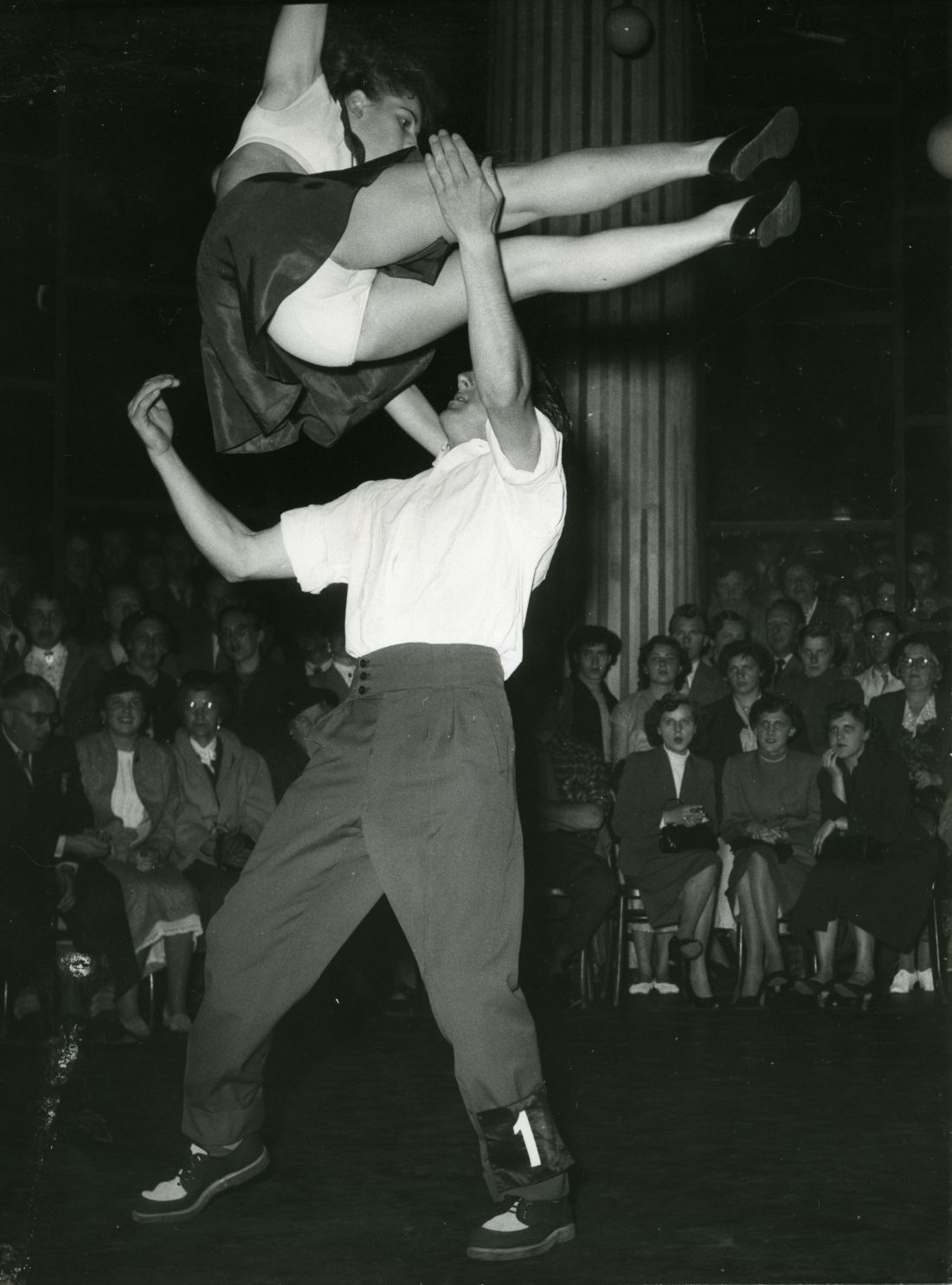
You know how these things go viral, yeah? Someone starts something, other people see it and like it, and they start imitating it, copying it, and making it their own. The craze then spreads like wildfire. We see it all the time. We label such things memes or trends. This is the story about one such craze that happened back in the summer of ’18, and it’s about a dance.

Best we can tell, this particular dance phenomenon started in Strasbourg, France that summer. A young woman began dancing in the street and soon gathered a crowd to watch her perform. Sounds sort of like the start of a flash mob, doesn’t it? But this particular woman was dancing solo, at least at first. And, the weird thing was, she simply kept dancing. And dancing. And dancing. The crowd of observers, first appreciative and admiring, soon turned to boredom as the woman’s performance seemed to have no end. For hours she danced in the streets of her city.

People began to wonder what was up with the woman. Why was she dancing for such a long period? And, the even weirder thing was, slowly, other dancers began joining her. Soon, over the period of some days, reports say that upwards of a few hundred of her fellow Strasbourgians (Strasbourgoise? Strasburgers?) began dancing, too. What we know for sure is that the original dancing woman eventually fell into exhaustion, but her place in the dancing performance was taken by several others.

The local authorities became worried and wanted to get involved somehow as more and more people joined the seemingly eternal dancing. Should they order people to stop dancing? Should arrests be made if people didn’t quit dancing? The local leadership efforts to do something about the event were ultimately stymied because, well, dancing in public isn’t really a crime after all. Doctors were called and stood by to assist the worn-out dancers as they began to fall out from sheer tiredness. Even local ministers begged the dancers to quit dancing, but their pleas were ignored by the whirling durvishes.

From July to September, these dancing people danced their lives away. And you know how these things go; rumor or gossip or “fake news” reports odd things that sound almost conspiratorial. These people were on drugs or drink, some said. They suffered from a sickness, some said (this particular theory gained traction even more when the later plague came through). The dancers had been stricken with mass hysteria, some said. Some of the dancers had even danced until they died, some said.

What we know for sure is that we simply don’t know for sure why the first woman began dancing in the first place and why others joined her in such numbers. Again, we know that by September of that year, the dancing ceased and left as quickly as it came. And something else came and took the place of the dance craze in the public’s imagination.

Of course, much of this is conjecture. After all, it’s hard to get accurate information on something that happened in 1518.