On Visiting An Old Home

Take it from someone who has rented far more than he has owned: Moving often from place to place stinks. And temporary homes can be difficult places to create family memories. Before us we have the case of a small family of four who lived in a house for three years before having to move out. The husband, wife, and two small kids moved into a place south of Baltimore in the early 1960s because of the husband’s work. While there, the wife had lost an infant son, so there was that trauma the family went through while living there. On the other hand, the family also experienced some joy there, as families do, on holidays and birthdays and the like.

Then, in the third year there, the husband passed away suddenly. The young widow had to move, and she decided that she and the two children under the age of 6 should move in with family up north. The owners of the property were sympathetic to the tragic circumstances; they allowed the woman and her kids to take all the time they needed to pack up. However, knowing that she really couldn’t stay there (and another family waited for them to vacate), the woman managed to organize a move from the house within two weeks after her husband’s funeral.

Years passed.

As the children grew, the woman often thought of that house that had held such mixed memories for her. On the other hand, she also recognized that the place was the only house in which her kids shared any memories of their dad. So, she made arrangements to take her children, by then aged 13 and 10, back to the old house for a visit. She wrote to the then-occupants of the residence and asked if she and and the children could drop by sometime for a quick visit.

She received a warm letter in return welcoming the family back. And so it was, in 1971, that the widow–who had since remarried–and her two children went back to the house where they had lived almost 8 years earlier. Those occupants of the house welcomed them warmly because they understood that, even if the house was a temporary home, it was still home because of the memories made there, memories both good and bad.

The two children were taken in hand by the current occupant’s two older daughters. The four kids played with the family’s dogs while the adults visited. The widow quietly but sincerely thanked the occupants for being so accommodating in allowing them to intrude. The short visit concluded with good wishes, and when the family returned home, both children wrote letters of thanks back to the host family, telling them how wonderful it was to be in the only place where they remembered their dad.

The woman also penned a heart-felt thank you note.

“You can’t imagine the wonderful gift the your family gave me, and my children,” Jacqueline Kennedy Onassis wrote to Pat Nixon.

On a Hidden Affair

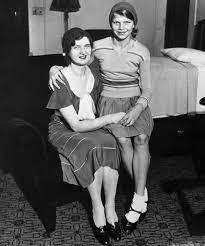
Nan knew the wealthy man was married. She didn’t care. He was extremely handsome, she thought. He made her feel pretty. He spoiled her. He even told her he loved her although they had to sneak around to meet. There was even one time that the man hid Nan in a storage closet in his office because his wife came in the room and almost caught them.

The wealthy man’s wife, well, she was the brains behind his wealth. It was her father who had been a successful businessman, and the father provided funds so the son-in-law could finance a newspaper he purchased. The father-in-law seemed to have been a good judge of character; he once threatened to shoot his daughter’s husband. He thought that he could keep better tabs on him if he put the man in his debt. He was wrong. The son-in-law had several affairs while married to the newspaper magnate’s daughter.

In fact, the man was cheating on his wife when he began meeting clandestinely with Nan. Nan first laid eyes on the man who would become her lover when she was only 15. Her father was the one who approached the man and told him of his daughter’s infatuation with him. Nan graduated from high school in 1914, and she moved to New York City to become a secretary solely in order to be closer to the man she loved.

Now, Nan wasn’t so naïve that she thought the wealthy man was with her exclusively. In fact, Nan knew his proclivities and that his appetite for intimacy meant he would have other lovers throughout their relationship. Again, Nan didn’t care. She was entranced by his charisma. And, he was indeed charismatic. People loved him. He wasn’t the smartest man in the room, but his personality definitely dominated it.

Then, in 1919, Nan became pregnant by the man. She had a daughter she named Elizabeth. The wealthy man promised that, no matter what happened to them, he would care for the child and provide for the two of them. Satisfied with this promise, Nan continued the affair.

However, the wealthy man died suddenly in 1923. Of course, the man’s wife refused to honor the promises of fiscal providence her adulterous husband had made to Nan. She even refused to acknowledge that Elizabeth was her husband’s child. As many people do, especially people of money and/or prestige, they set about burnishing the image of the person who died. And that’s what happened here. The wife-now-widow worked for the remainder of her life to keep her deceased husband’s reputation as untarnished as she could; for example, she destroyed love letters between her dead husband the the litany of women he had affairs with over the years.

Nan lived a good, long life. When she died at age 95 in 1991, she was surrounded by her family, Elizabeth’s children and grandchildren, and with a head full of fond memories of what she considered to be a fairly happy life. It wasn’t until 2015, almost 100 years after Elizabeth’s birth that DNA confirmed that Nan’s daughter was, indeed, the wealthy man’s daughter.

But, by then, President Warren G. Harding wasn’t remembered by many people anyway.

On a Great Legacy

Mohammed al-Fahri wasn’t born rich, but he became a wealthy merchant. When he died in the early 800s AD, he bequeathed his fortune to his two children. It was their legacy to do with it as they saw fit. One of his children, a daughter, had married, but her husband had died. So, this child decided to use her share of the inheritance to care for the poor and the sick. The other child, well, the other child had other ideas.

You see, al-Fahri made sure both of his children were well-educated. They were both raised in Islamic law, in philosophy, in logic, and in the sciences. For someone who came from a relatively poor background himself, al-Fahri wanted to give his children an education that he knew would benefit them no matter what they decided to do with their legacy.

It was the other child realized that the legacy left by their father was a double blessing. The money, yes, the money could do great good–in fact, both children even built mosques that specialized in helping the indigent–but it was this other child that realized the other legacy of the education was equally valuable.

So, using the inherited money, this other child expanded the original mosque that had been built by purchasing the land around the facility and building a large Islamic educational center. This major expansion took over a decade and cost most of that half of the inheritance. However, the mosque soon became a leading Islamic educational facility. Across the centuries it continued to provide education for Muslims and today is part of the University of al-Qarawiyyin in Fez, Morocco. It has become a repository for Islamic texts and learning that is famed not only throughout all of Islam but also throughout the world. Unusually for an old Islamic teaching institution, subjects are taught these days in both traditional and modern methods, so there is room at the university for people of all backgrounds. All in all, a lasting and fitting legacy that continues to this day.

UNESCO calls the site the world’s oldest continuing university. Interestingly, women were first admitted to the university in the early 1940s.

And that’s somewhat strange considering it was a Muslim woman–the other child of al-Fihri–who founded it.

On a Dam Coincidence

The title here is not a typo. The story is about the building of the structure that became known as the Hoover Dam. The name of the dam that was built on the Colorado River between Arizona and Nevada comes to us because the president at the time the funds were allocated for the construction was the much-maligned Herbert Hoover. Hoover, presiding over the worst economic downturn in American History, knew the construction of such a dam would have drastic and amazing consequences for the entire southwestern United States.

First of all, the influx of government money to the severely depressed region would be warmly welcomed. Jobs were created. The water collected by the dam led to an explosion of agriculture in an area that had largely been desert. Floods were controlled. Lake Mead was created. The electricity that the dam produced completely changed the lives of everyone in that part of the nation. And so on.

It is an amazing engineering feat. Hoover himself is the only professionally trained engineer to hold the presidency, so that tracks. In today’s money, the dam cost almost three-quarters of a billion dollars. Almost 3.5 million cubic yards of concrete was poured to construct it. And the building of the massive structure was so fraught with danger because of the scale of the venture that it eventually cost over 100 lives.

The first person to die at the building site was a man named John Tierney. He died in a flash flood that roared through the canyon where the dam would eventually be built while he and a survey party were scouting a possible suitable places to build. This happened on December 20, 1921, long before the dam’s plans and funding were approved.

Ironically, the last person to die during the dam’s construction happened 14 years later to the day. On December 20, 1935, a worker fell to his death between two of the intake towers in the dam. That coincidence was not lost on many who worked on the massive project.

Rumors abound to this day surrounding the build. Some say that there are workers who were accidently cemented inside the dam and their bodies never removed. Some say that the project was the first one in the world to have required hardhats be worn by all construction workers because of the deaths. Some say that the dam is haunted and therefore jinxed by those who lost their lives there. Of course, none of these is true.

And those rumors are peanuts compared to the coincidence of the first and last deaths that took place at the building site. The fact that both men died on the exact same date 14 years apart is amazing on its face. What makes it even more eerie–almost downright spooky–is the other coincidence about the deaths.

You see, the man who died 14 years later after John Tierney was named Patrick Tierney–a man who was John’s only son.

On The Perfect Pet

Some people say that the best ideas are hatched over the course of an evening spent in a bar or pub. The local watering holes around the world have probably birthed thousands of great ideas, and many of them have been forgotten by the time the cloud of genius produced by the alcohol had worn off by the time the creators awoke the next morning. Such ideas as Southwest Airlines, Buffalo Wings, and dozens of the best selling novels in history have been hatched in pubs.

And then there’s Gary Dahl’s story. Gary, you see, didn’t really invent something in a bar more than he realized that something incredibly common could be marketed well enough to produce a quite handsome profit, thankyouverymuch.

Now, I’m a house and pet sitter and have been for years. For a couple of decades, I owned my own pets, but much of my adult life has been spent taking care of other people’s pets. So, I get it that pets can be a handful, especially for someone who works long hours and has no one at home to walk to the dog or feed the cat. And that’s what Gary and his drinking buddies discussed one long drinking evening in April, 1975.

You see, the care and attention that animals needed often preclude many young urban professionals from having pets. Gary, after listening to his fellow yuppies complain about the care their pets required, offered a not-quite-sober but incredibly lucid and brilliant solution. He told them of a pet that they could have that required practically no care at all, really.

Now, in 1975, Gary was a 39 year old professional copywriter who lived in California. His background was quite uncommon, actually. Born in North Dakota and raised in the Pacific Northwest, Gary had gone to college and worked at that time for an ad firm. Nothing really distinguished him from dozens of other copywriters in the San Francisco metropolitan area. But his moment of absolute clarity over several rounds of drinks with his friends and co-workers made him a success.

He sketched his marketing plan on a bar napkin and showed his less than impressed chums. They thought he was pulling their legs and told Gary so. He insisted that the pet he had in mind would be the answer to their complaints about having the pets own you rather than the other way around. And, what’s more, Gary woke up the next day, sober, and realized that the idea that the drinking gods had conferred upon him in his cups was a sure-fire money maker.

By August, Gary had his marketing plan in place and began selling his pets. And, sure enough, Gary’s pets became the hottest selling pet that year and the must have gift for everyone that Christmas. What’s more, Gary was right. His pet was ingeniously easy to care for. Gary sold them in a box with proper air holes and included a 32-page instruction booklet on how to “care” for the pets. At their peak, over 10,000 pets per day were being boxed and shipped by the makeshift staff of pet wranglers Gary had hastily assembled in an empty warehouse near Los Gatos. At $4 per pet, Gary sold enough of the pets to quickly become a millionaire. His face was everywhere, and he even became a repeat guest on the Johnny Carson Tonight Show.

And to think, it all happened over a few drinks after work. You might have purchased one of them if you’re over 50. You see, Gary’s brainy idea for something insanely easy to care for was so simple that it’s amazing no one had thought of it before.

A pet rock.

On a Cesarean

Men have no idea how difficult pregnancy is on both mother and child. The miracle of gestation and the wonderful but incredibly uncomfortable 9 months of the development of the fetus isn’t usually discussed in polite society, but it should be. And that doesn’t even factor in the emotional issues associated with the flood of hormones produced by the pregnant woman. Then, all of that culminates in the indescribable pain associated with the birth itself. Carol Burnett famously described it as pulling your bottom lip over your head. Modern medicine has made the process somewhat more safe and less painful to a degree, but, again, that is only in the modern era. For births in antiquity, every event was fraught with potential disaster to both mother and child.

Take a birth that occurred in Rome approximately 100 years before the Christian Era. At that time, physicians knew relatively little how the process of birth happened. In this case, the pregnancy had been a difficult one on top of the usual issues that come along with becoming pregnant. The doctor on duty for the birth realized that the birth would be difficult as well, possibly endangering the lives of both mother and child.

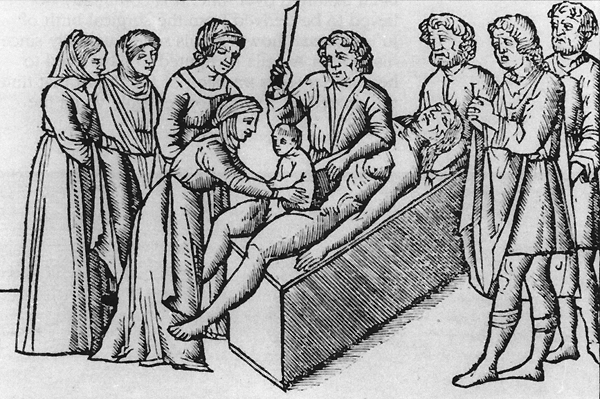
Now, at the time, Cesarean sections were employed only in cases where the mother was dead or dying in an attempt to possibly save the child. Sometimes, the doctors would perform the operation on the deceased mother in order to extract the child if it were dead so it, too, could receive a proper burial. It wouldn’t be until within the past 150 years that C-sections were employed to save the life of the mother rather than only to save the child. There were anecdotal evidence of the rare case when the mother would recover after the child was taken by C-section. These stories were so rare that many historians today doubt their veracity. By the way, the verb “to cut” in Latin is caedere, and cutting out of the child–that’s where the idea of the Cesarean section came from.

I say all that to point out that his particular physician was preparing for the worst. In his mind, if the mother was unable to give birth and began to succumb, he was ready to do what was needed to extract the child–even if the child, too, passed away. Such was the primitive methods and mindset of birth 2100 years ago.

Yet, in this case, despite the difficult pregnancy, the birth was relatively uneventful. In fact, a thoroughly healthy boy was born to a wealthy family, to the mother, Aurelia, and her husband, Gaius. Their family name, by the way, is said to have come from the fact that one of the ancestors of Gaius had indeed been taken from his dead mother surgically.

That’s why this healthy boy, a boy who was not born by C-section after all, was named Julius Caesar.

On A War on Terror

When the terrorists attacked the United States and so many people were killed, it was a given that the federal government would spare no effort or expense to seek out those who were responsible for the attacks and prosecute them to the fullest extent of the law. Those who refused to be arrested were, with public approval and loud acclaim, killed by the federal authorities. It’s what our government does to a) get revenge for the attacks and b) show other potential terrorists that they, too, will be met with swift retribution and justice if they try similar atrocities.

Terrorism has fear at its heart, of course. It’s in the name, after all. The purpose is to cause public panic and make the attacked populace take notice of the issue the terrorists want them to see and, it is hoped, pressure the government to change their public policy. Of course, sometimes, terrorists simply wish to cause chaos. And that seems to have been a large part of these attacks.

Raids on terrorist cells netted over 3,000 suspected or known terrorists. They were rounded up and jailed without trial. Judicial processes were eschewed. The government said that they couldn’t take the risk that someone who might be a terrorist but they didn’t know for sure couldn’t be allowed to go free. It was better, the government said, to err on the side of caution and public safety. I can’t say that I disagree because of my fear of such acts. And the government deported several hundred others even loosely affiliated with the terrorists. Again, I get it.

Fears like mine led, as you know, to a strong fear and reaction against “foreigners.” Thus, anyone who was not seen as easily identifiable as, for lack of a better term, “American” was instantly suspect. The government advised Americans that if they even suspected odd behavior or even something that smelled faintly anti-American, they were to report it to the nearest law-enforcement authorities. A spate of paranoid reports followed the terrorist attacks for some years afterward. One story told of arrest made of a person who simply refused to put his hand over his heart at a public playing of The Star-Spangled Banner because such a person, it was reasoned, must be against America and therefore a terrorist. That made him an instant suspect.

And that’s what terrorism does. It makes us crazy. It seeks to drive us to lie sleepless at night and peek out our curtains at the new neighbors. It wishes to divide us and suspect each other of being that difficult to define thing: Un-American. In this case, the President said that the terrorist attacks, “poured the poison of disloyalty” into our national consciousness. The President also said that the terrorist “must be crushed out” of existence because of what they’d done to the United States.

And, so, new federal agencies were set up, as you are aware. Huge budget increases were passed that allocated money to fight this war on terror. A young man in the federal government, only aged 24, was tasked with not only ferreting out people in the United States who might have terrorist ties, but he was also tasked with setting up the department specifically designed to fight those who might make war against our ways of life and create social instability.

The terrorist attacks we’re speaking of were the bombings of the offices and homes of several government officials over 100 years ago, in 1919, by so-called anarchists. And, of course, you know the young man and the newly-formed government agency he headed up.

The agency became known as the FBI, and that young man was J. Edgar Hoover.

On a President’s Companion

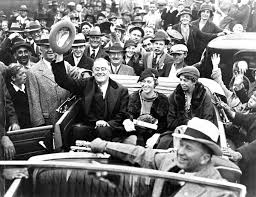
Murray “The Outlaw” Falahill isn’t a name that you’ll recognize readily, but people who lived through World War 2 knew of this Scot. Murray was one of those secret presidential companions who always seems to be at the center of power but who also remains largely unknown by the public. Murray entered the orbit of President Franklin D Roosevelt in 1940. He was brought into Roosevelt’s orbit by one of Roosevelt’s cousins, and the two became fast friends. Today, history tells us things about FDR that the public generally did not know at the time; for example, his many extramarital affairs were kept secret for many years. The fact that Roosevelt was effectively paralyzed from the waist down was also not publicly known. And it makes sense that there will be private relationships that people in power have that transcend politics and public scrutiny out of necessity. We all need someone close to us who we can confide in and be ourselves around outside of the public eye. Very quickly, Murray became this relationship for Roosevelt.

Murray soon traveled everywhere with Roosevelt. When Roosevelt went to his retreat in Warm Springs, Georgia, Murray went along. Murray also accompanied the president to Canada when FDR met with Winston Churchill, the British Prime Minister, to discuss the progress of the war in Europe. He journeyed with the presidential entourage to the Aleutian Islands one time. That’s when some information about Murray’s close friendship with Roosevelt almost cost the President. Someone in the press heard a rumor that Murray had been accidentally left behind in Alaska when the president’s traveling party returned to Washington. The rumor was that FDR sent a United States warship to Alaska to pick up Murray and bring him back at the cost of several million dollars that the US taxpayers would have to pay for. Now, remember that Murray had no official title in the Roosevelt administration. He was not an elected official. He was just Roosevelt’s companion. So, if this rumor were true, it would be a fairly good-sized scandal that Roosevelt would have to explain. Quickly, Roosevelt addressed the issue before it could turn into a scandal. In one of his radio addresses, he squashed the rumor without going into great detail by saying that no member of the President’s staff or family had been left behind in Alaska and therefore that no expense had been wasted on going back and picking up any member of the traveling party. Besides, FDR said, any Scot worth his or her salt would be appalled at such an expense.

Murray pretty much moved into the White House. One of his proclivities was that he preferred breakfast in bed, so the White House kitchen staff was always ready to make Murray’s favorite morning repast. He was around Roosevelt so much that, invariably, photos were taken that show him near the President. You can see him in those pictures today, and, at the time, nobody questioned his being there. When Roosevelt died in April 1945, Murray was with the President. And he was crushed because the two had become so close over the years. Eleanor, who spent a great deal of time with and became attached to Murray herself in the years after Franklin’s passing, said that Murray never really recovered from the death. He himself lived only 7 years after his friend.

When a statue honoring Franklin Roosevelt was unveiled in Washington, D.C., it depicted the President seated. And, to his right, is seated Murray—known better as Fala—Roosevelt’s trusted and beloved Scottish Terrier.

On an Adopted Son

Adopted children are special. I know this first hand. My sister’s son is adopted, and my own son is, too. Unlike children related by blood, adopted children are selected to a degree; their choosing by the adoptive parents, at least to me, means that they are special and beloved even before the adoption paperwork is completed. That is a bond that transcends blood relation. And, sometimes, love and marriage bring a son or daughter into a parent-child relationship that can often be a wonderful thing for both.

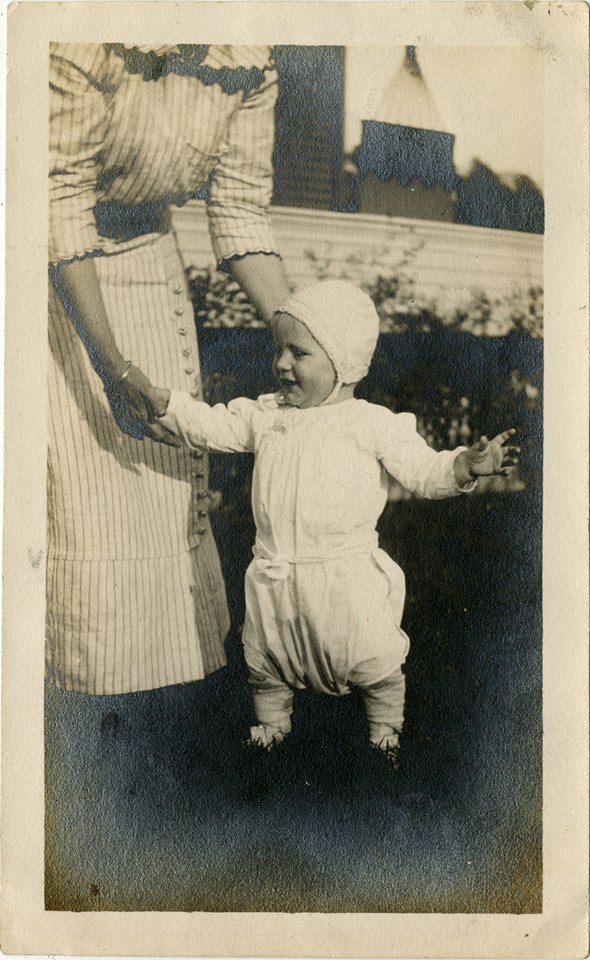
Take the case of Leslie Lynch King, Jr. He was born in 1913 in Omaha, Nebraska. His mom, Dorothy, had married Leslie King, Sr., the son of one of Omaha’s richest families. But the marriage wasn’t a happy one. The husband was a spoiled rich kid. He often beat Dorothy. He even threatened to kill her and her unborn child. Once her son was born, Dorothy secretly left Omaha and the senior Leslie and moved first to her sister’s house in Illinois and then into the house of her parents in Michigan. The wealthy grandfather of Leslie junior eventually provided child support, so Dorothy didn’t have to worry about money while raising her boy.

However, by the time the son was three, Dorothy had met a wonderful guy in Michigan, a man named Rudy. Rudy was not wealthy, although he made a living as a worker in his family’s paint store. Unlike her first husband, Rudy wasn’t a spoiled man who didn’t consider other people when he made decisions. He was kind and hard working and appreciated the love that Dorothy had for her son. And Dorothy knew that Rudy would make the perfect adopted dad for her young Leslie.

And that is exactly what he proved to be. Rudy took Leslie under his wing. He taught the boy the meaning of hard work, of patience, of being appreciative of others and aware of their needs and of his own shortcomings. He taught his adopted son sports–something that Leslie soon found he liked and excelled at– and encouraged him to join the local Boy Scout troop. Leslie loved scouting, and, as he grew, he climbed the scouting ladder until he reached Eagle Scout–the highest ranking a scout can obtain.

Dorothy and Rudy had three other sons, but the bond between Rudy and Leslie was unmistakable. One day, Leslie asked Rudy why he had a different last name than his step-father. Leslie tugged at his chin. “Well, would you like to have my last name, son?” he asked. “Yes, sir,” the young man said. So, with Dorothy’s smiling approval, Leslie Lynch King, Jr., took on the name of the man who was not his biological father but rather of the man who was his dad, the man who raised him, and the man who made him who he became.

That’s why you knew him as President Gerald R. Ford.

On a Criminal Insider

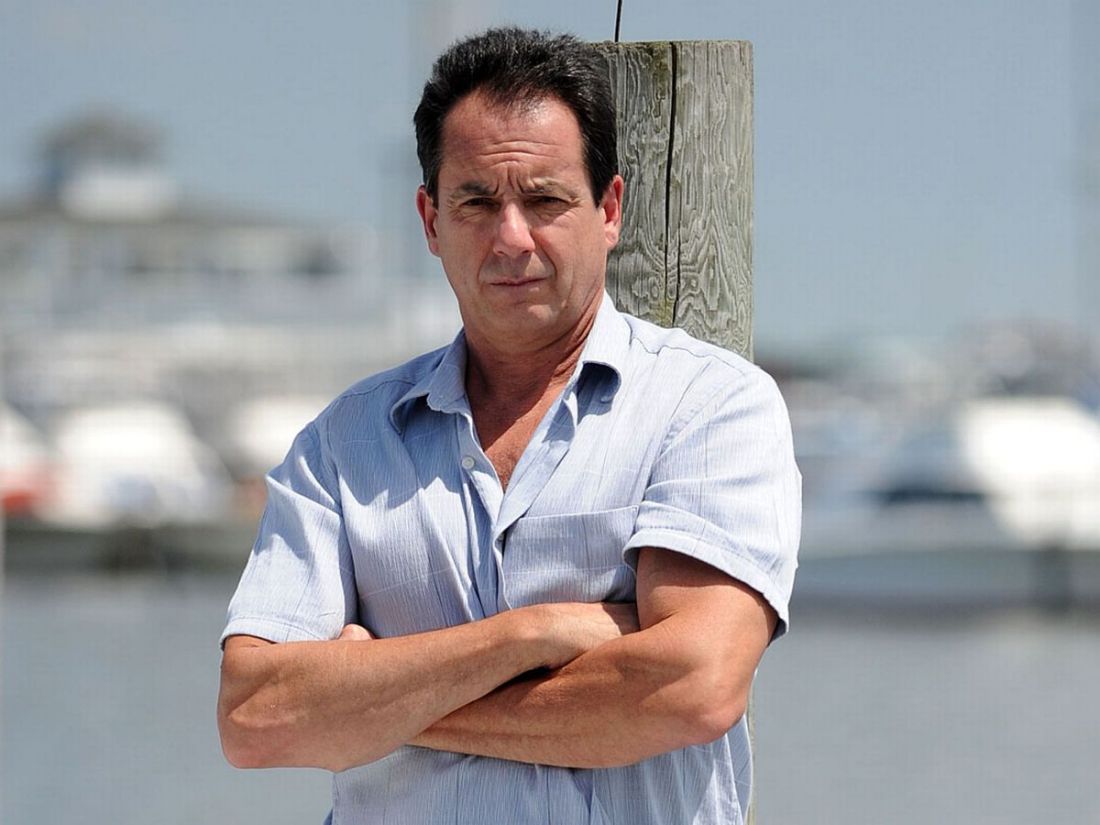
Michael Dowd is one of those criminals who has had films and books created about his career in the criminal underworld. Born in 1961 in New York, Dowd grew up on Long Island in a neighborhood that, ironically, was filled with the families of police and firefighters, and these connections would be important to him later in life. By most accounts, he was an above average student in high school and showed no signs that he would go on to a life of crime in his adult years.

One thing that set Michael apart from other criminals was that he had connections to the authorities because of his background around policemen. Using these connections, he was able not only to be able to make contact with drug dealers on the highest levels, but he also used the same connections to secretly get information on drug busts. He would pass the details of the raids on to the drug dealers who were able to evade capture because of Michael’s intel. That information pipeline made him not only valuable to the drug dealers, but it also allowed him to rapidly rise in the ranks of the drug dealers in the Brooklyn and Queens boroughs of New York City. Because of his ties to police sources, Michael famously bragged to his criminal cronies, “No one can touch me!”

Additionally, Michael used his police connections to illegally obtain police identification, badges, and sometimes, even weapons and provide these to the drug gangs. That allowed them to avoid capture by the legitimate police by pretending to be undercover police officers when they would be stopped or detained. In one of the most notorious use of police information, Michael was able to obtain information about a mole inside one of New York’s crime families. He told the criminal bosses about this mole, and they “took care” of the problem.

Finally, Michael’s illegal actions caught up with him. And his arrest was a direct result of the New York City authorities working diligently to remove corruption within the police department and the insider information that Michael was receiving from his police connections. Realizing that his criminal career was over after his arrest, Michael decided to cooperate with the investigators. He turned into a cooperative witness for the police investigators as more and more police corruption was uncovered. Because of his collaboration with the authorities, the eventual prison sentence Michael received was much lighter. He served only 12 year of a 16 year sentence.

While incarcerated, Michael was a model prisoner. He ran the drug and alcohol abuse recovery program in the prison, and he worked as a suicide prevention counselor. Today, Michael speaks and writes about his criminal past, and he is collaborating on more media based on his life story.

Oh, and the reason Michael was able throughout his criminal career to continue to receive more and more information about and from the New York Police Department?

It’s because Michael Dowd was a policeman himself.