On a Small Soldier

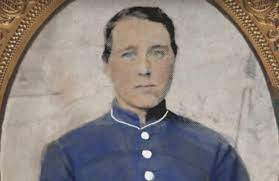
When President Abraham Lincoln put out the call for soldiers from the northern states to volunteer for the Union Army, an 18 year old enlisted in the 95th Illinois Regiment under the name of Albert Cashier. As a private in that regiment, Albert joined the Army of the Tennessee (Union armies were named after rivers) under the leadership of General Ulysses S. Grant. Albert saw service throughout the south during the war. Though small in stature, Albert’s fellow soldiers testified to the bravery and spirit they saw in the private. It wasn’t uncommon for teenagers to enlist; courageous boys as young as ten saw duty as drummers for some regiments.

Albert kept to himself, mostly, as many soldiers did. When people asked, Albert told them about immigrating from Ireland at an early age and becoming a farmhand in Illinois. With the others in the regiment, Albert performed the usual duties of standing guard and even going on scouting missions. During a reconnaissance patrol, Albert was captured by the Confederates and held as a prisoner of war. Somehow, though, Albert escaped and managed to rejoin the regiment. But then, a crippling case of dysentery put Albert in the hospital during the siege of Vicksburg, Mississippi in 1863. There, Albert received the first real rest in more than 16 months in the army.

More battles followed. Albert participated in more than 40 of them and never wavered, never ran, never panicked. Albert’s coolness under fire was how most of the others in the regiment recalled the youngster. It is estimated that Albert and the 95th Regiment marched over 9,000 miles during the course of the war, following the retreating Confederates from Nashville through Chattanooga and down into Georgia.

When the war ended, Albert, along with the rest of the regiment, was discharged and sent home with the gratitude of a nation for having defended the Union and the ideals upon which it was founded. Returning home, Albert lived a quiet life as a town handyman, caretaker of the local church grounds, and sometime store employee. In 1907, Albert applied for an received a well-deserved pension for the time in the service.

Then, in 1911, a car hit Albert and the resulting injuries required hospitalization. Some of Albert’s fellow old soldiers from the regiment visited their fellow small soldier in the hospital. Sadly, Albert would never fully recover from the accident. Death followed not too shortly afterward. However, it was in the hospital that the attendants and physicians who cared for Albert made a remarkable discovery. This person who had fought bravely for the Union, worked for years in the town, was known by many people for honesty and prudence, was not who he said he was.

In fact, it was discovered that the person who had lived for over 50 years as Albert Cashier was actually a she.
On a Birth Mother’s Demand

When she became pregnant in 1954, Joanne had only one demand of potential adoptive parents for her unborn baby: They had to be college graduates. In Joanne’s mind, college graduates would insure that her child would also attend college, at least statistics said it made that possibility much more likely. Joanne herself had attended college. In fact, the University of Wisconsin is where she’d met her soon to be born son’s father. The father of the boy was a Syrian named Abdulfattah, himself the son of a wealthy family who’d paid for their boy to attend Wisconsin to obtain a graduate degree.

The pair fell in love, and the pregnancy resulted. However, Joanne’s conservative father refused to give his blessing to the union because of Abdulfattah’s Muslim background. So, Joanne traveled to San Francisco to have her son and to find what she considered suitable parents for him there. Soon, what seemed to be a dream couple entered Joanne’s life. The man was an attorney and the woman had agreed to forego her career and stay home to take care of the baby. But then, the couple discovered that Joanne’s baby was a boy, and they had their hearts set on a girl.

The next couple that applied for the child was in no way acceptable to Joanne. Neither prospective parent had attended college. Paul was a repossession man and Clara was a bookkeeper. Clara had had a troubled pregnancy earlier, and they were eager to adopt. They didn’t mind that Joanne’s child was a boy. But Joanne refused to sign the child over to this couple. They begged her and pleaded with her. While their jobs weren’t glamorous or high paying, the work was steady in San Francisco and would definitely provide a secure future for her son. Paul and Clara made Joanne a promise. They would send the boy to college when he was of age.

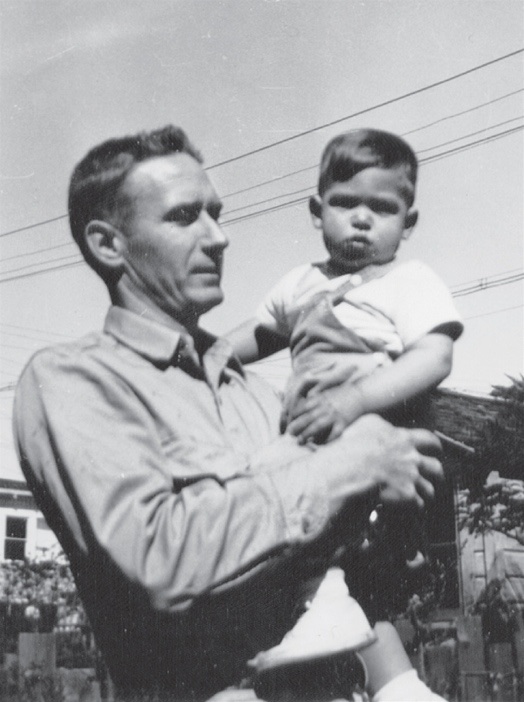
With that promise in her hand, Joanne reluctantly signed the adoption papers, and Paul and Clara gladly welcomed the boy into their home. Clara feared for some time that somehow, the boy, whom Paul and Clara named Steven Paul after his adopted father, would be taken from them because of Joanne’s hesitancy. But he was never taken from them. Instead, the couple indulged the boy as he grew, they also adopted a sister for him, whom they called Patricia.

Well, true to their word, when Steven came of age, he did indeed attend college, enrolling at Reed College in Oregon. However, the boy, while incredibly bright, didn’t fit in with the college environment and dropped out after one semester. He would move back home with Paul and Clara in 1974 and find work as a computer game technician. He and a friend from high school (a guy also named Steve but whom everyone called Woz) would tinker with the games and work on improving them.

And that’s how Steve Jobs came to create Apple.

On a Rum Rebellion

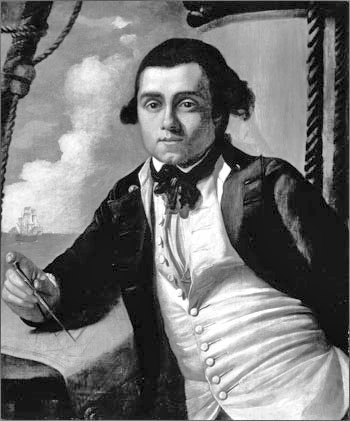
William had a reputation as a strict disciplinarian. This was the major character trait that won him appointment as the Governor of New South Wales, representing his Majesty, King George, in 1805. The settlement had the reputation of lawlessness, and William was seen as the man to handle the situation. Once he was established in office in the capital city of Sydney, William began implementing his model of what an effectively functioning administration in a royal colony should be.

William immediately made it his goal to bring discipline to soldier, clerk, and administrator alike. He wanted the government to run smoothly, efficiently, and answerable for the choices each person made. This emphasis on responsibility came from his time in the Royal Navy, having captained ships for years before his appointment. He would confront people to their faces, often embarrassingly so, and publicly call out any infraction of law or rule. But, the people of New South Wales, both in the government and the settlers, were not used to this confrontational style of management. As you can imagine, William’s tactics rankled everyone he interacted with.

In addition, William wanted to stop any illegal (that is, not taxed) trade that came to or went out of Sydney. Well, again, things in New South Wales had been done differently for years, and the people there who made a living trading illegally weren’t about to put up with some hot-shot administrator coming in and messing with their livelihoods.

Finally, the government officials, soldiers, and even the settlers of the area had seen enough. In 1808, they all marched on the government house and had William arrested in what became known as the Rum Rebellion (rum being the biggest illegally traded money maker in the area). He was put aboard a boat and sent to Tasmania. There, he attempted to raise British troops to go back to Sydney and re-take the government, but, even there, he managed to rankle the authorities so much that they dismissed his requests.

Poor William! News traveled slowly then from literally the other side of the world. By 1810, word reached him that the British government had declared the rebellion to have been a mutiny since troops were involved. He was assured that the guilty would be punished. He also received word that he had been replaced a governor. William was a broken man by this time; while he received a promotion, he would never get another significant appointment or command for the rest of his career.

Of course, this wasn’t an unusual event in William’s life. No, he had experienced something similar several years earlier. You see, it was in 1789 that a man named Fletcher Christian had led another mutiny against Captain William Bligh of the HMS Bounty.

On a Bank Robbery

Normalmstorg Square in Stockholm, Sweden lies in the middle of a business district downtown. It connects two shopping districts as well, and, in the Swedish version of the board game Monopoly, Normalmstorg Square is the most expensive piece of real estate on the board.

Beginning on August 23, 1973, it was the site of a famous bank robbery.

One of the significant things about this robbery is that it was the first criminal event covered by live television in the country. You see, the robbery went all wrong. It happened this way: Jan-Erik Olsson was pretty much a career criminal who had been released between convictions when he attempted to hold up the Credit Bank in Stockholm (Kreditbanken). But, before he could make his getaway, the police were notified and arrived on the scene. Olsson did the only thing he could think of to protect himself–he took four of the bank employees hostage.

The police, having surrounded the bank, asked Olsson for his demands. He had a long list of them, in fact. He wanted his former cell mate brought to the bank, a man named Olofsson. He asked for two more guns (he had one already). He wanted 3,000,000 Swedish Kroners (about $300,000 at that time). He said he needed 2 bullet-proof vests. And, finally, he requested that he be given access to a Ford Mustang. That’s quite the list of demands, isn’t it?

The police contemplated the demands. They agreed that Olsson could have the car, but they insisted that he could not take any of the four hostages with him. The negotiations between robber and police continued for hours. The day ended, and no agreement between the two parties.

The next day, Olsson was able to speak to the Swedish Prime Minister, Olof Palme. He asked Palme to allow him and Olofsson to go free, but Palme was reluctant to let the men off. Olsson then threatened to kill the hostages if not, but Palme didn’t budge. That day ended with no resolution.

Over the course of five days, the robber(s) and hostages stayed in the bank, and all of Sweden (and much of the world) watched all of these events unfold live on TV. Olsson passed the time singing to himself, reading, and walking around visiting with the hostages. Finally, on August 28, the police, who had drilled a hole in the bank vault, pumped tear gas into the building. It was enough to make Olsson surrender. He and Olofsson were charged with the crime, but it was eventually determined that Olofsson’s only role was as support for his former cellmate. In fact, Olofsson spent most of his time negotiating between police and Olsson and in keeping the hostages in good spirits.

None of the hostages was harmed.

When they were released and interviewed at length by eager TV news people, the bank employees showed surprising support for their former captor(s). All four of them expressed disappointment in Palme and told of their fear not of the robber(s) but, rather, of the overreaction to the crime by the police. The public was fascinated by their unusual stance on having been held hostage. Some psychologists suggested that they had been brainwashed by their charming captors. Nils Bejerot, a Swedish criminal psychologist, was called in by the police to analyze this phenomenon, to help determine why the hostages seemed to show such sympathy for the men who had held them hostages. He called their mindset Norrmalmstorgssyndromet.

You know it better as Stockholm Syndrome.

On a Misnomer

In a small town called Tacubaya on the outskirts of Mexico City, a Frenchman had come to Mexico and established a pastry shop in the 1830s. His name was Mr. Remontel. We don’t know what circumstances caused Mr. Remontel to make his way from his native land, what brought him to leave home and travel thousands of miles away to set up a bakery. But that’s what he did.

When Mexico became independent from Spain in 1830, the baby nation established commercial ties with the United States for obvious reasons, but France became Mexico’s third largest trading partner. France was in a building boom, and it craved the natural resources Mexico provided. However, French goods in Mexico were still subject to higher tariffs than those from the US or Great Britain.

Mexico was still in a state of flux politically and socially. The lack of stability was hurting trade and the economy. Rival political groups supported sometimes competing militias who fought each other and, sometimes, these groups attacked foreigners. Mr. Remontel apparently became the subject of one of those attacks. He claimed that Mexican soldiers came into his pastry shop and destroyed it, ransacked it. He made a formal complaint to the French government, asking for them to help him recover his losses through diplomatic channels. He was asking for over 50,000 pesos in compensation, but his shop, according to reports of the day, was worth little more than 1,000 pesos. Now, please realize that, at that time, the average salary in Mexico City was 1 peso.

The French government, angry for what they considered to be an affront to one of its citizens (and some attacks on other French people as well), plus their frustration over the high taxes on French imports to Mexico decided to take action. They wanted to right the perceived wrongs done to them. In what may be considered one of history’s greatest over-reactions, France declared war on Mexico. They ordered a complete blockade of all of Mexico’s ports from the Yucatan the US border, and they first bombarded then occupied the largest Mexican port on the Gulf of Mexico, Veracruz.

Eventually, cooler heads prevailed, and the two sides signed a treaty ending the blockade and the war. Mexico agreed to pay damages for destruction of French property and to lower tariffs on French goods. However, Mexico never paid reparations for the damages done to French property, so, using the non-payment as a justification, France declared war on Mexico again in the 1860s and attempted to establish a monarchy using Archduke Maximilian of Austria as the king (who later gets executed by Mexican forces).

More bloodshed followed. Mexican instability continued for decades. One could make the argument that today’s ills facing Mexico have their roots in this period. It wasn’t until the 1880s, fifty years after Mr. Remontel’s shop was vandalized, that the two nations finally agreed to drop the issues that led to the years of violence and ill will. Surely such an important period of Mexican history deserves a name fitting of such a time of instability and suffering.

Yet, because these years of pain, destruction, hardship, and death all started in the village, at Mr. Remontel’s bakery shop, the conflict is known today as the Pastry War.

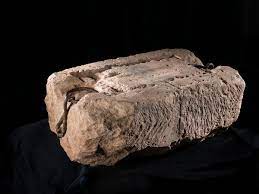
On a Stone Obsession

You can call them stone collectors, petrographers, or, if they are people who seek out their formation, geologists, but many people refer to them simply as rock hounds. They love rocks and collecting them, studying them, classifying them, and sometimes simply looking at the rocks in their possession.

Then, there are those in a rare category of rock hound who seek the perfect stone, that one special mineral, the holy grail of their particular desire. Robert Gray was one of this latter category. He had his eyes on one special stone, and he spared no expense in tracking it down and bringing it home. Now, Gray was trained as a stonemason, so his love of rocks came to him as a vocation as well as an avocation. But there was one stone that was special to Robert Gray.

As a mature man, Gray had served in the army during World War 2 and had made good money in his masonry business. In addition, he wielded influence before and after the war as a politician, getting himself elected to the Glasgow, Scotland, City Council. He also served as a board member of the Glasgow Corporation, the organization that ran one of the largest and most efficient public transportation systems in the UK.

It was because of these commitments that Gray couldn’t leave Glasgow and pursue his desire to obtain the stone. So, he did what anyone in his position would do; he hired someone else. He paid four Glasgow University students to go get the stone for him. He provided all expenses and the planning for them to go to London, obtain the stone, and bring it back home to him.

Now, if you’re thinking that it sounds like Robert Gray paid some college kids to go to London and steal the stone he desired, well, frankly, you’d be correct.

In December of 1950, that’s exactly what happened. The foursome went to London and stole the stone. Except, to Robert Gray, the group of thieves weren’t really stealing the stone for him. Rather, they were returning it to its rightful place. You see, Gray didn’t want the stone for himself. He felt that it belonged to all of Scotland. When the students returned with their prize, they brought the stone to Robert Gray’s masonry yard. There, according to some, Gray made a copy of the stone before arranging for it to be returned to London and the care of King George VI.

The stone in question had been the one upon which, for centuries, kings and queens of Scotland and England had sat when they were crowned. And, about a week from now, when King Charles III of the United Kingdom is crowned, he may or may not be sitting on top of the original Stone of Destiny.

That’s because some say Robert Gray hid the original one somewhere in its rightful home of Scotland.

On a Mysterious Death

The place was a bar called Ryan’s Tavern, in Maryland, and the time was October 3, 1849. Joe Walker, merely an amateur drinker, found an acquaintance of his who seemed completely and slovenly drunk in Ryan’s. That man, who was in his early 40s, wasn’t making any sense and kept babbling to Joe various names and places. But, upon closer inspection, Joe decided that the man wasn’t only drunk, but that he was also seriously ill. In a delirium, the man gave Joe the name of a friend, and Joe reached out to the friend to help him find a place for the obviously distressed man.

When that man, a Mr. Snodgrass, arrived at Ryan’s to help Joe, he later described the delirious man as being “beastly intoxicated,” and described a man wearing dirty, unkempt clothes, his hair all askew, and vacant, staring eyes. Those clothes, by the way, appeared to not have belonged to the man–they were several sizes too large for him.

Joe and Snodgrass took the man to a doctor, a man named John Moran, who put the ailing man in a hospital for observation. Moran knew the man, had been his person physician at one time, in fact. Dr. Moran forbade any visitors to the man, and he kept him in what was basically a drunk tank inside the hospital, almost more prison than health care facility. In his condition, the only thing the ailing man could do was to call out the name Reynolds.

Over the next four days, Dr. Moran became convinced that the man was suffering from severe depression and some illness that he could not diagnose. During this time, the man’s strength ebbed and flowed. In the short periods the man became lucid, Moran kept asking what he could do for him, but the only answer he received was that the man asked the doctor to shoot him and put him out of his misery.

As the man’s condition worsened, he thrashed about on the bed. At times, he also cried out for a woman he said was his wife in Richmond, Virginia. He despaired for his traveling trunk, which he said had all his possessions in it. Finally, in the early morning hours of October 7, the man suddenly stopped his thrashing and lay still. Dr. Moran noted the time and called for the orderlies to remove the still warm body to the morgue.

All in all, it was a mysterious and curious death. Later, it would be suggested that the man suffered from cholera or even from an overdose of laudanum or opium. Some said he died from being poisoned. Even Dr. Moran became a suspect in the strange death because he didn’t inform the family of the passing for a month, and then only after the family requested information about their missing relative. And the story told here is based only on Moran’s recounting as he allowed no visitors to the room while the may lay dying.

To this day, we still don’t know the truth of how and from what the man died. Truly, it was a death worthy of a mystery story.

And that’s a fitting end to someone like Edgar Allan Poe.

On a Missed Opportunity

I’ve had the pleasure and honor of meeting President Gerald Ford after he left office. In addition, I shook hands with Al Gore on two different occasions. Those types of interactions are not as unusual today as they were when the United States wasn’t crisscrossed with interstates and domestic air routes, when politicians didn’t travel far and wide as they do today.

In the 1790s, George Washington made trips around the United States to drum up support for the newly enacted federal government under the Constitution. The journeys were difficult ones given that roads and bridges were scarce, and, for most people, the federal government in New York (Washington, D.C. had yet to be completed) seemed something remote and abstract to most people. Yet, President Washington met mostly adoring crowds on his trips.

Once, when he was headed to Salisbury, North Carolina, Washington was not so sure he would be met with acclamation. The area was known for being skeptical about what the residents there felt was an overreaching, way too powerful federal government. Yet, more because Washington was the military leader who successfully fought the Revolutionary War than he was the national Chief Executive, people still wanted to see him. One of his most fervent supporters was a young woman named Betsy Brandon.

Betsy and her family operated an inn on the road leading to Salisbury. Inns at that time resembled more of the English pub, a place where the public could come for a meal and a drink and, if they were travelers, get a bed for the night. They revered the man even if they didn’t like the power that the Constitution gave the federal government. And, like many in the area, Betsy’s family made plans to attend the reception for Washington in nearby Salisbury.

But there was a problem. The inn was doing good business because of the trip. People were traveling on one of the only good roads in the area–the road that the family inn was on–to get to the celebration. Betsy’s dad said that someone in the family had to stay behind to tend to the customers who would be coming and going that day. And, as luck would have it, Betsy drew the short straw. He opportunity to meet General Washington was lost to her. She was sad, of course, but she understood that the family couldn’t afford to shut the inn for the day, not with all the traffice.

So, Betsy said goodbye to her family as they left early the morning of the event, and she set about getting ready for the day’s incoming business. She made sure there was enough wood for the cook fire, then she made the bread, set the butter out of the keep, made the coffee, and gathered the eggs from the hens’ nests. A few travelers, excited about seeing Washington, came by and got breakfast, but their excitement only frustrated Betsy because she couldn’t go. She told herself to concentrate on the tasks at hand and the disappointment would go away.

A large group of well-dressed travelers came into the inn about 9am. Betsy set about putting the lard in the large, black skillet for the eggs and fatback bacon for the group. They patiently waited for her to serve them, knowing that she was working alone to accommodate them. She thought that her father would be especially pleased because this large group would be paying a goodly sum for the food.

After the meal–which the group seemed to greatly enjoy–one of the men asked her why she was by herself that day. Betsy was a bit surprised. She answered, “Surely you know that General Washington is going to be in Salisbury today, that all the territory is headed that way,” and she went on to say that she was saddened that she missed her opportunity to see the great man when he was oh so close.

The man who had asked her the question, rose to his feet. He leaned over and kissed Betsy on the top of her head. “When your family returns,” he said, straightening, “you can tell them that you saw him before they did, and that he kissed, you, too, because I am George Washington.”

On a Theater Patron

Lynn Riggs had been in the US Army for over a year by the time he went on leave in New York City. The year was 1943, and Riggs had been away from his native Claremore, Oklahoma, for some time, having spent rounds as a college teacher and even working for a bit in Europe. But, here he was, on leave, and he was in a Broadway theater watching the brand new play, Oklahoma!

For those who don’t know, that production of Oklahoma! changed musical theater. It was the first collaboration between Rogers and Hammerstein, the famous Broadway musical duo who went on to create Carousel, The King and I, South Pacific, and The Sound of Music among others. Before that duo, musical theater had been mostly productions that had great music but the musical and dance numbers were strung together with little plot in between. This production changed that. Oklahoma! was a story, a real story, of life in the Oklahoma Territory soon before it became a state that featured musical numbers. After that, all musical theater followed that formula.

That’s one major reason this soldier on leave from the Army wanted to see the production. Riggs was not your typical theater patron. Being a native of Oklahoma and also part Cherokee, Lynn Riggs had deep roots in that place. Of course, he loved the performance, the dances, and the music. It bothered him a little that, instead of square dancing that he was used to back home, the dances were complexly choreographed for New York theater audiences by the legendary Agnes de Mille. But the story rang true, and Riggs was suitably impressed by the production. The creative duo of Rogers and Hammerstein had made the story into a rip-roaring, patriotic (perfect for the war years) love story to the people of that state. And Riggs was ok with that.

Riggs had an even deeper connection to this play. He had been a playwright in his life before the Army. In fact, Riggs would pen over 20 plays during his lifetime and even one television script after the war. One thing that attracted him to this particular play was the source material. He knew the basis for the story came from a play penned by a native of his state. That made him especially connected to the production, and you can imagine his eagerness at seeing the performance.

Another thing about Lynn Riggs was that he was gay. As difficult as life had been growing up in rural Oklahoma, it was made doubly difficult being gay. Riggs had kept his secret from almost everyone back home. That was one reason that, while Riggs loved his home state, he longed to find a place in the world where he could feel free, to feel safe, to simply be himself. Theater had been that refuge, that safe place, for him.

But Lynn Riggs never forgot where he came from, and he appreciated what Oklahoma had given him, what it had made him. After the war and after leaving the military, Riggs was able to live off the proceeds from his plays. That money included a play that was produced on Broadway.

In fact, it was Lynn Riggs who wrote Green Grow the Lilacs, the play Oklahoma! was based on.

On a Rejected Proposal

Amanda was indeed a great beauty. Her grandfather knew that the young woman would make a great prospective wife for the right man. Now, this was back in the day when women often had little say over whom they would wed. Marriages were arranged by older relatives, and they often involved what amounted to business transactions that would unite lands or fortunes–or change them. And Amanda’s grandfather had his eye on a wealthy man, a cousin, in fact, who would make a good match for Amanda, he felt. She would provide him with a beautiful companion and a good mother for his children, and, since the man was of a higher social rank, that benefitted his family even more.

It helped that the wealthy man listened to Amanda’s grandfather for advice. He felt that the older man was much like his own grandfather had he knew him, but the wealthy man’s grandfather died before he was born. Even though Amanda’s grandfather was named Louis, the wealthy man called him “Uncle Dickie.” This wealthy man had the reputation as a bit of a what we might call a playboy today, someone who had a reputation as someone who made the rounds. Uncle Dickie advised him to “sow his wild oats” but to get serious and think about starting to settle down–preferably with Amanda.

Now, Amanda at this time was a teenager, and the wealthy man was 9 years her senior. While Uncle Dickie saw no issue, the wealthy man wanted to avoid any public embarrassment, so he agreed to wait until Amanda was a bit older before he asked her to marry him. The pair spent time together on trips and became friends, good friends, in fact. Uncle Dickie wrote the wealthy man and advised him to not wait too long. “”For a wife, one should choose a suitable and sweet charactered girl,” he wrote, and added that he should do so, “before she met anyone else she might fall for.” It was clear that he meant Amanda.

That’s when the wealthy man’s father stepped in. He had a figurative and literal (financial) interest in whom his son married, and, for his part, he didn’t particularly get along with Uncle Dickie. The father advised his son to not listen to the advice and to choose someone besides Amanda. But the wealthy man had become smitten with his younger distant cousin.

So, when Amanda was 21, the question was popped. But no one had asked Amanda how she felt. She told the wealthy man that while he was one of her favorite people, that she looked at him more as an older brother than a potential husband. He confessed that he felt strong affection for her, but she said that she could not return his affection in an romantic sense. Now, it’s true that Amanda could have been compelled by her family to agree to a loveless marriage, but they (especially her mother) allowed her to decline the wealthy man’s offer of marriage.

That was in 1979. But the wealthy man wasn’t too devastated by Amanda’s rejection. In fact, he had continued an affair with another woman all the time he was wooing Amanda. And, less than two years later, the wealthy man proposed to another young woman, a 19 year old named Diana.

And despite some misgivings, Diana Spencer accepted the proposal from Charles Windsor, the Prince of Wales.