On The Liberator

Ok, there’s no catch here and no surprise ending–this post is about Simon Bolivar, the South American liberator and “founding father” of much of that continent. To dismiss or pigeon-hole him as South America’s version of George Washington doesn’t do the man justice. He is largely responsible for the freeing of most of Spain’s colonies in that continent from Madrid’s control. And that almost-constant war against Spanish colonialism framed most of the man’s 47 years on earth. He won victory after victory against the Spanish, and paved the way for the eventual independence of many modern nations.

How many people can say that they were the president of not only one, not only two, but three different nations? Yes, at one time, Bolivar was the chief executive of Columbia, Peru, and Bolivia.

At the same time.

Bolivar was a disciple of the humanist Enlightenment philosophers who believed in the essential rights of men. While his ideas met strong resistance in most quarters, it seems that he was for the removal of the system of slavery in all of South America. His detractors said that this position wasn’t without a selfish reason; Bolivar needed soldiers to fight the Spanish, and he was happy to take newly liberated slaves into his ranks. To be fair, for his time, Bolivar was remarkably progressive in his treatment of other races, a trait that was lacking in the leadership of many other democratic republics of that time (looking at you, America).

He also recognized the United States’ version of federalism as the optimal model for a united Latin American nation one day, but he was also practical enough to realize that Spanish colonial influence and the political and social organization system that combined large landowners and the power of the Catholic Church made such unification almost impossible. Before he died of tuberculosis, he felt a failure for not uniting the disparate countries and cultures.

And it’s not fair to say that Bolivar accomplished all he did on his own. A confluence of several factors beyond his control certainly made his successes in getting the various Spanish colonies their independence. Among these factors were the weakening of Spain’s power in the Americas due to the ongoing Napoleonic Wars as well as Britain’s threats of retaliation if Spain made too much of an effort to re-assert its dominance over the South American continent (The Monroe Doctrine said the same thing, but the infant American republic lacked the military teeth to make this stick). Besides, other important military leaders in the various areas of the continent aided him in his liberation activities including Jose de San Martin from what is now Argentina.

But it’s also not an understatement to say that Bolivar was the right man at the right time. History is often made by these confluences of person and period, timing and personality.

I’ll leave you with one more factoid. Besides the nation of Bolivia bearing his name, did you know that one other nation in South America is named after him? Yes, it’s true.

The official name of Venezuela is the Bolivian Republic of Venezuela.

On a Crash Victim

Statistics say that every passenger or driver of a motor vehicle in the United States will be involved in one major automobile accident in that person’s lifetime. That’s a harrowing thought, but I can attest that I have experienced my major crash when I was in college. However, I wasn’t driving when an old man stepped out in front of the WV van my chums and I were riding in. He was killed instantly. Even writing that sentence sends chills through me 40 years later.

Mary King Ward was one such victim of a vehicle crash. Mary was an Irish scientist and astronomer with a reputation for attention to detail in her scientific publications. She also published some scientific books designed for public consumption which proved popular during her lifetime. She married Henry Ward, an wealthy Irishman, and together the couple had a large family.

I wanted to talk about Mary since she, too, died as a result of a car accident. Mary’s accident happened when she was only 42 in August of ’69. The story goes that she and Henry were riding in the vehicle with two brothers, Richard and Charles Parsons, and a family friend near the town of Birr in County Offaly. The Parsons were part of a wealthy family and their car was special. They wanted to show it off to the Wards, so the couple were excited to take a short drive in the Parsons’ new ride. As the car rounded a curve, it flipped. Mary was thrown out of the car. The back wheels ran over Mary and broke her neck almost instantly. A doctor who lived nearby arrived on the scene quickly, but there was obviously nothing he could to to save Mary.

The Parson brother who was driving the car was distraught and could not be consoled. He soon had the vehicle junked. Henry and his children grieved their wife and mother for years. Her promising career in the scientific community was, sadly, cut short by the car wreck.

As I said, all of that happened back in ’69–1869. The Parson Brothers had invented a prototype of a steam-powered car, and Mary was in that vehicle when she was thrown out and killed.

Mary Ward is thus the first casualty of a motor vehicle accident.

On a Mountaineering Expedition

Alexis Pache was a Swiss mountaineer. In 1905, he joined a British-led and funded outfit that attempted to climb the world’s third-highest peak, a Nepalese mountain called Kanchenjunga. He was recruited by a fellow Swiss climber, a man named Jules Jacot-Guillarmod. The group also recruited another Alpine mountaineer from Italy. So, this was truly an international expedition. The British leader of the group was named Alexander.

At over 28,000 feet above sea level, Kanchenjunga today is recognized as one of the most challenging mountains in the world to climb. Glaciers that cling to the mountainside often cause avalanches of ice that make any attempt life-threatening. The locals traditionally believed that the mountain gods felt that the peak was sacred and protected it by using the avalanches to brush off any pesky humans who attempted to scale its summit.

Yet, the group was undeterred. Remember that this was a period in western history when men were stretching the limits of human endurance. Robert Peary would reach the North Pole (maybe?) in 1909, and Amundsen would beat Scott to the South Pole two years later. Groups raced each other to be the first to do this or accomplish that before all extreme tests on the globe were conquered.

The group started out by setting up base camps at lower levels and letting their bodies adjust to the thinning air at those altitudes. But at the last base camp, Alexander, the British leader of the climbers, began to behave strangely. He started viciously beating the Nepalese workers the expedition had hired as porters and helpers on the climb. Alexis tried to calm the English fellow and reason with him, but all that did was bring the man’s ire down on the young Swiss. Now, Jules had seen this type of behavior before on high altitude climbs; as some people moved into the thinner air, a type of mania or craziness sometimes overtook them.

In fact, Jules had been on another expedition with Alexander when the pair had attempted to scale K-2, the second highest mountain on earth. At that time, Alexander had brandished a pistol and threatened several members of the group. And, again, it seemed that this man had succumbed to the lack of oxygen to his system. However, the Nepalese workers whispered that the mountain god had possessed Alexander in an effort to keep the foreigners off the sacred mountain.

A sharp disagreement broke out one night when Jules some of the others tried to take command of the expedition away from Alexander. He and Alexis and the Italian suggested that they strike out for a lower camp immediately, that the weather was good enough for them to attempt a descent. They said that they would do well to strike out in the dark so that the most challenging part of the climb down could be accomplished during the day, when the dangers of an avalanche could be better seen. But Alexander sharply disagreed. Again, Alexis tried to play peacemaker, but he received a severe tongue lashing from Alexander for his efforts. The man then stormed off to his tent and refused to come out, pouting like a child.

Undeterred, the rest of the party set out in the dark. However, an avalanche occurred soon after the group left. The screams of those in the party could be heard by the group who remained behind in the upper camp. The avalanche swept away Alexis and three of the Nepalese helpers in the group. From the safety and comfort of his tent, Alexander laughed. “I told them they were foolish to go out in the dark,” he later reported.

The next day, Alexander had his workers strike his tent and he descended the mountain in the daytime, working his way carefully down to the next lower base camp. As he worked down the glacier, he passed the group that included Jules and the bodies of Alexis and those of the Nepalese workers.

And he neither stopped or spoke to anyone as he passed.

What kind of sick, twisted man would behave in such a cold, cruel manner? Alexander was his birth name, but he changed it later in life to Aleister.

You know him as Aleister Crowley, called by some as the most evil man who ever lived.

On a Missing Photojournalist

Photographers who choose to go into war zones and risk their lives to capture the horror and realism of war have always fascinated me. These women and men who willing go into battle do so knowing that they will be facing death through their camera lenses without any desire or ability to fight or defend themselves. I am mystified by that level of bravery. The list of famous journalists killed in wars is long and distinguished. People like Gerda Taro (killed during a battle in the Spanish Civil War) and Robert Capa (survived the D-Day invasion only to step on a land mine in Vietnam) carry a certain aura about them, a panache that is both frightening and attractive at the same time.

This is a story of one of the lesser known photojournalists from the Vietnam War period. His name was Sean. Sean was a handsome young man from California who went to Vietnam to document the conflict there. It was not Sean’s first war, however. He had extensive experience shooting the action in some of the Arab-Israeli conflicts of the 1960s, for example, and had seen heavy action and faced danger there that proved his mettle.

However, photojournalism wasn’t Sean’s first career. No, his striking good looks had caught the eye of Hollywood talent scouts, and he had accumulated several largely forgotten screen credits in the late 1950s and early 1960s. He can be seen in an uncredited scene in the famous beach movie, Where the Boys Are. But acting bored Sean, and he longed for a job where he could make a difference, have an impact. So, he chose photojournalism, and that led him to the biggest war story of the day, the Vietnam War. There, he quickly gained a reputation for being a risk taker if that risk meant getting a picture that no one else could capture. In fact, Sean was injured in his leg during one of his risky ventures.

In 1970, Time magazine hired Sean based on his previous war experience and his dramatic photographs to shoot photos for their publication. As stated above, he and another photographer, a young man named Dana, weren’t interested in the behind the lines pictures. They wanted to get the photos from the front lines, even behind the enemy lines, and the pictures that “safe” war photojournalists were too busy at the hotel bars to take. Towards that end, both Sean and Dana even parachuted into neighboring Cambodia with American troops to show what was happening in a part of the war where America wasn’t even supposed to be fighting.

The two young men decided in Cambodia to get on a couple of motorcycles and strike out into the countryside. No other photographers had tried to show the impact of the war on the civilians of Cambodia, and the two impulsive young men felt driven to get that story told. That drive led them to strike out on the machines one day in April of 1970 towards a checkpoint on the highway that they knew was manned by the Cambodian Khmer Rouge forces.

It would be the last anyone would ever see of the pair. No trace has ever been found of either young man.

In one of his last letters home, Sean wrote this to his mother: “I just want to say ‘thanks’ for home, the car, and just the fact that you are the best mother that I could ever want; and although you never hear me say it, I love you very much! I actually tried to be with you a lot, but everything just didn’t seem to go together.”

Interestingly, Sean didn’t speak of his father. Actually, his father had died a few years earlier. And Sean’s acting career was, in part, because of his father–a father who was also an actor and whose good looks Sean so strongly resembled. Perhaps Sean chose to be a photojournalist as a rejection of his father and that acting lifestyle. He never felt comfortable in a career where he was trading not on his own name and talent but rather on those of his father.

And while you probably didn’t know about Sean, you probably have heard about his dad.

Errol Flynn.

On a Policy that Never Happened

The racist hatred that white/European settlers in the early days of colonial settlement of North America would probably surprise even the most strident Klan member today. Governmental policy as practiced first by the British Parliament and then by the United States throughout much of early American History pretty much subscribed to the “good Indian is a dead Indian” philosophy even that that wasn’t overtly stated.

Not that it needed to be. In our national conversations about race, we carefully work our way around how native tribes were treated throughout the history of North America because we don’t want to address the facts of that hatred. Broken treaties. Unprovoked attacks and wars. Theft. Let’s not even get into the rampant abuses of the current reservation system. Terrible and disturbingly racist governmental policies. For only one example, look up what Andrew Jackson did to ignore a Supreme Court decision by using the US Army to remove the Cherokees from land in Georgia. It’s genocide, folks, and we have pretended it wasn’t for so long by casing it in language shaded with religious imagery by calling it such things Manifest Destiny and other such rot.

Well, some might argue, at least we didn’t use germ warfare against the native population. Or did we? The traditional story is that the British first came up with the idea in the 1760s to provide blankets to native tribes–blankets that had been laced with the smallpox virus. It’s not that this method of “taking care” of the “Indian problem” was more humane; no, it was more a case of the British feeling that such a method of killing was much more palatable to the soldiers who would ordinarily have to “endure” the difficult task of shooting.

Yikes.

And then the stories about the American Army giving similar smallpox-laden blankets to natives during one of the several Trail of Tears journeys during the first part of the 19th Century. There is anecdotal evidence of similar practices happening after the Civil War in the west when tribes were being moved onto reservations. What contributed to these stories was the fact that most native tribes often had a high rate of small pox infections. And blankets were given to native tribes. But, other than some possible talk in government circles about such practices in theory, there is no hard evidence that smallpox blankets were given to tribes–ever–by either colonial or state/federal governments or their agencies.

Again, some people will point to this myth as being only a myth and say that while natives were indeed killed, at least white people never conducted a systematic campaign of genocide against native tribes. But that’s like arguing that, while Hitler killed his millions, at least he never used a pea shooter to do it.

I’ll let the memory of the approximately 20,000,000 natives killed over the centuries since European colonization answer that argument.

On a Bike Trip

It was a warm late spring Saturday, June 10, 1944, in Limoges, France. Six young friends decided to take a bike trip into the country. France in the springtime is glorious, and the hilly vistas in the countryside surrounding Limoges were alive with blooms and greenery. The friends packed a lunch and the obligatory bottles of wine to accompany it. It promised to be a fine day.

The small group felt like celebrating for the first time in years. You see, news had reached the city that the Allies had invaded the beaches of Normandy, some 300 miles north of Limoges. After years of humiliating occupation by the Germans, it seemed that the iron grip of the Nazi invaders was coming to an end. So, a celebratory day in the countryside by bike seemed like a wonderful way to spend a Saturday.

The group decided to leave early that morning and strike out northwest of Limoges. They made their way through the outlying villages of La Vergne and La Lande and on a route that took them slightly south of what is now the runway of the Limoges Airport. By the time they reached Saint-Quinten, they had left the noise and traffic of the city behind and were truly in the countryside.

About one o’clock, the group of friends coasted into a sleepy village. They had decided that they would take a rest break and have their lunch in the grassy area of the square when they reached the small town, and so they slowed down as they entered the village. But something was wrong. The main street of the village was lined with military vehicles, German army vehicles, and armed men were standing next to them. The group of cyclists had no choice but to continue. There was no chance for them to turn around and leave the village the way they came.

Perhaps this was only an identity check. After all, the Germans were on high alert since the invasion. They were keenly aware of French resistance activity that had seen an uptick since the Allies landed only four days before. Maybe all the Germans in the village wanted was to make sure the cyclists were who they said they were–innocent friends out for a bike ride on a warm Saturday.

But no.

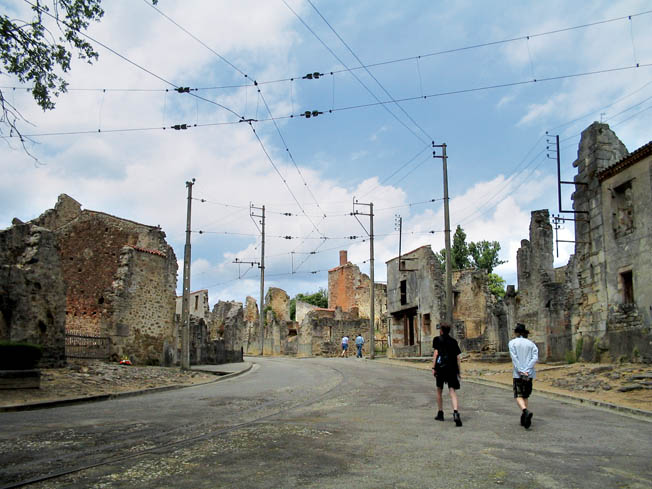
The Germans were on a mission of revenge. The resistance had struck damaging blows to the Nazi war effort around Limoges, and the occupiers were out for blood. They rounded up the villagers and separated them–men, women, and children. The women and children they put in the centuries old church building. The men…well, the men they first put into barns. Then they shot and burned them. A large bomb was detonated in the church building where the children and women had been herded. Those who survived the bomb, fire, and smoke were then shot. Fires were set all over. When the massacre ended later that evening, not one of the over 350 buildings in the village was left standing.

And the six cyclists from Limoges, the six friends who only wanted a nice day of biking in the French countryside, they became part of the 643 victims of the destruction of the village of Oradour-sur-Glane.

On a Risky Director

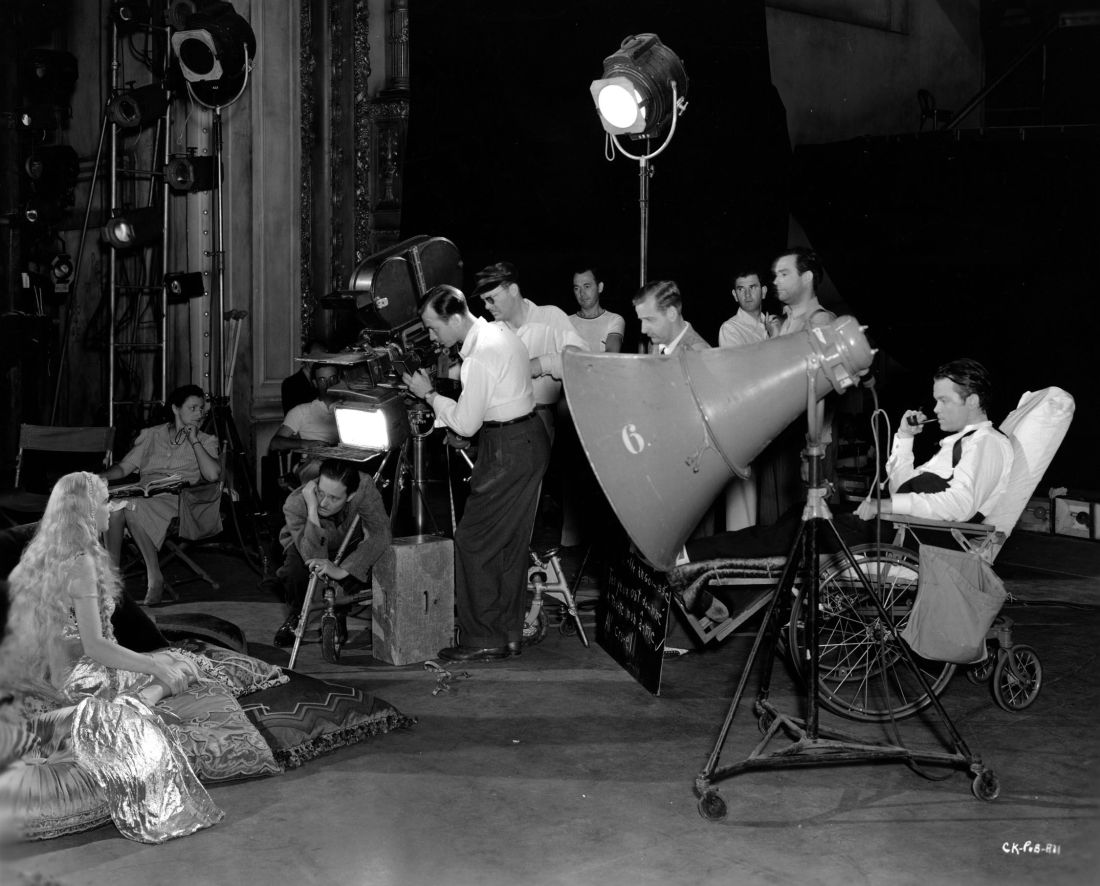
The guy had zero experience behind the camera. None. Zilch. Nada. It was as if the studio who hired him for this project seemed to want the film–and therefore the studio itself–to fail. In fact, if you wished for a film to fail, you would choose to allow someone like this guy, someone with no ties to Hollywood, to be in complete charge of a film production.

You see, this was 1941, and the Hollywood Studio System was in full swing. That system produced incredible films in the year 1939 alone such as Gone with the Wind, The Wizard of Oz, Stagecoach, Goodbye, Mr. Chips, and Mr. Smith Goes to Washington. Even 1941 itself saw The Maltese Falcon, Sergeant York, and How Green Was My Valley produced. The Studio System was a complex web of producers, directors, the screenwriters, and the various artistic craftspeople (lighting technicians, wardrobe and makeup artists, musicians, etc.) who combined to provide safeguards from one person breaking a project and causing it to fail.

The choice of this man to head this film went against that system, spectacularly. There was no head of production who would act as a safeguard or pump the brakes if the project started going off the rails. There were no voices who spoke up to warn that this neophyte was in over his head and should be yanked from the director’s chair before the expense of the film doomed the studio (and, by extension, all the jobs associated with it) to bankruptcy. This man had complete autonomy over the film. He even co-wrote the script.

Now, this particular studio was RKO. It was seen by many as having lost a step in recent years compared to the other big boys on the Hollywood block like MGM and Paramount and Warner Bros. and 20th Century Fox. Moves like giving this man carte blanche spoke of a hint of desperation from the studio that desperately wished to recapture its old glory and stature.

On his first day at the set for the film, the new guy climbed one of the ladders and began adjusting the lighting above the set below. “What the hell do you think you’re doing?” asked one of the long-term lighting techs on the set. The man shrugged and said he wanted to see what a change in the light would achieve on the sound stage below. “Lookit, mac; you tell me what you want, and I’ll adjust the lights.” The man sheepishly climbed back down the ladder.

And, to top it all off, this new man was only 25 years old.

And the film bombed at the box office. The story was confusing to some. There was no real romance to it. The film seemed preachy in its message. The odd angles and lighting that this rookie directed insisted on detracted from the story, some critics said. And, what’s more, the start of the film was criticized as having a wooden performance.

Oh, did I mention that this 25 year old man who co-wrote and directed the film was also its star?

Yeah.

And his projects with RKO ended up costing the studio over $2,000,000 when it was all said and done. The studio head who took a chance on this young guy saw his career almost ended by his poor choice, and he had to resign from RKO the next year. Oh, RKO would make a comeback eventually, but its reputation was damaged for some years.

And what happened to the young director?

Well, today, Orson Welles’s Citizen Kane is often hailed as the greatest film ever made.

On a Pet Policy

As a former pet owner, I have traveled with my bulldogs on out of town trips before. And, as I would make my plans, those plans would always have to include finding accommodation that would allow me to have my dogs in the rooms with me. That concept of a pet policy isn’t that new in American History, but it has been pretty much the right of the wealthier classes in the United States to not only afford family pets but also to travel with them.

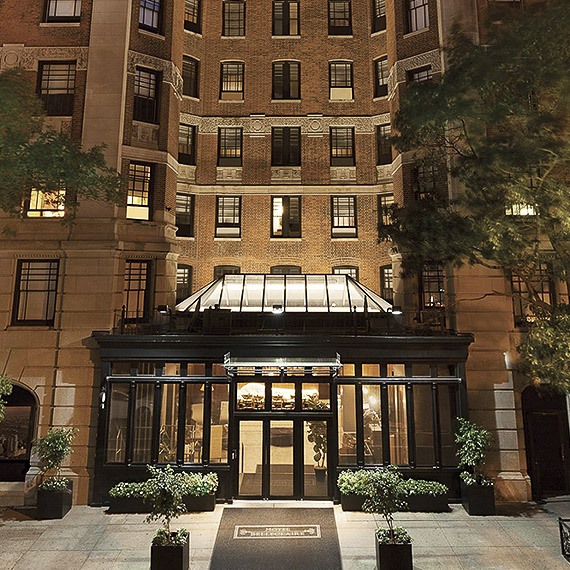
The Hotel Belleclaire in New York City has been declared a historical landmark and a building of cultural and architectural importance. The hotel of over 250 rooms was designed and built in the early 1900s on New York’s Upper West Side between Central Park and the Hudson River. While today it is a mix of long-term, rent controlled apartments and some nightly accommodations, when it was built, it was one of the city’s premier hostelries. People like Mark Twain, the acting Barrymore family, Babe Ruth, and Maxim Gorky all stayed there in the early days the hotel was opened.

And the Belleclaire was one of the first hotels of its kind to allow pets, although discreetly. The original newspaper stories about the establishment boasted that the staff knew how to be discreet regarding the needs of a sophisticated (i.e., wealthier) clientele. That meant learning to put up with pampered pups and cuddled cats for the guests at the hotel.

But that discretion had its limits, it turns out. A hotel staff is only expected to go so far. It seems that the kerfuffle began with a hotel guest who checked in under the name of T.R. Zann in 1920. Zann let it be known that he was a well-respected and widely-praised musician on the continent. He made the unusual request that his piano be shipped to him and brought by the maintenance department to his room on the 7th floor. And that’s what happened. The large, heavy crate was hoisted into the service elevator and brought to Zann’s room by an army of service workers and bellhops.

And then the story took a strange turn.

The manager received a phone call from the kitchen. It seems that Zann had made an incredibly odd request from room service. The kitchen asked the manager to discreetly verify the order with the guest before it filled it and sent it on its way to the 7th floor.

It seems that the musician wanted steak. Lots of steak. Fifteen pounds worth. And all of it rare.

The manager called Zann. The musician confirmed the order. When it was ready, the manager accompanied the waiter and his cart as the raw meat was taken up to the waiting man. When their knock at the door was answered with Zann’s brusque, “Come in,” the pair of hotel employees almost suffered a cardiac arrest because of the pet that stood before them in the center of the room.

The manager beat a hasty retreat to his office where he immediately called the police. They arrived and with them a horde of reporters in tow. Zann was removed from the premises, and the pet was taken into “custody” by the Bronx Zoo.

But, there was another catch. You see, Zann was not actually Zann at all. No, he was actually a Hollywood publicity agent named Harry Reichenbach. He was in New York to drum up buzz for the studio’s next big picture: The otherwise completely forgettable Revenge of Tarzan.

It’s why he registered under the name T.R. Zann, and it’s why he had a lion smuggled into the Hotel Belleclaire.

On a Museum Theft

Ever since we started collecting and displaying valuable art and artifacts, people have been trying to steal these items. One such theft occurred at a museum in Minnesota back in 2005. A Grand Rapids, MN exhibition was drawing good crowds to see the items on display, and local press had drummed up good publicity about the exhibit. The throng had been larger than the small-ish museum could handle that summer, and security was stretched pretty thin. Curator came in one morning to find that two of the most prized items in the collection had been taken. The thief or thieves had smashed the glass on a display and made off with the items. The smashing of the glass had not triggered any alarms, however. Clues were slim to none. The authorities were mystified. The museum failed to have adequate security cameras in place to catch the perpetrator(s). Whoever did the deed made a clean get-away.

Now, let me say that the items taken are today worth upwards of $4,000,000 on the open market, so it makes little sense that so little security surrounded these one-of-a-kind items. And, with no leads, the museum held its breath and hoped that the robber(s) would try to sell the items and get caught or even make an attempt at turning in the expensive stuff at an attempt towards collecting a substantial reward.

And then, finally, in 2018, the authorities caught a break. Someone contacted the insurance money saying that he had information about the theft. That tip on the contact led the museum to be able to recover the stolen goods and restore them to a newly secured (and heavily videoed) place in the museum. The FBI got involved and the person of interest backed off. But no suspect was named, and no one was arrested. The museum didn’t seem to care as long as the priceless artifacts where returned.

That was the end of the story until a recent indictment was made. It seems that a man who lived just down the street from the museum had taken the items almost on a whim. He acted alone, entered the museum after hours, and smashed the display case and took the items to his house. They stayed there, a few blocks away, until the sting operation got them back.

Yes, the grand jury returned an indictment against a Minnesota man named Terry Martin for felony theft of major artwork.

And what priceless things do you think Mr. Martin stole?

Why, nothing less than the red shoes worn by Judy Garland in the film The Wizard of Oz.

On a Disappointed Airman

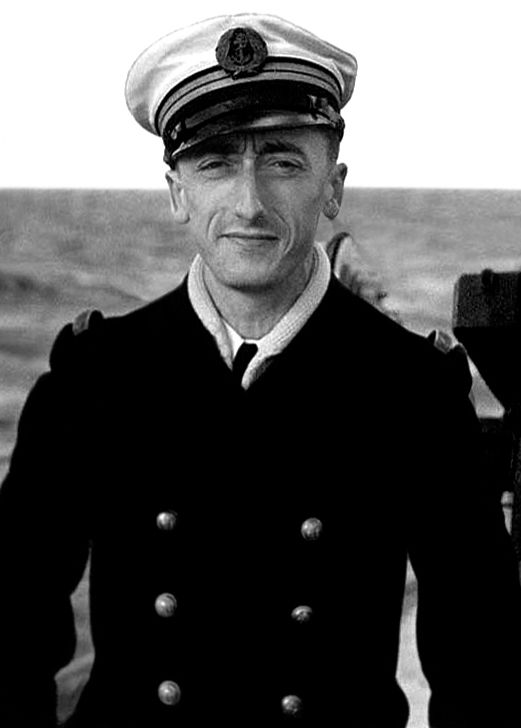
James desperately wanted to fly. Born in 1910 in Gironde, France, he remembered how exciting the early days of aviation were. The First World War propelled aviation innovation exponentially, and, as a young boy, James loved the developments in the flying technology that came out of the war. He, like many boys, made models of the planes that had won the war for the Allies, planes like the Nieuport and the Spad and other French planes (which the American pilots used in that conflict).

At the age of 20, James enrolled in the French Naval Aviation College to begin to fulfill his childhood dream. He excelled at gunnery school as well as being a pilot, so he pursued that path in the school. He graduated as a gunnery officer.

But then, tragedy struck. Coming home from his post one evening, the car he was driving was struck by another car–and James broke both of his arms. The resulting time missed from service and the weakness the breaks caused in his bones and muscles grounded the would-be pilot. James was crushed. He had committed his life to aviation only to have fate cruelly swipe his passion from him.

Still, he had his enlistment to fulfill, and James promised his nation to be the best naval officer he could be. He made a vow to become as passionate about the sea as he had been about the air. He worked with the navy’s new technology department, helping to create one of the first mini-subs for use by the military. And he lived up to his promise to be a good sailor across a 20 year career in the French Navy despite his intense disappointment in not being able to fly.

His acumen and innate intelligence led him into key assignments during that time. He went on information-gathering trips for the navy to many nations in the 1930s in the build up to World War 2, including one trip to the Soviet Union. During the war, James actively worked with the French underground movement and was awarded several medals after the war for his involvement in that fight against Nazism.

When he retired in 1950, James did not give up his love for the sea. In fact, he continued what became a second career that made him internationally known for his work with the oceans. James, of course, is his English name. You know him better as Jacques.

Jacques Cousteau.