On an Import to China

We hear talk often of the trade deficit with Asian markets as cheaply made products from that continent, specifically from the nation of China, crowd out the more expensively produced western goods in stores on this side of the globe. Western products get re-imagined and re-engineered over there because, in part, of cheaper labor, and then consumers in the west choose the cheaper product. And who can blame them? But here’s a story about an import to China that won’t and can’t be undercut and sold back to the west.

It involves a Canadian man named J. Howard Crocker. Let’s call him Howard. He worked in the early 1900s for an international organization that assigned him to the (at that time British-held) Chinese city of Shanghai. The organization shipped him off to China in 1911 with a farewell banquet and its best wishes for success in his new venture. So, even though he knew little about China and had worries that he would fit in over there, Howard agreed to go.

When he arrived, Howard found the organization’s organization in shambles. Offices in several Chinese cities didn’t coordinate with each other. There was overlapping territory, lack of coverage in other places where should be some, and almost zero cooperation or even communication going on between the offices. So, after being given the go-ahead from the home office, Howard set about re-organizing things. His efforts paid off pretty quickly. Within a short time, things in the China branch were humming along. Howard managed to bring people together. He borrowed a phrase from a fellow Canadian and touted the slogan, “The Joy of Effort” to represent doing your best in a job and enjoying the results.

But then, in 1912, China experienced a revolution. The emperor (and the power behind him) was toppled and replaced with a president. Rather than meeting opposition from the new regime, Howard found that China’s new leaders welcomed his group and promoted it. That led Howard to begin a wide ranging campaign of building offices and facilities throughout China in an effort to spread the goals of his organization. And rather than meeting opposition to what he was doing, the Chinese people embraced it eagerly.

By 1915, Howard realized that ultimate success in China depended not on bringing Canadian or other foreigners to China but rather to train native Chinese people to work for his group. The locals in turn would train other locals, and so on and so on. Soon, this thing was found in every city and hamlet in the nation, and it is still there today. In fact, China excels at it.

Now, this was fairly radical for Howard’s time, given that the western mentality of colonialism remained strong in most western mindsets. But Howard found success in training locals to take over the jobs that had been held by westerners. Now, to be fair, Howard was sort of forced into this because World War I took many of his western workers away from China, but the result was that the local people his group trained spread what he and his group had brought with them throughout the country much better than Howard ever thought his group could.

Eventually, because the Canadian war effort needed his organizational skills, Howard was recalled to Canada, but what he and his organization left behind in China is now today one of that nation’s greatest sources of pride. When J. Howard Crocker died in 1959, he had no idea that the thing he had introduced into China would make it one of the world’s leaders in that area.

What was it that Howard brought to China and in which it is now one of the world leaders in? Well, the organization Howard worked for was the International Organization of the YMCA, and the thing he gave to China, the thing that they’re one of the world’s best in is volleyball.

On Some Sleep-Deprived Workers

We’ve looked in the past on the concept of “second sleep,” that is, the idea that, in the period before electric lights, people usually slept in two shifts; one shift would be from roughly 7-8 pm until midnight or 1 am, while the second shift would be from 2 or 3 ’till 6 or 7 am. This post is about the opposite issue–a group of workers who get almost no sleep and, in fact, suffer greatly from the effects of sleep deprivation.

It’s the nature of their work that keeps these people–they are all men, by the way–awake. They work in the evenings usually, and they travel. That cycle of not sleeping during the day then working then going to the next place of business severely disrupts these workers circadian rhythms. They can’t sleep during the day because daytime is often when they prep for the work they do in the evenings.

All that’s left for them to do is to try to catch some sleep while they’re on the way to the next meeting. And, if you’ve ever tried to sleep while sitting up…well, you know it’s nigh unto impossible. And what is the result of months of sleep deprivation? Scientists have a good bit of data on this subject, actually.

It seems that when a human doesn’t sleep well or much for extended periods, the human body begins to break down in almost every area. Heart disease can develop because there’s almost never a resting heartbeat. Diabetes becomes an issue as people begin to eat/consume bad calories in order to try to stay awake for their jobs. The risk of stroke and heart attack dramatically increase. And then there’s the depression.

And it’s this depression that has made sleep deprivation among this relatively small group of workers such a public health issue. The depression that has come about due to their lack of sleep has manifested itself in increasingly bizarre and self-abusive behaviors: Drug and alcohol addictions, extreme risk-taking, violence, and radically poor life-choices.

In an effort to combat all of these symptoms of sleep deprivation, the organization these men work for has hired “sleep doctors” to not only monitor the effects of the deprivation on the workers but to also help them carve out time during their workdays to create sleep events. These sleep specialists have been working to get these men the help they need to fight their on-going battles with depression and the other physical and emotional toll the job takes on them. Now, you might think that the workers should quit or that the jobs they have should be eliminated out of concern for the workers.

However, simply terminating the type of job that is causing these workers to not be able to sleep is unthinkable and practically un-American. After all, the National Basketball Association generates too much money to let their players sleep.

On a Feared Beastie

The Middle Ages, The Dark Ages, the Medieval Age, all mean the same thing, basically. We usually think of it as the centuries between the fall of the Roman Empire in western Europe until roughly the beginning of the Renaissance (the so-called “Re-birth” of knowledge). During those centuries, wars (including the Crusades), famines, pestilence (Black Death, etc.), monasticism and the power of the Catholic Church, Feudalism, and so so so much more happened. Surprisingly, what is little discussed by most historians is the thing that many Medieval people feared the most: A creature of the forest.

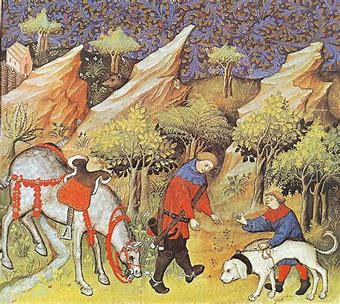
It’s hard to describe the terror this “thing” in the woods brought to people for hundreds of years. There are illustrated stories copied by monks of the period showing the beast with huge teeth, the blood of its victims dripping from them. In these drawings, the creature towers over the hapless folk as it grabs them around the throat and begins to viciously rip them to shreds.

In a world filled with legends and folklore, such a terrible beast caused nightmares and made strong men quake with fear. Woods were thick and dark. Getting lost in them often meant death at the hands (or claws) of wolves and other fabled “monsters” of the time. Tales and stories passed down through the generations only added to the fear that the common people kept in their hearts.

Now, please be aware that people of that period weren’t without their abilities to fight this menace; in fact, many people in the countrysides actively hunted the beastie. They killed it often, to be sure, but the ones they managed to subdue were much, much smaller than the ones depicted in the monks’ texts.

Perhaps, some historians suggest, the hunting of these smaller versions of the beasts was man’s way of trying to gain control over a fear that had been laid deep in man’s heart. But, even if that is true, these smaller versions that people killed (and ate as well) were not the ones feared. No, the ones that filled people’s imagination were, as one writer said, “sadistic, cruel, and violent animals” that no man could easily subdue.

And these things could use swords as well.

Your imagination might be thinking of some type of Grimms’ Fairy Tales-type monster as the one that terrorized generations of Middle Ages Europeans. You’d be wrong.

What was this terror of the Medieval Age?

The common rabbit.

On an Unusual Collaboration

Keith and Phoebe are, in many ways, an usual couple. They are not romantically linked, but they are dear friends and have decided to collaborate closely for the rest of their lives in promoting a non-profit organization. When you hear how they came to be friends and co-workers who share the same world-view, you’ll be as pleased as you will be surprised.

Keith and Phoebe both have deep backgrounds in the state of Louisiana. Their New Orleans roots run through what they are working on together. The group they head is part educational, part inspirational, part historical, and part hands-on application. And that’s not all.

You see, Keith’s family is mostly African-American, while Phoebe’s ancestry is mostly from Europe. That’s part of what brings them together today–that difference. Phoebe put it this way: “We want people to understand what legacy is…(and) not wait until the end of life but to realize what legacy is at an early age.” And, so, the pair speak to college kids, senior groups, churches, and have even appeared before legislative committees speaking about legacy–their specific legacy, and our collective one.

In Keith’s and Phoebe’s minds, the world works better if we stop looking for who we can be against and begin concentrating on who we can be with. Keith talks about taking a mentality of “verses” meaning opposition and turning that into “and” meaning coming together. If you’re starting to think that these two are working to spread a message of racial tolerance and peace, then you’d be correct.

The pair of unlikely collaborators don’t share much by way of careers. Keith worked for Marriott Hotels most of his life, and Phoebe was a photographer and filmmaker for much of hers. But their passion and, yes, legacy, is what brings them together on their mission and binds them forever historically.

Because Keith and Phoebe–note the “and” there–have ancestors that used to be “verses.” Keith Plessy and Phoebe Ferguson are descendants of Homer Plessy and Judge John Ferguson–the participants in the infamous Plessy v. Ferguson Supreme Court case that legalized segregation for decades in the United States.

On Some Expats

Since I’ve not found a permanent home outside of the United States as of yet, I’m classified as an expatriate or expat. Once I find some place and settle, I’ll then become an immigrant. This is the story of about 20,000 other American expats, most of whom became immigrants in the South American nation of Brazil.

The last Emperor of Brazil was Don Pedro II. In the 1860s, he wished to diversify his nation’s agricultural exports to Europe’s eager markets. Thus, he made it incredibly easy for American farmers to come to Brazil and get cheap land and help Brazil become much more of an agricultural exporter.

As said above, over 20,000 Americans brought their families south and set up farming in Brazil. Interestingly, until that time, Brazil had been a diverse national ethnically but had been almost 100% Catholic religiously. The expats who came there from the US built the first protestant churches and cemeteries that Brazil ever saw.

Now, Brazil was certainly a difficult change for many of the Americans. The language and culture challenged many of the expats as they sought to raise their children as “American” as possible within the confines of the Brazilian nation. Guide books were written and published in the US detailing how to make the giant leap and move to Brazil and raise your kids while maintaining your “American-ness.” The most famous of these books was Hunting a Home in Brazil and published in 1867.

Some of the Americans brought their metal plows with them, and these technological marvels caused the native Brazilian famers to gasp with awe. An agricultural school was set up to teach the Brazilians the latest farming techniques. The settlements in Brazil grew quickly, and, today, the Brazilian city of Americana boasts over 200,000 residents, many of them descendants of those early American expats turned immigrants.

What do you think made so many Americans accept Emperor Don Pedro II’s offer to come help Brazil’s agricultural sector? Well, if you know anything about American History, you know that the early 1860s saw the American Civil War.

And those more than 20,000 American expats–known today as Confederados–who left the United States for a fresh start?

They were American slave owners who couldn’t stand the idea of living in a nation that had outlawed slavery.

On the Emperor’s Gifts

The islands of the Aegean Sea are known for their beauty. The sparkling clear blue waters mirroring the usually clear skies above all beckon the traveler and the tourist. In 766 AD, all that beautiful area of islands and sea and sun was under the control of the Byzantine Empire. And the emperor that ruled in the capital city of Constantinople at that time was named Constantine V.

Now, Constantine V ruled the empire for a little over 30 years. He took advantage of a time in history when the encroaching Muslim forces were in disarray, and he secured and expanded the borders of his kingdom. He is remembered as an able military leader and decent administrator as those things go.

What he’s not remembered for is his generosity.

And that’s interesting considering how he treated several of his high-ranking political appointees and governors. You see, Constantine V personally saw to it that 17 of his underlings were taken care of on an island in the Aegean. There, they had constant care and watching. Their food was provided for them. They didn’t have to worry about clothing or the basic necessities of life.

And, what’s more, all 17 of them were blind.

Yes, the Emperor Constantine made sure that these incapacitated former administrators and advisors were seen to. He even dispatched servants once a year with special gifts from him to the 17 men. It was his way of subtly reminding them who was taking care of them and why they were in the situation they were in in the first place.

Now, you’d think these men would be grateful, right? They have a great place to live, all their needs were met, and they received special attention via the emperor’s gifts once per year. In their conditions, you’d expect them to show how much they appreciated the situation their ruler had afforded them.

Yet, the 17 men deeply resented him. Their hatred for him burned with the heat of 1000 suns. They spat when they heard his name, and they loathed the moment that the servants arrived from Constantine V bearing his yearly gifts.

Why? What had he done to them that would cause them to resent his generosity so?

Well, you see, it was Constantine V who had blinded them in the first place and exiled them there. These 17–and two others who were executed outright–had sought to overthrow the emperor and install a different ruler over the Byzantine Empire. And Constantine had defeated the rebellion.

And the yearly gifts that he sent them?

100 lashes, each.

On a Horse Race

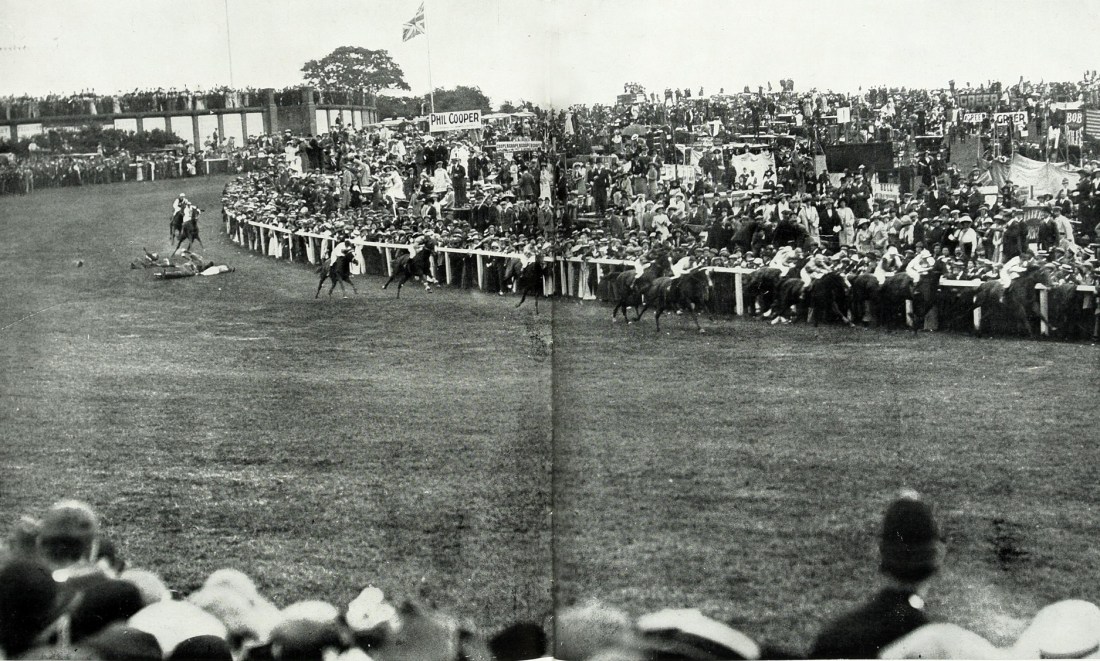
June 4, 1913, was the day of the famous Derby Race held in Epsom, Surrey. The 1 1/2 mile race is the premier thoroughbred horserace in the United Kingdom. That day, the Derby was won by a 100-1 long shot named Aboyeur, although he was not the first horse to cross the finish line. Another horse crossed first, but, unusually, that horse was disqualified because the horse and rider had committed several fouls along the race course. That’s why Aboyeur ended up in the winner’s circle that day. However, we don’t remember the 1913 Derby because a long shot won that day.

Jockey Herbert Jones is one reason we remember that particular race so well. That day, Jones was astride a steed named Anmer, and Anmer was owned by none other than King George V. Now, Jones was one of the best-known riders of his day. Jockeys were celebrities like pro athletes are today, even gracing the fronts of collectors cards (like a horseracing version of baseball cards). Jones won Britain’s version of the Triple Crown, and he had been astride other colts owned by royalty before. Some said he was one of the favorite jockeys of Edward VII, a king known for his love of the ponies and racing and betting.

But this was not Jones’s day. Anmer broke late and never had a chance to move up to challenge the leading pack that day. In fact, Anmer didn’t finish the race at all. You see, an obstruction was on the race course, and Anmer struck the obstruction, falling, and throwing Jones off his back. He summersaulted and landed on top of Jones. The jockey was knocked unconscious and later was determined to have had a concussion. He also had to have an arm in a sling. King George was most disappointed. He noted in his diary for that day, “Herbert Jones and Anmer had been sent flying” by the obstruction and that it was “a most disappointing day” all around. Luckily, Anmer wasn’t badly injured, and Jones even managed to ride the horse in races again not to much later after he recovered from his injuries.

But, what exactly was this obstruction?

Well, it happened at turn four as the race was about to enter the home stretch. Something ran out onto the racecourse in the direct path of Jones and the king’s horse. Newsreels of the day captured the moment it happened, and you can see it on the internet today. The obstruction–the object that ran out in front of a mounted horse running about 35 miles per hour–was a woman.

It seems Emily Davidson, a 39 year old suffragette from London, crossed under the barricade and moved alongside Anmer and Jones as they sped towards her. The newsreel footage seems to show that she was trying to attach some sort of suffragette pennant to the horse’s tackle or bridle as it flew past. The horse struck her—and killed her almost instantly.

Davidson’s dramatic death is said to have led to the public outcry that would give women in the UK the vote only 5 years later.

On a May-December Romance

Frank’s Uncle Steve loved the teen dearly. The uncle wasn’t really an uncle, actually, but a close family friend and Frank’s dad’s law partner. The pair had known each other since Frank was born, in fact. And, despite the fact that Frank’s “uncle” was 28 years older, the pair fell in love even while Frank was a teenager.

Frank’s dad died in a vehicle accident when Frank was only 11. And when Oscar, Frank’s father, died, this Uncle Steve had become Frank’s guardian and protector since the two men were close due to being law partners,and since there was no other relative who could provide for the young person financially. Oscar had been stupid with his money; he gambled and gave away much of his wealth. That’s why Steve had to step in and take charge of raising the youngster.

Steven often brought the teen into his house, but there is no evidence that anything physical or sexual happened between the two at that point. Steve had been a confirmed bachelor his whole life, and it seems that his love for Frank was really the first time he’d shown any interest in, well, anyone at all from the perspective of love. Would it surprise you to learn that Frank’s mother approved of the relationship between Frank and this much older man? The mother did, actually. Steve even asked permission from Frank’s mom before he asked for Frank’s hand in marriage. Frank’s mom approved wholeheartedly.

Frank really liked photography and political science. At college (a college that Steve picked out and, of course, paid for), Frank excelled and became incredibly popular. Good-looking, smart, and with a maturity that belied the fact Frank was a teenager, several suitors tried to woo Frank during college. One almost succeeded, but Frank turned the boy down. After all, Frank knew that Uncle Steve was waiting. After graduation, Uncle Steve insisted that Frank take a trip to Europe to help “round out” the education received at college. It’s interesting that throughout all the college years, the trip to Europe, the various boys who tried to take Frank’s attention away, nothing changed Frank’s mind about being in love with Uncle Steve.

Finally, when Frank finished school and became 21 (and Uncle Steve was 49), the two lovebirds wed in a simple ceremony before only 31 witnesses.

It was the only time a sitting President of the United States, one Stephen Grover Cleveland, married in the White House. And his young bride, (who was christened Frank Clara Folsom), known publicly as Frances Folsom, would go on to have several children with Cleveland, including one named Ruth–whom you probably know as Baby Ruth because a candy company named one of their candy bars after her.

On An Old Man’s Conversations

George really was a man who enjoyed simple things, but he was no simpleton, he. Some of his friends called him “Farmer George” because he liked to dabble in agriculture (even though he lived in the city, mostly) and because of his liking for things like food, family, and laughter. All in all, a good man who married a good woman and had a bunch of kids.

15 to be exact–9 of them sons. The last two boys were born to George when he was an older man. It was these last two sons that George talked to more than the other children that he and his wife had. You see, George had some health issues as he aged as many of us do. He became bedridden, and the younger children around him were all he saw as the older ones were grown and gone by that time. So, George amused himself by talking to the two younger boys, Freddie, the 9th son, and Eight–yes, George named his 8th son Eight–for hours on end.

The boys never complained about their father’s long talks with them. Oh, he would ask them questions often, and he would listen intently to their answers, but most of the time in his bed-ridden state, George would simply talk…and talk…and talk. And while young boys being that patient with an elderly father seems unusual, you’ll see why the never grew bored with or tired of their father’s attention.

And it’s not that George ignored the rest of his family. Unusually for his day, George doted on almost all his children. The oldest and namesake, well, he was different than his dad. George, Jr., wasn’t fond of the simple things like his dad was. Those two men never really “bonded” as is the phrase today, but what inheritance the older George left when he died went almost all to George, Jr. No, the older George would carry his younger children around on his shoulders, he’d toss them in the air, he’d play games and always–always–remember their birthdays and special events in their lives.

So, for the years preceding his death in 1820, Old Farmer George talked to his two youngest sons about life, death, God, toys, travel, the stars, and even shared secrets with them that no one else knew.

Sadly, the boys never heard what their father said to them.

That’s because both of them had died several years before. Eight–whose name was actually Octavius–died in 1783 at age 4. And Freddie–Alfred–had died at age 2 in 1782.

You see, in his madness, King George III of Great Britain and Ireland, talked long hours to the precious sons he had loved and lost.

On a Grand Larceny

The film franchise Fast and Furious has nothing on perhaps the greatest automobile theft in history.

Seems that over 1,000 Volvo 144s and other odd construction vehicles and trucks were stolen in the 1970s, and no one talks about it much today. In fact, it’s a theft that I’m sure the Volvo Corporation would rather forget. It began with a customer who put in this large order for delivery of some of Volvo’s products. The buyer asked for a discount since the order was so large, and Volvo had no trouble agreeing to a less-than-off-the-rack price. The negotiations between the two sides were amicable. Volvo had dealt with the buyer before with no issues. Perhaps that was part of the long con that the buyer pulled. Perhaps.

At any rate, Volvo was eager to make delivery on such a large purchase. If they could sell $70,000,000 of their cars and other vehicles at one fell swoop, well… And, again perhaps, Volvo’s eyes at that potential payday might have clouded their judgement. Swedish firms are notoriously (they might say suspiciously or realistically) cautious when it came to making big business decisions. On the other hand, did I mention the incredibly large sale?

So, the deal was struck. The buyer would pay upon delivery of the vehicles. The paperwork was done in Stockholm, the containers were loaded on the ship, and the cars made their way to the buyer. Easy-peasy, right?

Not so fast.

Upon receipt, the buyer simply…didn’t pay for the cars or other vehicles. Any of them. And still hasn’t all these years later. Volvo pitched a rather subdued fit and insisted that payment be made Nope. Not one cent was forthcoming. The company, wishing to avoid the public embarrassment of having been bilked, quietly appealed to the Swedish government to intervene since this particular buyer was overseas. I’m not going to say that the Swedish government laughed in the company’s face, but…oh, wait. Yes. Yes, that’s what I’m going to tell you. The Swedish government basically told Volvo that they could do nothing and, what’s more, didn’t want to do anything about the company losing that much money to what amount to a really grand larceny on the part of the buyer.

And, so, Volvo goes down in history as the victim of the largest car theft ever.

That’ll teach them to do business with the government of North Korea.