On a London Café

You can’t spit in Edinburgh these days for a coffee shop. London’s almost the same. Here’s a story about such a place that opened in London a while back. And it’s a typical story of a mix of cultures coming together in the British capital city as is often the case. The man who started this particular café was a Greek immigrant named Pasqua Rosee. He came to England to work for a man he’d met in Turkey a few years before. Now, to be fair, Pasqua was planning to work clandestinely. But he still had the drive to open a coffee place in London and make it like the coffee he had growing up–a confluence of Turkish and Greek tastes that he felt would appeal to the sophisticated palates of Londoners.

You see, Pasqua had worked as sort of a butler or servant for a London resident named Dan Edwards when Dan lived and worked overseas. One of the jobs Pasqua had was making coffee every day for Dan. And Dan raved about it. He praised the Greek man, telling him that there wasn’t anything like Pasqua’s coffee in London. So, believing his employer, Pasqua took the chance and bought a ticket to England. He had saved some money, but he knew that his illegal status would preclude him from actually owning the business and, besides, he simply didn’t have the contacts. But Dan had his back. Dan provided the “face” for the legal stuff and let Pasqua’s coffee-roasting and brewing skills do the actual work.

The called the coffee shop, simply, Rosee, after Pasqua’s family.

Dan also helped Pasqua get some baristas to help in the business. One man, Kitt Bowman, was a family friend of Dan’s who decided to invest in the business as well as work there. And the location–which we can all agree can make or break a business–was superb. It was right in the financial district, not too far from the Royal Exchange, and the clientele and market was upscale people who had disposable income. The business was a success soon after opening. The place was packed. People raved over the taste of Pasqua’s coffee. People kept asking him to sell his secret of how he achieved the great tastes of his roast, but he wouldn’t budge. Kitt and Dan were supremely happy. Word of mouth soon made it the most popular coffee place in London.

But, then, the coffee shop’s luck ran out and disaster struck. A fire in a nearby location swept through the adjoining buildings and destroyed the establishment. However, Pasqua wasn’t in the country at the time. It seems that his lack of legality in England had somehow caught up with him, and he was forced to leave the country. Kitt carried on for a time until he grew sick, and then, the fire finally killed Rosee. But the way Pasqua made coffee didn’t die with Rosee. Within a few years, over 500 coffee places had sprung up in London and the surrounding villages using his roasting and brewing methods.

Oh, and that fire that destroyed Rosee? It was the Great Fire of London.

You see, Pasqua Rosee opened London’s very first coffee shop–back in 1652.
On a Financial Advisor

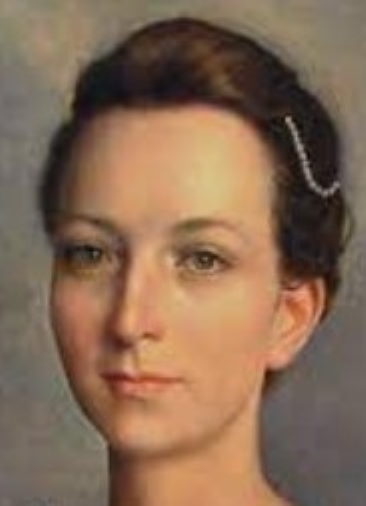
Patsy was set for life when her hubby died. Daniel passed suddenly in his early 30s, and the young widow found herself one of the wealthiest women in the country. To begin with, her real estate was in the tens of thousands of acres of productive farmland. She now possessed rental houses. She owned property totaling sums that most people only imagine. And it was all hers because Daniel had died without a will; everything passed to her as executrix.

But it was not all rosy for Pasty. She and Daniel had bore four children. You see, Patsy had come from a large family and wanted a large family, and Daniel agreed with his wife. So, she was worried about raising her children alone and managing what was now a large financial portfolio. That’s when she decided to call in someone who could help her make the best decisions for herself, the children, and the legacy that Daniel had left her.

Now, before we look at that, let’s remark that this was an incredibly attractive woman under the age of 30–even discounting the fact that she was enormously wealthy at this point. Surely a prospective life-partner would find that appealing. But Patsy didn’t want any man. She was smart enough to manage on her own, but she preferred that her attention be on the children and leave the financial matters to someone else. That’s why Patsy was really asking not really for advice on how to manage the vast wealth, but, rather, she really wanted someone to take it all on for her and do the managing so she could concentrate on raising the kids.

Now, please know that a certain man who lived not too far away from Daniel and Patsy made his, shall we say, services available to the young widow fairly quickly after Daniel was buried. He was a military man who had some decent land himself (but nothing like Patsy) that he had improved over the years. He was a few years younger than she, but his skills at managing his financial affairs impressed the young woman. So, she invited him for a meeting to see what his plans were for her holdings.

The pair instantly found a connection. There was a physical attraction between them on top of the fact that Patsy recognized the young man’s fiscal acumen. Here was someone who could manage things for her while she raised the kids, and he would be someone she felt sure that Daniel would approve of. About a year after she wore a widow’s veil, Patsy’s wedding was planned–more like a wedding with some overtones of a financial merger, perhaps.

Now, you might wonder if Patsy should have made a pre-nuptial agreement. That’s something that is common when one party is substantially wealthier than the other. But she did not. She trusted the man. His reputation for fairness and honesty preceded him. She allowed him to have the full control over all her finances–the land, the rental property, and all possessions. In return, all he had to do was insure that her and Daniel’s four kids would be looked after in perpetuity, and that she herself wouldn’t have to worry about the inheritance she’d received.

But, why should she worry? After all, it’s not every day that someone like Martha “Patsy” Custis would be so lucky as to put her life and her entire fortune in the hands of someone as honest as George Washington.

On a Promotional Flight

We probably can’t relate to how much of a media star Howard Hughes was in his time. Maybe–maybe–the closest we could get is if we merged Bezos and Musk and Zuckerberg together, we might begin to understand Hughes’s hold over the public imagination of the 1930s and ’40s. He was, among other things, a financier, a real estate baron, a film mogul (director and producer), a manufacturer and innovator in many fields. One of his major areas of productivity was in the advancement of aviation. Besides being the brains behind Trans-World Airlines (TWA), Hughes set/broke many records for aerial speed in aircraft he himself designed. You have also probably heard about the largest plane ever (dubbed the Spruce Goose) that he built and flew.

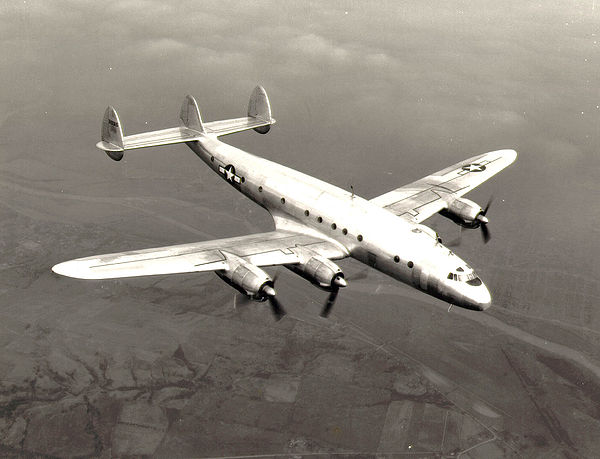
During World War 2, Hughes worked closely with the US Government in developing new aircraft for the war effort. One of his stellar accomplishments (pun intended) was the creation of the Constellation, a sleek long-distance passenger airplane that was commissioned by Hughes just as the war was breaking out in Europe. He saw the future, Hughes did, and he knew that after the war was over, people would want to travel long distances cheaply and comfortably. That’s where the Constellation came in. It was the first aircraft to feature a pressurized cabin that would allow it to fly safely and comfortably at high altitudes unlike any other aircraft before it.

Hughes took delivery of the aircraft in 1944 and flew it from California to Washington DC as a publicity stunt. He thought it would drum up business for his airline and new star of the fleet (again, pun intended), the Constellation. Skipping across America (and back), Hughes planned stops along the way to land and take local dignitaries up for quick flight so that they would be able to experience the thrill of luxury air travel. And so, he and the president of TWA went to DC and flew some government officials around before heading back west. One of his stops on the return was in Dayton, Ohio. Upon landing, there seemed to be a bit of confusion because almost no one was there to take the promotional flight. One in particular was an old man in a rumpled suit who didn’t even seem too excited to be included.

But Hughes was a showman. He gave the small group the usual sales speech and then took off with the gaggle of notables (plus the older man) and showed them what the future of air travel would look like. Throughout the more or less 50 minute flight above Dayton, Hughes let the passengers take turns sliding into the co-pilot’s seat to get a bird’s eye view of things from up front. When it was the older man’s turn, Hughes said to him, “Would you like to fly her?” The old man sort of shrugged and placed both of his hands on the yoke. “It really flies itself, doesn’t it?” the older man remarked to Hughes. Hughes smiled and nodded. And the man had some questions for Hughes. “What’s the wingspan?” he wanted to know. Hughes told him: 123 Feet.

“Do you do much flying?” Hughes asked the man as he got up to allow the next passenger to sit. “No, sir,” the old man said, shaking his head, and then he began to exit the cockpit. Then, he paused as if in thought. He turned back towards Hughes.

“123 feet, you say? That’s about as far as we flew the first time,” Orville Wright grinned.

On the Portuguese Empire

We all remember our history of the world’s great empires; names like Persia, Greece, Rome, England, and others bring to mind vast areas of land under the control of one leader or government. Those areas that differed in culture and language and were under the control of a powerful military–that is one definition of empire. What we often forget is that, at one time, the small nation of Portugal was once one of the world’s largest empires.

Today, Portugal is about the size of the US state of Indiana. In the 1400s through the early 1800s, Portugal controlled about 25% of the globe’s population, making up over 5,000,000 square miles of territory spread literally around the world. And the person probably most responsible for the power Portugal wielded was a crown prince of the country, a man we now call Prince Henry the Navigator (although he wasn’t called that at the time). It was Henry, the third son of King John I of Portugal, who first advised his father in the early 1400s to send ships along the northwest coast of Africa, to explore and to find trade goods.

Now, up until that time, Portugal, a Catholic nation, had had their hands full fighting off the Muslims who had occupied much of the Iberian Peninsula and also their neighbor, Castille (Spain). But John and his immediate ancestors had been able to establish a modicum of stability, and it was in this time when Portuguese exploration flourished along the western African Coast.

And Portugal’s ships brought back so, so many wonderful trade goods from Africa. They raided the interior of the continent for precious metals, ivory, and people. All of this brought wealth to the nation. Forts were set up to protect the trade routes. And, the ultimate prize for Portugal, was that they believed Africa was much smaller than it is–and that they could simply sail around the bottom of the continent and hit India, the crown jewel in trade for spices, cloth, and all sorts of goods that people in Europe would literally kill for.

But, as we now know, Africa is much larger than the Portuguese thought. It took them until 1488–some 30 years after Henry died–to reach the point where they rounded the Cape of Good Hope (they named that, by the way) and knew they were in the Indian Ocean. By then, their way was clear. They had the exclusive route along Africa to all of India’s (and Africa’s) wealth. The Catholic pope insured that they and only they could have this route. For a percentage of the take, of course, but yeah. They won the race to get to India first by sea.

That’s why the Spanish, finally kicking out the Muslims (and other non-Christians) and unifying the various kingdoms and principalities in their area, were late to the game. They, too, wanted a taste of the goods from India. But, realizing that the route along the African Coast belonged to Portugal, Spain grew desperate.

That’s why, in 1492, Spain’s King Ferdinand and Queen Isabella hired this Italian guy named Columbus who had a crazy idea to get to a route for them to India–by sailing west.

On an Unusual Pacifist

Conrad Haas should not have been a pacifist. Given his position in the Austrian Army’s artillery corps, Haas spent most of his adult life figuring out how to best use gun and cannon fire to kill large numbers of troops. And, during the time that Haas lived, artillery killed more soldiers than any other type of weapon did.

Haas was born in Vienna and raised in a middle-class family. He studied artillery in college, and became an army officer in charge of munitions for the entire Austrian Army soon. When it came to artillery, Haas was somewhat of a savant. He not only could calculate distance and elevation of the weapons to fire accurately, but he also knew how to best conserve fire and make it effective when it counted most in battle. Such skill soon made him known throughout Europe, and he was invited to Romania to teach in an army artillery school there.

Now, you’d think that a person who knew about how to effectively cause death and destruction through artillery wouldn’t have many qualms about his job, but Haas did. In fact, he began to see that his job was that of a sort of artillery grim reaper, a person who sowed disaster and mayhem. And that made him become a pacifist while he was still in the employ of the military.

He began to tinker with the artillery and the calculations needed to shoot projectiles long distances. And this led him to try to see another possible application for artillery than that of death. What Haas came up with was revolutionary for his time. In addition, he began writing treatises about disbanding and disarming the military. “Mankind should pursue peace and not war,” he wrote. “The day will come when the powder will stay dry, the leaders will keep their money, and the young men will not die.” You can imagine that these types of writings made him some powerful enemies.

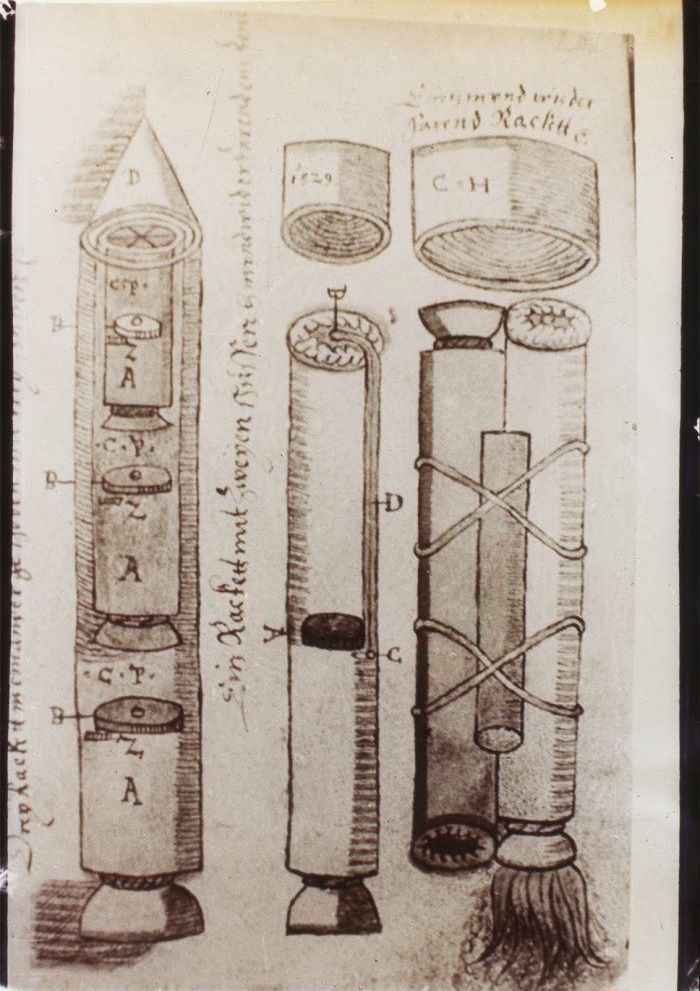
And those enemies would have done something about this artillery officer cum peacenik if what Haas proposed to do with artillery didn’t interest them so. You see, it was Conrad Haas who first came up with idea of launching not an artillery projectile, but, rather, a rocket into space. His concept was a three-stage rocket made up of a combination of solid and liquid fuels that would help the rocket break the earth’s gravity and cause the projectile to soar into the upper atmosphere.

He also came up with what is called a delta-shaped fin (the types we see on rockets today) and even a cone-shaped exhaust that would focus the power more directly and in a less diffused manner. And we can imagine that armies certainly liked the military capabilities that Haas’s ideas brought. So, his pacifism was ignored.

Of course, when Haas thought of all this, the practical application for such technology was years away.

After all, it was the 1550s.

On a Hat Maker

Thomas Corbett was born in England in the 1830s and, with his family, emigrated to the United States when he was 8 years old. The family moved to Troy, New York, and young Thomas apprenticed to a hat maker in the village. It would be a job he’d hold off and on throughout his life. When he became of age, Thomas found a woman he fancied, and the pair got married. But his wife and her baby died in childbirth, and that sent Thomas over the edge.

Thomas cursed God and decided to spend the next few years as a homeless drunk for the most part. One night, he found himself in Boston, Massachusetts, and got rip-roaring drunk as usual. It was during his intoxication that he crossed paths with a minister who was standing outside of a local bar and preaching to all those who came out of the establishment, drunk to the gills. Something the minister said resonated with the young grieving widower, and he gave up drinking on the spot. As fervent as he was as a drunk, Thomas became equally as resolute as a Christian. In fact, he even changed his name to represent the “new birth” he felt he’d received upon his baptism; he became Boston Corbett.

Now, we should note at this point that this young man was somewhat unstable mentally. He had exhibited odd behavior even before he experienced his remarkable conversion, but he became increasingly odd afterward. He would stop people on the street and pray for them–people who were complete strangers. He would verbally berate anyone whom he heard using what he considered to be swear words. And he had a habit of stopping traffic in the street and preaching to all within earshot. All of these behaviors caused those around him to question his sanity.

When the Civil War broke out, Corbett enlisted in the Union Army. There, he soon got into trouble for refusing to follow orders he felt were against God’s law (such as marching or fighting on the Sabbath). He faced disciplinary action on many occasions, including one court martial. After one battle in Virginia, Corbett was captured by the Confederates. He was sent to the infamous Andersonville Prison Camp in Georgia, staying there until released in a prisoner swap. When he eventually rejoined his unit, he found himself near Washington D.C. as the war ended.

Like all of the other soldiers in the army, Corbett was incensed that the man he saw as God’s avenging instrument, Abraham Lincoln, was gunned down by the Confederate sympathizer, John Wilkes Booth, a few days after the war ended. Corbett and his company were part of the group who pursued the fugitive Booth. When Booth was found hiding in a barn a few days later, it was Boston Corbett who shot Booth as he hid–shooting the man who was supposed to have been captured alive. You see, Corbett didn’t listen to the orders of men, no; he had a Higher calling.

And the event made him a hero.

After his service, Boston Corbett returned to hat making. He suffered increasing bouts of strange behavior for the remainder of his life. It is supposed that he died in fire in Minnesota a few years later after being a lay preacher for many years in addition to making hats.

What we know now is that Thomas “Boston” Corbett was crazy, but there was a reason for his being that way. You see, at that time, the fur used in making hats such as the tall, beaver pelt hats of the day, was treated with a compound that included mercury. Years of inhaling that poison affected Corbett’s brain and caused his madness.

And it’s why we say that someone is “as mad as a hatter,” because, for Boston Corbett, the avenger of Abraham Lincoln, that was his job.

On a Painting Contract

There are usually two camps when it comes to paying for contract work. Some people argue that it’s always better to pay the contractor up front, but others contend that the work should be completed before payment is tendered. Then, there’s a growing third group, and this bunch sets benchmarks for work completed with payment to be given as the benchmarks are met and the work approved. I like this one the best, because it seems like a win-win with neither side in a position to take advantage of the other.

This last benchmark-type contract was the arrangement Julio made to have some painting done. He hired a man named Mike for the job. Mike and his crew came highly recommended. As Mike completed different tasks for Julio, the work was to be inspected and payment made before Mike would begin the next bit of painting. But there’s something that you should know about both Julio and Mike–each man had a terrible temper. Julio was known to berate people who worked for him. He was obscene and showed off his vast vocabulary of curse words daily, sometimes rattling off a litany of vulgarities simply to see how others would react. For a man with quite a lot of money, he had a lower-class sense of humor and coarseness about him. In addition, he was unfaithful in his sexual relationships, fathering children by several different women. Now, on the surface, this has nothing to do with paying a contractor what you owe him, but it gives you an idea of the kind of man Julio was before we get to his business agreement with Mike.

And Mike, for his part, was no prize, either. His temper was shown not to underlings or workers like Julio’s was, but, rather, for people he worked for who stiffed him on payment. He was known to threaten violence against anyone who didn’t pay him the money he knew was owed him for his work. Some rumors were out that that Mike had killed a man at one time for non-payment. No, for his own workers, Mike was generous to a fault, often paying them out of his own pocked when the people he worked for didn’t meet their promised obligations. Add to this the fact that Mike wanted the job done right. He was often late on his work because he was known for starting over. Call it OCD or whatever you wish, but the man was a perfectionist. Julio wanted the job done right, but he wanted the job done. He didn’t want to wait for Mike’s perfectionist streak to repaint and repaint and repaint.

And, so, when Mike and Julio agreed to a large benchmark painting job, you knew fireworks were bound to happen somewhere along the way.

The first benchmark was met, and Mike was paid. The second one, was met and Mike was paid. The third one was…late. Mike was repainting, and Julio yelled at him that this was a breach of the contract, that the benchmark having not been met meant that the deal was off. But Julio was pleased with what Mike and his crew had done. So, he promised to pay Mike, but still he withheld payment. So, Mike and his bunch took their buckets and brushes and ladders and left the job unfinished. Julio, realizing that he wasn’t going to find a better man than Mike to do this job, finally acquiesced and convinced the man to return to the work. And there were other hiccups along the way.

In all, it took Mike from May to September to finish the $600,000 paint job–September five years later.

But you have to admit, the painting of the Sistine Chapel by Michelangelo for Pope Julius II was worth the time and trouble.

On Lunar Trash Bags

Did you realize that there’s an experiment that was left on the moon that is still ongoing? It’s true.

The United States made six successful trips to the moon with humans onboard. Those journeys, from July of 1969 to December 1972 (Apollo 11 to Apollo 17), were summed up (somewhat grammatically awkwardly) by Neil Armstrong when he said that stepping onto the surface of the satellite was a small step in one way but a giant leap for mankind in another sense. And he was right. Those six landings captivated the world and still do to this day.

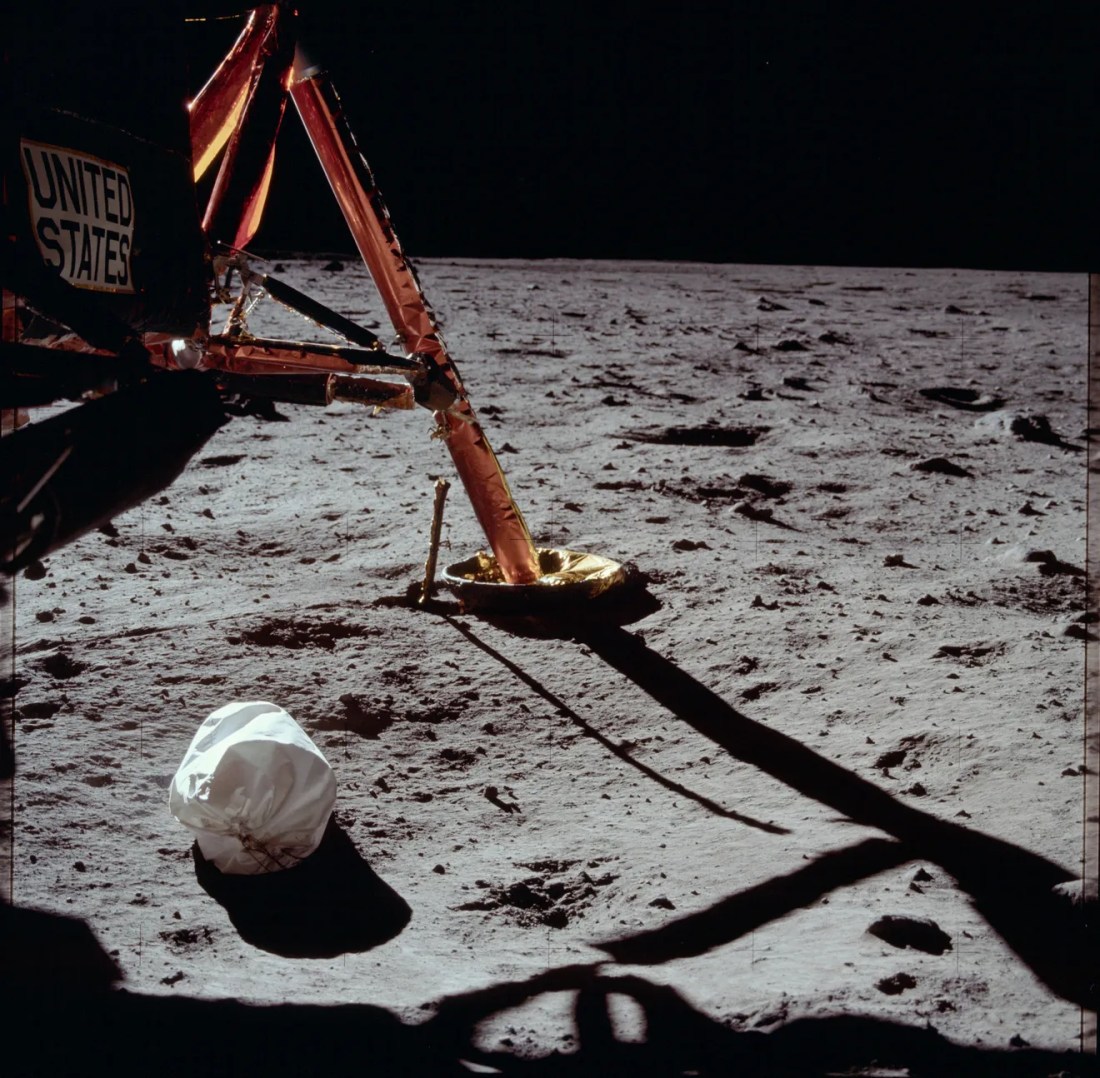
However, wherever mankind goes, trash goes with mankind. That’s certainly true of the moon as well. And besides the mechanical stuff that the astronauts left, things like the lunar rover, the landing “gear” that the modules took off from, various tools, and the now-bleached out flags and poles, there is another classification of garbage that the humans left that particularly interests scientists today, more than 50 years after humans last visited the moon.

The astronauts left this type of garbage on purpose. And this garbage is in 96 bags. They knew when they left it on the moon’s surface that the composition of the bags was teeming with life. Over 1,000 different types of microbes and species of bacteria are in those bags according to scientists. And it’s possible that fungi could have formed in the microbial bags. Thus, these 96 bags represent an interesting experiment in how living things can–or even if they can–live in an environment as sterile as the moon’s surface.

The extreme temperatures of the moon are a great test tube for this experiment. And, to be fair, the likelihood of anything surviving is slim. However, if the microbes can survive on the moon, well, they could be a signal that we can send things like seedlings or the basic building blocks of life long distances in space. Microbes can survive in the most unlikely places and in ultra-extreme conditions. This experiment might help us understand if we can maybe send life to planets that could be somehow “greened” or made habitable over time. This entire enterprise makes astro-microbiologists (yes, that’s a thing) really excited about the possibilities here on earth and the beginnings of life on our own planet. And the lunar experiment is still waiting for mankind to return to the moon to see how–and if–the microbes and bacteria survived in these bags.

And to think, all of this excitement over 96 bags of human poop.

On a Radical Innovation

Some swore that they would never bring such a thing into their homes. The innovation was thought to bring disease and foul air into houses. Radical concepts often face such criticism from people unused to new things or who are resistant to change. Yet, since about the past 100 years or so, the majority of homes in the western world went from not having this innovation to the adaptation being assumed and universal in that part of the world.

And it wasn’t merely an innovation; it was also a matter of changing architecture and even city planning. Such was and is the impact of this change that it remains something that modern cities grapple with and debate over to this day. Yet, archeologists have found that some ancient civilizations had it in their homes eons ago.

While many other ancient civilizations had variations of this innovation, it was the ancient Romans who produced something we’d recognize today. Yes, the Romans used this in both wealthier private homes and even some in the public sphere. Their version of this innovation pretty much resembles the modern incarnations, surprisingly. However, like some of the other Roman Empire discoveries and technology, the Middle Ages either lost or forgot some of what the Romans accomplished.

It was up to the Victorian Era to re-connect with what the Romans (among other civilizations) had concocted. The Of course, the Victorians thought that they could solve almost any problem, and they pretty much did–certainly in this case. But old traditions die hard, and many people in Britain and elsewhere in the western world resisted creating space in their homes for this re-discovered innovation.

Ministers, worried bringing something they considered “unnatural” into the home, warned congregants against bowing to the new fad. Some argued that such conveniences were of the Devil, that only the idle rich would have such things in their homes. But, as the 1800s began drawing to a close, more and more houses and towns regardless of income began adapting the technology. And, as we said, from the 1920s on, it was expected in houses in most cities in the Western Hemisphere.

We of course take it for granted–don’t give it a second thought–that our house or apartment will have a bathroom.

On a Free Breakfast

We in the west generally believe that the “free school lunch” is something that children in need should have access to in order to achieve academic excellence. That concept is fairly new in education, and there’s even some pushback in some quarters today with an increasing number of people questioning whether it is the responsibility of publicly supported schools to provide that nutrition. However, the argument has been made and the prevailing attitude is that free school lunches should be provided.

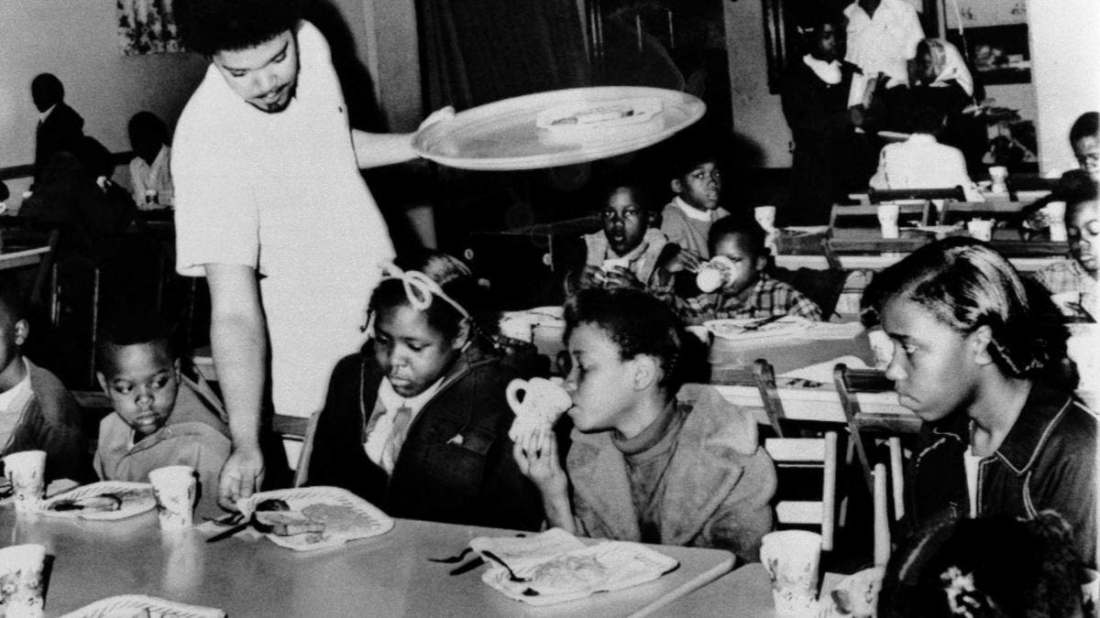
Interestingly, that type of free food program for lower income children started not because of a government program but began through a non-profit, private organization that worked in inner-city communities to better the lives of the citizens there. The first free meals for poor kids weren’t lunches, either, actually, but they were breakfasts. This group, a group that also had political goals, began serving low income kids in poorer sections of Oakland, California, in the late 1960s. They knew that people would be more receptive to their ideas if they were a positive contributor to the community to begin with. A local Episcopal Church building was used by this organization to give the free breakfasts to the kids. The volunteer group had gone to local grocery stores to solicit donations and had even consulted with nutritionists to see what types of food would pack the most punch for the kids throughout the day.

The results were astonishing.

Teachers and the school administrators reported almost miraculous improvement among their students who were receiving the free breakfasts before school. Test scores, good behavior, attendance, and over-all well-being showed significant increases. The kids were attentive as well; teachers said that the fed children stayed alert longer, they weren’t getting sick as much, and their prospects for school achievement increased. The volunteers were thrilled with their report card; they quickly expanded the program to other communities across the US. Schools in low-income neighborhoods of Detroit, Chicago, New York, and other large cities began reporting similar results to those in Oakland. The program was a success.

And that’s right about the time that the United States government began to take notice. Mainly, one agency of the federal government took umbrage with the efforts of the group. You see, the head of this governmental agency was such a racist that anything that helped minority people was seen as a threat to the nation in his eyes. He declared war on this program and its volunteers. He began ordering his offices around the nation to begin a whisper campaign against the free breakfast program. Parents were sent notices (ostensibly from the schools themselves) hinting that the group was secretly poisoning the children with the free food. And he ordered them to begin photographing the children as they left the places where they ate in an effort to intimidate the kids and pressure them to not return. The free breakfast program was shut down through this systematic harassment by the government.

What type of governmental bureaucrat–no, what type of human–would stoop so low? The program was good; it was free; no tax money was being spent, and the positives overwhelmingly outweighed the negatives here. Who would do this type of thing?

Well, luckily, cooler (and less racist) heads prevailed. Seeing the benefits of the program, the US Office of Education (what the Department of Education was before that agency was set up in the late 1970s) began offering free lunches and free breakfasts to low-income families. The program started by the volunteers in Oakland in the ’60s was reborn, and millions of low-income children have been helped.

But that success never would have happened if J. Edgar Hoover hadn’t’ve hated the Black Panther Party so much.