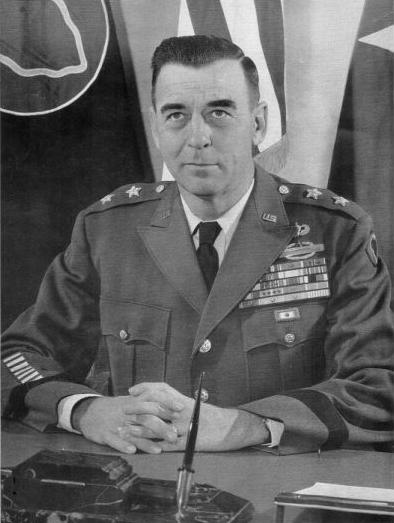
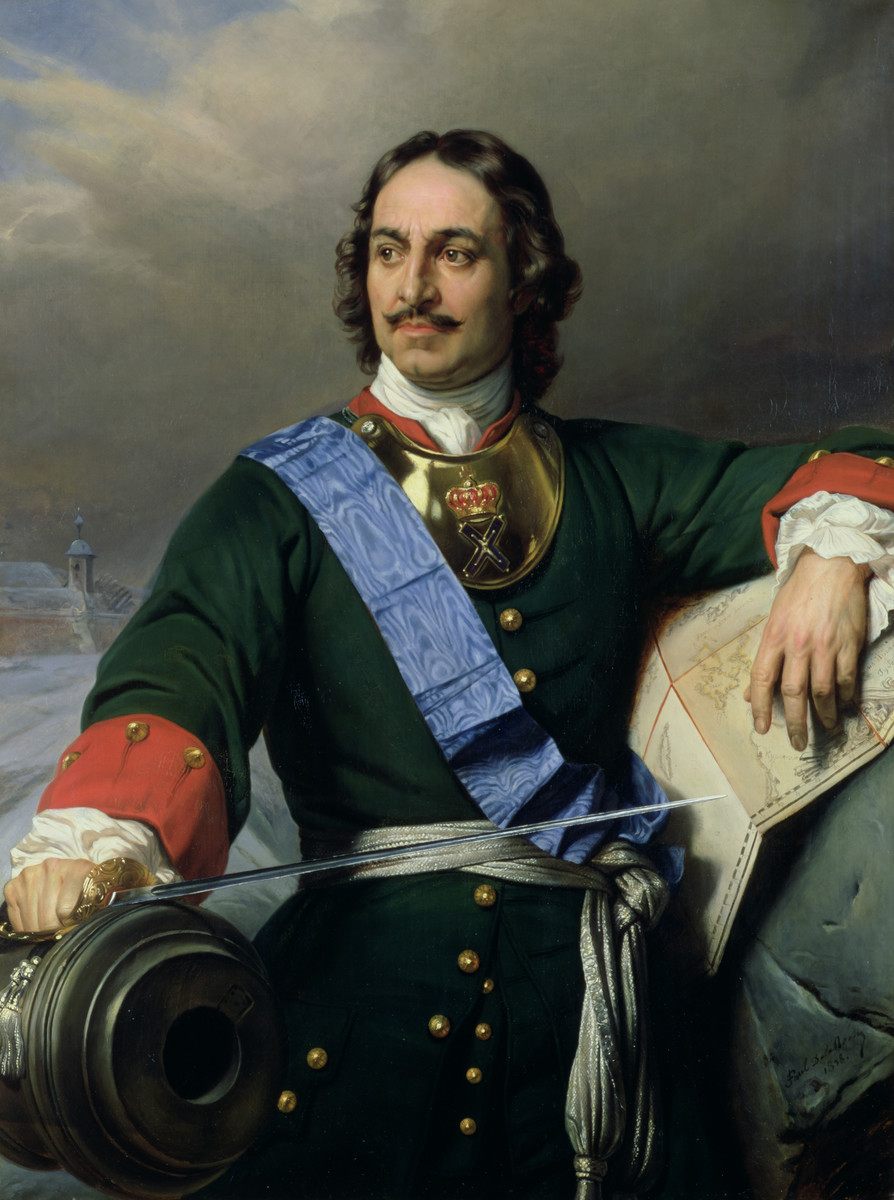
On Lord Haw-Haw

During World War 2, the British public was eager to hear about their loved ones overseas. The British Empire’s great size meant that British soldiers and sailors were literally fighting all over the world, and, often, news about these fighters was slim at best. And that’s why the British public often turned to their radios, their “wireless” sets, to hear what they could about the condition of loved ones overseas. And, the person they turned to more and more as the war went on was known as Lord Haw-Haw.

You must remember that from 1940 until the early part of 1942, the British military and the British people were the only ones standing between the aggression of Nazi Germany and the United States. Until the US entered the war officially in December 1941, it was up to Britain to be the sole remaining democracy in Europe as Hitler had taken all of Europe that he wanted to take (and even began invading the Soviet Union in 1941). Britain’s back was against the wall. The Blitz, the systematic bombing of British cities by the German Air Force (the Luftwaffe), was hurting public morale. Prime Minister Winston Churchill and King George VI stood as stalwart reminders that the will of the people needed to remain strong as news of loss after loss came home to London and Manchester and Leicester and the other cities and towns and villages of the United Kingdom.

And people were hungry to know if their loved ones were alive. And that’s where Lord Haw-Haw’s broadcasts came in. You see, Lord Haw-Haw would go on the radio and tell people how British troops were doing. He’d detail where the various groups and armies were fighting. He’d read lists of casualties–killed, wounded, missing–and, for the families who were desperate to hear from their loved ones, they were ever so happy to finally get word as to where their soldiers and sailors were fighting and how they were doing.

Well, you might be thinking that this type of information would be dangerous to the secret strategies of the British high command as they were planning the war. These reports by Lord Haw-Haw were basically relaying information that the enemy could and might use. You’d be right. The government was furious that these broadcasts were being made, even if the families of the troops got comfort from them. But the government powers were powerless to stop them, interestingly.

The real name of Lord Haw-Haw was actually William Joyce, a man who had been born in the United States. Joyce and his family left the US when he was young and went to Ireland. There, he fought in the Irish War of Independence while still in his teens. Afterward, he was educated in England, receiving a university degree there. Then, for a time, Joyce worked as a teacher. He married a British woman named Margaret, and he received his residency.

When he was making his war-time broadcasts, Joyce tried to affect a nasally, upper-class British accent, and that’s where the nickname Lord Haw-Haw came from. One critic of his broadcasts said she imagined him having a monocle and a turned up nose and would be “snooty” if you met him in person. Actually, Joyce was blonde and thin and had a large scar on his cheek. He was good at different English accents having a good ear for imitation and having lived in the US, Ireland, and the UK.

And the British people tuned in. In droves. At the peak, it was estimated that over 18,000,000 British listeners heard Joyce’s voice weekly. And the reason the British government couldn’t stop Lord Haw-Haw as he told the whereabouts of British troops and read off his lists of casualties was that he was not broadcasting in the UK at all.

No, Lord Haw-Haw was a product of Joseph Goebbels’s Nazi propaganda machine because Joyce defected to Germany in 1939. And for his defection, for the damage he did to the British war effort, and because of the negative impact he had on British morale, William Joyce was hanged for treason by the British government in 1946.

On a Walking Woman

When Gladys Ingle died in 1981 at the age of 82, hardly anyone noticed. Gladys had moved into the home of her daughter, Bonnie, and had enjoyed the love and care of her family in her waning weeks of life. To be sure, the local newspaper printed its obituary. And it was then that the public found out that, some sixty years before, Gladys had been a professional walker.

Yes, that is not a typo. In the 1920s, Gladys was paid money for people to come and watch her walk. In fact, she was part of a group of professional walkers. It’s obvious to us today that the 1920s was a wacky time filled with things like dance marathons, crazy stunts, barnstorming, and the like, and the public was eager to pay for such things. The booming economy of the Roaring ’20s gave disposable income to the growing the middle class in the United States, and those folks wanted to spend it. So there was actually a market for people like Gladys to make money by, well, being paid for people to watch her walk.

Gladys had been born in Washington state. She had a reputation as a young girl of being somewhat of a tomboy. She was a bit of a cat, known for being able to walk on the tops of picket fences while barefoot. So it’s no wonder she made money for walking when she got older. She also learned to ride a motorcycle when only a teenager at a time when such activities were seen as being incredibly unladylike. To make matters worse in the eyes of polite society, Gladys began racing the motorbikes and events against men–and winning some of those races.

As a young adult, she moved to southern California and continued her racing and expanding her risky pastimes. She tried parachuting and ballooning. And she even managed to get some credits as a stunt double in some Hollywood films of the Silent Film era. But it was when she got her position as a walker that Gladys truly made a name for herself, joining the group of other professional walkers and making good money.

By the way, the name of the group that Gladys was in that was paid to walk was known as the 13 Black Cats. The name of the group should tell you that the group flaunted their distain of things like lucky charms and other such superstitions. Now, such a thing might seem like bravery if Gladys and her fellow walkers performed their perambulations on the ground. But, as you probably have deduced by now, Gladys Ingle wasn’t paid to walk on the ground.

No, Gladys Ingle made her money and reputation walking not on the ground but rather several hundred feet in the sky–and across the wings of airplanes and from one airplane to another more than 300 times in her career.

On the Butterfly Effect

I’ve been thinking about the Butterfly Effect lately–the idea that one small, seemingly insignificant event can trigger other things that lead to a major change in the world. As an amateur/armchair historian, playing the “what if?” game can be both fun and scary. What if Bobby Kennedy hadn’t been shot? No Nixon/Watergate then, no ending in Vietnam like we had it, possibly things like universal healthcare in the US, etc. And so forth.

Take the life of Gaetano Bresci, for instance. You’ve never heard of him, and neither had I, really, until I followed him down an internet rabbit hole search recently. Bresci was an Italian immigrant to the United States in the late 1800s. He settled in Hoboken and then Patterson, New Jersey, and took up with another immigrant, an Irish woman, with whom he had two children. Bresci worked as a silk maker in a mill there, and he became interested in making a better life for himself and his fellow workers. Thus, he began attending meetings of labor unions and workers’ organizations to see what could be done collectively to improve working conditions in the factories that dotted the New Jersey landscape.

But he quickly grew frustrated. The meetings were much talk and little action. “Much ado about nothing,” he remarked, and he began to think of ways that he could have an impact. You see, Bresci had a soft heart in one sense. He saw injustice in the way workers were treated by management–harsh conditions for little pay, no breaks during the day, huge profits for the factory owner on the backs of the workers, etc.–and knew that the system was inherently unfair. But what could he do to change it all? He was only one person, after all. You can understand his frustration.

Then, word came about an event back in his native Italy. It seems that some desperate factory and farm workers in Milan had rioted because they had no food. The Italian government stamped down, hard, on the rioters, and several dozen were killed and over 400 wounded when the military opened fire on their own citizens. This outraged Bresci. He purchased a pistol in New York, kissed his wife and children goodbye, and returned to Italy. He was going to act.

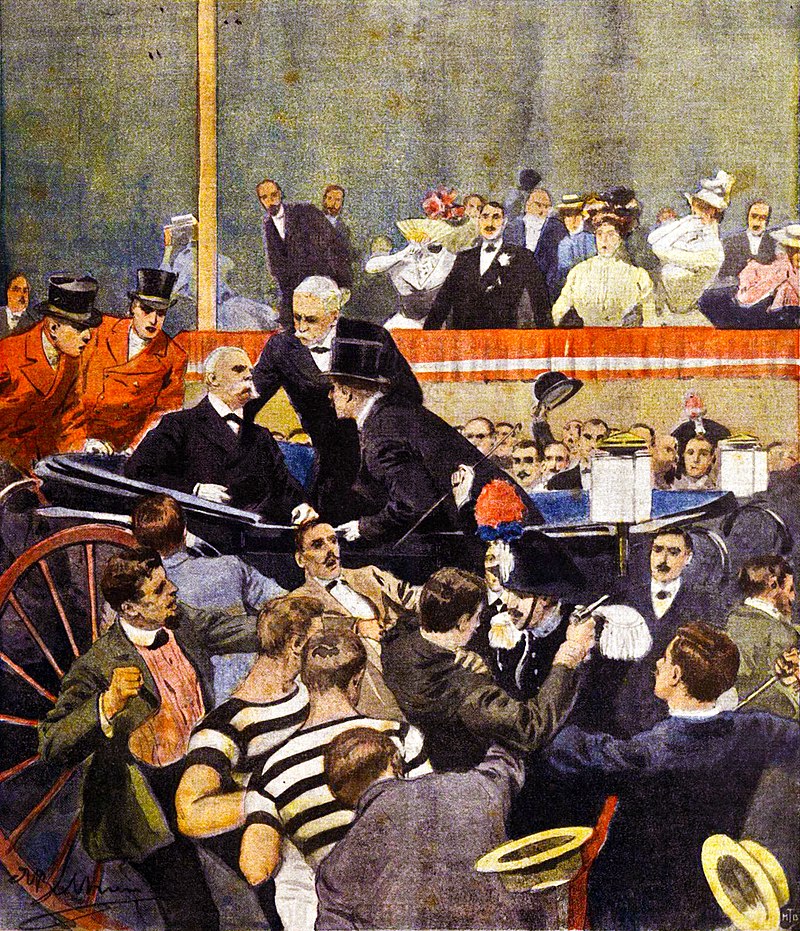
On July 29, 1900, Bresci stepped out of the crowd that surrounded King Umberto of Italy and shot him, dead. He then did not resist arrest, and he calmly stated that he had not killed a person but, rather, he had killed a principle. Well, of course, this “reason” for the assassination was seen as preposterous, and he was sentenced to life in prison. Shortly after being incarcerated, he was found dead in his cell–possibly killed by another, unknown assailant.

Back in the United States, the press hailed his death. Such should be the fate of anarchists and assassins, the newspapers said. But one young man, a Detroit-born fellow of Polish descent born Leon Czolgosz but who called himself Fred Nieman, saw Bresci as a hero. Here, he thought, was someone who was willing to do a wonderful thing to strike back at the people who held power and who exploited the little fellow, the nobodies of the world. Nieman, by the way, was the name chosen by Czolgosz because it means, literally, “nobody.”

So, inspired by the Italian assassin, Nieman took a pistol, wrapped it up in a bandage on his hand, went to the Buffalo World’s Fair in 1901, and shot and killed American President William McKinley. A nobody who killed a somebody.

But let’s Butterfly Effect this. Who became president upon McKinley’s death? Theodore Roosevelt. If McKinley had lived, then there might have been no Progressive Movement as we know it; no election of Taft in 1908; no splitting of the Republican vote in 1912 that led to the election of Woodrow Wilson. And if Wilson isn’t elected, then there’s no entry by the United States into World War I. And possibly no victory of the Allies in that war. And if Germany doesn’t lose, then no rise of Adolf Hitler in the early 1930s.

And no Hitler?

On a Perfect Person

“Nobody’s perfect” isn’t simply a saying; it’s a fact. If you are a human, you have flaws. Try telling a believer in Jesus, for example, that the savior had bodily functions and got tired and hungry and frustrated and sneezed on people and got in trouble with his parents. Then stand back and watch them argue that he was “perfect.” Remind them that to deny the humanity of Jesus flies in the fact of what the Bible says about him, and that’s the point. Perfect people don’t exist.

Except in one case, apparently. The person I’m referring to apparently isn’t quite human, apparently. For example, it is said that he has never had a poo or wee in his life. He is said to be “too perfect” for such mundane things as passing food and liquid waste through his body. Or take the story about him climbing a high, treacherous, snowy mountain in a business suit and dress shoes with no effort and with no blemish to either suit or shoes.

He is said to have automatically driven a car at the ripe old age of three years. With zero lessons in his life, he is also recognized as the greatest artist his nation has ever produced. At the age of 9, he challenged a professional yachtsman to a race and handily beat him–all without ever stepping foot on a boat before then. And, did I mention that his musical compositions top the pop charts in his country even if he never received any musical instructions, either? To top it off, this man has been voted the most desirable man on earth for multiple years running.

To be fair, this prodigy seems to have gotten his perfection from his dad. The dad, after all, wrote 40 books a week during his time as a student, bowled perfect/300 games every time he took to the lanes, and shot several holes in one the first time he played golf. Not bad, not bad. So, at least he got his perfection honestly, right?

And it helps that his home country has been labeled the Happiest Country in the World several years running. It helps that the people there have the best government ever created on the planet. It helps that the nation enjoys 100% unanimity in support of that government.

And this perfect person? Why, it’s the exalted leader of North Korea, Kim Jong Un, of course.

On a Beating

The rhetoric that surrounds much of the modern political discourse walks a razor’s edge of violence. Politicians know precisely what to say that will encourage their like-minded supporters to move to physical action while allowing the politicians at the same time to argue that their words were misconstrued. They rely on the plausible deniability to protect them from not only prosecution but also responsibility for the resulting violence. All of this has resulted in a polarization in the public discourse in the US that hasn’t been seen in a while. We need to remember that words have power and choose them carefully.

But what happens when the politicians who speak in these “dog whistles” become the ones who act out the violence? That’s something that happened in a most unusual place–the United States Senate floor. There was a time that tempers were running high between a Republican senator from the north against a Democratic senator from the Old South. The two men were on opposite sides of most issues, but the emotional issue of Civil Rights divided the pair the most. And it got personal. The Republican even made fun of the Democrat’s slurred speech that he had developed as a result of a recent stroke. True, this type of personal attack is unwarranted and uncouth, but politics is a nasty business, after all.

But a relative of the Democratic senator took great offense at the Republican’s attacks of both political and personal natures. And while the saying about sticks and stones is true, words can lead to the use of them for a certain. This man, this relative of the senator, he actually made plans to kill the Republican. And, to make this bad situation even worse, the relative with the murderous intent was a member of the US House of Representatives and also a prominent Democratic politician. A friend talked him out of murdering the poison-tongued northern senator and instead convinced the man to merely beat him. The younger relative reluctantly agreed.

Well, the Republican was at his desk on the almost empty Senate floor after the day’s business. He was busy writing a speech for the next day and was so intent on his work that he failed to notice the representative approaching him. The Democrat pulled out a cane with a golden handle and, with a mighty backswing, struck the sitting senator in the head with all his force. The blow knocked the man from his chair. He later said that he blacked out at that point and barely remembers holding his arms up in a vain attempt to defend himself against the blows that began raining down on his head and shoulders.

The attacker got several blows in before anyone nearby could intervene. Some later privately said that the northern senator got what was coming to him, but then others managed to tear the attacker away. The northern man was so severely beaten that pools of his blood surrounded his desk; he had to be carried from the chamber on a stretcher and then treated for a concussion and also received several stitches. The attack was so violent that the man wielding the can broke it in several places; his swings were so violent that he hit himself with the cane and had to also receive some stitches.

Sadly, the senator from the north was so badly beaten that it would be over a year before he was physically able to return to his desk. And equally as sad, many in the nation agreed with the attack. Some media recommended that the senator receive such a beating regularly. And some other people sent the young representative a new cane, one even inscribed with the words, “Do It Again.” However, other supporters of the beating said that it was not as bad as the senator made out. The severity of the beating was, in effect, fake news.

But it wasn’t fake. Nor were the divisions between the two sections of the nation.

The beating of Massachusetts Senator Charles Sumner by US Representative Preston Brooks of South Carolina in 1856 symbolized the moment when the rhetoric about the issue of slavery turned violent and presaged the bloody Civil War that would follow four short years later.

On an Assassination Attempt

General Edwin Walker was a decorated soldier who was a career soldier up until the time he, well, wasn’t. Walker graduated from West Point. He commanded troops in World War 2. He fought in Korea. Then, after Korea, something either happened to Walker or he felt less need to stay quiet. What happened was that Walker became political and vocally so. Now, there’s nothing wrong with military people having an opinion. The issue arises when they let those opinions determine if and when they obey orders or they use their opinions to coerce people under them to make choices based on those opinions. And that’s what Walker started doing in the 1950s.

You see, General Walker fell into bed with extreme right-wing politics. He was an extreme anti-communist (ok, nothing wrong with anti-communism), but he bought into the idea that much of the US government and military were agents of the Soviet Union. This was the period of the Cold War, and America saw the USSR as its mortal (and moral) enemy. Walker joined forces with people like extreme racists, John Birch Society folks, and other radical right-wing groups.

In the mid-1950s, President Eisenhower gave Walker command of the troops detailed to insure that the segregation of Little Rock Arkansas schools went off without interference from violent racist groups. To say that Walker found the duty distasteful is an understatement. He carried out his orders, but he didn’t like it and said so. He threatened to resign (not retire), which would have meant he was giving up his military pension. But Ike offered to re-assign him, and Walker accepted. But the changing political and social landscape proved too much for him to keep his opinions quiet. When the University of Mississippi was integrated in the early 1960s, Walker decided it was time to resign.

The now former general decided to enter politics as a pro-segregation, anti-communist, pro-Bible/Christian, and anti-, well, anti pretty much everything candidate. And he decided to run for governor of Texas. He gave a speech in which he said that he had been “on the wrong side” during his work in Little Rock, but that now he was “standing for the right,” and he probably didn’t see the irony of his words. And he drew adoring crowds in a state in the south that was still largely living separate existences between the black and white population. Fortunately, his brand of extremism was defeated by the more centrist appeal of John Connelly in the election.

But his anti-communist views were some of the most troubling. He was firmly convinced that Franklin Roosevelt, Harry Truman, and even Dwight Eisenhower were all Russian/communist plants in our government, hell bent on the destruction of the nation he’d sworn to protect and defend. And this anti-communist stance drew the attention of a man who wished Walker dead. One evening, as Walker sat at his desk in his house in a Dallas suburb, a shot rang out. Walker grabbed at his forearm, as splinters from the shot entered his body there.

He leapt up and ran to the window. There, he saw where a bullet had shattered the window sill. It was the splinters of metal from the bullet that had fragmented when it hit the sill that had pierced the former general’s arm. He was lucky to be alive. A few inches to the right and a bit higher, and the shot would’ve pierced his anti-communist brain. And that’s interesting that the shooter was fairly close, on the same level even, as Walker, but still missed the headshot.

Eight months later, Lee Harvey Oswald, who’d failed to kill Edwin Walker, got his headshot with a much more difficult shot into the brain of John Kennedy.

On Dropping Football

The current state of American Football as played by colleges and universities is at a crossroads today. The game and the players are becoming increasingly more professional. Players can now openly be paid by sponsors and even private individuals if the person is paying for an “endorsement.” That means that the schools that are rich are getting richer by paying the best players, while the less fortunate teams are left to pick up the crumbs of the remaining players.

What if I told you that a major college football program, one that had won national championships, decided to end its football program because of changes made to the state of major college football? Well, that’s what happened. This particular team began playing football way back in 1892. And they didn’t end football because they were bad at the sport historically. In fact, the opposite was true. It won 2 national championships over the years. They had a winning record against almost all teams they played (never lost to historical powerhouse Notre Dame, for example). They produced a Heisman Trophy winner (given to the best player in the country). And, and this is significant, it won its conference championship 7 times. And what if I told you that the conference this team was in was the Big Ten Conference?

Yes, you heard me right. The Big Ten is one of premier conferences in the United States today. They send a team to the College Football Playoffs almost every year. Teams like Ohio State and Michigan and Penn State and the others are always in the top ten year in and year out. And the leadership of this member of the conference decided that the state of football had reached the point where money meant more than competing and certainly meant more than academics.

The president of this university was Robert Hutchins. Hutchins felt strongly that the commercialism and the money that was becoming more and more important to the college game was unhealthy for the sport and the young men who were associated with it. He proposed to eliminate the program. But, as you can imagine, players, students, and alumni were outraged by Hutchins and his idea to discontinue football. So, to avoid student unrest because of his decision, Hutchins announced that the football program would be dropped…during the Christmas Holiday break time.

Well, you can imagine the fallout. Enrollment immediately declined. Alumni pulled their financial support. Sports news writers and announcers tore him to shreds in print and over the air. But Hutchins stood by his convictions. College football had turned professional, he argued, and his university wouldn’t be a part of it.

Eventually, the university recovered financially. In fact, today, it is one of the best-endowed institutions of higher learning in the world. The institution? Robert Hutchins was the president of the University of Chicago. And the outbreak of World War 2 in 1939 made people forget that he disbanded one of the best football programs in the United States that year.

On a Long-Time Boyfriend

Kenneth Sean Carson was born on Mar 11, 1961 in Willows, Wisconsin. Over the years, Ken, as his friends know him, held many jobs but was successful at all of them. And he met his life-long love, Barbara Roberts, only after leaving Willow as an adult. Interestingly, Barbara was from the Willows area of Wisconsin, also, born a couple of years before Ken and thus she was a senior at Willow High when he was only a sophomore. However, it seems that they didn’t date in high school. Both of them were the oldest among their siblings; she was the oldest of three sisters, while Ken had a little brother. But it took a chance meeting in California to bring the two “Badgers” together.

You see, Ken had model good looks, and he did commercial acting work when he was younger. And that’s how he met Barbara because she, too, did modeling and commercials. And after they met on set, the couple were practically inseparable. Those who were there described their meeting as one of those “love at first sight” type of things.

They and their friend group did almost everything together. In fact, one of Barbara’s closest friends, a woman named Margaret “Midge” Hadley, married Ken’s best friend, Allan Sherwood in 1991. That couple started a family. Other couples were part of that coterie of chums surrounding them, and many of them, too, got married and started families. But Ken and Barbara didn’t; their careers were a priority for them both, and, besides, Barbara would go on to have great success as a model (you’ve seen her even if you didn’t know her name). However, Ken’s modeling work was not as profitable. So, he did other jobs. But the couple remained a couple over the years and the center of their friend group.

That is, until 2004. That’s when Barbara decided that they needed a break after so many years together, explaining that, “it’s time to spend quality time apart.” Ken was somewhat taken aback by Barbara’s announcement. For a couple of years, he was in a funk. That made the social gatherings and frequent meetings of their group of friends somewhat awkward, but Ken was gracious enough to stay out of many of the group events often. It was rumored that the pair were still platonic friends, but you couldn’t tell it by Ken’s demeanor. In 2010, he got a dog, a West Highland Terrier named Sugar. But as much as he came to love Sugar, Ken realized that he missed Barbara greatly.

Then, after seven years apart, Ken made a concerted effort to win back Barbara’s affections. He showered her with gifts and attention, and, believe or not, it worked. The couple reunited on Valentine’s Day, 2011. And they’ve been together ever since. And you may wonder why this tale of Ken Carson, the long-time boyfriend of Barbara Roberts is interesting enough to warrant a few minutes of your time, but the answer is really simple.

It’s because Barbie and her long-time boyfriend, Ken, are the hottest couple on the planet at the moment.

On Some Throne Games

The phenomenon that was TV’s Game of Thrones has nothing on the games that Russian Czar Peter I, known as Peter the Great, played throughout his reign. Through a series of wars, he expanded Russia’s land and power. He ruled with the proverbial iron hand for over 40 years in the late 1600s/early 1700s, and he struck fear in the hearts of his enemies…and his friends. Peter was ruthless, but he could also be incredibly modern and forward-thinking in his decisions.

An example of this is the building of St. Petersburg. Peter built the city as an example of the modern, western-style metropolis that had all the latest and most up-to-date technology. He introduced the first newspaper to Russia. He brought universities and culture to the nation. But it was his personal life that has many historians comparing him to the fictional characters in the Game of Thrones stories.

You see, Peter had a wife…and several mistresses. Peter’s liaisons produced over a dozen children, three of which lived to adulthood (and at least one of which the czar himself had poisoned for suspected treason). One of Peter’s favorite consorts was a woman named Anna Mons. And Peter’s second wife, Catherine, had Anna’s brother, Willem Mons, as a “private secretary” in her chambers. There were rumors that Catherine and Willem were having an affair. Are you keeping all this straight? If you’re Peter, you find out that your wife is having an affair with your mistress’s brother. Well, you can imagine how that news was received by Czar Peter. What games were Catherine and Mons playing? And it didn’t help that Willem Mons was described by contemporaries as one of the most handsome men in Russia.

Well, Peter brought Willem up on charges of embezzlement. Mons was imprisoned and eventually beheaded by the state on the steps of a government building in St. Petersburg. What happened next is not exactly clear, but the story is that the relationship between Peter and Catherine grew incredibly icy after the beheading. The pair were rarely seen in public together, and, when they were seen together, they rarely spoke. It seems that the beheading of Willem Mons scared Catherine into silence and, perhaps, she was also mourning the man she really loved.

But the really sick, twisted part of this story is that Catherine and Peter had a tangible reminder of Catherine’s supposed infidelity. While it is beyond doubt that she trusted Willem and took him into her confidence, we are only supposing that the two were lovers. But, if they were not, Peter certainly thought they were. And Peter didn’t play games.

And that’s why Peter ordered that on the nightstand by Catherine’s bed for the rest of his life, there would be placed a jar, filled with brine, and inside the brine rested the severed head of Willem Mons.

On A Sister’s Secret Service

Patricia and Jean Owtram were sisters born two years apart in the 1920s. When World War 2 came to Britain in 1939, both sisters were eager to do their part in the war effort. It was the younger sister, Jean, who joined the Special Ops at the age of 18. She managed to get stationed overseas for much of the war. As the British and their Allies managed to push back the Nazis, the war took Jean to such places as Egypt and Italy and eventually Austria as the war neared its end.

But Jean was not able to tell her family about what she did during the conflict. She had to sign a state secrets contract that forbade her from telling anyone–even close family–about her wartime activities. She worked much of her time organizing and contacting guerilla activities in the places she was stationed. Jean also worked as a codebreaker for a time, and she had some work at Bletchley Park, the famous codebreaker headquarters and home of such people as Alan Turing. Of course, lives would have been put in jeopardy if she talked about her work, so she kept her secret faithfully.

And Jean wasn’t the only member of the family to go overseas. The sisters’ dad, Carey Owtram, served in the British Army in the Far East. He was captured after the Battle of Singapore. He served out the rest of the war in a Japanese POW camp. The girls’ dad was part of the group of British prisoners on the infamous River Kwai, and when the war ended, he returned home a hero.

The fact that Jean had top-secret clearance and no ability to tell anyone about her work didn’t deter her from writing to her sister Patricia. The two corresponded throughout the war, but absolutely no secrets were revealed by Jean to Patricia. Patricia’s newsy letters were filled with information about the family and the weather and what books she was reading and what boys she liked, and those letters made Jean feel like she was home. And even though Jean had the unique opportunity to work with refugees after the war, she chose to return to her dear sister and her loving family and care for her father who had only then returned from his ordeal as a POW. Life returned to normal for the family.

Jean worked as a social worker in Scotland for a time then was employed by a university in England for a time before retiring in 1980. Patricia gained some university degrees and worked most of her career in television production. The sisters both married and had families but remained close to each other always.

Then, several years after the war, the British Government decided to declassify information related to the state secret programs like the ones Jean had been involved in during the war. The family never knew anything about the details of Jean’s work; all she had told them was that she was deployed in administration work. But the declassification revealed the level of secrets that Jean had kept all those years. The family was amazed. Patricia was especially proud of her little sister.

And then, it was Jean’s turn to tell the family her surprise. It seems that when Jean was globetrotting around and helping to win the war, Patricia had been hard at work for the Allied cause as well. And what Patricia shared with her loved ones was that she had been a codebreaker associated with Bletchley. She had then worked directly under General Eisenhower for SHAEF in London and was privy to top secret information regarding such events as D-Day.

You see, unknown to anyone, it turns out that both sisters had secret lives no one knew about.