On a Business Deal

During the Cold War, one of the not-so-secret secrets was that, despite embargoes on many goods in the Soviet Union, western companies tried desperately to enter the Soviet market. And western consumer goods were in high demand despite the communist rhetoric about the evils of capitalism. One American corporation that desperately desired to enter the Russian market was PepsiCo, the food and soft drink conglomerate.

Long the number two cola company behind Coca-Cola, Pepsi knew that if they could somehow leverage an entre into the USSR, the fiscal reward would be substantial. Besides, there would be the tremendous free publicity that such a news event would generate for the company as the first and only American company in the communist country. Pepsi, after tense and lengthy negotiations, finally was able to enter the USSR market in 1972. Within a very short period, the company was making upwards of half a billion dollars a year in Russia; the drink was incredibly popular (and had the cache of being a “forbidden” decadent western company) with no rival, giving Pepsi a monopoly in the market.

But there was a major catch. Rubles, the Russian currency, was not tradable or usable in the US or most western banks, especially in the amounts Pepsi was making them in Russia. Besides, the country didn’t allow their currency to leave the USSR in such large amounts. So, another round of fierce negotiations followed, and a comprise of sorts was reached. Where there’s money to be made, it is interesting how creative solutions can be found. And that’s what happened here. The leadership of the USSR offered to pay Pepsi not in rubles but, rather in trade goods. Pepsi could then take the trade goods, sell them in the west, and take the profits. While the extra step was not ideal, the amount of money the company was making (and would continue to make as the monopoly) proved to be more important than having to basically become a middle man for Russian trade goods.

The first round of Russian goods to be swapped for Pepsi products was, you guessed it, vodka. And that worked for a while; Pepsi simply opened a liquor branch of the company and sold the vodka in the US and other western nations. This worked for a while, but then the United States and its allies began a boycott of all Soviet goods because of the Russian continued invasion and occupation of Afghanistan in the 1980s. Pepsi then had no way of turning their soda profits into raw cash anymore. The company then approached the Soviet hierarchy and asked if they had any other products that they could trade that Pepsi could then turn and sell to recoup their money.

And, of course, the Soviets did. And they traded these products throughout the 1980s and early ’90s, and Pepsi managed to turn the trade goods into cash…eventually. By the way, Russia is still PepsiCo’s second largest market after the United States. Of course, today, with the collapse of the Soviet Union and the communist system, Pepsi is paid in cash. But, for a time, because of the unusual circumstances, the company received metal that they, in turn, sold as scrap. And that metal was in the form of old Soviet warships and submarines.

As a result, for a time in the early 1990s, PepsiCo had the 6th largest navy in the world.

On a Shooting

Antofagasta is a Chilean harbor town located about a quarter of the way down the coast of the shoestring nation. If you traveled inland from the town, you’d come close to where the borders of Bolivia and Argentina meet. Back in 1905, Antofagasta was a boom town; it owed its existence to the mining of first silver then copper in the nearby Andes Mountains. And it was the scene of a brutal killing of a young police officer on fateful August evening of that year.

It seems that a couple of drunks in a bar started something. They either mouthed off to the wrong person or the wrong person mouthed off to them. Pistols were brandished. Sensing that some frontier-style violence was about to happen, the barkeep sent word to the local constabulary that they had better come to the cantina, quickly. When the police arrived, the officers told the brawlers to take their disagreement outside, to the street, that the establishment wanted no trouble inside. As the argument began to move through the saloon doors, a shot rang out. One of the police officers was instantly killed at close range by a pistol.

Well, in the ensuing chaos, an arrest was made. It seems that the man who did the shooting was actually an American, one Frank Boyd. He argued that his Smith & Wesson revolver went off accidently, but that didn’t make the policeman any less dead. The 24-year-old officer, Arturo González, was buried the next day with full police honors, including a procession, marching band and the flower-bedecked hearse. His beautiful young widow and two-year-old son followed closely behind.

Boyd appealed to the US Consulate for help. The US representative, one Frank Aller, posted $50,000 bond and stated that he would allow Boyd to stay in his house as a condition of his release. At the bond hearing, Boyd’s business partner, a man called Thomas Fisher, testified that, while he was not present at the shooting, that he could vouch for Boyd’s character, saying that they two had come to that part of South America to invest in the cattle business. He further swore that he trusted Frank Boyd with his life. The release of Frank Boyd was granted.

Well, you can guess what happened. Boyd (and Fisher) skipped out of Antofagasta the next day and never looked back, leaving the family of Officer González without anyone held responsible for his death and the US Consulate $50,000 poorer. But legend says that within a couple of years later the pair would be killed by Bolivian troops in a shootout, so maybe justice of a sort was served.

But we can’t be 100% sure what really happened after Antofagasta to Fisher and Boyd, better known to you as Butch Cassidy and the Sundance Kid.

On an Experimental City

The word “utopia” means, literally, “nowhere,” and that’s with good reason. Mankind has searched and tried for centuries to try and find a way of creating the perfect place to live. Each attempt at building a utopia has failed. Those repeated failures haven’t kept humans from trying to create the perfect place, however. Take the case of one such utopian plan that arose in Florida in the early 1960s.

The concept of this planned utopia was so vast and forward-thinking that people were stunned. Here was an idea to have a city that was constructed under a dome–all fifty acres (20 hectares) of it. That would take care of any climate issues, it was believed. A downtown work center would be ringed by worker housing (apartments and single-family dwellings), and the two areas would be separated by large swaths of greenways, gardens, and forests. The workers would connect to the downtown via rapid and cheap public transportation. New materials and prototype, renewable and sustainable construction methods would be used. As needs of the population evolved, the city would evolve. It was, in the words of one of the main architects of the plan, the city as experiment.

And the people who would/could live there were not to be beyond a certain age. No retirees! And unemployment would be non-existent. No fossil fuel vehicles would be allowed inside the dome, and a heavy emphasis would be placed on recycling and repurposing of all consumer goods. Prices in the city would be regulated closely, and all citizens would have all healthcare and medical expenses met. There would never been any need for things like voting or representative government because the town would provide all the needs for the people who lived there. The town wanted to ask the people to trade their political voices for financial and physical security, swap their political freedoms for a place where their children could grow up happy and safe and productive.

This conceptual city was, of course, never constructed. On the other hand, it has influenced the proposal for other potential utopian cities in the modern era. Walmart has thought of building Telosa, a utopian city in the desert of the American Southwest. Saudi Arabia, in beginning work on their Green Line in the desert there, analyzed the plans for the Florida project to see what they could learn from it. And other more recent attempts still look to the domed city that was never built for their inspiration.

However, some of the features of this proposed Florida utopia were indeed incorporated into something that not only was built but also something that you can visit today. The idea behind a utopia is, after all, an attempt to make people happy. And the place you can visit today is, ironically, part of the “happies place on earth,” Walt Disney World. You know it as the Experimental Prototype Community of Tomorrow–EPCOT.

On a Hunting Buddy

My friend Greg back in Tennessee said that the difference between hunting and fishing is that no one thinks you’re odd if you fish alone. The idea is that hunting seems to be a sport enjoyed with friends, companions, and buddies. The shared camaraderie of the hunt goes back centuries to prehistory and continues today. One such couple of hunting buddies in England grew up in vastly different circumstances but became best of friends through hunting.

Tom was born to a middle-class and land-holding family on the outskirts of London when that area was still largely pastoral. Because his father owned land, Tom was able to enjoy some privileges most young men of his social level couldn’t. for example, he was able to spend time on the estate of a local lord, a friend of his father, and a man who taught young Tom the intricacies of hunting. At the estate, he learned about falconry, even, and how to run the dogs and corner game. Tom loved it; the outdoors, the thrill of the chase and the hunt, and the attention to detail of dealing with the falcons appealed to his sense of order. At the age of 20, he was sent to college where he studied theology and eventually found work as a clerk for a large cathedral in England. He proved to be an efficient administrator, and he was recommended by the Church to go to work for the government.

It was in this government position that Tom met Hank, a man who was also in government service, and one who shared Tom’s interest in hunting. The two began to hunt together. Hank wasn’t as careful with the details as Tom was, but he was a smart fellow, and Tom enjoyed his mind and his company. And, after the hunts, the two men would often share a drink and share stories. A bond was formed. The pair of hunting pals soon became inseparable, sometimes even forsaking their governmental responsibilities for the sake of the time they spent in the field and over their drink. Henry was from the upper class, and, as such, had the means to go to hunting lodges across England and take Tom with him. And, so, they hunted and drank, and drank and hunted.

Then, Tom was appointed to another position and left his governmental department. And the nature of his relationship with Hank changed, in part because, in Tom’s new role, he was now in charge of a part of what Hank was doing in government. Instead of a friend, Hank now saw Tom as someone who was trying to control his career rather than simply be his hunting chum and best friend. Hank appealed to Tom and their friendship to not be his overseer and remain his friend. Tom, on the other hand, took his new responsibilities seriously. He tried to tell Hank that it wasn’t personal, that his job required that he perform certain tasks that, even if Hank found them to be intrusive, were still part of his job.

The rift between them grew. Hank was now hunting and hanging out with other people, people he would later say were nowhere near the intellect and wit of his old friend. And, one night, while drinking with these new friends, Hank made the remark that he wished Tom could be removed from his position someway, somehow. Some of the drinking buddies swapped looks. They liked Hank and his money. They liked the drinking and the girls they sometimes had in the parties with them. And they wanted to impress Hank.

So, thinking that the drunken, offhanded remark about removing this man meant something else, several knights of the court of King Henry II entered Canterbury Cathedral on December 29, 1170, and killed Archbishop Thomas Becket.

On Laura and Her New Friend

Laura Buxton loved her grandparents. And when the older couple celebrated their 50th Wedding Anniversary, Laura was so thrilled to be a part of the party. The British girl, only 10 years old, was given the important task at the celebration of making sure the celebratory balloons were properly wrangled. She was going to release several balloons when the time was right at the end of the party.

But, before she turned the helium-filled balloons loose, Laura’s granddad told her, “Why don’t you write your name on one of them before you let it go?” So, Laura wrote a note that had her name and phone number on it and tied it to one of the balloons. She and her grandparents released them all together, and Laura watched as the one with her name on it rose and rose until it caught a high wind and was carried out of sight.

A few days later, Laura had almost forgotten about the balloon. She came home from school and was eating a snack when the phone rang. When Laura answered, she heard a young girl’s voice say, “Hi, is this Laura?” The voice on the other end of the phone then told Laura a story. It seems that the balloon with her name on it had been found almost 150 miles away in the back yard of a farmer. The farmer, who lived close to the girl and had no daughters of his own, brought the deflated balloon to the girl.

As the two girls talked, they excitedly realized that they had a lot in common. The other girl was about the same age. They both loved horses, and they each had a guinea pig. They liked the same subjects in school. And during the phone call, the two jabbered on like they were old friends. Their parents thought the whole situation was cute and interesting, the fact that the two would meet because of the note tied to the balloon. The girls both begged their parents to let them meet somewhere halfway between their two houses, and both sets of parents agreed.

When Laura arrived to meet her new friend, she was a little nervous, so she’d brought her pet guinea pig with her to show the other girl and to also have something they could talk about when they met in case it was awkward. After all, they’d never met before. But Laura felt a closeness to this other girl, and it was something she couldn’t really explain. And when the girl arrived with her parents, and she jumped out of the car and ran to Laura, both of them were surprised that the girl, too, had brought her pet guinea pig with her.

And that’s not all. both girls, with no pre-planning or discussion, had decided to wear the same color clothing that day. They found they that each owned a three year old black Labrador dog. They also both had pet rabbits. They were roughly the same height with the same hair and eye color.

It was the last thing that the two girls had in common that ultimately shocked everyone involved. Now, please know that this first meeting took place over a decade ago. Both girls are grown now, and they still meet each other when they can. They are both in university now, and they are still amazed at these remarkable string of coincidences. However, the last coincidence is probably the most remarkable.

You see, the girl who called Laura Buxton, the girl who shared all those things in common with her new-found friend, she was also named Laura Buxton.

On a Banned Item

It’s rare that a day goes by when the news isn’t reporting on some group or another protesting about this practice or that book or the other item over there being something that is causing the ruin of modern society. That fear isn’t new. The status quo hates change by definition, and anything that is perceived to be a threat to what most people are used to is often castigated as the “other.” Take the banning of an item in the Middle Ages, for instance.

In Europe of almost 1000 years ago, of course, the Catholic Church was the predominant influence on what was acceptable to society and what wasn’t. And anything that was considered by the Church to be unacceptable was labeled–no surprise–evil. That’s what happened in this case. In fact, the item in question was labeled as “notorious” and “sensuous”–two words that spell Satanic in the minds of most Christians of that time.

But that wasn’t all. This particular item was considered to be so heinous that its use was said to make the user homosexual. Those of us today who snicker when we hear some religious person speak of something “turning our children gay” should know that this type of mindset is, again, not new. In fact, the Church decreed that the use of this item ranked right up there on the list of high sins, right alongside such despicable things as gluttony, the selling of church positions, and even marriage by priests.

I’ll even give you the name of this item. The people of that day referred to it as Pigache. I can tell you that, and you’ll still probably have no idea what it was. The word comes from the middle French word for a long-toothed hoe, but that etymology is more of a descriptor than a definition. And Pigache were banned across much of Europe for several decades because of this association with sin and the Evil One.

We today find it difficult to relate to a time when the things you could use were considered not only illegal but also morally wrong. The Middle Ages were a time when even your thoughts, if you expressed them, could condemn you to prison or worse. That is why we should remember those times in history when mankind used tradition and superstition to coerce others into acting in a way that really amounted to freedom of choice and expression.

And you’ve seen Pigache before in artwork from the Middle Ages. Pigache are, in fact, so innocuous that you’ve not given them a second thought, yet, at that time, they invoked fear and dread because of the illogical fear of those in power. In the 1950s and since, the Pigache has been used by several groups including Rockers, Teddy Boys, and even more modern haute couture designers on runways across the globe. No one today things anything about it. Most people today know that things like Pigache have nothing to do with the content of your character.

After all, there’s nothing wrong with a pair of long-toed shoes, is there?

On a False Accusation

Mingo Sanders, First Sergeant, Company B, 25th Infantry Regiment, found himself in Cuba as part of the contingent of American soldiers in the Spanish-American War. He and his fellow soldiers had been assigned to the western US before the war started, and they were some of the first regular army troops to go to Cuba. The 25th Regiment was a Black outfit that had all-white officers, and Sergeant Sanders was one of the Black non-coms who formed the backbone of the troops. They were a proud group of men who were not new at their jobs, unlike many of the young and eager and inexperienced soldiers who had volunteered when the war fever broke out in April of 1898. Interestingly, Black soldiers made up around 25% of all US troops in Cuba during the conflict.

Sergeant Sanders was with his outfit one day in Cuba when another regiment arrived nearby. This was one of those all-volunteer units, and the way they set up their camp, well, a veteran could tell immediately that they didn’t have the expertise that Sanders and his fellow regular army comrades did. That evening, the commander of those troops, a colonel of the volunteer group, came to Sanders with a request. It seemed that his supply wagons had been delayed; could Sanders and his men please share some of their supply of hardtack with his white volunteers? Now, for those who don’t know, hardtack is like a large cracker that is, well, hard. You would usually soak it in coffee or water to soften it before eating, but the hardness allowed for it to be stored for a long time without decaying or breaking down. It wasn’t great food, but it was filling. And, of course, Sergeant Sanders was happy to give the young colonel and his volunteers some of their provisions. The young officer was grateful and said so. I tell you this to show you the type of man Mingo Sanders was.

Sanders and his regiment distinguished themselves in the war. Later, they were posted on the other side of the world, in the Philippines, to fight in that insurrection against the Americans. It was there that Sanders saved the lives of several men in an action and earned himself a medal for bravery under fire. At the end of that conflict, he and his men were stationed in Brownsville, Texas, right on the Mexican border. And it was there that everything went wrong for Sanders and the soldiers of the 25th Regiment.

It seems that the town wasn’t that thrilled to have Black soldiers stationed there. This was in the depths of the Jim Crow era in Texas, and racism practically hung in the air. The troops were given strict orders about avoiding any kind of confrontation with locals, and passes into town from the base were limited. That said, on August 13, 1906, two white citizens of Brownsville were shot; one of them was killed. The locals immediately blamed soldiers from the 25th. An inquiry was immediately launched, but the white officers of the 25th insisted that all their men were on the base the evening the violence occurred. Sanders and the other non-commissioned officers also vouched for the presence of all men in the barracks at the time of the shootings.

These assurances that the 25th wasn’t involved didn’t seem to matter to most folks. When local authorities could find no member of the regiment who could be definitively connected with the shooting, President Theodore Roosevelt sent a special investigation to Brownsville to sus out the truth of the matter. Each soldier of the 25th was interviewed, including the officers. Still, all insisted that the regiment, to a man, had not left base that night. They knew better, they all said. When the investigation reported to Roosevelt that no one in the regiment confessed or even pointed to any of the soldiers’ involvement, he did something odd.

Bowing to pressure from the white community of Brownsville, Roosevelt ordered that all members of the 25th Infantry Regiment be given dishonorable discharges. There would be no chance for appeal or any trial before a military court.

For Mingo Sanders, he was stunned. His 26 year army career was over without any due process or any official court martial. He lost his pension and his position and his pride took a major blow. And, in what may have been the most unkind cut of all was the fact that he lost it all due to this particular Commander in Chief’s order.

You see, Theodore Roosevelt was the same young colonel Sergeant Mingo Sanders helped by giving those green volunteers some of his regiment’s hardtack a few years earlier.

On a Shy Business Person

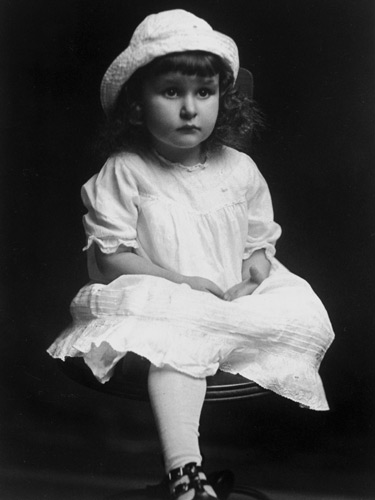
Claudia Taylor was born in Karnack, Texas, in 1912. Her father, the son of a sharecropper, had come into success as a storekeeper and eventual landowner. He was so successful that, by the time Claudia was born, the family lived in a large brick house on the outskirts of town. And the father realized that his daughter was a sharp one from an early age. The situation with her was, however, that she was painfully shy.

Oh, even someone calling out to her on the street of her hometown made Claudia blush and run into a store to avoid having to speak. She felt awkward and ugly (even though she was neither, in reality). And, her father, in his wisdom, decided that his daughter should get an education because of her intellect and, well, because it would give Claudia confidence. So, since there was no high school in town, Mr. Taylor sent Claudia to a nearby town 15 miles away for her high school education. Now, that was rare in the 1920s that rural women in Texas would get an education, but, again, Claudia herself was rare.

But the shyness stayed with her. She realized that high school was no challenge intellectually early on, and soon had the best grades in the school. When she realized that graduating at the top of her class would mean that she would have to make a speech as the valedictorian, Claudia purposefully did poorly her last semester so that her grades would sink and therefore force anther student to have to speak.

Then, it was time for college. At first, she went out of state, but she grew homesick and returned to Texas. Back home, she found a private girls college where she received her A.A. degree, then she transferred to the University of Texas in Austin. And that’s where Claudia began to bloom. She earned two degrees there, one in education and one in journalism. You see, Claudia wanted to be a reporter. She was great with words on paper even if not speaking, and she felt free to express herself on the page. And her confidence grew.

But it was also in Austin that she met a man who would become her husband. He was the opposite of her–brash, loud, and never met a stranger. And he swept Claudia off her feet. She later said that he was the flame and she was the moth. And then, as he first began work, went off to war in World War 2, and then returned to continue his career, Claudia continue to blossom. She inherited money from her father, and, despite her husband’s misgivings, she began to make shrewd investments with the funds she received. Calling back to her journalism degree, Claudia began buying radio stations during World War 2, a time when people were needing money. She knew that the war would end, and that radio stations would return. After the war, Claudia was also on the cutting edge of journalism by purchasing some of the first TV stations in Texas.

This shy woman’s investments proved so successful and ahead of their time that she parlayed the initial $41,000 she received from her father into over $1,500,000. She became a millionaire with no financial help from her husband. Oh, and, by the way, Claudia had taken $10,000 of that initial inheritance money and financed her husband as he began his career…as a politician.

You see, Claudia Taylor was known by another name for most of her life.

And like most people, her husband, Lyndon Baines Johnson, called her Lady Bird.

On Some Hotel Guests

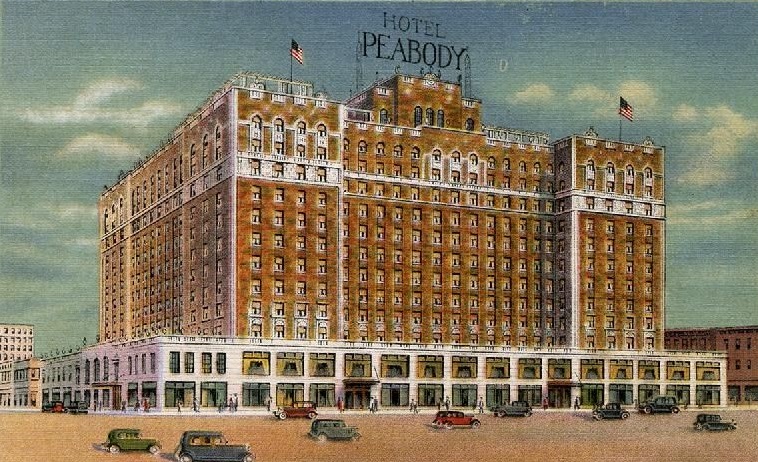
Acclaimed author William Faulkner is supposed to have remarked that Mississippi begins in the lobby of a Memphis hotel and extends south to the Gulf of Mexico. That hotel and that lobby to which Faulkner referred is known as the Peabody Hotel. The famous landmark has hosted many of the most famous people on the planet in the more than 100 years of its operation. It’s on the Nation Register of Historic Places. And if you wanted to stay only one night there, the room would set you back over $500.

What Faulkner was talking about is that the lobby of the Peabody, for as long as the splendid hotel has been in operation, has been the place where deals have been brokered, agreements have been reached, and even political races have been decided. It’s where the wealthy and well-connected met to conduct business. Thus, what was decided in the Peabody lobby has had a major impact on the entire Mississippi River area, far beyond Memphis. It’s still a majestic lobby, replete with a wonderful and historic bar, a restaurant, and, at its center, a famous three-tiered fountain.

But this post is about some of the guests at the Peabody. In particular, there are some permanent residents of the Peabody who bear some consideration. As I said, the rooms at the hotel for one night are more than some people make in a week, but these guests pay, well, nothing. In fact, the hotel provides the room for these guests for free. You might think that you would want a sweetheart deal like this, and you’d be right. These guests actually enjoy a penthouse on the top of the facility.

And the catch, the trade-off for being allowed to live in the Peabody for free is that they have to come into that grand lobby every day and simply hang out for a bit. That’s all. They don’t have to buy anything, don’t have to speak to anyone, and really don’t even have to interact with anyone, either. You might say that these Peabody freeloaders, they’re part of the ambiance, the magic of this Old South hotel. They’re like the crazy uncle most southern families have or the cousin who makes the “special recipe” drink that is illegal in most states; they help to make the place seem more, well, homey, southern, and charming.

It seems that this tradition (and what is the south without its traditions?) began at least 90 years ago after one of the hotel owners at the time returned from a hunt one afternoon. He came into the lobby and announced, to everyone’s surprise, that he’d brought some guests with him that he’d picked up on his hunt. He insisted that they be given a room at the hotel. And that’s how the tradition started that the Peabody would house a certain number of guests for free. And they still do to this day.

And so, every afternoon, the special elevator from the penthouse suite on the top of the hotel comes down to the lobby. The doors open. And five mallard ducks–four hens and one male–spend several hours frolicking in the fountain of the Peabody Hotel.

On a Migration

Yes, Virginia, there really is a Transylvania. It is today part of Romania, a part, in fact, where I lived for about two years in the 1990s. And when I was there, I quickly learned about the unique nature of the settlement of that land over the past 800 years or so. You see, 800 years ago, that part of the world was being overrun by invaders from the south and east. The Hungarian king, who ruled Transylvania at that time, was worried about all the groups who were encroaching into Europe and threatening his kingdom. So, he issued an invitation to people to come and have free land along his eastern border–the area of the eastern edge of what has traditionally been Transylvania. And the people he invited were from what is now Germany, many of them from economically stagnant areas of the eastern provinces.

And the hardy German people he invited were given the freedom to build walled cities and smaller fortified villages built around churches as a way to created a line of linked fortresses along the border. Now, Transylvania sits in the curve of a series of mountains known as the Carpathians or, more colloquially, the Transylvanian Alps. The idea of the Hungarian king was that once the invaders crossed the mountains (no small feat), they would be met with this system of fortress cities and villages that would act as a deterrent and, hopefully, cause the invaders to turn around and go home.

Seven large walled towns were built along the border. Dozens of smaller fortified church villages linked these larger towns. The towns and villages look like something that was taken from Germany and transplanted into Transylvania; they’re designed and built in the style they had built at home. And that makes sense. Many of them have been unchanged over the centuries, and today, some German tourists come to Romania to see what German villages looked like centuries ago. Hermannstadt, the largest of these walled towns, is called Sibiu today. Several walls ring the town even today, and there are defensive towers built and maintained by the various guilds in the town to protect their homes and businesses. All the large towns were built like this. In fact, the German name for Transylvania is the Seven Forts–Siebenburgen, in German.

Up until the post-World War 2 decades, Transylvanian towns maintained mostly German majorities. Interestingly, as soon as communism fell in the early 1990s, many of the Germans–after 800 years–decided to return to Germany.

And that takes us to one of the German towns where the ancestors of the modern Transylvanian Germans came from all those centuries ago. In the record books of one town in eastern Germany, there is a curious reference to the original migration of a large number of the town’s citizens who answered the Hungarian king’s invitation way back then. The curious passage dates from 1384, and it reads: “It’s been 100 years since our children left.” In the same town, the old church had a stained glass window depicting and referring to the migration as well, showing a person leading a group of migrants out of the town and, presumably, to Transylvania. The person leading the group was dressed in multi-colored clothing and was playing a wind instrument.

Of course, the German immigrants to Transylvania weren’t led there by a Pied Piper, but the documents and church that describe that migration are absolutely from the town of Hamelin.