On a Revolution

The Age of Enlightenment created dramatic societal changes across Europe, changes that are still being felt and interpreted to this day. This period, part and parcel of the late Renaissance, created a rash of authors and thinkers who spoke of logic and philosophy, calling upon the ancient, classical civilizations of Greece and Rome. It saw the rise among a growing middle class of the belief that the power of government should at least include the will of the people, the governed, the people who paid taxes. As a result, revolutions occurred across the western world, revolutions that ranged from the wild and bloody French Revolution (in the late 1700s) to the relatively mild and conservative American Revolution (France also had another revolution in the 1840s as well) Monarchies were toppled. Congresses and Parliaments were set up, old nations died, and new nations were born. Kings and regents slowly began to give up some of their power and relinquish it to the people.

One such revolution happened in the Kingdom of Denmark in 1848. The people of the Scandinavian nation saw the power that the population of other nations were gaining, and they decided it was time to rise up and demand that the Danish monarch share power with them. Denmark had been one of the kingdoms who had a good middle class population who had made money on trade in the North Sea and the Baltic. Denmark sits smack in the middle of one of the most important trade routes in northern Europe. And the king of Denmark at the time was a young-ish 39 year old man named King Frederick VII who had acceded to the throne in January of that year.

Frederick had come into a dicey situation regarding Denmark’s southern border with Germany and German claims of land in that area. In addition, some incremental democratic changes had occurred in Denmark. However, those agreements had been made under the previous monarch. And because of the border situation, man people were afraid that this new king would, in an effort to consolidate his power, renege on the gains that the people had made and rule with an even stronger hand. And Frederick hadn’t made concrete statements as to his intentions regarding the continued loosening of the power of the crown. Thus (and this description is a gross oversimplification), the people of Denmark decided that a public revolution was needed to force the new king’s hand.

In March, 1848, a demonstration made up of over 20,000 Danes marched for several days to the Royal Palace in Copenhagen and demanded that King Fredrick VII give up absolute power and allow a guaranteed Constitutional Monarchy be established. There were some violent street confrontations, but, generally, the demonstrations were calm. What the demonstrators didn’t realize at first was that Frederick had fired all his cabinet ministers who were against the increase in democracy. And, so, hearing the news that Frederick had moved to guarantee an increase in public power, the Danish revolutionaries did an unusually peaceful thing for a band of revolutionaries.

They cheered.

And then they went home.

And that, for the most part, was Denmark’s revolution. The people made demands, and the king acquiesced. Incredibly efficient. Remarkably unbloody. And positively Danish.

Oh, and what the good Danish folk didn’t realize until much later in Danish history was that King Frederick VII really didn’t want to govern. It frankly didn’t interest him, and the work in the government took him away from his other pursuits–drinking, acting, and women among them. So, Denmark’s revolution certainly happened because of the people’s demands, but it also was helped by the complete disinterest of the country’s king to govern.

On A Wall

The Dutch really wanted to protect their town, so they built a wall. Now, settlements throughout history have built walls of protection. That’s nothing new. Walls seem to have three general purposes: One is to keep people out of a place. Two is to keep people in a place–like the kind you’ll find in a prison or, for animals, in pens or fences. And three is to act as support for some other structure. The wall the Dutch built was the first kind. Well, to be fair, the citizens of the town allowed their animals to graze on the other side of the wall because it kept the animals from coming into the town itself and bringing waste to the streets and alleyways, which means maybe the wall was 90% defensive and 10% keeping animals out.

You see, the Dutch were worried about other people–particularly the English–encroaching on their town, but only from one side. They didn’t worry so much about the other three sides of the town because, like many Dutch towns, it was built on the water front. The only place they felt the town was vulnerable was from the land and that was only on one side. So that’s why they built their defensive and protective wall there. The structure started out as a simple wooden demarcation line, but it soon grew to become a true defensive wall over 12 feet (3.7 meters) high. The Dutch called this defensive line Het Cingel–The Belt or The Ring–even though it wasn’t a true “ring” and only stretched across one side of the town. And, as the town guards walked along Het Cingel, the path they trod in the grass became a walkaway for townsfolks and, eventually, a street on its own. But the purpose was purely defensive.

Well, you can imagine what happened. When the Dutch were attacked, they were attacked from the sea. And the English who did the attacking with their superior navy took the town fairly easily. So the wall proved to be largely ineffective, despite the Dutch attempts at keeping people out by building it, and the English managed to secure the town for themselves.

Now, today, if you go to that particular town built by the Dutch today, you can still see the remnants of the wall or at least the places where the support posts were in the ground where the wall used to be. That line where the wall used to be is actually more famous today, even though there is no wall there.

Today, it’s in the part of the old Dutch town that has a lot of financial businesses affiliated with it over the years. When it was built, it was still legal in many parts of the Europe and the Americas for the buying and selling of people. One of the markets that facilitated this practice was located along this wall. So when you go to New York City, a place that used to be known as New Amsterdam when the Dutch owned it, you can see remnants of the Het Cingel built there, almost three hundred fifty years ago.

You know it as Wall Street.

On Waiting Impatiently

We’ve spoken before about how much Alexander Graham Bell, the Scottish inventor of the telephone, really didn’t care much for his own invention. He felt that the device would stifle personal relationships. He’s not alone. Even (especially?) in the modern age, people don’t like talking on the phone as much as doing a whole bunch of other stuff on the devices. Today, it seems that using the cell phone to talk to someone else is about the last thing we wish to do. Even when there were such things as “home phones,” there was still a group of people who disliked the device and saw it as a personal intrusion. Others felt that, rather than feeling connected by the phone, some even felt, like Bell, that it was rapidly replacing face-to-face meetings between people. And that feeling of separation was found by some to be increased when people were calling businesses–businesses who often depend on face-to-face interactions to establish trust with a customer.

Take the case of Alfred Levy. In 1962, Levy was not only a business and factory owner, but he was also somewhat of an inventor, a tinkerer, and he brought that mentality to the issue of making business phone conversations more personal and more, well, connected. He found that potential customers who called his factory would often become impatient when they were being assisted. He realized that the impatience of his phone customers didn’t exist so much when customers were standing in front of him. Part of the issue was that, since the business was often quite busy and calls came into a switchboard, clients were frustrated when the office operator would put them on hold to transfer their calls to the appropriate department.

Levy thought about how to resolve this issue. What could he do to make sure the customers on the other end of the phone line would be handled within a proper and appropriate time-frame by first the operator and then by the particular office that their calls were being transferred to? The answer to Levy’s situation came to him quite by accident, and it had to do with the construction of his factory, of all things. And this lucky accident helped to alleviate Levy’s issue of his customers being frustrated while waiting to be served.

You see, the frame for Levy’s factory was steel. If you saw it, you’d think it looked like one of those steel frame warehouse structures that have aluminum siding on a concrete slab. And the building had been constructed right next door to an AM radio station. Turns out that, in 1962, a loose wire in the factory’s phone system had been accidentally allowed to touch one of the building’s steel frame girders. And that steel frame of Levy’s factory acted as a giant antenna for the AM station. When people called Levy’s business, and the company operator would put them on hold to transfer the call, it seems that the caller was able to clearly hear the music that the AM station was playing at the moment.

Thus, out of sheer luck and chance (and poor wiring), Alfred Levy is credited with inventing on hold music, an invention which he patented in 1966.

On a Hunt Gone Wrong

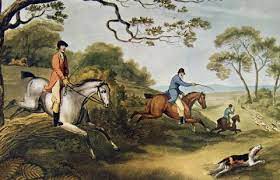
The history of organized hunting in Europe has generally been the story of wealthy people hunting for a sport rather than for food. Contrast that with the common folk of the UK or Europe, poor people who hunted mostly for necessity rather than the enjoyment. Practices such as fox hunting, pheasant or other wildfowl hunting, hunting weekends on estates specifically dedicated to that purpose and all the associated ephemera that goes with all of that, including people who handled the dogs, responsibility for the supply and care of the game, the upkeep of the guns, the sporting clothes that had to be prepared and created, etc. all served to make hunting on that level a large part of social life for the wealthier classes.

There was one particular hunting expedition in the French countryside that went terribly awry in the early 1800s. In this particular case, the hunted game was going to be rabbits. A certain French nobleman by the name of Louis Berthier organized the hunt for a group of fellow aristocrats. Berthier wanted to ensure that his guests would have a good time and a successful hunt. He ordered his servants and gamekeepers to provide hundreds of rabbits for the hunt. Now, most of us would say this was not very sporting; it’s tantamount to almost having the game tied down and then shot. Nevertheless, things were different during that time, and no one thought anything bad about having the prey within an easy shooting distance of the hunters.

On the morning of the hunt, the rabbits were released on the edge of a field, and the hunters moved towards the rabbits. Men moved behind the rabbits, making noises to scare the rabbits towards the advancing hunters. When the rabbits got within sight of the lead hunter of the group, something very strange happened. The rabbits seemed to attack the man who was at the point of the group of hunters. By attack, I mean that they begin jumping on him, running up his legs, and leaping up on his shoulders. The man tried to use his gun to fight the aggressive rabbits off him. He was not successful. Soon, dozens of the animals were covering the man, running up and down his body. Reports at the time said he had a full-blown panic attack. Other hunters rushed to his aid, but there were hundreds of bunnies, remember. Soon, these other hunters also found themselves covered with the rabbits. Somehow, the hunters managed to free themselves from the rabbits, and they beat a hasty retreat back towards the edge of the field from which they had come.

I say, good for the rabbits! And the man who was attacked first was given several stiff brandies before his nerves would be calmed. Interestingly, this man had a reputation for being cool and calm under fire, so it surprised people to see him so upset and discombobulated over several dozen rabbits jumping on him.

Turns out that Berthier’s animal wranglers had used domesticated rabbits and not wild ones for the hunt. All the rabbits were doing was thinking that they were about to be fed by the approaching hunters–a normal thing for domesticated rabbits. The man who was at the point just so happened to be the unfortunate guy that the rabbits attached themselves to first.

And so, on that warm July day in 1807, the great French general, Napoleon Bonaparte was defeated not by an enemy on the field but rather by some bunnies on his shoulders.

On a Hot Dog Stand

Would you believe me if I told you that, during the Cold War, the Soviet Union had nuclear weapons targeting a simple hotdog stand? Apparently, that’s true. Now, the location of the stand is key, here, as you can imagine. It was sited in a courtyard, as you probably suspect, a courtyard located in the heart of the United States government near Washington DC. Now, to be sure, it was a rather large hotdog stand, but a hotdog stand nonetheless.

But the Soviets were convinced that the hotdog stand was either a cover for a much more important building beneath it, sort of a bunker or some kind of operations center, or it was a top-secret planning headquarters for the US military. Some Russian analysts believed that the structure was at the heart of the US military establishment. As a result, Russia spent, millions of rubles and countless man hours trying to get close enough to this hotdog stand so they could figure out what was going on inside the small building, possibly underneath it. They never succeeded in finding out the truth.

So, just to be sure, that’s why they had not one, but two of the nuclear warheads targeting this  Hot dog sand. Now, what the Soviets didn’t know and couldn’t confirm was that this particular hotdog stand was well, really only a hotdog stand. It wasn’t masquerading as something else. It wasn’t a front for anything. And you might be wondering why the Soviets would target this particular and seemingly innocent hotdog stand , instead of one of the countless other hotdog stands in the US. And the reason is because of the clientele.

You see, the Soviets were able to easily ascertain that most of the people who went to get hotdogs there were people associated with the upper echelon of the US military. That was curious to the Russians. It’s not that the Soviets were paranoid, although they were. Of course, perhaps these military members were simply stopping there to get a hotdog because it was lunch time, and they were hungry. But the Soviets didn’t see it that way. It’s just that if, in the spy game, you see behavior being repeated, that indicates a trend or a “tell”, and a trend can be a tip off for something deeper, something that requires more analysis. And the stakes of the Cold War were simply too high for the Soviets to ignore this trend.

Interestingly, this hotdog stand outlived the Soviet Union. It was torn down in 2006, and a new structure was put in its place. I wish this story had a surprise ending for you. But it really doesn’t. The Soviets were wrong. It was, ultimately, simply a hotdog stand.

Of course, the courtyard in which the hotdog stand stood was located in the exact center of the Pentagon.

On a Segregated Unit

The size of the racial divide in the United States is still a matter of debate almost 250 years after the founding of the nation. Even service in the US Military has been segregated for most of the nation’s history. It took President Harry S. Truman in 1948 to officially desegregate the armed forces. Up until that time, Americans of any race other than white served in units made up of people of the same race. White officers served over those units. That was true even of frontline, battlefield, combat troops in World War 2.

The 442nd Regimental Combat Unit was one such outfit. While the non-commissioned officers were of a minority race, the officers were, as usual, white. They were part of the troops who participated in the liberation of France and the pursuit of the German Nazi troops across France, then into western Germany, and finally into the Nazi heartland in 1944 and ’45. In the months of fighting, the unit was one of the most decorated for what it did and the amount of time it served in combat. It was the fall of ’44 when the 442nd was tasked with a special mission that many military historians still talk about.

The unit was part of the 36th Infantry Division, and part of that same division was made up of the 141st Regiment, a group mostly comprised of Texans from that state’s National Guard. And, they were an all-white unit. It seems that these same Texans found themselves completely surrounded by Germans after a counterattack had cut off the Texans’ route of retreat. At first, other elements of the 141st tried to reconnect with the Texans, but the Germans kept them at bay. Some of the surrounded men sent out a small detachment to see if they could break through, but this effort, too, was thwarted.

The 442nd was ordered to break through the German lines and “rescue” the Texas regiment. The issue for the 442nd was that they had been engaged in heavy fighting on one flank of the 141st for some days, and they were fatigued. However, knowing that their fellow Americans were in danger of being annihilated, the segregated unit accepted the challenge of re-connecting the Texans with the rest of the US Army. After three days of heavy fighting, the last day culminating in a fixed-bayonet charge up a steep, well fortified hill, the 442nd ended the German encirclement and relieved the 141st. The first message relayed to the 442nd from the happy Texans was, “Tell the 442nd we love them!”

Two weeks later, the commanding general officer of the regiment ordered a review of the troops. When the 442nd assembled, he turned to his First Officer and said, “Where are the rest of them?” The answer shocked him. “That’s all that’s left, sir,” was the reply. Over 800 killed, wounded, and missing were reported. Five of the unit were given Medals of Honor. General George Marshall and President Truman after the war gave the entire regiment commendations and ribbons. And, in the 1960s, Texas Governor John Connelly made the 442nd Regiment, to a man, Honorary Texans for their rescue of the Texas troops in October 1944, the only minority and segregated unit to receive such recognition.

What makes this story even more interesting is the fact that the entire 442nd Regiment–except for the officers, of course–was made up of troops of Japanese ancestry, most of them from Hawai’i.

On A Definition

Words have meanings. One of my favorite things to do as a kid (I was a huge nerd, then as now) was to look up the definitions in the Oxford English Dictionary. The OED had great definitions of words that we didn’t use much in the US, but it also had remarkable word histories (etymologies), telling the stories of how the words came to be. Thus, I got an English lesson and a history lesson all at the same time. In the US, the definitive (pun intended) text for most young scholars like me was the Merriam-Webster Dictionary. And while the Merriam-Webster had etymologies, some of the words that developed in US English had unknown origins, many more than those whose origins were from Anglo-Saxon or Greco-Latin origins.

Take the word dord.

Many dictionaries (the OED included) are compiled by teams of word scholars who researched and examined word usage and origins. And those teams were experts not only in words but also in other, specific fields. For example, in compiling the Merriam-Webster, physicists were used to compile words from that field and vet them before submission to the dictionary editors. Dord was one of the words a scientists submitted to the editors for publication in the M-W for 1934. Dord, as submitted, was listed as a scientific abbreviation for density. It rested there between the definitions of dorcopsis (a small kangaroo species) and dore (something that is golden).

And thus dord was accepted and published for the next five years. Then, an editor, preparing for a new edition of the dictionary, noticed that there was no history for the word, no etymology. He made inquiries to the scientific community, but the answers he received were mystifying. It turns out that there is no such word as d-o-r-d in science or in any other discipline for that matter. So, eventually, the word was deleted from the dictionary after a few more years of appearing in print. However, that wasn’t the end of the matter. The dictionary editors were now worried that their abilities to catch words that may be spurious wasn’t what they thought it was, that their vetting processes were flawed somehow. An investigation was launched, and what that investigation found shows that even the best systems of making sure words are real can have their flaws.

Turns out that, in 1931, a chemistry editor for the dictionary by the name of Austin Patterson had indeed submitted the word for publication and did list it as having the definition of being an abbreviation for density. Because Patterson was a known research chemist, no one questioned the word. And that’s because Patterson’s intent was definitely not to deceive anyone. What had submitted to the dictionary was an attempt to expand on words the letter D can stand for in different fields.

His submission? “D or d–an abbreviation for density.” Patterson’s typewritten note was fine except he inadvertently put a space between the o and r in the word or. Instead of an upper case or lower case letter D, Patterson’s submission read as the word D-o-r-d to the next editor up the line.

Dord is now considered a “ghost word,” a word that exists but has no true definition. Interestingly, today’s Merriam-Webster includes the ghost word esquavalience–listed as being the avoidance of one’s responsibilities–as a word inserted to protect the book’s copyright.

On a Principality

Most of us would be hard pressed to define what defines a principality. Simply put (and I had to look up this definition for myself), a principality is exactly what it says it is–a nation ruled by a prince or princess. Now, why that title is used by a leader/ruler and not the title of king or queen, well, I don’t know that answer. What I do know is that most principalities are really small places, and the idea is that the land that makes up the principality is generally owned majorly by the prince or princess . Take the improbably named Principality of Sealand.

The history of Sealand originates, as many such places do, during the time of warring lands. Sealand was built high above the sea (hence the name) first as a fortress for defense of the land behind it. The sea vessels that passed below it were protected from attack because the fortress bristled with weaponry designed to thwart enemies from interfering with the vital shipping route. And, when the war ended, the fortress fell into disrepair. That’s when it was taken over from the nation who built it.

As you can imagine, Sealand isn’t large at all–it really only comprises the area of the fortress and not much else. Today, there are no forests, no agricultural land, no highways or airport. And, when the fortress was taken over, to be honest, no one really noticed at first. The person who took it over–and claimed the place and the area surrounding the fortress in his own name–was a military man, Major Patrick Roy Bates. And how do you think he took Sealand? Well, he simply occupied it. He and his family moved into the place and announced that they had founded a constitutional, hereditary monarchy called the Principality of Sealand. But the tiny nation soon came under attack from within.

It seems that a man who was the prime minister of the principality’s parliament, one Alexander Achenbach, staged a coup against Prince Patrick. It seems that the prince and his wife were away at the time, and it was rather easy for Achenbach to declare a mutiny and himself as Sealand’s new prince and ruler. He even arrested and imprisoned the heir to the principality, Prince Michael. But events moved quickly. Michael managed to convince some guards at the fortress to turn on Archenbach and the insurrectionists in the name of patriotism and out of loyalty to Prince Patrick. The guards, led by Prince Michael, recaptured Sealand and arrested the prime minister and the other coup members. Since he was officially a Sealand citizen (he had a passport, in fact), he was charged with high treason. It turned out that Achenbach had ties to Germany, and the German government sent negotiators to Sealand to secure the release of Achenbach. While the German delegation did ultimately accomplish that task, they also inadvertently gave the small principality recognition as a sovereign nation.

Again, you’ve probably never heard of Sealand, but it is real. It has passports, a flag, a constitution, and even prints its own money, mints its own coins, and issues its own stamps. The ruler of Sealand today is Prince Michael after his father died in the 1990s. You can visit the principality today, although there’s really not much for you to see or do there. The official population in 2023 is two citizens. And that’s because Sealand was a fort built during World War 2 by the United Kingdom, not on land, but on top platform of an oil rig in the North Sea.

On an Established Firm

The Kongo Gumi Construction Company in Japan is an old established firm, well known throughout the country, although you’ve probably never heard of it. The firm has made its reputation as the foremost company in the construction and repair of the country’s many Buddhist temples and shrines. And one of the major characteristics of the company is that, in an age when many construction companies use modern building techniques and products, Kongo Gumi sticks to the traditional Japanese methods of temple building.

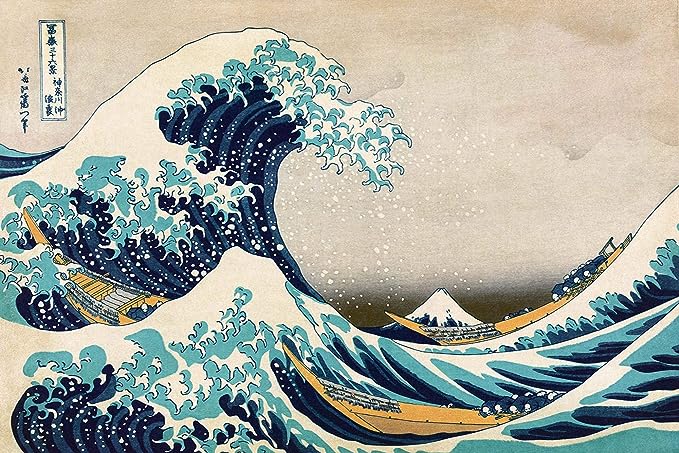
That’s important in a land where tradition is still widely practiced and respected, although it is under attack in many quarters of society. The “old paths” still carry a great deal of weight in Japan, despite the rapid incursion of a more modern sensibility and practice. There’s a famous and beautiful Japanese art print showing a tsunami wave about to rain destruction upon some Japanese boats. In the distance, Mt. Fujiyama is dwarfed by the wave. The print’s subject isn’t actually the wave or the boats but rather the symbol of the modern world crashing down on the traditional Japanese lifestyles and ways.

Thus, a cultural war of sorts has been ongoing in Japan for some decades now between the new ways and the old. And Kongo Gumi was one of the old firms that still clung to the old ways, stubbornly and tenaciously so. Sadly, their share of the construction market is shrinking as clients look for ways to save money in building, even in the building of temples. Concrete and modern methods have increasingly replaced the way Kongo Gumi has practiced their craft for a long time.

There’s an irony here as well. It seems that this old established firm was actually the one who pioneered the use of concrete in the building of temples. However, Kongo Gumi never used the material on such a scale that you’d notice it from the temple exteriors. But other and much newer construction companies have used concrete almost to the exclusion of all other construction materials. And, as the population becomes more and more “modern,” people care less and less about how a temple is constructed. As a result, the market share that Kongo Gumi held dwindled and dwindled over the years. Finally, in 2006, the company went bankrupt. It was purchased by a large conglomerate, and the traditional processes used by the firm were kept by the large company for specialist projects like temple repair or small temple construction for clients seeking that old style of building.

And that’s a sad thing in one sense. True, time marches on. Life is change. But there is something to be said, I think, about embracing the change while still remembering and appreciating the way things were done in the past. The future may depend on finding a balance between the two.

Still, it’s a shame that a company like Kong Gumi is not what it was. Especially considering that it is an old established Japanese firm, especially since it was the world’s oldest firm, established in 578 A.D.

On Grant’s Tomb

In the 1950s, Groucho Marx hosted a game show called You Bet Your Life. The show was a vehicle for the famous comedian to interact with simple American citizens and riff on their interactions, and all of it was built around a question and answer format. Sometimes, Marx and the producers found that, when faced with the lights and TV cameras and the studio audience (not to mention the larger than life persona of Groucho himself), some contestants on the show would freeze up and not be able to answer the show’s questions. That’s when Groucho would resort to a simple question in an effort to get the people to open up and begin to relax: Who’s buried in Grant’s Tomb? Well, the obvious answer that Groucho wanted was, of course, “Grant.” However, that answer both is and isn’t correct. Allow me to explain.

We today forget that Ulysses S. Grant (the “S” stood for nothing–it was only an initial) was seen in his day as one of the saviors of the Union. After almost four years of trying one commanding general after another as head of the Union Army, President Abraham Lincoln found in Grant a man who wasn’t afraid to engage with Robert E. Lee’s rebel army in the field. “I can’t spare Grant,” Lincoln said, “he fights!” Grant fought the insurrectionists to the point that they surrendered in April, 1865. And, in the 1868 election, the next election after the war’s end, Grant was elected President of the United States in a landslide as a sign of how popular he was despite the fact that he had no political experience and was the youngest president elected to that date. Think Dwight D. Eisenhower but almost one hundred years earlier. Grant was re-elected four years later, again, with a good majority of the vote. Sadly, almost a decade after his last term, Grant died of cancer.

However, at that point, much of the nation was divided over Grant’s legacy. Obviously, the people of the rebelling states thought of him as a butcher, the man who forced the Confederacy to be defeated by attrition. They had no use for him. And then, even in the north and west, there were Grant detractors because of what had happened during his eight years as president. You see, those two terms were some of the most corrupt in American History. Several of Grant’s appointees and administration officials were convicted of fraud and of bribery. While Grant himself wasn’t involved, the taint of the corruption had colored how many people viewed him. And, upon his death, the nation was torn as to how to remember this important–even if he was divisive–person.

And those who revered Grant wanted him to have a tomb fitting of the national hero they saw him to be. A fundraising campaign was begun to raise money to build a fitting tomb for the former general, but, after a good and fast start, it quickly fell flat. And land was found along the western side of upper Manhattan Island in New York City for the site of the memorial and grave. Now, Grant was from Ohio originally and had lived in Illinois for a time, but it was New York City that he called home after his presidency and where he was when he died. Also, it was where his wife, Julia, wanted the tomb to be located. She, of course, wished to be buried with her husband when she passed away. That request is why Grant wasn’t buried at West Point (no women allowed at that time) or other military cemeteries. Finally, after a direct appeal by Julia Grant to the soldiers who had fought with her husband in the war, enough money was collected to begin construction.

Now, even the building itself was controversial. The amount initially set aside for the task wouldn’t build a monument grand enough for those who loved Grant, but they felt that, as time wore on, they had to erect something on the selected spot. Finally, a cornerstone was laid in 1892, a full seven years after Grant’s death. And the final structure didn’t get finished until 1897–twelve years after the great man died. Julia died in Washington, D.C., in 1902.

And, to be clear, when the bodies of President Grant and his wife, Julia, were added to the memorial, they were not interred. Instead, the bodies lie above ground, sealed in a red marble sarcophagus. And that fact leads us back to Groucho’s question, the answer to which isn’t as easy as it seemed at the time.

Thus, the real answer to the question as to who is buried in Grant’s Tomb is, actually, nobody.