On Making Amends

The older man had to go to the store for some simple supplies. So, as he usually did, he decided to take his bicycle. As he made his way to the local store, an older woman stepped from the curb into the street and in front of his bike. He couldn’t stop in time. The man crashed into the woman, and they and the bike collapsed in a heap. The woman was injured, and an ambulance was called. The man was distraught to the point of tears. He would never intentionally hurt a fly–almost literally.

Now, you should know that this man’s name was Puyi. He lived in China, and this accident with the older woman and his bicycle occurred in the early 1960s. That was a time when Chairman Mao was working to restructure Chinese society into the “ideal” communist utopian nation. And Puyi was one of those people in the older generation with whom Mao’s ideology didn’t quite take hold. He, like many of his age bracket, had undergone re-education to first “unlearn” the old ways of thinking and be taught Mao’s new, communist way. But Puyi was a special case. He was a kind man, and, in many ways, a simple man. Sadly, he didn’t understand much of the changes that Mao and the communist party had brought to China.

Puyi was almost as forgetful as he was kind. He would sometimes leave the water running after he washed his hands, for example. He would enter the house and forget to shut the door behind him. His wife, Li, whom he had married when he was 56, despaired of him sometimes. She threatened to leave him because she grew tired of going behind him and fixing what he forgot to do. “It was like living with a child often,” she would later say. Yet, what kept her in the marriage was Puyi’s incredible kindness and humility. But, that humility also was a double-edged sword. Puyi would allow everyone else to board public transportation before him in a true show of his humility. Yet, that act often resulted in Puyi missing the bus or train entirely as he waited for others to board.

But back to the woman and the bicycle accident. Puyi made it his mission to visit the woman in the hospital every day. He would bring her flowers and sit, often for hours at a time, talking to her and seeing to her every need. He was, it was reported, more attentive than her own family, even. But that was who Puyi was. He wanted to make amends. Even when the woman recovered and released from the hospital, Puyi would still go to her home to check on her. That was the level of concern he felt, the depths of the responsibility for his actions he had.

From the early ’60s until he died in 1967, Puyi worked as an editor for a communist party publishing house. He and Li lived modestly and as happily as they could. His body was cremated as was typical in China at the time. And he was mourned as a man who spent his later life trying to make amends for his mistakes–as demonstrated by his care for the woman he injured with his bike. Anyone who knew him when he was younger would have been amazed that Puyi was like that at all.

You see, Puyi had been born into wealth before China became communist. In fact, at the age of 2, he had been declared Xuantong, the last Emperor of China.

On a Local Hero

We love our heroes. Sometimes, we love them even more when they come from us, from our ranks, from the common folk. And sometimes we love them even when or possibly because they are obviously bad people. Take the case of Captain Moonlite. You may have snickered a bit at that name, but that was his preferred moniker. Let me explain.

He was born Alexander Scott in Ireland in 1842, the son of a clergyman. But Ireland was too small for young Scott’s imagination, and he went to London to study engineering. He then followed his family as they immigrated to New Zealand at a time when that British possession was still being settled. The British authorities were waging war against the local Māori and Scott was inducted as an officer to fight in the wars against the first nation. He received wounds in both legs, and was reluctant to return to duty when he was healed. That led to charges against him for shirking his duty. In Scott’s defense, he pointed out that the British policy of warring against the Māori was immoral. He had witnessed what today we would classify as war crimes against the locals. Discharged, Scott began to follow his father’s footsteps in church service.

But something fundamentally had changed in him. The next time history hears from him, he robbed a bank. And it’s not only that he robbed it, it was how he robbed it that made the feat different and peculiar. The bank teller described the robber as being dressed in a cape and a mask, and he was handed a note that absolved the teller of any wrongdoing; it said that he, “had done everything in his power to resist this intrusion,” and was signed, “Captain Moonlite.” Scott was caught and prosecuted and served some months in jail, but he managed to rob some other places and got caught again. And he managed to escape jail by tricking a guard into opening the cells of some other prisoners who then overpowered the guard. Finally, Scott was recaptured, prosecuted for the robberies and the escape, and sentenced to 10 years hard labor.

And that’s when Scott began to tour New Zealand as a public speaker. He made presentations on how corrupt and unfair and downright foul the prison system was. Scott was a captivating, charismatic speaker, and crowds loved his presentation. They felt that he spoke for them. With him on his tour of speaking engagements, Scott was accompanied by a fellow former prisoner, a young man named James Nesbitt. As Scott’s popularity grew, the authorities bristled over his accusations against the prison system and the racist policies of the government against the Māori. They tried to pin several unsolved robberies and other crimes against Scott. That made him out to be a martyr to the public at large.

What few people knew was that Scott was using his speaking tours as a cover for the robberies that he and Nesbitt were committing as they made their way around the country. The managed to assemble a gang of former convicts to assist them on their tour of crime. One instance saw Scott deliver his lecture to a crowd of people and then he and his gang calmly robbed every member of the audience, ordering them at gunpoint to empty their pockets and purses. Rather than turn the public against him, such acts only caused the common man to love him even more. They were thrilled to having been robbed by Captain Moonlite and his fellows. And in all of these crimes, Scott and his gang went to great lengths to not use violence even though they brandished weapons during the robberies.

Finally, as usually happens, Captain Moonlite and his gang were caught. The authorities set a trap that ended in violence despite Scott’s attempts to not use weapons. In a shootout, a police deputy was killed, and two of Scott’s men were also shot and killed including Nesbitt. As his dear companion lay dying, Captain Moonlite cradled Nesbitt’s head and openly wept according to witnesses. Scott was tried for not only the killing of the policeman but also for all the string of robberies he and his gang committed. He was sentenced to hang for his crimes. The public cried for leniency from the court, for clemency for Scott and the other gang members, but the government was happy to rid itself of this thorn in its side. He was publicly hanged in 1880, and it was said that he wore a ring on his finger that was made from a lock of Nesbitt’s hair.

What makes a hero? What is it about someone who obviously and openly flaunts the law that makes the public flock to them, causes them to rush to their defense, to stand up for them and feel that the criminal somehow is relatable and “speaks” for them? Psychologists might say that we as the public project our desire to break the law onto these miscreants, that we who ourselves would never consider doing these things somehow find release in the fact that others do, in fact, commit crimes. And we cheer them on as some sort of a release for our own desires to do those things.

In the final analysis, Captain Moonlite, no matter how charming and popular, was still a criminal and possibly a murderer. And while making such people into popular heroes can be cathartic, we must remember that it also can be a dangerous thing.

On Traffic Rules

William Phelps Eno. That’s a name you have never heard of, most likely, but it’s one that affects your daily life more than you realize. You see, Mr. Eno is the man most responsible for the way we use our automobiles on public roads. Eno is often referred to by historians as the “Father of Traffic Safety” for his innovative ideas on how to use vehicles and how those vehicles should interact with the public at large.

The mobile society brought about by the production of the automobile was not anything Eno would have imagined when he was born in 1858 in New York City–ironically one of the cities that would benefit most from his later innovations. His father was a well-to-do real estate investor in the city, and his mother was from an old wealthy New England family. As the child of this pair, Eno studied at Yale and had a wide range of interests. Having financial security allowed him the time to think about the issues of traffic in the city and how to solve those situations.

Actually, according to Eno, it wasn’t automobiles that first caused him to consider the issues surrounding traffic in New York City. One day, as a young man, he and his mother were caught in a traffic jam of horses and carriages and wagons. It was immediately clear to the young Eno that a solution needed to be enacted to alleviate the tangled traffic. He enjoyed order, Eno did, and he approached the problem from that angle. For him, the answer lay with establishing regulations for traffic and then instructing the law enforcement authorities on how to enforce those regulations. Thus, to him, the solution was one of clarification and education of both the public and the police. People should have easy and clear understanding of the regulations, and the police should know how to help them navigate those regulations.

Thus, in 1900, which really was before cars were the predominant mode of transportation in the city, Eno published his plan. He called it Reform in Our Street Traffic Urgently Needed. That led him to create the first traffic code for the city a few years later. No other city had such a code, so New York was ahead of the curve. That led him to be asked by other major international cities such as Paris and London to create similar plans for them as well.

One way streets? That was Eno. Clearly defined lanes? Yep, he did that. Pedestrian crossings marked out at intersections? Ditto. In fact, most of the things we take for granted in traffic organization today were from the mind of William Phelps Eno. One creation of his is omnipresent in Europe but rare in the United States: The roundabout or the traffic circle. Europe appreciates that they allow the rapid flow of traffic at intersections without the need for a traffic light, while Americans see them as confusing and dangerous. Statistically, they are much safer than traffic lights as Eno realized. The only ones most people know about in the US is Columbus Circle in New York City that he designed and had built or the one around the Arc de Triomphe in Paris, France.

After a long and fulfilling life, Eno died in 1945. He was appropriately lauded as the creator of all things traffic. But there’s one interesting item about Eno that might surprise you.

Not only did the Father of Traffic Safety never own a car, but he also never learned to drive.

On an Imported Worker

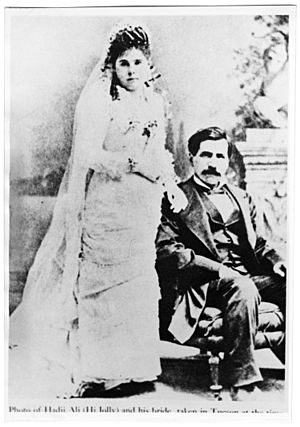
The small Arizona town of Quartzsite is home to a remarkable grave. The stone says the body buried beneath it is someone called “Hi Jolly,” but that’s a remnant of the racist nature of the United States 150+ years ago. We’ll look at his name in a moment, but how this man came to live and eventually die in the American Southwest is as odd as it is interesting.

The man’s name was actually Hadji Ali, but it’s easy to see that someone in the United States back in the mid-1800s might hear that name as “Hi Jolly.” So, to make his life somewhat easier, he want by the name that the locals in Arizona called him. From what we can glean he was born in what is now Turkey to Greek Orthodox shepherd parents in the 1820s. His Greek name was Philip Tedro. But, at an early age, Ali converted to Islam and changed his name. Because he had made a pilgrimage to Mecca early in this religious journey, he chose the name Hadji. He also served in the French Army as a young man, fighting part of the French colonial wars in Algeria. His background with animals saw him assigned to care for the pack animals used in by the French in their supply lines.

It was in this capacity that Ali was hired by, of all outfits, the United States military. How that happened has to be explained. You see, in the presidential administration of Franklin Pierce, the Secretary of War (what the Secretary of Defense was known as at that time) was none other than Mississippi’s own Jefferson Davis. This is the same Davis would would go on to become the President of the Confederate States of America during the American Civil War. Since there were no real foreign threats to the US during this time, the major focus of American defense policy was the pacification (meaning removal and/or eradication) of the native residents of the vast stretches of the western US. Davis looked for ways of creating better supply chains for the string of forts the army had set up to protect Americans from what they felt were native threats to settlement. That’s why Davis sent American agents to the Middle East to find and hire the best animal wranglers and handlers money could buy–people who had experience in handling animals in harsh, desert conditions. Ali was one of several hires made by Davis’s agents, and he came to the US in 1856 and arrived in Texas before making their way to the Southwest.

Ali was appointed to be the leader of these animal handlers. Everyone who worked with him commented on his professionalism and experience. As a vital member of the army’s quartermaster corps, he began enacting the plan Davis created to supply the forts and, at first, all seemed well. But 1857 saw the start of a different presidential administration and a new Secretary of War who didn’t have the priorities that Davis did. Besides, the tensions surrounding the beginnings of the American Civil War began to divert government funds from the western theater to the creation of warehouses and armories back east that began stocking supplies and weaponry. Soon, Ali found himself out of a job and unable to return to his native lands.

So, he decided to stay. He married a Greek girl in Arizona and did more supply work for the army in the wars against native groups in the late 1800s. He did some prospecting as well. He and his wife raised two children. Finally, he died in 1902, having never returned home. In fact, Ali became an American citizen and came to love the beauty and freedom of the deserts of Arizona.

You might be wondering why Jefferson Davis would have to send away to the middle east to find people to manage pack animals in the American Southwest. Well, that was needed because no one in the United States had any experience working with the specific pack animal Davis was using in the deserts in an interesting although failed experiment.

Ali, you see, had a good deal of experience working with camels.

On A Real Estate Contract

Nyack, New York, sits a few miles away from New York City but far enough away from the metropolis that it feels like the country. Nyack is on the water, and that also helps to make the real estate prices in the town rather high. Picturesque water views and a quaint village atmosphere combine to make Nyack an incredibly desirable location to make your home. It’s the perfect place to live in and easily commute to the city. That’s what Jeffrey Stambovsky had in mind when he put down some earnest money on a nice waterfront property in Nyack around 1990.

Even then, the price for an average waterfront residence was almost three-quarters of a million in Nyack. The Stambovsky family was incredibly excited by the prospect of moving out the crowded, noisy, and busy city and into the calming, soothing village. Not too long after committing to purchase the place, Jeffrey and his wife made the short trek out to Nyack to visit their soon-to-be home and to speak with the owner, Helen Ackley, Ackley’s family had owned the home for some years; in fact, the family had renovated it from the shambles it had become after years of neglect. They lovingly restored it to its former glory, keeping as many original fixtues and features as the building codes allowed. The house had been constructed in the Victorian Style in the late 1800s. It featured 5 bedrooms and 3 1/2 baths and boasted over 4,000 square feet of living space. And, in keeping with the local aesthetic, the Ackleys had painted the house a crimson red. All of this history was fascinating to the Stambovskys, and they seemed to be keen on keeping the house in as close to original condition as possible.

Now, when anyone purchases a house, the person is responsible for doing what is called due diligence. That means that it is the purchaser’s responsibility to find out about the condition of the house, any issues that may be a part of the property such as mineral rights belonging to another, easements, and even if any major repairs are needed to be completed in order to live in the house. And the seller also has a responsibility to disclose whatever they know of the place; to keep such information hidden from the buyer is illegal and could render any agreement to sell the house null and void if they fail to tell the buyer about an issue. And that’s what happened with this house in Nyack. It seems that Ms. Ackley tossed off some information about the house that the Stambovskys heard but didn’t completely understand–or at least they didn’t fully grasp the ramifications of the information. And that information is what Ms. Ackley divulged that weekend when the Stambovskys visited the house in the days leading up to the house closing.

When the reality of the house issue hit Jeffrey Stambovsky, he backed out of the sale. Now, he had put down over $35,000 in earnest money as a promise to buy the house, and, if he backed out now, it stood to forfeit that money. But Stambovsky felt that the information Ackley now told him should have been made clearer earlier in the purchase process. In other words, Stambovsky said that if he had known about the issue earlier, he wouldn’t have put down the earnest money. And, so, he sued Ms. Ackley.

As the case made its way through the court system of New York State, it drew attention because of its unique nature. And when the final verdict was handed down (after an appeal), it favored Stambovsky. The court said that he should have been notified of the issue sooner in the buying process and thus was due to receive his earnest money back.

So, in the court case, Stambovsky v. Ackley, it was decided that a house owner must inform any prospect purchaser, up front, that the house they are buying is haunted.

On a New Captain

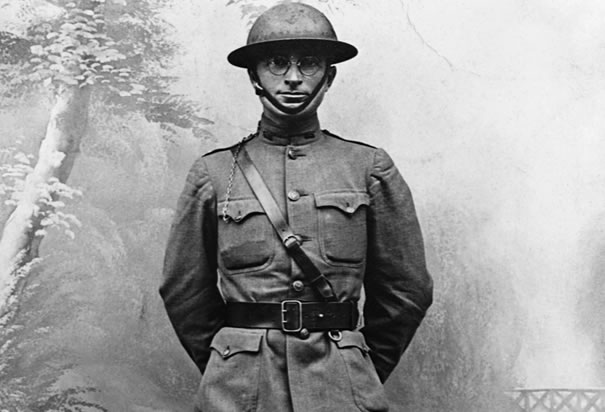
It was in June 1918, in France, during World War I, when the men of Battery D of the 129th Artillery Regiment received word that they had been called to muster for an important announcement. They were introduced to a new leader. This new commander of the artillery battery was a newly promoted captain and a volunteer. The group of men who made up the battery were unimpressed with the new guy from the start. “He looked more like a college professor than he did a captain of artillery,“ one noncommissioned officer remarked later. And that was an accurate description. The man, age 34, wore wire rimmed glasses. He stood awkwardly, obviously wasn’t terribly athletic, and when he addressed the troops that first time that they were mustered under his command, not a few of them noticed that his knees shook while he spoke. After he addressed the group and dismissed them, several of the artillery men responded with a Bronx cheer.

Later that day, several men decided to test the will of this neophyte captain. They staged a fake riot in one of the barracks to see what they could get away with, to see how he would respond. And his response was nothing that they predicted. The next morning, without a word, a notice was posted on that barracks bulletin board. It listed the demotion of the noncommissioned officers and a list of chores to be completed as discipline for the entire group.

Addressing the other noncommissioned officers from the other barracks, the captain reminded them that he wasn’t there to get along with anyone. And if they were unable to maintain discipline in the ranks, he would find another assignment for them. The older and wiser non-coms in the group looked at each other and nodded. This guy was going to be OK, they decided. Discipline was restored because of the new-found respect that they had for the new guy.

On the other hand, the new captain also quickly developed a reputation for rewarding those soldiers who excelled. His men grew to like him as well as respect him. He was cool in his decision making and treated everyone fairly. Still, the unit had yet to be tested under fire. And it was here that the captain himself worried about his ability to withstand what the enemy had to offer when the shells were coming in on him. He wrote a letter to his fiancé, saying that he hoped that his legs would help him stand firm, even when they were wanting to take him away from the danger. And that first test of battle came a month after he was made captain. After selling a German position, the Germans returned fire to the Americans. Several of the group abandoned their artillery pieces and began making for the rear. The captain began yelling at them– – something he had not done before. Apparently, he called them every day in the book, challenging their manhood, and even referring to their mothers in inappropriate ways. His anger worked. The men came creeping back to their stations at the guns, and they returned fire on the Germans. The captain was later commended for his coolness under fire in for rallying his men under duress.

When the war ended, the men of the battery took up a collection. They had a silver cup made, which they presented to the captain as they were discharged from service. On one side, the cup said, “Presented by the Members of Battery D in appreciation of his justice, ability and leadership.”

And on the other side, the cup said, “Presented to Captain Harry S. Truman.“

On a Law Code

The history of the compilation of legal statutes is as old as the concept of ownership. In other words, the written law began with owning land and other property. Think of all the issues associated with owning land: Deciding who is the proper owner, where the boundaries of the land is, who owns things like mineral rights, how one accesses the property (what land you have to cross), etc. All of that requires regulation and thus, a written law code. And law codes mean adjudication. And that gave rise to things like courts, judges, and even lawyers. And it all began with ownership.

Today, the law continues to define what exactly constitutes property and the associated rights of it. The idea of something that is property also includes intellectual (that is, not physical) property and rights. We also think of land being lateral, but it can also be vertical as well. People have the rights to the space above their property as well–for example, I can’t build a bridge over your house if I own the property on either side of you. This concept is still being defined legally as time goes on.

Some people have been thinking about this concept of what is above you for almost a century. A Czech lawyer was one of the first to attempt to codify what legal rights people should have over the space above them. His name was Vladimir Mandl. He published his thoughts on it way back in 1932. Das Weltraum-Recht: Ein Problem der Raumfahrt was his treatise on the subject, published in German, and it was obviously way ahead of its time. As the 20th Century progressed, others added to Mandl’s propositions. Cases began to be heard in various courts around the world that added to and clarified the proposition. Now, international law is understandably dicey because of the various laws in the nations involved. But the idea is that international legal consensus be built so that rights can be applied equally across the globe. Think of the world-wide standards for things like war (the Geneva Convention, for example) and other issues that have global implications and applications.

The United Nations also took up the issue. The laws become more defined. Agreements were signed. Conventions were held. Universal agreement was reached. Courts have been hearing cases involving one major point of contention: The definition of what it is above you. How far do your rights go? Can I claim the air over my land to the point that I can tell drones or even airplanes that they can’t fly over me? Also, remember that, since we are on a globe, the are above us grows in a cone shape the higher up we go. Do we as individuals or nations own that? And thus, the law is evolving and changing as it always does. But we go back to the original concepts of Vladimir Mendl. He set the standard for how we view what’s above us and how it should be regulated, and he did it long before we began traveling so far “up” that we were actually “out.”

By the way, the translation of his publication in English is Space Law: A Problem of Space Travel.

On A Consular Appointment

Tom was tired of art. He’d been an artist most of his professional life. In fact he’d made decent money at it. But he wanted a change. Call it a late-age crisis (if you consider 62 to be late-aged), but Tom knew he had more in him than simply art. So, having been interested in politics from an early age, Tom applied with the United States State Department for a position as a consul, preferably, he said, to Europe. Now, this was 1902, during a time when the US Civil Service was still being standardized and the best practices were still being established. Tom had no real qualifications to be a US consul except he had some friends in some powerful places, so he pulled some strings and made some inquiries and was able to get an appointment as a consul. Granted, it was not in Europe like he had preferred, but it was still a posting at a consulate. Besides, he had heard great things about the beauty of Guayaquil, Ecuador. So, Tom accepted the position and sailed for Ecuador in July.

Now, Guayaquil is a beautiful city on the coast of Ecuador and was, at the time, one of the major ports on South America’s western coast. Being so important to trade, the United States was extremely interested in maintaining a political presence there in the form of its consulate (the US Embassy was in the capital city of Quito, located high in the Andes in the interior). So, while the posting for Tom wasn’t particularly glamorous, it was an important appointment. And, despite not having any real public administration experience, Tom soon found that he really enjoyed the work. After all, the real paperwork and administration were done by those permanent officers in the consulate; most of what Tom did was assist Americans who made their way through the area on business or pleasure and who needed help with visas or passports or what have you. He was also wined and dined by the local dignitaries and the consular officers of other nations. Schmoozing? Tom could do that.

As the summer of 1902 turned into the fall (Ecuador really has no seasons other than rainy and not-rainy), people in the city began coming down with Yellow Fever. Remember that this was in the days before a viable vaccine for the disease, and the work of Dr. William Gorgas in eradicating the breeding of the disease-carrying mosquitos was still a couple of years away. People started dying in droves. It was discussed that the consulate in Guayaquil should be evacuated, and orders were approved in Washington to allow those able to travel to leave the city and go to a place where the Yellow Fever had yet to come or even, possibly, return home. But Tom did an incredibly selfless thing. He decided to stay. “People will need me now more than ever,” he said to an aide. Tom knew that his signature on travel documents would allow American families to leave the stricken area quicker. So, he stayed on and helped many Americans to escape the clutches of the disease. Of course, you can guess what happened. In December, Tom got Yellow Fever. He died on December 7th. His body was brought back to the US, and he was buried in the Bronx, New York.

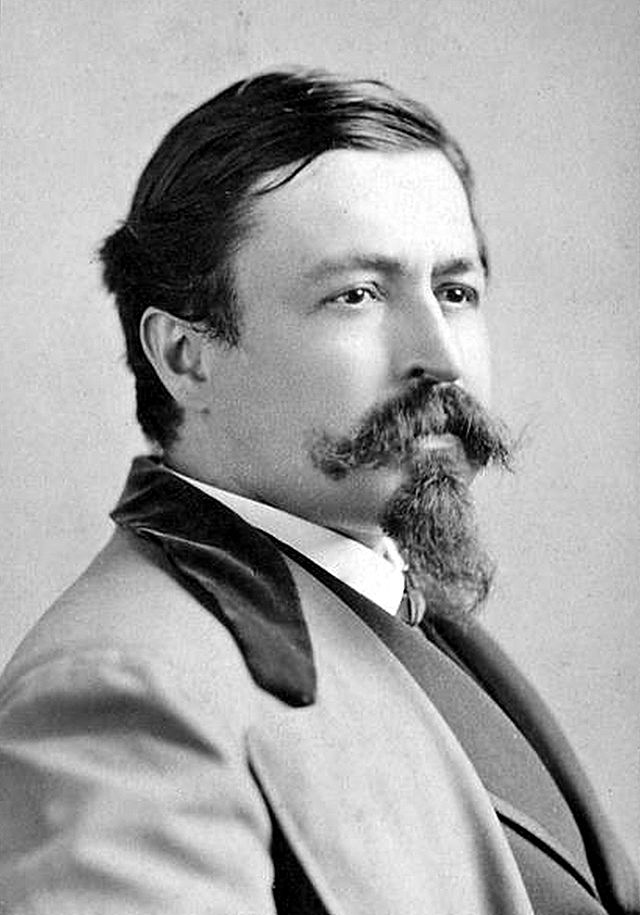
But we don’t remember Tom for his courageous and selfless work as the US representative in Ecuador that deadly autumn. No, we remember him for his art, actually. You’re quite familiar with his work. When you think of the two American political parties, you might think of the animals associated with them–the elephant for the GOP and the donkey for the Democrats. Tom did that. And, every December, you imagine Santa Claus looking like, well, like Santa Claus. Tom did that, too. And, today, every year, a prize is given in his name to the best political cartoon of the year.

In fact, Thomas Nast was the foremost political cartoonist of his day.

On a Pastime

Winston Churchill found himself between government jobs in the period between the world wars. World War I had not been kind to Churchill, and, finding himself temporarily out of politics, he took up a hobby. As many of you probably know, that hobby was painting. Churchill was never a great artist, of course, but that really wasn’t the point, now was it? Painting was a way to occupy his time, a hobby, something creative at a time when he felt his political and even personal creativity had been drained from him, and before he became the great statesman that World War II would make him. Churchill wrote about his artistic endeavors in a well-received book; he was, after all, a much better author than he was a painter. “We cannot aspire to masterpieces,” he wrote, “we may content ourselves with a joy-ride in a paint box.”

That “joy-ride” that Churchill referred to inspired another recent retiree to take up the hobby for himself. He, too, found himself at a low point, bored, and no longer occupied with life away from home. His wife, seeing that her husband was atrophying mentally, suggested a hobby. Having recently read Churchill’s book on painting, this retiree decided to give that hobby a try. The problem was, well, he’d never touched a paintbrush, even to paint something as simple as a wall. He knew who Bob Ross was, but he wasn’t so interested in landscapes and what he felt was a fast and easy way to learn how to paint. No, he wanted to “do it right,” so, he hired a professional artist to come to his house and give him lessons.

The person this retiree hired is named Bonnie Flood. She was an artist and had owned several art galleries over the years. She supported herself by selling her art and by giving private painting lessons. And she came highly recommended. The issue here was that Flood is from Cumming, Georgia, and the retired man lived in Florida (Florida–God’s waiting room). Now, this particular retiree was a man of means, so when Flood protested that she didn’t live near him, the man offered to provide a place for her to stay while she gave him lessons for a month. And he seemed to charming and friendly on the phone. So, Flood agreed to go down to Florida and teach the retiree what she knew about painting.

At their first meeting, the man was so eager to begin that he could hardly contain himself. “There’s a Rembrandt trapped in this body,” he gushed, “and it’s your job to find it.” This made Flood smile. But she looked at him and decided that he wasn’t kidding completely. He really wanted to learn to paint well. And so, the older retire and the younger artist began an unlikely collaboration. Flood thought she would work with him for an hour or two a day and then have the rest of the time to see things in Florida. She was wrong. The man asked for six hours of instruction per day for the entire month. She wasn’t complaining. The pay was great, and she was doing something she loved.

The man worked quickly and learned just as quickly. He was impatient to learn and to become better at the hobby. He began by trying to paint animals like pets and horses, but he really wanted to paint portraits. Flood tried to temper his expectations by saying that painting took time. He would smile and nod and continue to work tirelessly, day after day, hour after hour. When the month had passed, Flood could honestly say she was impressed. For someone who had never painted, never done anything artistic, the man had a primitive but forceful style that was, ultimately, not too bad for an amateur. She was impressed with his enthusiasm and his focus. They’d spent so many hours together that Flood was sad their time was over. She felt proud that he’d come so far so fast.

Since 2013 when Flood taught him, this man has continued to paint and was able to publish a book with several of his portrait paintings in it. It became a best-seller. And in it, George W. Bush credits Bonnie Flood for bringing out his inner Rembrandt.

On an Old Hippie

The fact that the word “hippie” is in the title of this story instantly marks me as being old. No one uses that word anymore, and anyone who knows it was from the period 50+ years ago when it was part of the cultural and social landscape. The word came from the idea of someone who was “hip” or “hep,” as in someone who was “in the know” and “wise” as opposed to someone who had no idea about what was cool or popular or “in.” In the 1960s and ’70s, a hippie was someone who was on the side of the anti-war, pro-drug legalization, anti-establishment youth movement. The opposite of a hippie would be a “square,” someone who supported the traditional values and power structure in the western world. You could tell which side someone was on based on how they dressed, what hairstyle they wore, and the language they used as well as how they voted and what issues they supported. And, while the overwhelming majority of hippies were young, this story is about one such hippie who was older.

In many ways, this old hippie was against type for many reasons besides his age. He was from the American south, from a traditional background, and had, as a younger man, indeed supported the establishment. But, as he aged, his politics changed. There’s an old saying that someone is more liberal in politics as a youth and more conservative as they age. So, this older man went against this trope. He had seen the effects of the American policy of the Vietnam War, for example, and he became horrified by how morally wrong it was. He became an anti-war supporter. Also, he began to wear his hair longer, much longer than what traditional society would say was acceptable for a man in his 60s. Remember, during that time, men who supported the establishment would not consider having long hair. Yet, this man wore his almost shoulder length. He would decry traditionalist men as “short hairs” because they cut their hair so short like the establishment was used to.

And the music he liked went against type as well. His favorite group was Simon and Garfunkel, and the song by this duo that was his favorite was Bridge over Troubled Water. He would listen to that record over and over for hours at a time. At that time Simon and Garfunkel’s reputation was more anti-establishment and anti-war, and this man embraced those sentiments as well. Finally, his dress also mirrored that of the younger, hippie group. He wore pants that slightly flared at the bottoms, a style known at the time as “bell bottoms.” Instead of wearing a tie and dress shirt as he did when he was in his working years, he wore a loose-fitting shirt and kept it unbuttoned low on his chest. At times, he would run around his property dressed only in shorts with no shoes or shirt, his long hair flowing behind him.

That property was a farm he’d purchased a few years before. In his retirement, he worked to make it more self-sufficient, less dependent on things like chemicals and pesticides. That emphasis on environmentalism was also a mark of the hippie, and this old man saw the wisdom of embracing those concepts in an effort to get closer to the land. Ideas like this meant more to him as he grew older, because his health wasn’t good. He had a bad heart, you see, and he knew that he didn’t have much time to live. The men in his family died young, he said, and he had wasted so much time going for money and position and power instead of working to seek happiness in himself rather in the things he owned or the position he held. That, too, was a mark of a hippie–the rejection of what the establishment considered to be the important things in life. Friends from his old life would stop by to say hello, and they often left complaining about that old hippie who wasn’t the man they knew years before. “I wanted to talk business,” one old acquaintance said after leaving the farm, “and all he was interested in was how many eggs his hens were laying.”

He died of a massive heart attack at age 64, at his farm. He said that he wanted to live to see the Vietnam War end. And that’s what happened. He received a call a few days before his death telling him that the war was over. On the other end of the call, the voice of Richard Nixon said, “We’ve negotiated a peace with North Vietnam. The war’s over. I wanted you to know.”

Lyndon Johnson, the old hippie, could rest, now.