On a Baseball League

It’s October, the time when the (former) National Pastime plays its annual fall classic. I played two years of Little League in Alabama when I must have been 10 or 11. The first team was the McGriff Tire Indians (McGriff Tire was the local sponsor of the team), and we wore green. The next year, I was put on the Orioles, with black and orange colors, but I can’t remember the sponsor that year. The thing was, kids used to play baseball all the time. We played in school, then, we dreamt of summer when we could be on the diamond as much as we could during the long days. None of us was any good, but we had fun. And that’s what baseball should be about for the majority of players.

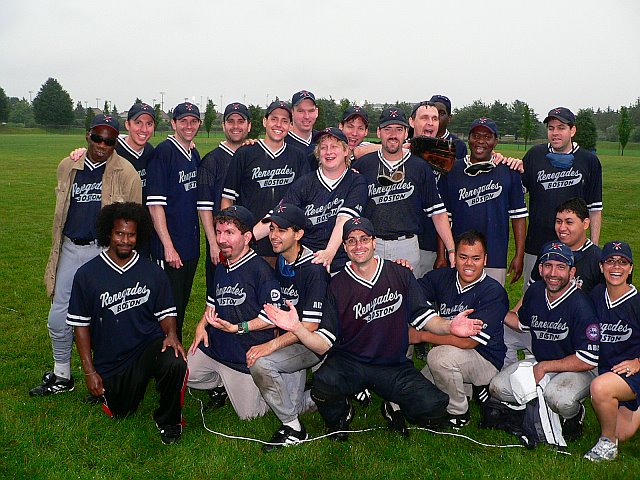
Take the NBBA, a league that is growing in popularity in the US and worldwide these days. It got started in 1976 mainly for adults to play, but today the age of the players varies widely. The league allows players as young as 12 and as old as 70. And the game as played by the NBBA has some quirky rules to it.

First of all, a game is only six innings instead of the usuals nine. And there are only six fielders on each side. The pitcher and catcher come from the other team; that means that the team that is hitting has a teammate throwing the pitch to them–the best possible pitch to hit. Oh, and each team has a spotter. More on that position in a moment. In addition, the ball is an oversized softball. The bases are blue, and they stand almost five feet tall and are made of a soft foam. Oh, and there is only first and third base. No second.

As for each inning, the batting team gets four strikes before the batter is considered out. If the batter hits the ball, it must travel at least 40 feet (even in play) or it will be considered a strike. If the ball is hit more than 40 feet, and the batter reaches either first or third base before a fielder touches the ball, a run is considered to have been scored. If a fielder catches the hit ball in midair, the side is immediately retired and the fielders come in to take a turn at bat. It’s almost as if the NBBA is a cross between baseball and cricket, but it’s not really that, either.

An invitational tournament is held yearly, and, sometimes, international teams play in it. The winner of the tournament is crowned World Champion. More than 200 teams are in the NBBA in the US alone, and teams are cropping up all across the globe as the game catches on. Cities like the usual major league towns are of course represented, but other towns like Austin, Wichita, and Stockton field teams as well. Teams with names like the Scrappers, the Sluggers, the Lightning, the Reapers, and the Comets have all seen action in the league.

Oh, and the spotter position I mentioned earlier? That’s a key ingredient to the game. When a ball is hit, the spotter identifies which of the six fielders’ position or area the ball is coming to. That’s all the spotter is allowed to do–identify an area from 1 to 6. It helps, also, that the ball that is used emits a beeping noise. That beep really helps the fielders do their jobs.

That’s because all members of the National Beep Baseball Association are blind.

On a Returning War Prisoner

Andras Toma had been a 20 year old Hungarian soldier when he was captured by the Soviets near the end of World War 2 in 1945. Toma was taken to a POW camp near what is now St Petersburg, Russia. The German soldiers and their allies, including captured Hungarians, often had to trek across hundreds of miles of countryside by foot when the war ended and they were released from custody in order to return to their homelands. I have some friends in Western Germany, near Cologne, who had their ancestor show up unannounced at the front door of the family homestead in 1947, fully two years after the war ended. They thought he was dead. That wasn’t an unusual event. Toma, too, had to stay some years in Soviet custody before his release, and his family had long since though him deceased in the war.

But Toma had survived. After the POW camp, an illness saw the young Hungarian transferred to another facility, a Soviet hospital, still deeper in the Russian interior. He languished there for several months, and then he was transferred to yet another facility, and that’s when he lost track of time. He didn’t realize how long it had been since he was put in the facilities. Back home, since he didn’t return after the war, his family had him declared dead. Again, this wasn’t unusual for families whose sons, husbands, brothers and other relatives didn’t come back.

Meanwhile, Toma was having trouble communicating with the doctors and the staff of the medical facility. Hungarian is a rich language, but it’s also one of the most difficult languages to learn. Besides, it’s not spoken much outside of Hungary. And Toma knew no Russian. So, when the doctors made their rounds and the nurses brought him his food and checked on him, there was almost no interaction between Toma and them. Apparently, he had no conversations with them at all while he was there.

Then, a doctor in the hospital who was from Czechoslovakia noticed the man. the doctor soon realized that, because of his name, Toma was most likely Hungarian. The man, curious as to what seemed to be a patient with no obvious or visible issue by that time, arranged for a records check on the Toma, and the entire story came to light. It seems that, for some unknown reason, Toma had ultimately been placed in a Soviet mental institution. His inability to speak Russian (and the Russians’ lack of Hungarian language skills) had allowed him to stay in the mental facility for an inordinate amount of time both unchallenged and unchecked.

And that’s how Andras Toma finally made it home to his family in Hungary after the war. He was given a hero’s welcome, and he was awarded back pay for all his time in the service, even though the war had ended some time earlier. The joyful reunion between Toma and his family occurred on August 11, 2000.

Because he didn’t speak Russian, Toma had been a POW for over 55 years.

On A Polish-American Hero

Only eight people have been granted honorary citizenship in the United States. Churchill, Mother Teresa, and The Marquis de Lafayette are among them. And then there’s another Revolutionary War hero, a man named Casimir Pulaski. You may have heard of him because of several towns and counties in the US bear his name. Like Lafayette, Pulaski joined the battle against what he felt was the oppression of the British government against the freedom-loving Americans. He did this in part because he had waged a similar but unsuccessful fight as a cavalry officer in his native Poland some time before and had been exiled by the powers that were in the country at the time. That’s when he came across Ben Franklin and Lafayette in Paris who convinced him to continue his fight for freedom and against tyranny by journeying to the newly-formed United States and joining the fight there.

And, so, he and several of his fellow Polish cavalry officers did. Pulaski had come from the nobility in Poland (he bore the title, “Count Pulaski”) and, thus, had some money of his own. He used some of his fortune to finance the first true cavalry unit in the United States Army, becoming known as the Father of the American Cavalry to this day. And he fought in the war effort from north to south along the eastern seaboard; he went as far north as New York and as far south as Georgia. When he stepped off the boat in Massachusetts, touching American soil for the first time, it is reported that he said, “I came here to defend freedom, to serve it, to live or die for it.” And, with this spirit and his skills as a cavalry officer and ability to train troops in the saddle, Pulaski became a national hero to those Americans who supported the war against Great Britain. He is even credited with saving the life of General George Washington in battle.

It was in the south, near Savannah, Georgia, that Pulaski was knocked unconscious and mortally wounded by cannon fire during a charge. He was taken aboard a ship in Savannah harbor and died from his wounds two days later having never regained consciousness. The nation mourned. This brave man’s story was their story in many ways. Many Americans at the time were still immigrants from Europe; they had left the oppression of European tyrants to come to the freedom of the American lands, and, even though he was of the nobility, they saw Pulaski as one of them. He died a hero.

Well, for various reasons, what happened to Pulaski’s body after his death got clouded and confused. Some said he was buried at sea after a funeral in Savannah. Others said that he was buried on some high ground on a plantation not too far outside of Savannah. For decades, no one knew for sure. Then, in 1853, a body was found on the grounds of the plantation and tentatively identified as Pulaski’s. That body was re-interred in a memorial to the cavalryman in Savannah. But, then, in 1996, the bones were dug up and underwent a forensic study to determine if they were, in fact, the bones of the Polish hero.

The analysis took eight years.

In the end, the bones were consistent with someone who was Pulaski’s age and military background. There was an injury to the skull consistent with an injury he’d sustained as a younger man fighting in Poland. One cheekbone had a defect, and that matches with Pulaski having had a bone tumor there. And, after comparison to the DNA of a known living great-grand niece, the study said that there was strong probability that the bones were, in fact, those of Count Casimir Pulaski. But, the years-long analysis also showed something no one suspected, either when Pulaski lived or since.

That the Polish hero might have been a woman.

On 500

Yesterday’s post about the pin-up girl marked the 500th short story in this series.

Thank you all for your support, critiques, suggestions, and reads/likes.

Stories connect me to you all, and they have served as connections for my family since I can remember sitting at my mother’s knee (that’s an inside joke because she only had one leg, so) and hearing the stories of her childhood in the 1920s. She was the consummate storyteller, and she also appreciated a good story told to her.

That’s why we always listened to Paul Harvey on the radio when I was a lad. His segment, The Rest of the Story, never failed to keep us entertained and enlightened. That’s the tradition this blog wishes to uphold.

For me, the best stories are the ones that help me understand the world or see it through a different lense.

In the world today, I need as many perspectives as I can get.

And I thank you for yours.

Now, have you heard the one about…

(Don’t worry–you’ll get a regular post later today, too!)

On a Pin-Up Girl

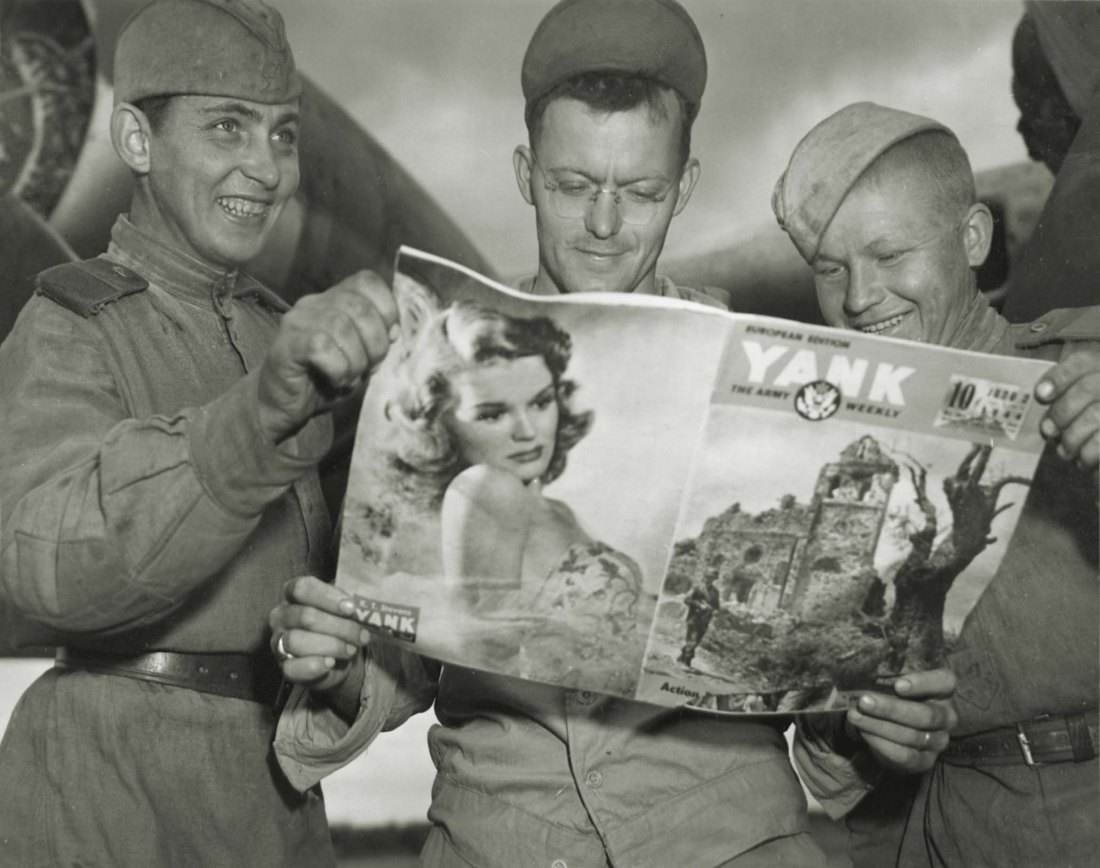
This tale might be distasteful to some, and I’ll confess that the subject matter is disquieting. The fact remains that, during World War 2, in an effort to boost morale among the American male servicemen, the military magazine YankThe Army Weekly (short for Yankee, the name by which most GIs were known overseas) always included a poster that featured a female in tight clothes. Known as a Pin-Up Girl, these women’s depiction was meant for the men to take out of the magazine and put up (or pin up) on the walls of their barracks, rooms, or even offices. The magazine, with a circulation in the millions, was sent weekly during the war years to every theater of war, from North Africa to Southeast Asia, Alaska to England.

Please realize that Yank never published pictures/pin-ups of women like magazines such as Playboy would later in the Vietnam War. But, while the women in Yank were clothed, they were posed in what was, for that time, suggestive postures. Bare legs featured prominently. Sometimes, the woman would be portrayed in a swimsuit or lying on a sofa or bed. Often, film or music stars were the photograph in the magazine; Ingrid Bergman, Lauren Bacall, Maureen O’Hara, and Donna Reed were some of the more famous ones. Jane Russell and Betty Grable were favorites of the servicemen. As a tongue in cheek issue in 1943, Yank featured a man (a sergeant named Charles Gardocki, shirtless and dressed in loincloth) as the pin-up, the editors saying that they did it for the women in uniform.

The magazine also contained news about life after the war such as opportunities for work and education, interviews with celebrities, and included the famous cartoon character, Sad Sack, a typically downtrodden army private. Some issues had short stories by famous authors in the 24 page magazine. One issue carried a letter from a Black soldier who wrote that German POWs were treated with more respect in the US Army than were Black men. That letter caused some controversy because of the number of letters received from servicemen who actually supported the assertion. But the pin-ups were what most men were eager to see in Yank.

And the magazine was incredibly popular with the troops. Copies of it carried great value as something that represented home and country to the fighting men. Once, supposedly, thousands of pin-ups were dropped over a Japanese-held island with the message, in Japanese, “This is what’s waiting for us at home; this is what we’re fighting for,” as a way of hurting Japanese morale. Of course, the Americans weren’t the only ones who liked the pin-ups. Enemy soldiers were sometimes captured with pin-ups found in their pockets or in their belongings, having gotten the magazine somehow during the ebb and flow of battle.

Now, we should mention that the objectification of anyone like the photos in Yank is wrong, obviously. But, for its time, Yank‘s pin-ups had a positive effect on the troops. And, as the war drew to a close, the editors had to decide what girl would have the honor of being the last pin-up girl in the magazine’s last edition. For weeks leading up to the last edition in late 1945, the magazine teased its readers with the secret identity of the girl. She had to be the best, the greatest girl that the boys on the front had ever seen. She had to epitomize the United States and all that it stood for. She had to be the ultimate pin-up.

And that’s why, in the last published edition of Yank, the pin-up girl was the one that every American, no matter who, loved the most.

The Statue of Liberty.

On Two Failed Medical Careers

Robert wanted his son to be a doctor, a physician, like he was. In fact, he wanted both of his sons, Ras (short for Erasmus) and Charlie to study medicine. So, in the autumn of 1825, Robert sent the pair of young men to the most prestigious medical school in the United Kingdom and, in fact, also Robert’s own alma mater: The University of Edinburgh. The reputation of the school was beyond dispute. Almost all of the modern medical world passed through the medical school in the Scottish capital city. And Robert wished that his sons would have the best education possible–as he himself had.

So, the brothers (Ras was a few years older than Charlie) took some rooms only a few steps away from the medical college on what was then Lothian Street, south of the Royal Mile and near what is today the Scottish National Museum. The rooms, the boys found were bright and airy and not at all stuffy as much of the student rooms in Edinburgh tended to be. At first, all seemed well; the boys loved Edinburgh, and they attended their lectures and classes and conducted themselves like the young, gentlemanly students they were.

However, as I mentioned, Ras was older than Charlie, and he had already been studying medicine at Cambridge in England for some time. By the time the spring of 1826 rolled around, Ras was pretty much finished with the Edinburgh part of his training. It was time for him to go to London to complete his medical education at the anatomy school there. That left Charlie alone in the Scottish city. And it was that spring that Charlie decided he didn’t like the study of medicine. Writing to one of his sisters, he complained that the lectures were boring him to the point of madness. He stopped attending his required beginning anatomy labs. He began hanging out in the natural sciences departments of the university, and he started to learn about botany and what today we would call earth science.

All of this disappointed Charlie’s father. The hopes he had for his son to follow in his footsteps as a physician were fading, fast. Now, it didn’t help that Robert’s youngest son was only 16 when he left home to go to university and then was a still-young 17 when Ras left him alone in Edinburgh. So, it quite possible that homesickness played a part in Charlie’s decision to quit the medical school at Edinburgh after less than two years there. He talked often of going into the clergy as his family had a long history of ministers as well as physicians. Ras, for his part, was a sickly young man most of the time; his delicate constitution proved too fragile for medicine. Thus, it was with great sadness on his father’s part that Ras also quit his medical studies at the precise moment that he was about to finish them. Neither son, then, followed in Robert’s footsteps.

Of course, Charlie wouldn’t become a minister, either. No, the interest he found in the natural sciences at university soon put Charles Darwin aboard the ship The Beagle and on the way to changing how we view our natural world.

On a Failed Artist

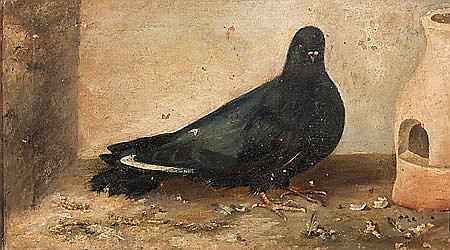
Jose Ruiz y Blasco is not an artist you would’ve heard about. Yet, you do know some things about him. We will get to that in a moment. For now, know that he was born in Spain, in Malaga, in 1838. His family was middle class, and that comfort allowed Jose to study art and become a teacher and artist himself. Everyone called him Pepe. He taught for many years in schools and also gave private lessons. He felt that within everyone, especially young people, artists were alive. The key, Pepe said, was to remain an artist your entire life. His own painting were usually of landscapes, and he loved doing pictures of doves and pigeons in the town streets and parks.

Pepe tried, he really did. He wanted to make a living from creating artworks, not simply teaching others about how to do that. Finally, he had a chance to exhibit some of his work in a public showing in Malaga. But the critics were not impressed. Oh, Pepe’s works were technically fine, but they lacked feeling, the critics said. The paintings had no passion, no fire of inspiration to them. Pepe was crushed. After working for a period in a Malaga art museum, he decided that a change of scenery was in order. First, he moved to another nearby town, where he also worked at a museum. But then, the opportunity arose to teach at a prestigious art school in Spain. So, he moved to Barcelona, but the work there only reinforced the idea that he could only make a living teaching other, more promising students how to paint.

And then there was Pepe’s personal life. He married when he was middle aged, and his wife, Maria, who was from a part Italian family, was fully 18 years younger than he. They had three children, a son and then two daughters. The youngest girl, Conchita, died of diphtheria when she was only 7. However, his marriage seemed to be a contented one. But, sometimes, his frustration with not being able to be a success as an artist spilled over into his family relations. He fought especially hard with his son.

Then, something happened to Pepe that made him stop painting all together. It seems that Pepe’s life completely changed when he saw the work of another artist, an artist he himself had helped to teach. The work of this young man stunned Pepe to his core. He couldn’t believe that someone so young could paint with the passion and fire that he himself lacked. Call it inspiration, call it genius, call it whatever you wish, but the fact remains that Pepe saw this young man’s work and was stunned. He raised his hand to God and swore he would never paint again.

You see, the young man who impressed Pepe so, the pupil who outshone his teacher, was none other than Pepe’s own son. That son decided to become an artist, too, but he chose to be known by his mother’s last name, that Italian name that her family bore.

Picasso.

On A Double Spy

This past week, I told you how much I love spy stories. This one involves a spy who worked for the American cause during the American Revolution in the 1780s. That period was a good time (relatively speaking–it was fraught with danger, of course) for spying because loyalties were fluid and people changed sides in the war depending often on who was standing nearby. But James was decidedly on the side of the American rebels.

It’s pretty generally accepted that the American public in the 13 British colonies were split into thirds during the conflict. About a third was against the rebellion and wished for the British Empire to stay as the ruler of the colonies. Another third didn’t care either way–the war didn’t affect them one way or another. Finally, approximately the last third of the population was whole-heartedly on the side of independence and actively worked towards that end. And James worked for independence more than most.

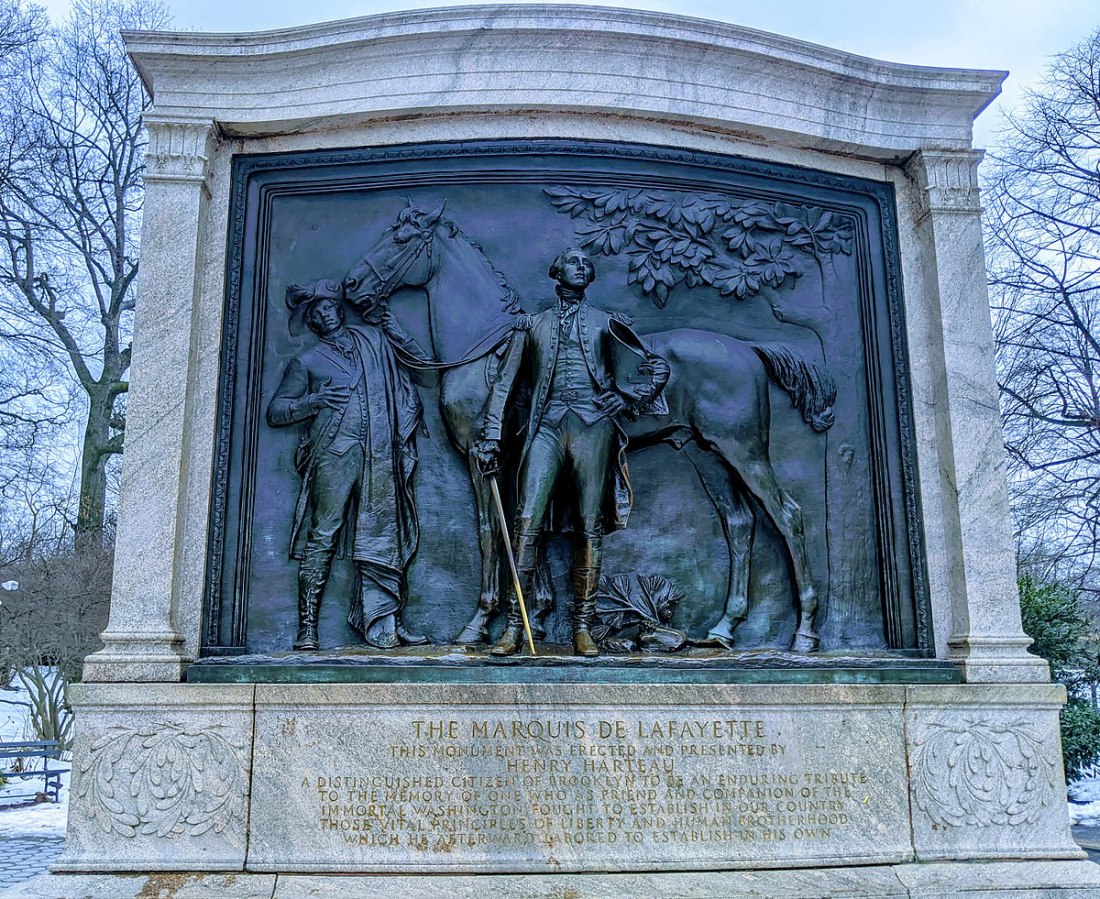
He offered his services as a spy to the rebels, and his offer was accepted. His commander was the French general, the famous Marquis de Lafayette, the man who admired the Americans’ desire for liberty so much that he came to the colonies to help George Washington in the war effort. Lafayette suggested that James secure a position as a “loyalist” in the camp of the American traitor, General Benedict Arnold. Arnold had changed sides in 1780 and then fought for the British. So, Lafayette, with Washington’s approval, sent James to spy on Arnold shortly after the transition from American patriot to British traitor. James gained the trust of the former American leader by pretending to be a spy for the British. The information that James gave Arnold was always solid but was largely useless. However, the intelligence he secretly sent back to the Americans was invaluable regarding British troop size and movements.

Then, as the war began its final stages, Lafayette ordered James to offer his services to General Cornwallis, the British commander in Virginia. There, James secured work as a courier for the British, taking orders and correspondence between British camps. In other words, the British were giving their battle plans directly into the hands of the Americans by entrusting it to James to carry between their lines. The information James gathered enabled the Americans to easily counter Cornwallis’s movements, and it led directly to the American victory over Cornwallis at Yorktown. It was the victory that effectively ended the American Revolution.

After the war, James purchased several acres of land in Virginia and became a fairly prosperous farmer. Despite some issues on whether or not he was in uniform during the war (he was not, obviously), James eventually received a small pension for his service in the war. But, for James, the real satisfaction was knowing that he had fought for the cause of liberty in his own way.

Then, in 1824, the Marquis de Lafayette made a return trip to the United States in honor of the nation’s upcoming 50th birthday. He traveled around all 24 states including Virginia. While in Richmond, Virginia, Lafayette was riding in his carriage through a large group of well-wishers when he saw James’s face in the crowd. The Marquis ordered his driver to stop, and he got out. He rushed into the crowd to excitedly hug James. The two old men were so happy to see each other after so many years and after they both had endured so much for the cause of liberty. However, many in the group surrounding the Marquis’s carriage were less than pleased, however.

You see, James had chosen the last name Lafayette after the man he so admired during the war. And the reason he chose that name was that he had no last name when he had met the Marquis. And the crowd was upset at the embrace because, at that time in Virginia, White men simply did not embrace former slaves like James Lafayette.

On Concentration Camps

Some topics almost hurt to even think about. This is one of those topics. The abject, heartless, evil, and inhumane (and inhuman) treatment that occurred there is almost beyond our comprehension as a species. And that’s a major reason we need to be reminded of these supreme examples of human inhumanity.

Let’s start with some facts. The system that created the camps was overly racist. There was nothing hidden or deceptive about that. While some others were swept up in the net of the camps, they were created to imprison specific ethnicities and groups. That can’t be denied (although many in recent years have tried to do so). And, while many of the victims who perished in the camps were murdered outright, we tend to forget that there were oh so many others who died of disease and malnutrition.

You see, the camps were poorly built and the supply chains that were supposed to give them even the bare needs of food and even water were often disrupted due to other miliary and national priorities and then by the war itself. The men who ran the camps had little interest in insuring that the camp internees were seen to or provided for. Thus, basic sanitation was non-existent. People were crowded into spaces designed for several times fewer than the number who eventually were placed there. As supplies dwindled nationally as the war continued, the government’s position was that the military and then their “own” people should have the priority of receiving proper nutrition. These “other” people who were in the camps? Well, not much thought was given to them regarding any relief at all.

Thus, thousands died of having no food or water, and thousands more from typhus, dysentery, and other diseases that could have been easily preventable if proper rationing had been instituted nationwide and if simple, proper sanitation elements were employed. But that was the choice the government made, so please don’t argue that these deaths by starvation and disease were somehow “accidental” or even beyond the government’s ability to help.

Some of the first reports on the dire conditions in the camps that made it back to the shores of Britain were made by a woman named Emily Hobhouse. It seems that she had managed to get a tour of one of the camps because the administrator simply didn’t care who saw what was happening to those placed there. In fact, Hobhouse later reported, he seemed rather proud of the fact that these people were suffering and dying. She was understandably shocked and stunned by what she saw, by the attitude of the camp commandant, and by the guards who stood passively by as people fell dead at their feet.

Hobhouse made a report to members of Parliament during the war. But most members who heard about her story, while outraged to a degree over what she reported, said that there was little they could do. That was a continent away, they argued, and they had no ability to make changes. Besides, compared to the war itself, the conditions of those in the concentration camps were way, way down on the list of British government priorities. So, nothing was done.

Finally, the war ended. The camps were broken up. But the damage had been done. The incredibly high rate of deaths among those imprisoned stunned the outside world. The especially high morality rate among children shocked many the most. How could a civilized nation allow this to happen? Emily Hobhouse’s report was resurrected, and the Parliament debated what to do about those in charge of the camps, but nothing was done to punish or condemn the camp administrators.

And, to this day, we don’t know for sure how many Dutch and African men, women, and children died in the British concentration camps of the Second Boer War from 1899-1902.

On A Grassroots Group

An American politician once voiced what good political operatives have known for centuries: “All politics are local.” He meant that political decisions, no matter what the level, have an impact in your town, your neighborhood, your street and house. That’s what Jim, Dorothy, and Irving, her husband, believed as well. And when this trio heard about some government actions that they thought would have negative consequences in their community, they got together to see what they could do about it.

You see, in the 1960s, the US was still in the throes of the Cold War, and the testing of nuclear weapons was still conducted in parts of the US and in the Soviet Union (and elsewhere in the world, for that matter). The trio of concerned citizens were frustrated that the American military was going to detonate underground nuclear bombs off the coast of Alaska near where a deadly and powerful earthquake had happened some years earlier. So, they thought that they could organize a group that would protest against these tests, to let the federal government know that they were concerned over the possible environmental impact such tests could have.

The small group were all members of the Sierra Club, an environmental protection organization that had been founded decades earlier by Scottish-American environmentalist John Muir. Through the efforts of Muir and his fellow eco-warriors, thousands of acres of western natural habitat were preserved in the 1800s and later. Remember that the proposed tests were in the 1960s, and there was a strong revival and growing awareness of the impact of modern society on our fragile ecosystems. Young people were becoming more eco-conscious, and such slogans as “Flower Power” meant more than the anti-war movement; it also stood for a desire to protect the environment and to push for government policies that respected, protected, and considered the impact of those policies on Mother Earth.

But Jim, Dorothy, and Irving weren’t kids. In fact, Jim served in the military in World War 2, and he had seen the results of the dropping of the atomic bombs on Japan. Dorothy had worked successfully in the American northeast to organize government workers to demand more pay. Her husband, Irving, was a Yale-educated attorney who worked mostly pro-bono on social justice issues. The married couple were so committed to the causes of peace and justice that they became Quakers, a religious group known for their pacifism and social activism. So, no, this small group wasn’t part of the “hippie” movement of the 1960s in the sense that they were kids. However, their senses of right and wrong, their devotion to the protection of the environment, all said that they shared the passion and dedication of the younger generation.

And, so, the group decided to meet in the basement of a local church to plan a strategy for protesting against the nuclear testing. The meeting drew a good crowd of people of all ages and backgrounds. It was decided at the meeting that the group would finance the purchase of boat that would go to Alaska and confront the government’s danger to the environment and the possible effect on the fragile seismology of the area. It was also at this meeting that the group decided to call itself the Don’t Make a Wave Committee, and that they would create publicity by confronting the engineers and military personnel involved in the testing off Alaska’s coast. The name was chosen because they wanted the test to not set off a seismic wave that could cause another earthquake and a possible tsunami.

Well, as you can imagine, the Sierra Club wanted no part of this. The club formally disavowed the group, so the group members quit the club over what they felt was a lack of true action against the environmental threat. And, to give you some resolution here, the confrontational action by the committee was successful. Publicity created by the group’s boat standing alone against the US Government made a powerful image that brought public opinion against the testing. The military agreed to stop testing in Alaska as a result.

You may be surprised that you’ve never heard of the Don’t Make a Wave Committee. Well, you have, actually. You see, it was one of the younger members of that group that met in the church that first night who saw that such a clunky name for the group wouldn’t resonate with the public. He said something to Dorothy about it, about how young people would be “turned off” by such a long and possibly confusing name. “All we want is peace,” Dorothy replied, flashing the two-fingered peace sign that the kids used.. The young man smiled at her. And his reply became the new name of the group.

“Then make it a green peace,” he said.