On a Submarine Attack

The water that February night was understandably cold as the vessel made its way towards the coastal city. The night was moonless, and that helped the submarine avoid detection. The harbor was filled with enemy ships, and the captain of the submarine had his orders to destroy as much as he could to help relieve the blockaded port. The captain, a man named George Dixon, singled out an enemy vessel that was heavily armed. It was an large, 1300-ton vessel that bristled with armaments on all sides. Dixon carefully maneuvered the sub into place.

Dixon was from Mobile, AL although he was a Kentucky native. Quite young at age 23 to be captaining a submarine, he was from a wealthy background. He was known in the service for wearing expensive, tailor-made uniforms. He also flashed expensive jewelry. Unlike many of his fellow soldiers, Dixon volunteered to fight instead of waiting to be drafted. He had received wounds in a previous battle, and even after his rehabilitation, still had a slight limp in one leg. And he carried with him an unusual good luck charm: A gold coin. You see, his girl back home in Mobile had given him the coin when he left for the war, telling him that it would bring him success and luck and protect him. It would also serve as a constant reminder that there was a girl waiting for him back home when he returned.

Dixon ordered his crew to position the submarine to where a silent attack could be made. The enemy never saw it coming. On Dixon’s order, the torpedo was sent into the hull of the large enemy ship. The enemy vessel sank to the bottom of the harbor less than 3 minutes after the torpedo reached its mark. After the attack, Dixon turned the sub for home.

However, something was wrong. The submarine had been damaged in the attack. Dixon is reported to have sent out a distress signal, hoping that some friendly vessel would see that the sub needed assistance. But none did. We’re not sure what happened next. We know that when recovery crews reached the sub, they found the crew still at their stations, long dead. The sub was raised and investigators made a thorough and careful analysis of both the vessel and the remains of the crew members. Whatever happened, it happened quickly. The men who served on that vessel and even the captain, captain Dixon, had all been volunteers, you see. And the fact that they all died at their posts told the investigators that not one of them shirked in their duty. They were identified and messages were sent to any remaining relatives telling of the death of the men. the body of George Dixon was identified easily. He still had his beau’s gold coin on him. It was an 1860 US $20 gold piece, minted in Philadelphia.

That coin was struck only four years before Dixon and his vessel, the Confederate submarine The Hunley, became the first sub to sink another ship in battle, on the night of February 27, 1864, during the American Civil War.
On a Sainted Mother

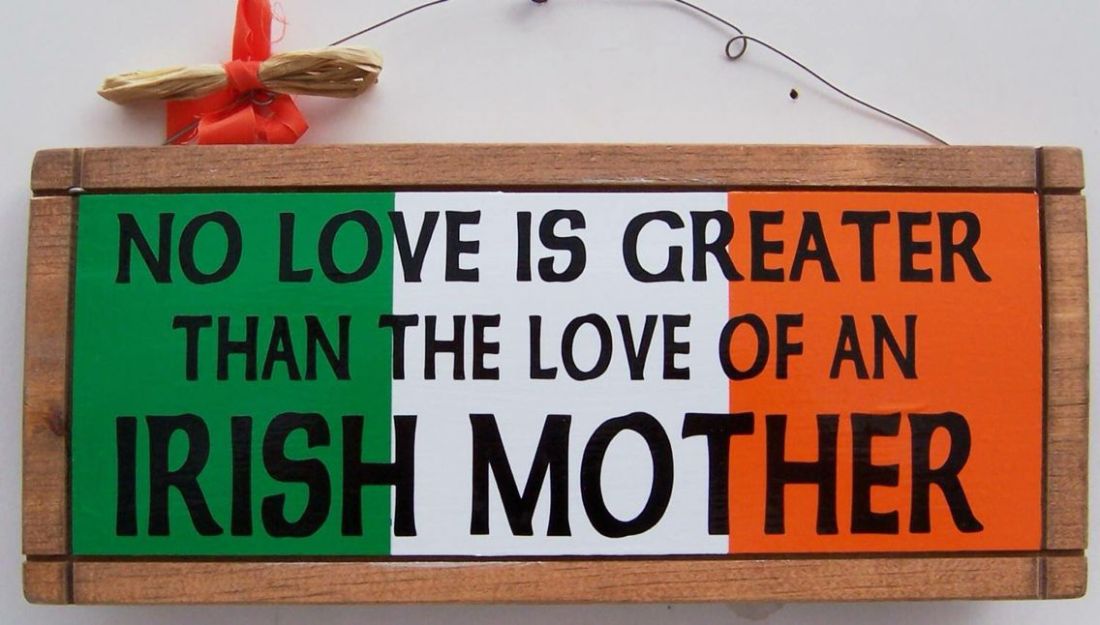
Paddy ran an Irish saloon in the heart of Chicago’s south side. With a name like Paddy, I didn’t have to tell you that he, given the names James Patrick by his mother upon his birth, was from Irish stock. His Irishness oozed from every pore. His bar wasn’t your normal bar, for sure. It featured Turkish Baths, a bowling alley, and a place to make bets on the various races around the US, with results coming in via telegraph and phone. If you are thinking of an image from the Oscar-winning film, The Sting, you’d be right. Paddy was deeply connected to the Chicago mafia, and he made good money during the 1920s. He was arrested a few times, but he was always able to escape real trouble because of his Irish mob connections.

People who came to Paddy’s place invariably asked about his mother. That’s one subject that could really get him going. Paddy’s mother, you see, was a saint–just ask him. He was born over on DeKoven Street, two years before the Great Chicago Fire destroyed the house and much of the street. He ended up marrying a girl who lived in the neighborhood. But the real love of his life was his mother. Sure, it’s almost a trope of the Irish boy thinking his mother was wonderful, but Paddy would get angry, almost violently so, when anyone questioned his mother’s character.

Catherine had immigrated to the United States in the period before the Civil War and married a man named Patrick, for whom she named her middle child. The couple were happy. Even though they weren’t wealthy, they felt blessed to have been able to come to the US and start over, much like the people of their neighborhood–other Irish, Lithuanians, and Italians–and to have the chance to enjoy the economic possibilities that were lacking in the lands of their birth. Catherine kept a couple of chickens in the shed out behind the house, and a cow that gave good milk. To Paddy, Catherine was the perfect example of how someone can come to America, work hard, and provide a better future for their children.

And that’s why he bristled when anyone came in his place and asked questions about his mother. You see, Catherine died in 1895, a heart-broken woman. Oh, she lived to see Paddy become wealthy, even if it were by nefarious means, and she was more than a little proud. But that success never repaired the distress she felt over the blame that was sent her way. There was a great deal of prejudice against Irish immigrants back in that time, much like there is today against Muslims and people coming to the US from the Middle East.

Perhaps those racist ideas caused people to blame Catherine for something that the evidence seems to say wasn’t her fault at all. Paddy always claimed that the unfounded accusations made towards his sainted mother hastened her death; she died of a broken heart, according to her beloved son. We’ll never know. What we do know is that, according to the legend, Paddy’s mother, Mrs. Catherine O’Leary, left a lantern in the shed.

And when the cow kicked it over…

On a Secret Cancer Surgery

The doctor said to the large, wealthy gentleman, “That thing is a bad-acting tenant, and I would have him evicted immediately.” It was the surgeon’s way of telling the man that the cancer that had been discovered on the roof of his mouth required surgery. The gentleman smiled at the doctor’s small joke, but the point was made. Surgery was scheduled.

Now, this was 1893, and a cancer diagnosis then was pretty much a death sentence. We forget how far cancer treatment has progressed in past 130 years since then. But at that time, well, all a surgeon could do was cut away until he felt the cancer was removed, and then everyone simply hoped for the best. Post operative treatment such as any type of radiation or chemotherapy was decades in the future at that point. But the gentleman trusted his doctor, and knew that the surgery was his best, and only, chance at surviving the bad “tenant.”

The patient was in relatively good health for someone of his size and age. In his late 50s, he stood almost six feet tall and weighed nearly 300 pounds and was remarkably active for his condition. He was what some today might call “fit-fat,” in that the weight he carried hadn’t reached the point that he was incapacitated by it. No, he worked for hours daily, walked often, and enjoyed life. However, he was an inveterate cigar smoker. And the cancer had come from. And the cancer–well, left unchecked, the man would be dead sooner than later. He was sicker than he realized.

Now, this man was important to Wall Street, a man whose influence had power over the rises and falls of the stock market. To announce that he had cancer could affect the markets at a time when the United States was entering an economic downturn. Newspaper reports of the man’s cancer could send stocks tumbling. And if he were admitted to a hospital, someone might recognize him and spill the beans. So, this upcoming cancer surgery would have to be done in secret. And, so, a wealthy friend of the gentleman offered him and his doctor the use of a yacht, the Oneida, as a place for the surgery. The boat would be offshore of the man’s summer home at Cape Cod, Massachusetts. The story was put out that the gentleman wanted to relax and do some fishing for a few days.

A team of six surgeons performed the delicate operation despite the moving boat and the rocking waves. It took them only 90 minutes to remove most of the roof of the man’s mouth, much of his upper left jaw, and several teeth. And they pulled all of that through his mouth rather than create an incision on his face. The thought was that no one would know about the surgery to look at him–other than a tooth extraction. The skilled surgical team even managed to salvage his distinguished mustache.

The operation was a success. The surgeons removed all the cancer. The gentleman would live another 15 years, but for the rest of his life, he wore an artificial rubber plate inserted where the roof of his mouth used to be.

But, if you looked at President Grover Cleveland, you’d never know it.

On an Imagined Email

If email had existed years ago, here’s a possible, mostly historically accurate, but completely imagined inter-office communique:

To: Senior Staff

From: JM

Date; 20 May, ’92

RE: The Boss

He’s talking about retirement again. We are at a juncture where such a move would prove disastrous for our little enterprise. In talking with him at length in his office this morning, the following items were brought up as the major reasons for leaving.

1.) He’s tired. The years of strain of being an exec have taken their toll, he says. He feels that he’s done all he can do to get us off the ground and on as stable a footing as he can given how little time we’ve been in operation, but he argues that he’s got nothing left to give. He talks about staying home, working in the garden, taking walks along the river, and playing with the dogs. Can you believe it? The dogs, for Chrissakes. And he says his wife is tired of him not being home after so many years of work. He says he’s old–but he’s only 60! For those of us who’ve been here since before the start, he’s always seemed older, but he’s never seemed old to us. We’ve got to remind him that he’s young, that he has many productive years left, and then say things about how his color is good or how he’s looking well.

2.) He’s fed up with the interoffice politics among senior staff. That’s why this email if for your eyes only. It would do no one any good to learn about infighting among the senior-level employees. Keep this to yourselves. But he’s looking specifically at Al and Tom. You guys have your issues, we know, but you’ve got to keep that stuff out of the office. No arguing in front of him, in the halls, or anywhere on the property. If you guys have something to say to each other, say it out of earshot of anyone having to do with this office. The Boss says he’s tired of having to play referee for your infighting. And he worries that staff as a whole will choose sides between you two, leading to division within our group, and possible dissolution of what we have all (especially he) have worked for so hard for so long. He is aware that there will be fighting over who will replace him among us, but he still is wishing to step down.

3.) Finally, he’s worried that if he stays any longer in the leadership position, people in and out of the organization will soon not be able to separate him from the role. In other words, his concern is that the man will become synonymous with the position, and anyone who follows him will forever be considered and seen as the “not him.” That’s a valid position to a degree, granted, but, again, we are at a critical point in our existence. We have to assure him that if he decides to step down now, there may be no role for anyone to assume after he leaves.

We have to have a united front on this. Remember: Stay positive in his presence. Tell him how good he looks and how young. No infighting (can’t be stressed enough). Remind him how vital he is to what we are trying to do here.

Everything depends on President Washington being re-elected in November and staying in office for at least four more years.

–Madison

On a Vegetarian

There’s a great deal to admire and respect about vegetarianism. The idea that our bodies respond to vegetables better over the courses of our lives indicates that there is some connection between longevity and eating less meat in our diets. Take the case of John, a man born in Tyrone, Michigan, a decade before the American Civil War began. John grew up farm-raised meat products, but he was a sickly child. Self-taught for the most part, he and his family learned about what they considered to be proper nutrition from a new religious group they joined, the Seventh Day Adventists.

John became a vegetarian as a result of this religious training, and he saw an immediate improvement in his health. He slept better, he had more energy in the mornings, the constant illnesses left him. At that point, for John, there was no turning back. He worked in his father’s broom factory as a teenager before becoming a teacher at the tender age of 16. After more teacher training at what we now call Michigan State University, the members of his local Adventist Church convinced John to pursue a medical degree so he could learn more about proper nutrition that could be derived from a meatless diet. And, so, John went first to medical school at the University of Michigan and then moved east and attended New York City’s Bellevue Hospital Medical College where he received his medical degree.

Returning to Michigan, John became, essentially, a preacher of the vegetarian lifestyle. He was one of the first physicians in the US to propose that gastric distress was often caused by having the wrong biotics in the digestive tract. Many people today eat yoghurt in the United States because John’s efforts to make sure people got pro-biotics into their systems. And he opened a hospital where people with poor diets could come and learn what to eat and why. Soon, celebrities began calling at John’s place. President Taft (a man in need of diet advice if anyone was), Amelia Earhart, Roald Amundsen, and Henry Ford all came to John to receive advice on how to live better through vegetarianism.

John also was among the first to realize the protein potential of peanut butter. He collaborated with George Washington Carver down in Alabama to promote the wider use of the product along with the nutritional benefits of the sweet potato. He worked on meat substitutes, and he was among the pioneers in the development of soy and almond milks.

Now, you might wonder why you haven’t heard of John before, but, of course, you have. In fact, you mostly likely have a product of his creation in your kitchen cupboard right now. It’s probably his most famous product, and it was so popular, that it overshadowed all his other amazing medical and food-related work put together. Vegetarianism worked for John. He died at the ripe old age of 91 in 1943. And he attributed his longevity in part to the product I mentioned above.

You see, it was John Harvey Kellogg that gave us the cornflake.

On a Newspaper Reporter

Print media is dead, at least according to some. Don’t tell that to Jennifer Mills, a reporter for a small print newspaper in Brooklyn, New York, called the News. For the past 21 years, Jennifer Mills has produced the paper for the people in her community, faithfully, every week. She’s the only employee, and, thus, the writer, editor, and publisher. And, you might be surprised to learn, this teeny tiny newspaper has been the subject of an exhibition in Brooklyn honoring the work Jennifer has done, and it’s also been featured in a BBC documentary on small newspapers that have had an impact on their local communities. The New Yorker has interviewed her for an article.

She grew up in Minnesota, attended Concordia College, and she earned a MFA from the Art Institute in Chicago before moving to Brooklyn and continuing the paper she started at age 17 in high school. And today, Jennifer’s journalism hasn’t changed much since high school; she doesn’t lean heavily on hard news for its stories, no. You won’t find an international news section in the paper, for example. However, you will find stories on things that interest Jennifer herself. For the first 20 years of the paper’s existence, the masthead read, “News you can uze since 2002,” but that changed last year when she decided to go with, “Trusted Jurnalism Since 2002!” Jennifer believes that if the story interests her, it will also interest her readers.

Thus, you have stories that seem somewhat odd, such as stories on films people might like or recipes that they might enjoy. There is a section called Breakfast News which is, unsurprisingly, news about breakfast. There’s poetry. A section on social life. Shopping. Hygiene. And Jennifer is always sure to cite her source for each article. That’s part of the trust her readers have in her; they know that each story is true and carefully attested to.

Much time in recent decades has been dedicated to the subject of what makes something news. The old local TV adage, “If it bleeds, it leads,” has led to media following the most sensational, the most lurid, and, often, the most violent stories available in order to play on people’s fears. We’ve all heard the new teasers that run something like, “Is there something dangerous in your home? We’ll tell you about it on the 10 o’clock news!” That type of scare-journalism does bring in the viewers and readers because it does appeal to our desires to be safe. Jennifer Mills, therefore, goes against this type of “news.” To her readers, the news she reports on brings them joy, it’s refreshing, it’s uplifting, and it’s without any appeal to our baser instincts and is completely without violence. That’s why her little newspaper in Brooklyn has such a large readership. In a world where the overwhelming majority of news is negative, divisive, and often violent, Jennifer’s news is refreshing and happy. Where else can you read about the best pillow or a really good cabbage stew?

Oh, by the way, this newspaper is only one page. Each issue, she says, takes about 45 minutes to create and edit. She prints it where ever she can find a printer, prints it on standard 8 1/2 by 11 copy paper. And, so, for the past 21 years, every week, Jennifer produces her paper. The Breakfast News? That’s what Jennifer had for breakfast. The story of the best pillow? Jennifer bought one and wrote the story to tell people about it. The poems? Yep, those are by Jennifer and about Jennifer. The story with the headline “Woman Watches Two Basketball Movies in One Week,” was about, well, the fact that Jennifer watched two basketball movies in one week. And so on.

You might call it a newsletter, but her avid readers know it as the Jennifer Mills News.

On a Future Library

Scandinavians are deliberate.

They tend to see themselves as part and parcel of what was, is, and will be, in a view that examines life on a continuum. Taking the best from the past and with an eye towards the future, they seem to always be making plans that have an impact on the present world and also on the generations to come. So, it’s not surprising that its the Norwegians who are planning on a library for the future. Here’s the idea.

Beginning in 2014, a public trust organization, in collaboration with the city of Oslo, Norway’s capital city, started collecting the a book of the year as chosen by a select committee. The project is almost as much art project as it is library. But the organization wishes to preserve modern literature for the future. They will collect a book a year for the next 100 years.

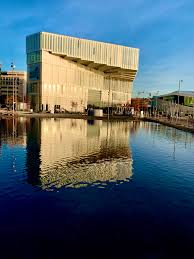
The Future Library Project, or Framtidsbiblioteket in Norwegian, has several disparate parts happening at the same time to bring this library to fruition. It will actually be a large room built inside a new library that was recently constructed in Oslo. A large swath of Norwegian forest was harvested for the wood used to build this special room that will house the future library. That choice of medium for the room is intentional, of course, because, after all, books are made out of paper that comes from wood.

Oh, and the books chosen? They are unpublished as of now. The authors submitted manuscripts to the organization, but the public hasn’t seen them yet. Some of the writers whose works will be a part of the future library include Han Kang, Margaret Atwood, and Karl Ove Knausgård. We know the names of the books, of course, but not the content. At least, not yet. And, since 2014, we have only 9 books of the eventual 100. When each chosen author presents the book to the organization, they meet in the place where the Norwegian forest where the trees were harvested to build the library room to partake in the handing over ceremony. This ceremony will be done only 91 other times.

Are you starting to see how all this is interconnected, how the collective community is being incorporated to produce this library for tomorrow? Everything has been thought out, everything has been planned–for the now and for the future. And, speaking of the future, let’s jump 91 years from now, to 2114, when the library is finally ready. Let’s listen in on a description of the library given by a docent to a group of visitors in the year 2114.

“There are now 100 books available to be read in this library, 100 books stretching back to the 21st Century. They have never been read by the public. In fact, they have only recently been printed. However, you can purchase copies of these books if you wish. In fact, people were buying these books back in 2014 before they were available. Again, with an eye towards the future, people back then bought the books for their grand children and great grandchildren to read in this, the future. And the pages of the books are made of special paper. The room you’re in was made 100 years ago of trees felled for this reason. In their place in the forest, new trees were planted that are now 100 years old. Those trees, those trees planted back in 2014, they are the ones now being harvested to use as paper for the 100 books you see before you.”

I told you Scandinavians are deliberate.

On a Trade Good

Of the thousands of lost and forgotten wars over the centuries of humankind, only a few of them have had an impact on the modern world as much as he one that took place between Britain and China in the 1840s. While we don’t think about China as being a powerful nation until the past 70 years or so, the fact is that the Chinese Empire was a powerful regional presence in Asia. Then, economic and social upheaval caused the country to become weak at the beginning of the 20th century. Also, in part, the spread of European colonialism carved up the nation’s sphere of influence.

European trade money had flowed into China for centuries, giving that government the ability to raise large armies, navies, and control a large area of land in Asia. Japan was really their only rival, and that was mostly later in the 19th century. But back to the war I mentioned at the start. In exchange for the Europeans’ silver, China sent tea, porcelain, silk, and other desirable trade goods to Britain. But the largest British import from China became the subject of an export ban by the Chinese government.

This trade ban outraged Britain so. The anger against China banning this particular product became so great that voices in Britain’s Parliament and across the country called for a declaration of war to force China to once again sell them the trade good. For China’s part, they felt the product was detrimental to their society. They begged Britain to reconsider. China had even sent a letter to the newly-enthroned Queen Victoria, asking her to please allow them to no longer sell this trade good. Young Victoria didn’t even bother to read the letter.

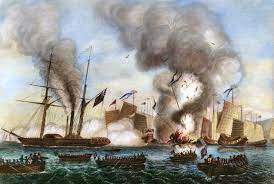
British desire for the product was so great that British sailors began violent confrontations with Chinese merchants in Chinese ports when they realized that the item was no longer for sale. And, so, Britain decided to go to war to force another country to sell them a product that the producing country did not wish to sell. And, of course, despite the money that China had, the technological advantages of the British Carronades (short-nosed naval guns) on their war ships made short work of the Chinese fleet.

China was forced to sign a treaty in 1842 conceding that they would once again allow Britain to purchase the trade good. In addition, Britain was granted control over five harbors on the Chinese coast, including Shanghai. The jewel of the treaty that ended the war was, of course, Hong Kong. Britain was granted absolute control over the city. For China to relinquish sovereignty over their own port cities–that’s how overwhelming the British victory was and how strong Britain’s desire for this trade good was..

And so, Britain followed the Golden Rule: They who have the gold make the rules. The British corollary of that is they who rule the waves, wave the rules. And Britain did both. Of course, you know what the product was, the trade good that Britain was so desperate to get their hands on that they were willing to go to war over it, the product that allowed them to control important coastal cities in China up until the past few years, right?

Opium.

On A Painless Dentist

Dobbs Ferry, New York, is about as middle class American as it gets and is a suburb about 40 miles north of New York City. It ranks as one of the best places in the state to raise a family. And so, that’s where Edward and his wife, Karen, moved to in the 1980s to raise their four kids. The couple had three girls and a boy. And Edward was a dentist. He bought a hilltop house in Dobbs Ferry, one that had a large, full basement, and opened his dental practice in that basement. Karen, who had been a psychiatrist, gave up that career to stay home with the kids and become Edward’s office manager.

The practice thrived. Of course, Dobbs Ferry is an affluent place where kids take care of their teeth. And Edward advertised that he was a painless dentist. His advertisement had a catchy slogan, too: WE CATER TO COWARDS! And the gimmick worked. The basement office was always full from opening to close, and sometimes there were issues with parking in the drive and on the street. But working at home was what both Edward and Karen wanted for their family. Being at home all the time was their goal, being there for the kids, and nurturing their education and ambitions was paramount.

Edward was one of the first dentists anywhere to use digital imaging for his dental x-rays rather than developing large film. He was an early adopter of technology, and computers were present in the office and in the home at a time when most people still didn’t have a home computer. In fact, Edward’s son created an electronic notification system for letting the office know that a patient had arrived. Up until that time, one of the kids would simply yell something like, “Patient!! or “Here’s another one!” to let Edward know someone had arrived for their appointment. Interestingly, the primitive message system was a lot like what would become AOL’s Instant Messenger, something that hadn’t come out yet.

The house became a sort of central stopping point for kids in the neighborhood. There was always something fun happening at Dr. Edward’s place. The girls would have friends over, and that, of course, attracted boys to stop by. The boy’s chums, who were fascinated by all the technology and geekiness of the place, wanted to see the latest video programs and games that were only then becoming The Thing for young people to pursue. Karen made sure snacks and soft drinks were around. And all of this social activity was why Edward and Karen wanted to have the big house on the hill. Edward always said that if the kids were home, you always knew what they were up to.

All of the Painless Dentist’s kids grew up to be successful. Randi, the oldest girl, does media production for people like the Clinton Global Initiative and the United Nations after receiving a degree from Harvard. Donna received a doctorate from Princeton and is a renown classics scholar. After a degree in business, the youngest daughter, Arielle, is a successful businessperson and a venture capitalist. She turned down an offer from her brother to go to work for the company he started because, she said, “Who wants to work for your older brother?”

That older brother, Mark, did pretty well for himself, too.

He founded Facebook.

On Some Dead Weight

The tale of the British attempt to be the first expedition to reach the South Pole is one of triumph and tragedy. Led by Robert Falcon Scott, the trip that began in 1910, known as the Terra Nova Expedition, is famous in part for ending with the deaths of Scott and the others of his group who attempted the conquest of the pole only a few miles from a cache of food and warming supplies that would have saved their lives. Alas, the elements (unusually harsh snowstorms) and poor planning (see below) doomed the Scott Expedition from the start.

Scott was one of those Edwardian Era Britishers who felt that they could conquer any task the world had to offer. History had proven men like him right, most of the time. The Victorians, as we have seen in other posts, believed in their abilities to conquer nature and the harsh conditions of the planet in the pursuit of knowledge and national pride. Thus, the trip was one of not only attempting to expand the world’s understanding of Antarctica, but it also had strong ties to British nationalism that was part and parcel of that era.

And, to his credit, Scott and his men did reach the South Pole. They simply didn’t live to tell the tale in person.

You see, the British had some rivals in their quest to be the first to the bottom of the globe. A Norwegian team, led by Roald Amundsen, was vying to plant the Norwegian flag at the polar extreme point first. And that really frustrated Scott to no end. First of all, it wasn’t supposed to be a race in his mind. Besides, Scott was not a professional explorer per se. He was a British military man. But that’s what you did back then. Any British man with enough pluck and gumption (and financing) could do and did do incredible things for the time. And he was one of those men. Scott did have some scientific experience in the south polar region, but exploring wasn’t his occupation. He was more of an amateur in the best sense of the word as opposed to someone who explored and profited from it. And that was how Scott saw Amundsen and his party. Those guys were professional explorers, in Scott’s mind, and that rankled him somewhat. While Scott and his crew were interested in the scientific aspects of the trip, he felt that the Norwegians were in it only for the glory and conquest. And that wasn’t entirely untrue to a degree.

Scott’s and Amundsen’s attempts were different in other ways as well. Scott relied primarily on ponies to pull his sledges, while Amundsen used the tried and true method of dog teams exclusively (which doubled as meat when necessary). The Norwegians were made up of a 9 man team, while Scott’s party was only 5 (both groups had a large cadre of support people in place at their bases on the coasts). Scott’s group’s nutrition was sadly lacking in some basic and energy-granting nutrients, while their Norse adversaries ate relatively well and had a good mix of vitamins and minerals. The Norwegians also used skis, while the British eschewed them.

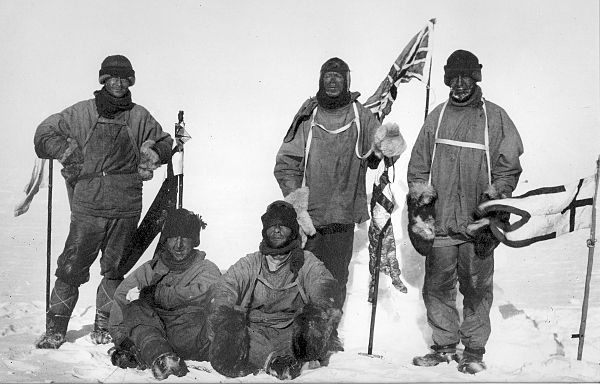
Despite their disadvantages, Scott’s party reached the South Pole early in 1911 even with their scientific experiments and samples that they collected on the way. However, they found that the Norwegian flag was there, and it had been there for over a month–34 days, in fact–since Amundsen beat him there. And, so, Robert Falcon Scott and his team, happy that they reached the pole but crushed that they finished a close second, turned back towards their home base. And it was this return journey that made him and his crew such heroes in the eyes of much of the world.

The going was slow, as I said, because of the spate of incredibly howling winds and driving snow. Their supplies dwindled. They spoke of desperately needing to reach the depot where fresh food and heat would be waiting, and, now on foot and dragging their sledges themselves, they began to falter. Freezing and starving to death, Scott still managed to keep a daily journal of the trip, and that journal was found along with his body and the bodies of most of the others in the group several months after their passing by some of his base camp comrades. And only 11 miles from their next supply camp. (Interestingly, Amundsen and his group actually gained weight during their return trip.)

In his famous journal, Scott spoke of his disappointment in not being first at the pole for Britain, but at the same time he also reveled in the scientific discoveries he and the party had made. He also mentioned that there had been discussions about discarding the samples of materials he and the group had found, jettisoning the weight, so that they could make more time, but that this idea was quickly abandoned in the name of science and knowledge. And, so, when the bodies of Scott and his companions were finally found, along with his diary, there were these samples. And the samples proved that, once upon a time, Antarctica had been a green, fertile, forested continent. The samples were fossils, you see, fossils the group decided to carry with them instead of getting rid of on the way home.

And so Scott and his men thus pulled several pounds of rocks across miles of Antarctica, choosing, perhaps, science over survival.