On a Therapist’s Notes

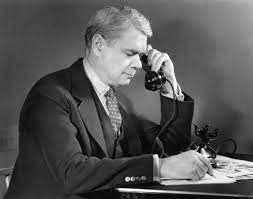
The psychologist watched through the window of his office as the patient left the building. He turned to his desk, picked up a large microphone, and reached beneath the desk where a recording device stood ready.

A metallic click was heard as he began the recording. He picked up his notebook of the details of the meeting and began speaking.

Meeting Notes for Patient 1548, David W., 9 October, ’31.

Patient spoke at length today about his childhood and his formative years. He began with some of his earliest memories of being raised by a nanny more than his mother and father. Patient reported that the nanny would pinch him and cause him to cry when handing him to his mother or father so that the parents would immediately hand him back to her. He only realized this as a young man, but, at the time, he saw this as a rejection by his parents.

He then spoke about his father, who he reports was a stern disciplinarian. Such was the harshness of the father’s discipline that patient’s brother developed a stutter in response to it. Patient says he was able to emotionally disconnect from the relationship early on. On the other hand, patient spoke fondly of his grandfather and grandmother, with whom he would spend many holidays. His father, wishing the young boy to learn discipline, sent him in to the navy at age 15.

The father then decided to send patient to university, but he says that he was not intellectually or emotionally ready for academia. He dropped out without completing a degree. Patient says that his failure at university greatly disappointed the father. When the war began, the father then insisted that the patient enlist in a front-line unit, but he says he saw only limited action despite being sent to the front lines. Patient seemed a bit embarrassed by his lack of heroism in the war. I reminded him that he performed well enough to earn the Military Cross in 1916, but he waved that off. His father, he said, was not impressed despite positive reports of his bravery by his senior officers.

Patient exhibited strong emotion when speaking of the death of his youngest brother, Johnny. The boy apparently died from seizures at age 11 when patient was 23. Patient said he wrote a strongly worded letter to his mother and father, accusing them of keeping Johnny caged in his room like an animal, and that his body was discovered much later after the seizure. Although he claims he “barely knew” his little brother, he felt it incumbent upon himself to chastise his parents for their neglect. When asked why he felt it was his responsibility to speak on behalf of a brother he had no close relationship with, patient tearfully admitted that he was writing his parents to take out his own lack of relationship and responsibility for his younger sibling and project it on her.

Patient agreed to return next week, and said he wished to speak of his new relationship with an American divorced woman.

Transcribe and put into patient’s file.

The psychologist turned off the recording device and sat back in his chair. He looked out the window at the London street that bustled with traffic. He let out a small sigh.

No one said that being a therapist to Edward, Prince of Wales, and next in line to the throne of the British Empire, would be easy.

On Reclaiming Land

The history of the United States government’s dealings with the First Nations is an appalling and some would even call it genocidal. Certainly the treaties that the US and, before that, the British colonial governments made with native groups were broken, abridged, and usually simply ignored. Promises were broken; lives and land destroyed and taken. So, it’s not surprising that there are instances of native groups rising up to reclaim land taken from them by either unfair or broken treaties.

Take the instance of a piece of land the native people refer to as Geniekeh, a small area that once belonged to the Iroquois Nation people near what is now the Canadian border. We forget that, once upon a time, places such as western New York were the American Frontier, was considered to be the “west,” and were largely untouched by European settlers. Think about the stories of James Fenimore Cooper, tales about that area such as The Last of the Mohicans and about his conflicted hero, Hawkeye/Leatherstocking. That’s the type of conditions in which the US made a treaty in 1797 that took the land in question from the Mohawks, the western-most group of the Iroquois Confederation. However, because of the military superiority of the American government, the Mohawks were forced into accepting what amounted to the stealing of their land.

Well, after a time, the Mohawks decided that they should try to rebuild their families and customs on their traditional lands. The Mohawk leaders pointed out that the treaty had never been approved by the US Senate (which, constitutionally, must approve all treaties with foreign nations, including native tribal groups). Thus, the treaty that took their land was invalid. A previous treaty, in 1794, had granted the Iroquois the land in perpetuity, and that treaty had been ratified. Thus, appealing to the 1794 agreement, the Mohawk re-occupied their land.

Now, it wasn’t a large plot of land, to be sure; it measured less than 1,000 acres. And it had been occupied by American settlers after the Mohawks were removed. But the native group re-occupied it and peacefully removed the Americans who had settled there. They then made the appeal that the US government should do the honorable thing and stay true to its word by allowing the Mohawks to reclaim the land. Interestingly, the US government policy in relating to native peoples has been a mixture of administration on the state and federal levels. Thus, the federal government allowed the State of New York to act as the chief negotiator and mediator between the natives and the federal authorities. Over the course of over 200 mediation sessions with the New York state legislature, an agreement was reached.

They named the reclaimed land Ganienkeh, the Mohawk word for “land of the flint,” the material by which the traditional hunting and working tools were crafted. The people carved out what they referred to as a non-reservation on the land, purposely rejecting the model of the US reservation settlement. That meant that, unlike the other reservations in New York State, the state and federal government had no oversight over them. They were an independent nation located within the borders of the United States, the last one of the Iroquois to be so.

And, would it surprise you to learn that Genienkeh was set up and reclaimed by the Mohawks in the late 1970s, and that it remains independent to this day?

On a Canal

Ferdinand de Lesseps is a name you don’t recognize most likely, but you definitely know his work and his impact on the world. de Lesseps was a French diplomat and civil servant who led the French organization that built the Suez Canal in the 1800s. The canal was a modern phenomenon at the time since the desire for a connection by sea from the Mediterranean to the Red Sea is as old as history. Over the millennia, many civilizations tried but failed to cut a channel between Africa and Asia, and it was mostly the organizational work of de Lesseps that accomplished what no one else had been able to do. As a result, the man became a major hero to the French Republic and an international celebrity.

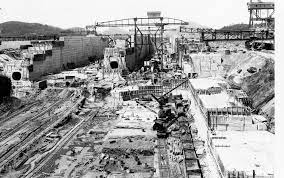
Thus, it made perfect sense for him to be the one to lead the next effort to build an important canal, this time across Central America. Such a canal would connect the Atlantic and Pacific Oceans. If built, the channel would save over 8,000 miles of sea travel by saving ship traffic from having to go all the way around the tip of South America to get to the other side. The potential savings of time and money were astronomical. All that de Lesseps had to do was to carve a ditch of about 50 miles across one of the most narrow points in Central America, across the isthmus of Panama.

It was with great fanfare, therefore, that the great canal builder de Lesseps was on hand in Panama to be the one to turn the first shovel of dirt, symbolizing the start of work on the project when construction began. But conditions in building the canal in Panama were remarkably different than those in the Suez. To start with, the construction was met with what seemed like insurmountable difficulties. Their equipment was good and modern, but it was mostly too small to do the task. One excavator said it was like digging a well with a teaspoon. The equipment would have been fine for the sands of the Suez, but, faced with the rock and mud of the Panamanian jungle, the machines bogged down quickly. There were landslides because of the rainy season when water poured down the hillsides of the construction sites. And when it wasn’t raining, it was scorchingly hot.

And then there were the tropical diseases, specifically the twin evils of yellow fever and malaria. Remember that this was in the late 1800s, in the period before vaccines and any types of proper treatment of scourges. Yet, despite these impediments and setbacks, the effort eventually removed more than 75 million cubic yards of dirt and rock. de Lesseps visited the construction sites and encouraged the workers that they were making good progress and that their efforts would be remembered forever in history.

de Lesseps local guide and on-site project manager was a man named Philippe Bunau-Varilla. Bunau-Varilla would become the most important Panamanian involved in building the canal. He was the one who organized the local workers and made all the arrangements for the logistical necessities like food, shelter, and facilities. And he was the mediator between the local/federal authorities in Columbia (who owned the land at the time )and the foreigners who were financing and overseeing the process of building the canal. Importantly, and unlike de Lesseps, Bunau-Varilla was an engineer. He disagreed with de Lesseps’s concept of making the canal a sea-level project rather than using locks. He understood that locks meant more cost but, ultimately, a much more simple process and a faster construction time.

By 1902, the work done by de Lesseps had produced the basic framework and route for the canal. However, because of the sicknesses of the location as well as construction accidents, over 20,000 workers had lost their lives in the effort. Investment money had dried up. Interest had waned in the work. It needed fresh eyes and a new perspective. And, by then, the aged Ferdinand de Lesseps had died. An offer from another investor came in, an offer to purchase all the equipment and the rights to complete the project. After almost no deliberation, the organization accepted the offer and sold out. This new investor then completed the canal in short order, using Bunau-Varilla’s idea for locks.

And who was that new investor?

Of course, it was President Teddy Roosevelt and the United States Treasury Department.

On a New Language

The development of language in history is a large area of academic study. These scholars examine not only how languages come into existence but also why and how. Linguists ask what is it in humans that causes them to seek to communicate with language? Which choices are made in a society when it determines things like grammar and syntax, noun declensions and tenses, alphabets and even types and manner of writing? Since languages have been around for so long, it’s sometimes difficult for language researchers to answer these questions because sources detailing the answers to these types of developmental questions are almost completely non-existent. That’s why what happened in Nicaragua in the 1980s excited language scholars like nothing else in the history of the field: A new language was born, and they got to watch it develop.

Now, to be fair, there are some examples in history of small groups of people, usually family members or often sets of twins, developing a simple “private” language between themselves. The development of these, known academically as cryptophasia or “twin talk,” isn’t usually widely known and is rarely documented, and of course these private languages aren’t shared by a wider audience. However, the language that sprang up in Nicaragua was and is widely used in that country. We should also mention that the creation of languages such as Esperanto, a language created in the late 1800s as an attempt at an international tongue, didn’t occur spontaneously or organically. Esperanto was the brainchild of one man, an ophthalmologist named Zamenhoff, who made up all the rules for the language himself (Esperanto has an estimated 100,000 speakers today). So, the development of that language didn’t happen “in the wild,” so to speak. But the one in Nicaragua did.

This language sprang up among some children in the Central American nation. As you are probably aware, Nicaragua speaks Spanish as a nation since the area was colonized by Spain and settlers from Spain moved there beginning in the 1500s. But there was a sizeable segment of the nation’s children who could not speak Spanish. And it was among these kids that the new language sprouted and grew. And it happened when the children were first brought together to a special school precisely because they couldn’t speak Spanish. The school, founded in 1977, was the first of its kind in the country. These children, who at first numbered about 100 and had no grasp of Spanish, were so thrilled to find other kids who didn’t speak the national tongue. And they began, completely on their own, to create a language through which they could communicate with each other.

Within five years, the number of kids who attended the school had grown to over 400, and the newcomers were quickly absorbed into and immersed in the new language. Up until that time, many of the children were assumed to have mental disabilities because of their lack of understanding of Spanish. But they rather quickly picked up the new idiom that the other children had created, thus showing that their lack of Spanish understanding had nothing to do with mental ability.

What was interesting was the these kids had been brought to the school specifically to learn Spanish, but they all resisted their instruction. Their teachers and staff began noticing that they were communicating with each other with a language that was completely new and unknown to the teachers. The children were having rapid, animated conversations using their own methods of communicating. The teachers were fascinated. By 1986, the school contacted a leading language scholar from the Massachusetts Institute of Technology (MIT), Dr. Judy Kegl, to come to Nicaragua and study this new language. Dr. Kegl felt as if she had found buried treasure. Here was the perfect laboratory to watch the creation of a language. It would be like an astronomer or astrophysicist witnessing the birth of a new star in real time or a biologist being present at the creation of an entirely new species. Kegl found that the kids had made the choices about the syntax, the declensions, the tenses, and the grammar all on their own. They had established the “rules” for the language organically. They had invented a language.

Thus, the children of this school had created what is today known as Idioma de Señas de Nicaragua or ISN. It is used today by thousands of people like them in the nation who don’t speak Spanish or any native tongue. And you might be wondering what all these people in Nicaragua, all these who now use this new language, ISN, have in common.

It’s that they are all deaf.

On a Bureau Chief

The Chicago Tribune was historically a conservative paper in a fairly moderate to liberal town. Run by the McCormick family, the paper reflected the conservative American values of that family. And practically none of the paper’s reporters was the best embodiment of those values than the firm’s Washington bureau chief, a man named Arthur Henning. Over the course of almost half a century, Arthur Sears Henning reported back to Chicago all the news that the conservative slant of that esteemed newspaper could print.

Henning began reporting from Washington for the Tribune back in 1907, during the William Howard Taft administration. Back then, and up until Teddy Roosevelt a couple of years earlier, most presidents of the United States never held press conferences where reporters could ask questions. No, any time the Chief Executive wished to convey a message to the press, he would call certain reporters to the White House for a meeting. Henning was one of the few that Taft favored, and he was a frequent guest for White House sit-downs with the president. That gave the Tribune many scoops over the years. And it also gave Henning unique insight into the workings of the White House. He got to know the next several presidents well as reporting on what he saw and learned from them.

Woodrow Wilson, he said, was not patient with unintelligent people. Calvin Coolidge, a man notoriously taciturn, would “talk your ear off,” if given a chance. Taft, a large, jovial man, was remembered by Henning as laughing and making his large belly shake like Santa when he told jokes. But Henning had little use for Franklin Roosevelt. The McCormicks were completely against FDR and his New Deal plan for dealing with the Great Depression. And Arthur Henning wasn’t writing anti-Roosevelt news stories simply to please his boss; according to a colleague, Henning was a True Believer. He actually agreed that the policies of the Democrats was tantamount to socialism. Henning would be more at home today on some right-wing media show. Which was interesting, because he had the reputation of being a fun-loving, kindly man who was often generous with his friends.

But that’s not why we remember Arthur Henning. You know about him because of only one story he wrote and for no other. In fact, we can narrow it down even more to three words he penned that you have most likely heard or at least seen. You see, when Roosevelt died near the end of World War 2, the nation worried that the new president, Harry Truman, might not be able to lead the nation like FDR had for over 12 years of first the Depression and then the prosecution of the war. But Truman brought the war to a successful conclusion in the months after assuming the office mostly by following Roosevelt’s blueprint. The peace that followed, however, proved daunting. Inflation, the re-absorption of the millions of service men and women into both the economy and society, the housing crisis, and the rise of communism after the war tested Mr. Truman’s mettle. As 1948 rolled around, it seemed that Truman might suffer an ignominious defeat in the election that year. After all, in the UK, Winston Churchill himself had been ousted after the war ended because people wanted a fresh start.

Henning reported throughout the summer of 1948 about the state of the election. He wrote stories for the Tribune detailing how unpopular Truman was to a wide swath of Americans. So it was no surprise that when election night rolled around, Arthur Henning turned in a story that everyone, including this experienced Washington bureau chief, expected.

The story’s headline?

Dewey Defeats Truman.

On A Perfect Tackle

The 1954 Cotton Bowl Classic American football game featured two of the nation’s best teams that year, the Rice University Owls and the University of Alabama Crimson Tide. Rice came into the New Year’s Day game in Dallas, Texas, as the co-champions of the Southwest Conference with a record of 8-2. Alabama, on the other hand, was the Southeastern Conference champ, undefeated in conference play, but with also two losses on the season. Their record was 6-2-3.

The game started well for Alabama. After a trade of punts by the two, Rice began a drive that approached mid-field when the Tide’s defensive back (and quarterback), Bart Starr, intercepted an errant pass from the Rice quarterback. The ensuing Alabama possession saw the team’s prize running back, a young man named Tommy Lewis, score a two-yard touchdown run for his side. With his team up 6-0, Lewis’s Alabama side seemed to have the momentum. A punt in the second quarter pinned the Owls deep in their own territory, and a stop by Alabama could give them great field position with the lead.

That’s when Rice’s running back, a speedster named Dicky Moegle, took over the game. The halfback slashed and cut up the Alabama defense and scored for Rice to even the score and swing the momentum back to the Owls. Alabama seemed to not have an answer for the swift running back. It was midway through the second quarter when the Tide pinned Rice back to their 5 yard line. A stop there could give Bama the ball back and potentially the lead. That’s when Moegle took another handoff and turned up field.

It seemed that he was gone for a 95 yard touchdown the moment he crossed the line of scrimmage. Not one Alabama defensive player laid a hand on him. He was headed for a score that could potentially crush the life and fight out of the Tide that afternoon. That’s when Tommy Lewis made a play that will live in not only Alabama lore but also college football history. He seemingly came out of nowhere to make a perfect tackle of Moegle near the Alabama 40. Both teams were stunned. It seemed that no one could have caught up with the Rice speedster. But, Lewis had stopped him. When you see it on film (it’s on YouTube) today, you notice right away that Lewis used perfect technique to wrap up Dicky Moegle and bring him to the ground cleanly.

The fans were stunned. The radio announcer stumbled for what to say about what had transpired on the play. The players on both benches couldn’t believe what they had just witnessed. The referees huddled for several minutes about the play. The Rice bench was screeching at the men in the striped shirts because of the tackle. Finally, the head ref, still shaking his head over what he’d witnessed, moved to the center of the field and raised both his arms straight over his head to signal touchdown for Rice.

Dicky Moegle finished that day with 265 yards on 11 carries and three touchdowns. He would go on to be named an All-American for that season. Rice defeated Alabama 28-6 in the Cotton Bowl that day, and it would mark the last time Alabama would make it to a bowl game for the next several years.

But what about Tommy Lewis and the tackle? Well, you see, the reason Moegle was awarded the touchdown despite Lewis’s perfect tackle was that, when Tommy stopped the Rice runner, he had done so by leaving the team’s bench and running onto the field to make the stop.

After the game, even though Rice won handily, the press wanted to talk to Tommy Lewis. They asked him why he’d done what he’d done; what possessed him to leap from his sidelines and stop what was a sure touchdown for Rice when he wasn’t even in the game. His answer is one of the rallying cries for the Crimson Tide to this day.

“I guess I’m just too full of Alabama,” Tommy Lewis said sheepishly.

On a Translator

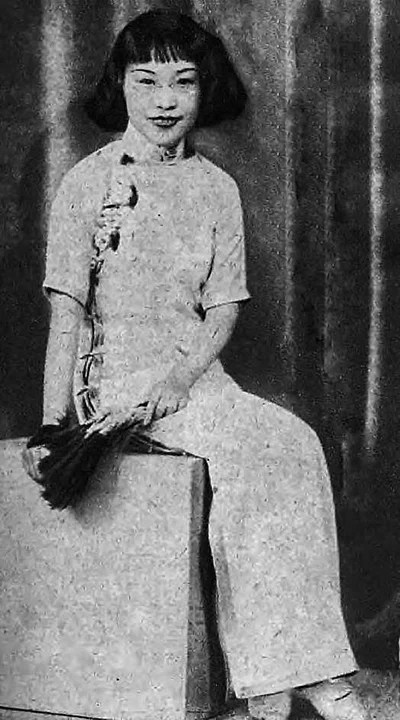
Chen Xiaocui (A reminder to the readers in the west that Chen is the family name) was a Chinese woman who worked as a translator and made a great reputation in China and around the world as a poet. She lived from 1902 to 1967, a period that saw great upheaval in not only Chinese society but also in the world. Born in a rural area to what would now be considered a somewhat middle class family of literary people, Xiaocui and her family moved to Shanghai when she was quite young. Her father, an author in his own right, opened a publishing company there in the days before the Second World War.

Xiaocui had a penchant for language from an early age. Her mother was responsible for much of her schooling, but the poetry, the poetry was a gift. Her literary father steered her into studying the classical Chinese poets and also introduced her to the poets that were famous from around the world. Her early published poems helped support her family in the years before her marriage in 1927 to a son of a high-ranking administrator in the Republic of China government. The marriage produced a daughter, and then the couple separated. It seems that Xiaocui was more dedicated to her work than to the relationship, and that makes sense given her innate talent in language and poetry. She took up painting as well, using the traditional Chinese methods to produce lovely works that were highly praised.

Throughout her life, Xiaocui also helped her father’s publishing business. She became his chief translator in the business. The firm’s name was Sanren Gongsi, translated as Three People because the firm really was her father, her older brother, and herself. Within a few years, Xiaocui managed to produce translations for over 70 novels of famous western authors into Chinese. The most famous of these translations and the ones that produced the most income for Three People were the ones that made up the entire canon of Sir Arthur Conan Doyle’s Sherlock Holmes stories. They became bestsellers in China because of her translation, and that helped the firm become somewhat successful.

In the years before the war, she spearheaded efforts to promote the writing of poetry and the painting of works both in classical Chinese styles within the Chinese school system. It was her belief that if children could be shown poetry at a young age, as she had been done, that it would nourish their imaginations and intellectual growth. She also worked with women’s artists and writers groups in the 1930s to promote more of the visual and literary arts among Chinese women. She taught in universities, urging her young women students to work on crafting their voices in art and literature. After the war ended and the Communists took over in China, Xiaocui had a chance to leave the country for Taiwan, but she chose to remain. He daughter managed to get out of China in the 1950s and make it to France where she, too, became a painter of some renown.

As you might imagine, someone working to create intellectual curiosity through artistic expression in Communist China would invariably run afoul of the authorities, and that’s exactly what happened to Xiaocui. She was removed from her teaching posts and lost her house. Realizing that her situation was growing dangerous, she tried to escape the country, but she was caught and tortured by the state police. Allowed to go free temporarily, she decided that it was better to take her own life rather than allow the communists to take it from her. Her poetry is only now being appreciated more and more in the west, almost sixty years after her death. What we forget about Chen Xiaocui is that she was such a prodigy. Her ability at such a young age can be seen not only in her early poems and paintings but also in those translations she did.

Remember those over fifty Sherlock Holmes stories she translated so well from English into Chinese?

You see, she translated them before she was 15.

On a Political Pastor

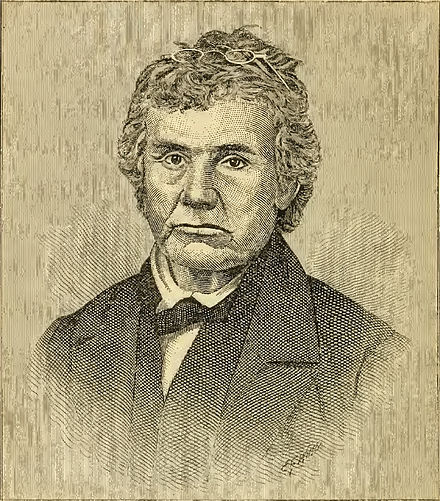
Peter Cartwright was a minister on the frontier of the United States in the early 1800s. Born in Virginia at the end of the 1700s, Cartwright became an ordained member of the Methodist Episcopal Church in 1801 and moved west to help bring the frontier settlers to Christianity. The frontier at the time was where many poorer people moved, people who were less likely to be “churched” and familiar with biblical principles. Cartwright felt a strong calling to go preach on the edge of civilization (Kentucky, at the time) and work among these settlers. Thus, he was part of what historians call the Second Great Awakening, a time of religious revival in that part of the western settlers of the United States.

There was a major issue that Reverend Cartwright found in Kentucky, however. At that time, human slavery was still legal since this was the time before the American Civil War. And Cartwright found that he could not tolerate his parishioners owning other human beings. After several years in Kentucky where he married and had some children, he decided to move to a northern state where the practice of slavery was illegal. Thus, he and his family made the trip to Illinois.

Cartwright was part of that generation that came along as the Revolutionary War generation was dying out. He and his contemporaries felt a strong emotion of patriotism, and they began to think of the Founding Fathers as being practically ordained by God to have started the most Christian, the most holy, the most God-blessed nation on earth (a feeling that is shared today by many as well). He became a chaplain in the US Army during the War of 1812 and saw it as he duty as a citizen to run for office and serve his fellow Americans politically. And so, the frontier pastor became a politician as well.

He was a rare person for the day, however. As a Jacksonian Democrat, he was nonetheless an abolitionist. In Illinois, his popularity as a minister and his advocacy of the elimination of slavery saw him elected to the Illinois State Legislature in 1830 and 1832. He ran for governor once, but he was defeated. Meanwhile, he kept preaching on the frontier, bringing many people to Methodism over the years and the miles. Cartwright was instrumental in setting up several Methodist colleges in Illinois as well, and he served the state Methodist Convention for decades.

Then, the chance came in 1846 for him to run as a US Representative from Illinois. His opponent was a member of the Whig Party and a man who had little political experience. At first look, it would seem that Cartwright would win the election easily against a young and inexperienced Whig, but many people in the state began to tire of the pastor’s mixing of politics and religion. Also, while many people were becoming converted to Methodism, many others continued to enjoy such things as alcohol, specifically hard cider that was made from the many apple trees planted across the state a few years before by one Johnny Appleseed, no less. Cartwright’s insistence on abstinence from alcohol and his calls for laws prohibiting the making and selling of alcohol ultimately changed the election against him. He lost a close election, and that loss made him decide to never run for public office again.

And that’s interesting, because the Whig candidate who did win that election decided to make it his life’s work–next to the study of the law.

That young Whig and new Illinois representative was Abraham Lincoln.

On an Unlucky Inventor

Walter Hunt is one of the greatest inventive minds produced by the 19th Century in the United States. Remember that the same century produced Thomas Edison, Eli Whitney, Cyrus McCormick, and other creative geniuses who changed society as the world knew it. And I’m arguing that Walter Hunt holds his place among those giants of ingenuity.

That’s what makes the fact that you don’t know him or recognize his name so frustrating to some industrial historians. This mystery inventor was born one of 13 siblings in rural New York State at the close of the 18th Century, and he learned as much as he could at the local one-room schoolhouse. Eventually, he went to what we today would call an A&M college and received a degree in masonry. He liked tinkering in his barn. It was while he traveled to New York City in search of financing for some of his ideas that he conceived of his first important invention. He witnessed a street car accident in which a young girl was struck and killed. Walter then developed one of the first warning bells on streetcars to warn pedestrians of the approaching car. He sold his invention to the largest streetcar company in the county, and soon, his invention was used on streetcars everywhere.

And that story was repeated throughout Walter’s life. He would invent something and immediately sell it. As a result, he never really made the big money that other inventors did during that time. For example, Edison kept the rights to his creations and either became the manufacturer or licensed the rights to them to other industries. Thus, while we know about Walter’s inventions, we really don’t know about the man behind the inventions. His name was erased from his creations the moment he accepted (usually low amounts of) money for them. Instead, we know the companies that produced his inventions rather than their creator.

Home knife sharpener? Yep, that was Walter. Restaurant steam table? Ditto. The fountain pen? Well, Walter created the prototype of the ones we use even today. Rotary brush street sweeper? Better oil lamps? Paper shirt collar? Reusable bottle stopper? Prototype repeater rifle? An ice-breaker for ships? All of those and more came from the fertile imagination of Walter Hunt. And all of them sold for much, much less than they would make for the people or companies who purchased those inventions from him. However, he did manage to save enough money to open a machine shop in New York City in Greenwich Village. And it was there that he created one of his most valuable inventions.

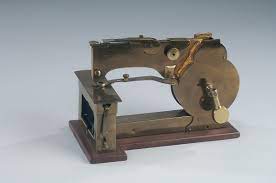
Up until that time, all sewing was performed by seamstresses in what amounted to sweat shops in the cities. Walter invented and built the first practical sewing machine, and it sewed faster than humans with the same accuracy and with even greater consistency of stitch. His wife and family were largely against his marketing or selling of this invention because of the number of seamstresses the machine would potentially render unemployed. Yet, he sold half interest in the machine to a man who promised to take the machine national but he…did absolutely nothing with it. Instead, the man changed the shape of the machine but left Walter’s stitching mechanism in place and pretended that he, not Walter, was the inventor of the apparatus. Later, a different man, Elias Howe, applied for the patent for the sewing machine. Walter began proceedings against Howe. The court found that while Walter’s machine predated Howe’s, Walter had failed to file proper patent paperwork and awarded the patent to Howe. Again, Walter didn’t gain wealth or recognition for something that he had created. Such was his luck. He died in 1859 of pneumonia, and almost no one noticed.

We still haven’t brought up the most significant invention by Walter. That one is, interestingly, both the most universal and the most simple of all of his creations. It was the one that would go on to make the most money world-wide. Of course, in typical Walter fashion, he sold the rights to it for the equivalent of $14,000 today. It was also one of the inventions he thought little of. Yet, if you know Walter at all, you know him for this. In fact, you probably have one or several of them in your house right now, thanks to Walter Hunt.

It’s the safety pin.

On Scientific Trash

Our world is filled with garbage. The scientific community shows videos of floating islands of trash in the Pacific Ocean that has an area larger than some nations. You can’t drive down the highway without seeing the mounds of aluminum, plastic, paper, and other assorted garbage that has been thrown from vehicles or fallen off of trucks. And no one seems to mind it, much. It’s only another of the prices we pay for life in the modern age. Oh, sure; some of those “earth lovers” decry the trashing of the planet, but, by and large, most people on the planet seem to not care about how much garbage is actually out there.

Then there’s the trash that the scientific community itself produces. Right now, there are hundreds of tons of garbage that endanger people every day, and this trash is a direct result of the so-called progress of the modern world that our best scientific minds have produced in the past 65 years. There are dozens of videos and websites devoted to showing the public this debris, if you know where to look. Yet, most of the public knows nothing about this potential danger to them that this garbage poses, hanging like an unseen or recognized Sword of Damocles over the heads of the population.

In fact, let’s get specific. There are over 130,000,000 pieces of trash that the world’s scientists have produced that have the potential to cause harm to us right this minute. Now, to be fair, the overwhelming number of these pieces are relatively small, but they can still do damage enough to harm us at least indirectly. More on that in a moment. But what’s even more unusual about this scientific trash is that the scientific community knows exactly where they are. In fact, there is an office set up to monitor the trash.

This accounting of the trash began the moment the first bit of junk was thrown away. Yet, the scientists are loathe to do anything to start cleaning up this large amount of trash; they say that they either lack the funding to clean up the trash or they lack the technology to do so. Some point to political reasons for not cleaning up the scientific trash. They invariably shrug and bemoan the fact that the trash exists. But that doesn’t stop them from continuing to add to the amount of garbage they produce every year as they watch the number and the tonnage of junk increase.

However, there is a new movement in some scientific corners calling for a halt to the pollution. One of the interesting things about this junk is that, these people say, if left alone for about 40 years, the junk will sort of “clean itself up” in a way. The theory goes that if no new garbage is produced, then, eventually, it will sort of simply go away. The reason for some of these scientists calling for a halt to the increase in this garbage is that the levels of trash has reached a critical point, they say. The likelihood of that trash causing a major catastrophe is increasing, they say.

And what exactly is this stuff?

Well, as you’d expect, there are garbage bags of trash, surely. Paint. Pliers. A camera. A blanket. Some toothbrushes. And that’s only some of the small stuff. The real threat is the bigger stuff. The fear is that some of that bigger stuff–some left over satellites, for example–will collide with existing objects orbiting earth, causing them to fall into the atmosphere and then crash onto populated areas of the planet.

Because there’s simply that much space junk orbiting earth right now.