On A Teen’s Activism

We applaud our youth when they find a cause and embrace it with all their passion and enthusiasm. Only the most cynical among us would try to dampen the spirit, the tenacity, the drive of a young person who finds a mission, a purpose.

Marsha Albert was one such youth, and she found her passion one evening as she watched news on her family’s TV. This was the 1960s, and youthful activism was one of the most enduring and endearing positives of that tumultuous decade. Marsha, age 15, saw a segment introduced by CBS’s “Uncle Walter,” Walter Cronkite. Cronkite had narrated a segment that December evening in 1963 that looked at a developing situation in the UK and throughout Europe, and Marsha sat and watched the entire program, riveted to everything Cronkite reported. When the news ended, she promptly marched up to her bedroom, grabbed paper and a pen, and she did what many young people of the 1960s did: She took action.

What Marsha did was she wrote a letter to her local radio station. She demanded to know why the station and other US media outlets didn’t address the issue Cronkite had raised that evening. “Why can’t we do that in the United States?” Marsha asked in her letter. “Why can’t we have that here?” she wondered. The station, impressed by her passion, agreed. If Marsha felt this strongly, they reasoned, perhaps other kids her age felt just as passionately about the issue. They resolved to do something about it.

The station was Marsha’s local station, WWDC-AM in Silver Spring, Maryland, a Washington, D.C. suburb. Marsha, being so close to the US capital, couldn’t help but be aware of the issues of the day. After all, it was practically her neighborhood. And the station, being in the DC area, also was aware of its responsibility to its listening public regarding important issues of the day. So, the station took action and called in some favors. The BOAC (now operating as British Air) cabin crew that flew into the capital brought recorded information about the topic into Washington and had it delivered to the station so that WWDC could address the situation directly.

And Marsha was invited to the station to talk about the issue on the air, to introduce the topic to the public and to stimulate the discussion because of her letter and her passion. And Marsha did just that. She introduced it, the station played the recorded information and–the station’s phone lines exploded with ecstatic calls from other young people who couldn’t believe what they had heard. They, like Marsha, had become energized to the point of frenzy about this topic. And, like Marsha, they wondered why this could not be brought to the United States.

You see, Cronkite and CBS had actually recorded the report that stirred Marsha so much the week of the Kennedy assassination, but they had shelved it for a few weeks because the network thought the topic was too trite, too trivial given the gravitas of the days surrounding Kennedy’s death. By mid-December, they felt enough time had passed, and, besides, the nation needed something to divert its grief.

Cronkite’s report was on a fever that was sweeping through the youth of the UK and Europe, and, in a way, Marsha and then the other young people of the DC area were among the first in the United States to also catch this contagion. Marsha was the one who caused it to first be broadcast in America.

You know this fever as Beatlemania.
On A Retiree

Sometimes, the golden years aren’t all that golden.

As we age, along with the loss of memory (and often decay in the body) comes the loss of autonomy. For many retirees, depression can set in especially if they feel that choices are being made for them rather than in consultation with them. Such was the case of one retiree who had no choice where he found himself upon retirement.

Many older people would be happy with retirement on a sunny, warm beachfront property, but not this man. And it especially galled him that he still felt like he had contributions to make to society, that he still could be a productive man even in retirement. But, again, the choice was not his to make, as is often the case with retirees. For him, the retirement felt more like a prison.

The wife was long gone, and man was estranged from his children. So, the state made the choice for him, the choice without consideration of his wishes, to place him in this home.

The home offered programs for him to enjoy, but he found no pleasure in them. There were many social events offered, and, when he did rarely participate, he would be sulky and sullen and withdrawn from the rest. Others could not understand his attitude. His caregivers were attentive, and the facility even offered meals that were cooked to order. None of this could change his mentality.

Understandably, depression dogged him. His doctor noted his moodiness, and he said that they were times when the retiree would be practically non-communicative. Yet, the mind was still active, and the man sought his own distractions. He expressed the desire, as many retirees do, to possibly begin writing books. He had been a veteran and thought about telling the stories of his time in the army. He toyed with learning another language in an effort to keep his mind active. His caregivers reported that he spent a lot of his time playing variations of solitaire.

This last distraction seems to be the most fitting for the retiree. He not only felt alone and abandoned, but he also felt, well, exiled.

That’s because he was.

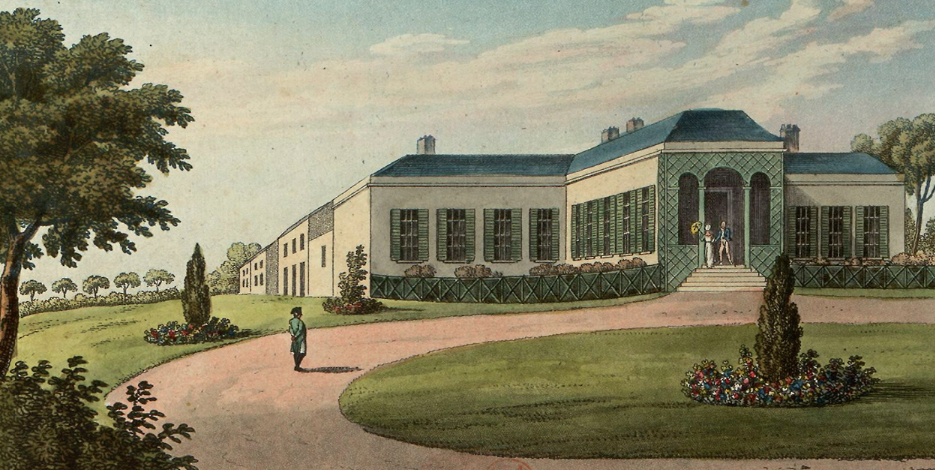
The island of Saint Helena, 1200 miles off the west coast of Africa, would be where Napoleon Bonaparte would spend his last days.

Happy Father’s Day

In honor of the recent holiday of Father’s Day, here is a story of a good father.


Anna and Richard were so in love. According to her in later years, they were always playing jokes on each other, always laughing, always happy. Such long-term relationships are rare, and almost unbelievable, except that people who knew them well echoed this reality. So, maybe it was true.
Anna also told the story about how, after having her engagement ring stolen, that Richard bought another one and slipped it on her finger in the night while she slept. He was always so romantic like that, Anna recalled.


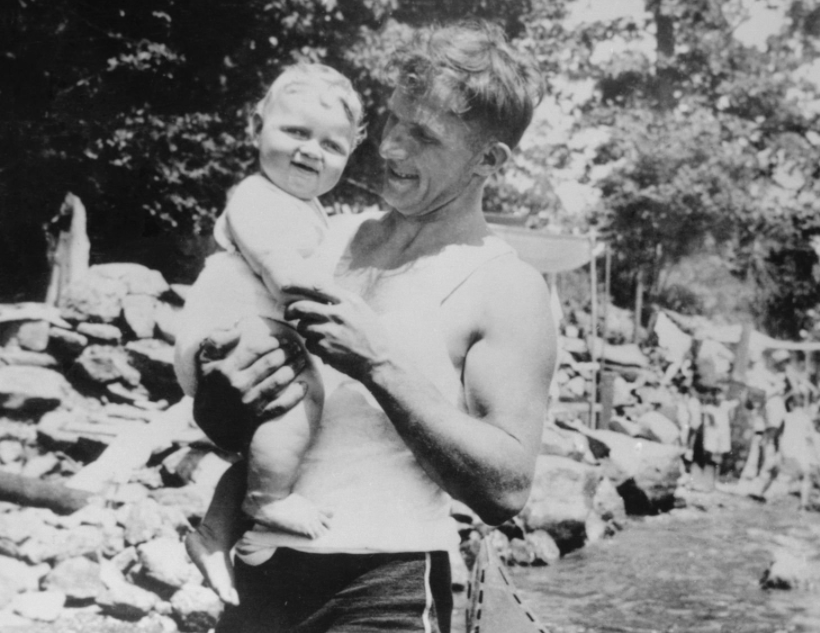
They eventually had a son, and they gave him his dad’s name as his middle name. That’s Richard holding his infant son in the photo above. You can see Richard’s love and pride in the photo. He was a good dad.


Living in New York’s Bronx during the Great Depression, Richard still managed to provide for his family through his work as a top-notch carpenter. This was even though they were also immigrants from Europe.


Everything was as it should be until one day in 1934 when Anna came home with her son to find a neighbor waiting for her in the entry of their apartment building. “They’re up there,” she said, “and they’re waiting for you.” Anna gave her baby to the neighbor and ran up the stairs to find her husband sitting on the bed and a couple of dozen policemen going through their apartment. “You’re gonna burn for this, pal,” one of the police officers said to Richard. He sat on the bed, stunned.


Richard was soon placed under arrest. Anna couldn’t understand. What had he done? They were telling her, but it couldn’t be true, what they were saying. She wanted to visit Richard in prison, but he refused. “I don’t want my boy to see me in here,” he told her. “I don’t want him to have any memory of me behind bars.” Such a good dad, even in this situation.


In 1936, Richard was executed in the electric chair in New Jersey.


The crime he was accused of?


Killing the infant son of another man.


You know that other boy as Charles Lindbergh, Jr.


And you know Richard as Bruno Richard Hauptmann.


Happy Father’s Day.