On an English Widow

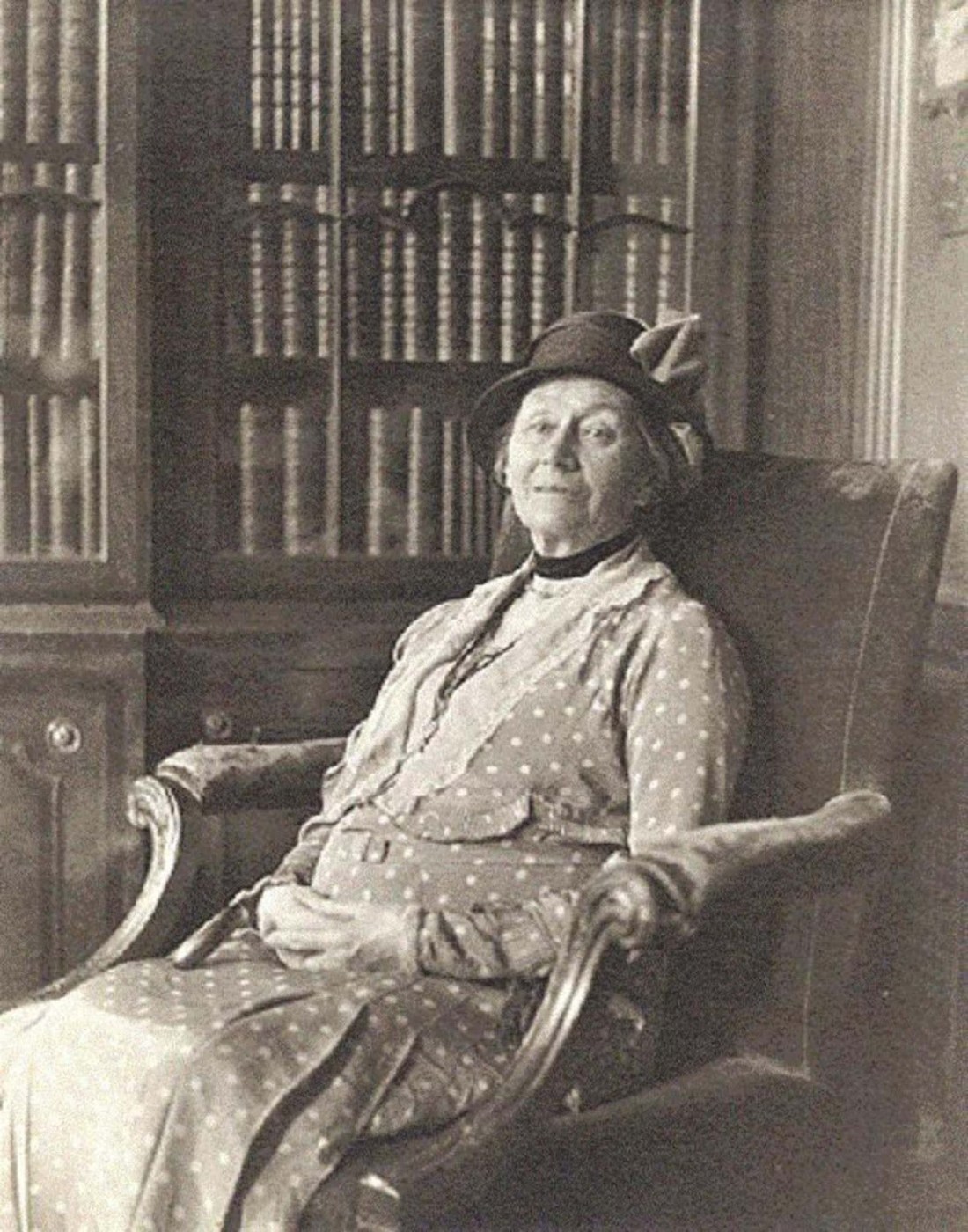
In the English village of Lyndhurst, the 82 year widow of Reginald Hargreaves died in 1934. As per her wishes, her body was cremated, and her ashes buried in the graveyard of the church of St. Michael and All Angels in the village. Her burial plaque reads, “Mrs. Reginald Hargreaves.”

Mrs. Hargreaves lived a fairly typical life for an upper-middle class English woman of her time. During her lifespan, she saw the British Empire reach its zenith and then begin its decline after World War 1. Her husband, Reginald, was a cricket player by profession. The pair married in 1880 when she was 28. Because her future husband had a goodly inheritance, the couple married in Westminster Abby. Reginald eventually became a local magistrate in Lyndhurst. The couple had three sons, two of which died in action during the Great War. The only surviving son produced a granddaughter for the Hargreaves.

As befitting her place in English society, Mrs. Hargreaves became a hostess of various social events in the village. She became the first president of a local women’s organization and even began referring to herself as “Lady Hargreaves” even though there was no reason for her to do so. But no one seemed to mind. She was active in local society up until her death. Reginald had passed away in 1926, and his wife said until the end that he was the true love of her life.

In her dotage, people asked her about her childhood, asked her what it was like to have grown up in the height of the Victorian Age. Mrs. Hargreaves would talk at length of her upbringing in Oxford, how her father, the ecclesiastical dean of Christ Church, had raised his brood of ten children with love and laughter. Family legend says that the youngest son of Queen Victoria, Prince Leopold, was so taken with her when he went to college in Oxford that he made serious attempts to court her, although there is little to substantiate this story. Like most young well to do women of her day, she traveled to Europe and received a good education.

However, what most people who came to her door to speak to her wanted to know from Mrs. Hargreaves were the tales of a young scholar and teacher from Oxford, a Mr. Charles Dodgson. Mr. Dodgson had befriended her father and the family because of his association with Christ Church. The people who queried Mrs. Hargreaves wanted to know what he was like, what he talked about, what stories he shared with her and her siblings. Mrs. Hargreaves would always tell them all they wanted to know. She told them of the tales Mr. Dodgson spun, the fantastic worlds his imagination created for her and her siblings. And she knew all the stories by heart, even into her 80s.

After all, she should know them. After all, she was the main character of most of Mr. Dodgson’s stories. When he finally wrote them in book form, Mr. Dodgson wrote them under the penname Lewis Carroll.

And now you know that Alice Liddell Hargreaves was the heroine of Alice’s Adventures in Wonderland.


On a Busboy

Juan Romero. He is one of those people in history you know, but you don’t really know you know.

You know?

As he rode the bus to school on a warm early-June day in 1968, Juan yawned and looked at his hands. There was something under his fingernails, something dark. He thought about what it might be, and he thought that maybe it was something he had come in contact with at his job the night before.

You see, Juan worked part time as a busboy in an Los Angeles hotel, one of the big ones. He was only 17, and he worked at the hotel when he wasn’t in high school or studying for tests. Juan did not see the work as a career, of course; it was merely a job you have in high school to earn some spending money. Besides, his ultra-strict stepfather insisted that he work in an effort to keep the young man off the mean streets of East Los Angeles. So, Juan worked clearing tables in the banquet halls and taking room service food to guests on the upper floors of the hotel. It being Los Angeles, Juan was able to meet a few celebrities during his time at the job. He liked that part. Until later.

After high school and a marriage to his sweetheart, Juan decided to leave LA and head inland. He settled for a time in Wyoming. Out there, he worked at several manual labor jobs and made decent money in the construction business. In later years, his marriage failed, and he moved back to California. This time, he lived in San Jose. He met a nice lady on Facebook, and Juan was excited about their future. Then, he suffered a heart attack with little warning and died a few days later in 2018.

Isn’t it interesting that, no matter how long someone lives, a particular moment in time forever seems to define you—at least in the imagination of the public? Juan Romero had such a moment when he had been a busboy…on that night…back in 1968. You see, Juan had been forced to stay late at the hotel the night before because of a function and then because of…because of something else that happened after the function.

So, despite being dead tired the next morning, Juan got on the bus and went to school. He thought it would take his mind off what had happened the night before. That’s when he looked at his fingernails and noticed the dark stuff under his nails.

“You’re him, aren’t you?” a woman on the bus said to him, pointing to Juan’s photo on the front page of the newspaper she held. Juan nodded. He looked back at his hands. Then it hit him what the dark stuff was under his nails.

Bobby Kennedy’s blood.

On the Father of His Country

We all are familiar with the story. Every school child should be able to recite it. The patriots, led by one daring and experienced man, win a great victory over the colonial power and create an independent nation from a loose confederation of former colonies.

We even have a title for the type of man who leads such a successful military rebellion against the colonial master: The Father of His Country. Such a man as this should be lauded, shouldn’t he? Shouldn’t he have mandated federal holidays, celebrated for generations for his amazing contribution to the founding of the nation?

Fighting against the much better trained and much better equipped colonial power, this man used his cunning and small-group tactical experience to fight a guerilla war against the slower, larger colonial forces. It was the smaller victories, he always said, that would slowly chip away at the edifice of the entrenched European power until final victory was achieved. The result? Independence. Freedom. Peace. Prosperity. All the things new nations wish for themselves.

And, after the great victory over the European power was achieved, all that was left was for the will of the people to have this man elected as the first President of the new nation. He was the logical choice, obviously, because not only of his military victories but also because of his charisma, his way of commanding a room when he entered it. No one else in the new nation, it was said, could bring the disparate parts of the country together like he could, either. No one else had his stature, his beloved reputation. Yet, despite the acclaim, he characteristically insisted that he not ever become an emperor or a president for life. That was not his style. The people, he insisted, the nation–those were his priorities.

Yet, the new nation had its enemies. The old power base from the European colonial country still lingered in some pockets of the new nation. Internally, over 1/3 of the population did not like the idea of a new country led by this former military leader. Talks of civil war and rebellion filled the land. Yet, he held his loyal countrymen together by and large. They loved him, especially those who had served with him in the great Revolutionary War.

On top of this, he was a learned man. He had received the finest education possible as a young man, and he spoke several languages. He was also a poet, and he wrote extensively about basic human rights. “There is nothing more precious,” he once said, “than independence and liberty.” At his large but simple home, he enjoyed gardening and taking care of such animals as the fish in his pond, which he fed regularly. When, after a long career of public service, he passed away of heart failure at age 79, he was mourned by hundreds of thousands of his countrymen as, again, the Father of His Country.

Busts, statues, plaques, and monuments have been erected to him in the many years since his death. Streets and universities, schools, and even religious sites bear his name today. Even a city in the new nation was christened in his name:

Ho Chi Minh City.

On a Dying Wish

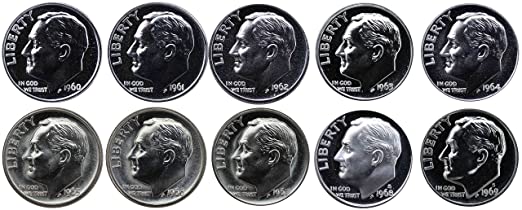
10 dimes.

One of the last wishes of the 82 year old man in the cardiac ward of the hospital was that he be buried with ten dimes in one of his front pockets. That wasn’t the only odd request the old man made. He also wanted to have a roll of cherry Lifesavers and some Tootsie Rolls, two of his favorite candies, buried with him. He had always enjoyed smoking cigarettes and was known to his friends to drink and have a taste for decent whiskey, so he asked also to be buried with a pack of smokes and a fifth as well. 

It was the request about the dimes that puzzled some people at the time. In the old man’s mind, the dimes were a sort of a talisman, a good luck-type sense of security, a touchstone of sorts. 

You see, when the man died in 1998, pay phones were becoming obsolete rapidly. Besides, even a local call cost at least $.25. Yet, to this old geezer, he always told people that he kept the dollar’s worth of dimes to make sure that he would have enough to use a payphone for an extended period if he needed to.

And that’s what was odd. 35 years before he died, this man’s son had been kidnapped. The kidnappers insisted on communicating only through payphones. The man (who had a great deal of money) made the arrangements over payphones to pay the ransom, and he did so. His son was released after only a couple of days being held. 

Oh, of course, the kidnappers were caught and prosecuted. But the man never forgot the fear, the dread, of what might have happen if he had  needed to use a payphone and did not have enough change. So that’s why he kept one dollar’s worth of dimes with him at all times, and it’s why he insisted that he be buried with them in one of his front pockets.

And so when you visit the grave of Frank Sinatra, you can be certain that those 10 dimes are still with him.